
Afrontar ou ser contrário a um regime autoritário através da arte e suas plurais expressões é medida que, muito embora isolada, atinge todos os representantes daquela classe de forma mais global. Aprendemos isso no Brasil em dois momentos: durante a ditadura militar, que perdurou longos 21 anos, entre 1964 e 1985, e durante o desgoverno bolsonarista entre 2019 e 2022. A arte é sempre a primeira a sofrer represálias, seja pelo ataque direto, pelo desmonte de políticas de fomento ou pelo silenciamento simbólico, pois invariavelmente exerce influência na opinião pública. Através da arte, a uniformidade de posicionamentos dá lugar à pluralidade de ideias, o que é, claramente, um risco a governos que visam a concentração de poderes.
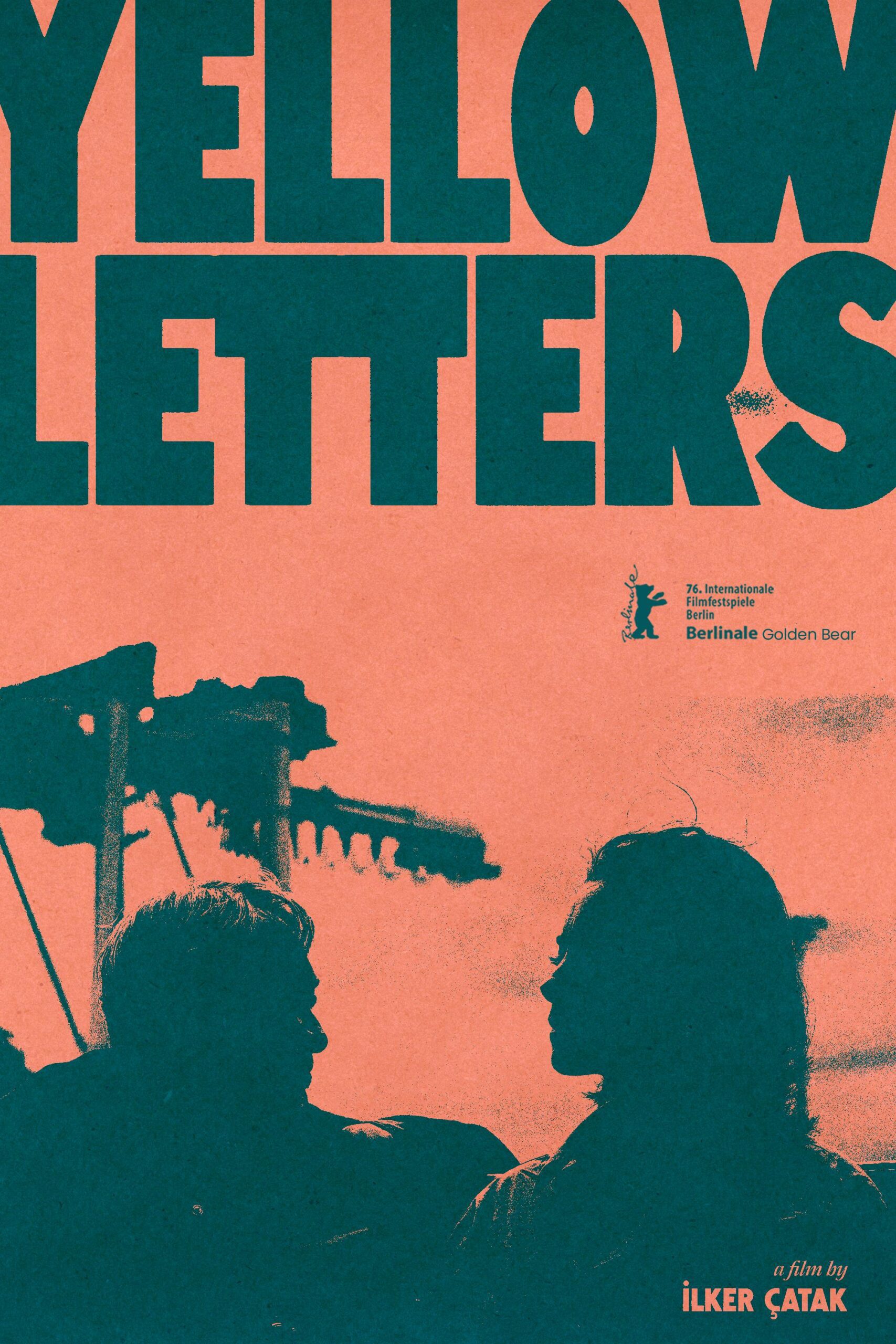
Entretanto, quando a relação deixa o campo coletivo, do artista contra a estrutura, para se tornar singularizada, ou seja, do artista contra o próprio governante como pessoa, as consequências são igualmente direcionadas. Yellow Letters, dirigido pelo alemão de origem turca İlker Çatak e grande vencedor do Urso de Ouro de melhor filme na 76ª Berlinale, reflete os efeitos de um sistema opressor em atuação contra a vida particular de um específico indivíduo e seu núcleo familiar. Derya (Özgü Namal) é uma famosa atriz dos palcos, dirigida por seu também prestigiado marido e professor universitário, Aziz (Tansu Biçer). Os artistas trabalham num espetáculo que é sucesso de público e acabam chamando atenção do governador do Estado, que apreciando a obra, vê-se rejeitado por Derya, que simplesmente não deseja vê-lo após a peça. A partir daí, uma bola de neve atinge todas as esferas da vida familiar do casal. Com uma filha adolescente e inseridos numa vida de estrelismo e conforto, eles se vêem concomitantemente demitidos pela companhia de teatro e universidade, perdem a casa e precisam reformular-se diante da precariedade financeira, voltando para Istambul, onde a mãe de Aziz vive.
O contexto geográfico de Yellow Letters se estrutura como peças de um quebra-cabeça que o diretor nos permite montar. Os letreiros Berlin as Ankara e Hamburg as Istambul surgem como se a identidade das cidades se misturassem, ou ainda, como se fossem colocadas em comparação, a cidade alemã assumindo as características da cidade turca. Os programas de rádio anunciam atos de terrorismo, o que contextualiza politicamente de certa maneira. A clareza geográfica aparece apenas no momento em que os personagens, imigrantes, precisam voltar para Istambul, restando elucidado tratar-se de sua terra de origem.

Como artistas que, por um ato individual, acabaram se colocando contra um sistema algoz, Derya e Aziz se posicionam como resistência, lutando em protestos públicos e se organizando com outros artistas. Especialmente Aziz carrega em si uma visão utópica da arte, orgulhando-se de exercer seu trabalho na busca por “salvar o mundo com teatro”. No entanto, os limites do casal vão sendo testados na medida em que o status quo trazido por seus privilégios financeiros vão se perdendo. Com o desemprego, falta dinheiro. Com a falta de dinheiro, não podem pagar aluguel, não conseguem ostentar uma escola de qualidade para a filha, nem suas aulas de violão. Progressivamente, suas energias de luta vão se exaurindo, e embates familiares cada vez mais intensos começam a surgir.
Yellow Letters desenvolve-se assumindo um caráter didático quanto à importância da luta da classe artística. Entretanto, falta substância e há até certa confusão na imposição e manutenção desse posicionamento tão fundamental. Nos protestos nas ruas, todas as bandeiras são levantadas, luta-se genericamente por liberdade, justiça e paz. Na casa de Derya e Aziz, forma-se um quartel general de estruturação da luta, logo esquecido para dar lugar aos conflitos do casal com sua filha, Ezgi (Leyla Smyrna Cabas), que assume uma rebeldia que parece ter sido causada unicamente pela situação de rebaixamento social. İlker Çatak não consegue equilibrar os embates pessoais dos personagens com o contexto político. Se faz evidente, como dito, que predomina a visão nuclear dos efeitos do contexto na vida particular, mas falta respaldo para sustentar a relação entre o macro e o micro.
As cartas amarelas do título são prenúncio da penalização sofrida por Derya e os seus. Para aqueles que sofrem as penas, por mais artistas e utópicos que sejam, o elitismo e a manutenção de privilégios transformam a gana de luta em resignação. A morte da resistência é uma ideia um tanto complicada e contraditória para um filme que posiciona-se politicamente, e que foi escolhido como vencedor do prêmio maior da Berlinale, nos parece, estrategicamente por esse motivo. Num mundo onde o capital dita regras em prol do individualismo e do desmonte de mobilizações coletivas, que Yellow Letters endosse (talvez sem pretensão de fazê-lo) o discurso de que é melhor o conforto do que o confronto é um ponto que provoca reflexão sobre, de fato, o papel da arte nos dias de hoje.
English Version: Yellow Letters
To confront or oppose an authoritarian regime through art and its plural expressions is a measure that, although isolated, reaches all representatives of that class in a more global way. We learned this in Brazil in two moments: during the military dictatorship, which lasted a long 21 years, between 1964 and 1985, and during the Bolsonaro misgovernment between 2019 and 2022. Art is always the first to suffer reprisals, whether through direct attack, the dismantling of funding policies, or symbolic silencing, as it invariably exerts influence on public opinion. Through art, the uniformity of positions gives way to plurality of ideas, which is clearly a risk to governments that aim at the concentration of power.
However, when the relationship leaves the collective sphere — from the artist against the structure — to become singularized, that is, from the artist against the ruler himself as a person, the consequences are equally directed. Yellow Letters, directed by the German filmmaker of Turkish origin İlker Çatak and the big winner of the Golden Bear for Best Film at the 76th Berlinale, reflects the effects of an oppressive system acting against the private life of a specific individual and her family nucleus. Derya (Özgü Namal) is a famous stage actress, directed by her also prestigious husband and university professor, Aziz (Tansu Biçer). The artists are working on a show that is a box-office success and end up drawing the attention of the State governor, who, appreciating the work, finds himself rejected by Derya, who simply does not wish to see him after the performance. From then on, a snowball effect strikes every sphere of the couple’s family life. With a teenage daughter and inserted in a life of stardom and comfort, they find themselves simultaneously dismissed by the theater company and the university, lose their house, and need to reinvent themselves in the face of financial precariousness, returning to Istanbul, where Aziz’s mother lives.
The geographical context of Yellow Letters is structured like pieces of a puzzle that the director allows us to assemble. The captions “Berlin as Ankara” and “Hamburg as Istanbul” appear as if the identities of the cities were blending, or as if they were being placed in comparison, the German city assuming the characteristics of the Turkish one. Radio programs announce acts of terrorism, which in a certain way provides political contextualization. Geographical clarity appears only when the characters, immigrants, need to return to Istanbul, making it clear that it is their land of origin.
As artists who, through an individual act, ended up positioning themselves against an oppressive system, Derya and Aziz present themselves as resistance, fighting in public protests and organizing with other artists. Aziz especially carries within himself a utopian vision of art, taking pride in carrying out his work in the pursuit of “saving the world with theater.” However, the couple’s limits are tested as the status quo brought by their financial privileges is gradually lost. With unemployment, money runs out. Without money, they cannot pay rent, cannot afford a quality school for their daughter, nor her guitar lessons. Progressively, their fighting energy becomes exhausted, and increasingly intense family conflicts begin to arise.
Yellow Letters develops by assuming a didactic character regarding the importance of the artistic class’s struggle. However, it lacks substance and there is even a certain confusion in the imposition and maintenance of this fundamental stance. In street protests, all flags are raised, and people fight generically for freedom, justice, and peace. In Derya and Aziz’s home, a headquarters for structuring the struggle is formed, soon forgotten to give way to the couple’s conflicts with their daughter, Ezgi (Leyla Smyrna Cabas), who adopts a rebelliousness that seems to have been caused solely by the situation of social downgrading. İlker Çatak fails to balance the characters’ personal conflicts with the political context. It becomes evident, as stated, that the nuclear vision of the effects of the context on private life predominates, but there is a lack of support to sustain the relationship between the macro and the micro.
The yellow letters of the title foreshadow the penalty suffered by Derya and her family. For those who suffer the consequences, no matter how artistic and utopian they may be, elitism and the maintenance of privileges transform the urge to fight into resignation. The death of resistance is a somewhat complicated and contradictory idea for a film that positions itself politically and that was chosen as the winner of the Berlinale’s highest award, it seems to us, strategically for that reason. In a world where capital dictates rules in favor of individualism and the dismantling of collective mobilizations, the fact that Yellow Letters endorses (perhaps without intending to do so) the discourse that comfort is better than confrontation is a point that provokes reflection on the actual role of art today.


Crítica de cinema, formada pelo Talents Rio da Berlinale e Goethe Institut. Membra do júri da Latin American Critics Awards for European Films e da Comissão de Cinema da APCA (Associação Paulista de Críticos de Arte).