
Idealizar, romantizar, concretizar e se frustrar. Embora esse seja um ciclo conhecido, somos levados, talvez de forma inconsciente, a criar expectativas suficientemente altas para justificar nossas decisões e as projeções que fazemos para nossas vidas. Sobretudo no que diz respeito a acontecimentos socialmente esperados de nós, como casar e reproduzir, ainda que as desilusões estejam diante de nossos olhos, tendemos a nos julgar especiais e capazes de driblar sua existência.
No que se refere à maternidade, ainda que a ideia de sua romantização seja hoje mais facilmente rechaçada, e muitas mulheres encontrem no realismo, e não no idealismo, o caminho para uma felicidade possível, é fato que há prazer no romance. Se preparar uma grande viagem faz parte dela ou pode ser até melhor do que o próprio destino, planejar uma vida perfeita é extremamente aprazível — portanto, é fácil se render à fantasia.
De se mencionar, ainda, que a idealização do casamento e da maternidade também decorre da influência religiosa cristã na estruturação de nossa sociedade, como parte de um processo histórico de convencimento voltado à continuidade do projeto bíblico de reprodução humana. Somos constantemente levados a acreditar em um propósito maior para nossa existência, e dar à luz finda por se tornar, para muitos casais, a finalidade suprema dos relacionamentos — e, por vezes, da própria vida.
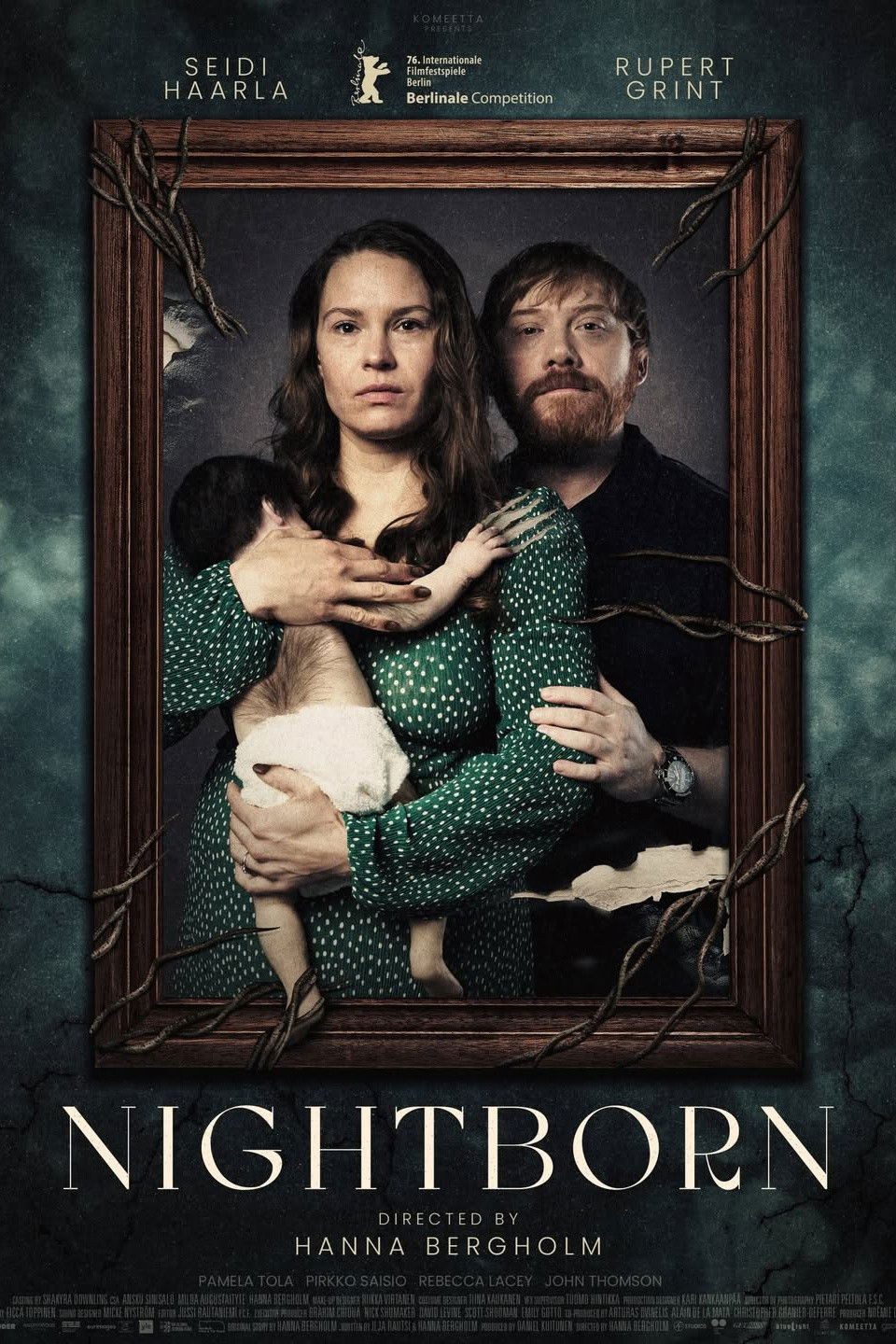
Dentre tantos filmes que abordam a maternidade moderna, obras angustiantes (e ótimas) como Se Eu Tivesse Pernas, Eu Te Chutaria, de Mary Bronstein, ou mesmo o fraco Mother’s Baby, de Johanna Moder, Nightborn, novo filme de Hanna Bergholm, propõe trabalhar o desequilíbrio entre o sonho e a realidade por meio da metáfora da monstrificação e das possibilidades criativas que se abrem no cinema de (body) horror. Saga (Seidi Haarla) e Jon (Rupert Grint) aspiram, juntos, a uma família e a uma vida perfeita e, para tanto, decidem abandonar a cidade para morar em uma casa isolada numa floresta finlandesa, lugar onde Saga passou a infância. Ali, nesse espaço de memórias de uma vida feliz, o casal tem seu primeiro filho – e apenas a mãe nota que há algo de pouco cristão no bebê.
Hanna Bergholm é um tanto didática nos símbolos e na evidência da atmosfera de desconfiança e mau presságio de Nightborn, e parece se divertir com esse didatismo, que é cômico, porque ela mergulha no exagero e na ridicularização das pessoas e dos fatos, e também aflitivo, já que o exagero conduz ao horror sanguinário. A própria idealização da vida é escarnecida, já que Saga e Jon são assumidamente cegos e até patéticos (a capacidade de Grint de parecer bobo é uma saída para seu talento limitado). Diante de uma casa caindo aos pedaços, quase como uma extensão da própria floresta sinistra ao redor, eles vislumbram, boquiabertos, uma expectativa de felicidade e encanto que notoriamente não condiz com o lugar.
A contradição e a cegueira, expressas de forma caricatural, afastam os personagens da realidade não só para situá-los num lugar cômico, mas também para que o fantástico livremente represente as consequências da frustração, principalmente no que se refere à maternidade. Nightborn não abandona o exagero e, com sangue e elementos da mitologia nórdica, faz Saga transitar da romantização para o despertar de uma mulher instintiva, selvagem – uma mãe de primeira viagem que não se conecta com o próprio filho e que passa a vê-lo como uma criatura estranha pela qual, subitamente, se torna responsável.
Tornar-se totalmente responsável por alguém é, de fato, aterrorizante. Compreender a linguagem de quem não consegue se expressar senão pelo choro pode ser igualmente assustador. Aceitar as transformações do corpo feminino durante a gestação e no pós-parto, bem como amamentar, também pode se revelar desafiador e doloroso. O assombro de Saga se manifesta na simbologia do bebê-monstro, desse ser que parece não pertencer a este mundo, que suga sua energia e que se torna vilão até que a mulher selvagem que habita a protagonista aflore para compreendê-lo. Segundo Clarissa Pinkola Estés, em sua obra literária Mulheres que Correm com Lobos, toda mulher carrega em si uma selvageria natural que é socialmente domada, e em Nightborn o despertar desse lado feminino se dá tanto pela nova condição de mãe quanto pela conexão com seu lugar de origem, aqui representados pela casa de infância, pelo mito nórdico e pela floresta.
A mitologia, diga-se, é incorporada nos elementos de direção de arte que transformam o quarto do bebê – igualmente idealizado – em uma espécie de redoma que reproduz o ambiente externo (tal qual o quarto do bebê de Yubaba em A Viagem de Chihiro). O papel de parede verde-escuro simula a floresta ao redor da casa, enquanto os móveis antigos carregam o espaço de uma sensação de claustrofobia, como se o ar ali fosse úmido e difícil de respirar. Emular a floresta, nesse contexto, não traz oxigenação nem conforto, mas se torna o ambiente propício para a habitação desse peculiar recém-nascido.
É certo que há um excesso de símbolos e de didatismo. Hanna Bergholm leva o exagero a tal ponto que, por vezes, perde a medida entre a seriedade da metáfora e a reflexão que pretende construir. Ainda assim, é no alívio do sufocamento que Nightbornencontra sua (extrema) resolução. Exausta, constantemente corrigida e instruída sobre como deve agir como mãe, a protagonista rompe com a projeção da maternidade controlada e normativa que a aprisiona. Quando o bebê se revela cada vez mais monstruoso, o horror é enfim assumido por Saga, que abandona a tentativa de domesticar ou negar aquilo que lhe parece estranho. Ao assumir o monstro, ela assume e compreende a própria condição – imperfeita, instintiva, selvagem e profundamente humana – de mãe.
English Version:
To idealize, romanticize, realize, and become frustrated. Although this is a familiar cycle, we are led—perhaps unconsciously—to create expectations high enough to justify our decisions and the projections we make for our lives. Especially when it comes to events socially expected of us, such as marrying and reproducing, even though disillusionments are right before our eyes, we tend to judge ourselves as special and capable of circumventing their existence.
With regard to motherhood, although the idea of its romanticization is now more easily rejected, and many women find in realism, rather than idealism, the path to a possible happiness, it is a fact that there is pleasure in romance. If preparing for a big trip is part of it or can even be better than the destination itself, planning a perfect life is extremely pleasurable—therefore, it is easy to surrender to fantasy.
It should also be mentioned that the idealization of marriage and motherhood also stems from the Christian religious influence in the structuring of our society, as part of a historical process of persuasion aimed at the continuation of the biblical project of human reproduction. We are constantly led to believe in a greater purpose for our existence, and giving birth ends up becoming, for many couples, the supreme purpose of relationships—and sometimes of life itself.
Among so many films that address modern motherhood, anguishing (and excellent) works such as If I Had Legs I’d Kick You, by Mary Bronstein, or even the weak Mother’s Baby, by Johanna Moder, Nightborn, the new film by Hanna Bergholm, proposes to work with the imbalance between dream and reality through the metaphor of monstrification and the creative possibilities that open up in (body) horror cinema. Saga (Seidi Haarla) and Jon (Rupert Grint) aspire, together, to a family and a perfect life and, to that end, decide to leave the city to live in an isolated house in a Finnish forest, a place where Saga spent her childhood. There, in that space of memories of a happy life, the couple has their first child—and only the mother notices that there is something unchristian about the baby.
Hanna Bergholm is somewhat didactic in the symbols and in the evidence of the atmosphere of distrust and ill omen in Nightborn, and she seems to enjoy this didacticism, which is comic, because she dives into exaggeration and the ridiculing of people and facts, and also distressing, since exaggeration leads to bloody horror. The very idealization of life is mocked, since Saga and Jon are openly blind and even pathetic (Grint’s ability to appear foolish is a workaround for his limited talent). Faced with a house falling apart, almost like an extension of the sinister forest around it, they envision, open-mouthed, an expectation of happiness and enchantment that clearly does not correspond to the place.
The contradiction and blindness, expressed in a caricatural way, distance the characters from reality not only to place the dream of the ideal life in a comic space, but also so that the fantastic can freely represent the consequences of frustration, especially regarding motherhood. Nightborn does not abandon exaggeration and, with blood and elements of Nordic mythology, makes Saga transition from romanticization to the awakening of an instinctive, wild woman—a first-time mother who does not connect with her own child and who begins to see him as a strange creature for whom she suddenly becomes responsible.
Becoming totally responsible for someone is, in fact, terrifying. Understanding the language of someone who cannot express themselves except through crying can be equally frightening. Accepting the transformations of the female body during pregnancy and the postpartum period, as well as breastfeeding, can also prove challenging and painful. Saga’s haunting manifests itself in the symbolism of the monster-baby, of this being who seems not to belong to this world, who drains her energy and who becomes a villain until the wild woman that inhabits the protagonist emerges in order to understand him. According to Clarissa Pinkola Estés, in her literary work Women Who Run With the Wolves, every woman carries within herself a natural wildness that is socially tamed, and in Nightborn the awakening of this feminine side occurs both through the new condition of motherhood and through the connection with her place of origin, here represented by the childhood house, the Nordic myth, and the forest.
Mythology, it should be said, is incorporated into the elements of art direction that transform the baby’s room—also idealized—into a kind of dome that reproduces the external environment (much like Yubaba’s baby’s room in Spirited Away). The dark green wallpaper simulates the forest around the house, while the old furniture fills the space with a sense of claustrophobia, as if the air there were damp and difficult to breathe. Emulating the forest, in this context, brings neither oxygenation nor comfort, but becomes the appropriate environment for the habitation of this peculiar newborn.
It is true that there is an excess of symbols and didacticism. Hanna Bergholm takes exaggeration to such a point that, at times, she loses the balance between the seriousness of the metaphor and the reflection she intends to construct. Even so, it is in the relief from suffocation that Nightborn finds its (extreme) resolution. Exhausted, constantly corrected and instructed on how she should act as a mother, the protagonist breaks with the ideal of controlled and normative motherhood that imprisons her. When the baby reveals itself to be increasingly monstrous, the horror is finally embraced by Saga, who abandons the attempt to domesticate or deny what seems strange to her. By accepting the monster, she accepts and understands her own condition—the imperfect, instinctive, wild, and profoundly human condition—of being a mother.


Crítica de cinema, formada pelo Talents Rio da Berlinale e Goethe Institut. Membra do júri da Latin American Critics Awards for European Films e da Comissão de Cinema da APCA (Associação Paulista de Críticos de Arte).