

Quantas vezes, enquanto crianças, fomos indagados por adultos sobre as expectativas e sonhos de nosso futuro? “O que você quer ser quando crescer?” é a pergunta que permeia círculos familiares, escolares e amizades que fazem desses seres em formação, no mínimo, curiosos a respeito dos espelhos nos quais refletem suas vidas. Muito embora tais questionamentos adultizem, de certa forma, o pensamento infantil, é fato que a busca por influências que forneçam as respostas possíveis traçará o caminho natural dessas expectativas – a figura dos pais, avós, parentes, a cultura e os costumes regionais e até, porque não dizer, filmes e programas de TV, representam referências e instigam a curiosidade infantil.
Como as expectativas e reflexões sobre o futuro de uma criança podem se cruzar especificamente com o município de Guaribas, no Piauí? Guaribas possui 4.350 habitantes, e ganhou projeção nacional após implementar o projeto-piloto do programa social Fome Zero. A Fabulosa Máquina do Tempo, novo trabalho documental de Eliza Capai exibido na Mostra Generation Kplus da 76ª Berlinale, conecta o município a uma discussão sobre a possibilidade de novas perspectivas para as meninas que lá habitam, quando todos os caminhos parecem uniformizados: como suas mães, o porvir aponta para o casamento e para a maternidade como única saída.
A Fabulosa Máquina do Tempo adota o ponto de vista infantil para refletir como a passagem do tempo e a melhora da qualidade de vida convergem para que novos horizontes possam ser imaginados. Capai faz do cinema um espaço lúdico para que as pequenas entendam seus lugares no mundo a partir da intersecção temporal, entre a consciência da miséria que antes assolava a região sertaneja, o desejo de aproveitarem a infância e o temor da adolescência, que traz consigo a possibilidade de tornarem-se novas mães e esposas. Brincando, elas descobrem que desejam renovar o olhar.
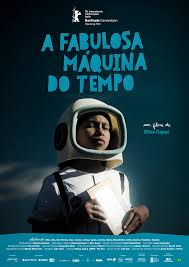
“Será que a mulher seria diferente se fosse feita direto do barro?” Nesse sertão que tem como religião predominante o cristianismo evangélico, a paisagem árida alaranjada adquire uma atmosfera espacial e marciana (referências à 2001: Uma Odisseia no Espaço e Barbie são aferíveis), a caixa d’água representando a simbologia da máquina do tempo, para iniciar questionando a origem bíblica da vida e o posicionamento da mulher nessa história. Vestidas de trajes de astronauta, as meninas assumem os instrumentos cinematográficos para que, por suas próprias vozes e visões, assumam suas próprias jornadas. Munidas de claquetes, microfones boom e câmera, a conclusão de que “Ufa, ainda bem que eu ainda não sou mulher” da narração da pequena protagonista de 10 anos define a chave de leitura da obra.

Documentários como A Fabulosa Máquina do Tempo e, pelas similaridades estruturais, também Favoriten, da austríaca Ruth Beckermann, carregam em si uma honestidade e uma singeleza raras: lidar com crianças pode ser, ao mesmo tempo, um enorme desafio e um grande privilégio. Há, nas crianças filmadas, uma verdade indomesticável e um gesto imprevisível que, quando acolhidos pela direção, transformam-se em matéria cinematográfica pura. Eliza Capai não só acolhe, mas concede às pequenas o espaço e o direcionamento que precisam para exercer essa naturalidade de forma plena, de modo que o fazer cinema, que elas observam e aprendem, se torna uma grande brincadeira. Trata-se de uma aproximação genuína e respeitosa, que se recebe com o rosto em sorriso e o coração em estado de aconchego.
Passado, presente e futuro se conectam nessa metalinguagem educativa, onde o filme assume a posição de máquina do tempo. O passado é refletido através do vínculo geracional, e as crianças entrevistam suas mães, perguntando-lhes sobre seus sonhos, seus arrependimentos e suas trajetórias. Na sua maior parte composta por mulheres negras, as mães, tímidas, retomam o passado escravocrata, para justificar a falta de água, gás e comida de outrora. O discurso é muito semelhante entre elas quanto aos arrependimentos: se tivessem que mudar algo, não teriam abandonado os estudos e teriam feito tudo de outra forma.
No presente, as protagonistas resolvem brincar, dentre outros jogos, de casinha. Questionadas sobre as diferenças entre meninos e meninas, a resposta muda, mas a conclusão é sempre a mesma: “O menino vai beber cachaça e a menina fica em casa organizando as coisas” ou “Homem só joga bola e mulher limpa casa, lava louça e faz comida”, tarefas domésticas que elas já sabem fazer. Os papéis de gênero naquele território são claramente delimitados por uma herança cristã, escravocrata e patriarcal, estruturas que se naturalizam diante da escassez de oportunidades locais.
Há, ainda, espaço para descoberta e enfrentamento dos medos e de uma elaboração sobre a religião que não acompanha qualquer julgamento. O medo — de morrer, de perder os pais, do Fofão, de buracos, do escuro ou da fome — é amparado por A Fabulosa Máquina do Tempo, enquanto Eliza Capai guia as crianças pela mão, ensinando-as a enfrentá-lo por si mesmas através do exercício imaginativo. É curioso que o maior temor seja o da vida adulta, refletido na simplicidade sobre o medo de adolescer, tomando a adolescência como culpada pelo distanciamento das amigas que não mais podem brincar com as menores.
No entanto, a transformação gradativa desse pensamento opera nas novas gerações, perceptível quando a máquina do tempo fabulosamente remete as crianças à imaginação de um novo amanhã. Elas não querem mais ter filhos, mas um animal de estimação. Não querem se casar novas, querem se casar após os 23 anos (a maioria das mulheres casa-se antes dos 18 anos). Elas querem estudar, querem dar casa e carro aos pais, querem ser empregadas, professoras, advogadas criminalistas. Querem fugir do passado de alcoolismo de seus pais porque vivenciaram seus traumas. Ao ensinar cinema e transformá-lo em ferramenta de mudança real na vida das meninas de Guaribas, A Fabulosa Máquina do Tempo configura-se como um lúdico, sutil e belíssimo estudo de caso dos impactos bem-sucedidos das políticas sociais brasileiras, sem nunca aderir a um viés demonstrativo ou panfletário – apenas permitindo que crianças sejam crianças plenamente.
English Version: The Fabulous Time Machine
How many times, as children, were we questioned by adults about the expectations and dreams of our future? “What do you want to be when you grow up?” is the question that permeates family circles, schools, and friendships, making these beings in formation at the very least curious about the mirrors in which they reflect their lives. Although such questioning somewhat adultifies children’s thinking, it is a fact that the search for influences that provide possible answers will trace the natural path of these expectations — the figure of parents, grandparents, relatives, culture and regional customs and even, why not say, films and television programs represent references and spark children’s curiosity.
How can a child’s expectations and reflections about the future intersect specifically with the municipality of Guaribas, in Piauí? Guaribas has 4,350 inhabitants and gained national prominence after implementing the pilot project of the social program Fome Zero. The Fabulous Time Machine, the new documentary by Eliza Capai screened in the Generation Kplus section of the 76th Berlinale, connects the municipality to a discussion about the possibility of new perspectives for the girls who live there, when all paths seem uniform: like their mothers, the future points to marriage and motherhood as the only way out.
The Fabulous Time Machine adopts the child’s point of view to reflect on how the passage of time and the improvement of quality of life converge so that new horizons can be imagined. Capai turns cinema into a playful space so that the girls understand their places in the world through temporal intersection — between awareness of the misery that once plagued the backlands region, the desire to enjoy childhood, and the fear of adolescence, which brings with it the possibility of becoming new mothers and wives. Through play, they discover that they wish to renew their gaze.
“Would a woman be different if she were made directly from clay?” In this backlands region where evangelical Christianity is the predominant religion, the orange arid landscape acquires a spatial and Martian atmosphere (references to 2001: A Space Odyssey and Barbie are noticeable), the water tank representing the symbolism of the time machine, beginning by questioning the biblical origin of life and the positioning of women within this story. Dressed in astronaut suits, the girls take up cinematic tools so that, through their own voices and visions, they assume their own journeys. Armed with clapperboards, boom microphones, and a camera, the conclusion — “Phew, I’m glad I’m not a woman yet,” from the narration of the ten-year-old protagonist — defines the interpretative key of the work.
Documentaries like The Fabulous Time Machine and, due to structural similarities, also Favoriten, by Austrian Ruth Beckermann, carry within them a rare honesty and simplicity: working with children can be, at the same time, an enormous challenge and a great privilege. In the filmed children, there is an untamed truth and an unpredictable gesture that, when embraced by direction, transform into pure cinematic material. Eliza Capai not only embraces this but grants the girls the space and guidance they need to exercise this naturalness fully, so that the act of making cinema — which they observe and learn — becomes a great game. It is a genuine and respectful approach, received with a smiling face and a heart in a state of warmth.
Past, present, and future connect in this educational meta-language, where the film assumes the position of a time machine. The past is reflected through generational bonds, and the children interview their mothers, asking them about their dreams, regrets, and trajectories. Largely composed of Black women, the mothers, shy, revisit the enslaving past to justify the former lack of water, gas, and food. The discourse is very similar among them regarding regrets: if they could change something, they would not have abandoned their studies and would have done everything differently.
In the present, the protagonists decide to play, among other games, house. Asked about the differences between boys and girls, the answer changes, but the conclusion is always the same: “The boy will drink cachaça and the girl stays home organizing things,” or “Men only play soccer and women clean the house, wash dishes, and cook,” domestic tasks they already know how to do. Gender roles in that territory are clearly delimited by a Christian, enslaving, and patriarchal heritage — structures that become naturalized in the face of scarce local opportunities.
There is also space for discovery and confrontation of fears and for an elaboration about religion that does not carry any judgment. Fear — of dying, of losing their parents, of Fofão, of holes, of the dark, or of hunger — is supported by The Fabulous Time Machine, while Eliza Capai guides the children by the hand, teaching them to face it themselves through imaginative exercise. It is curious that the greatest fear is that of adulthood, reflected in the simplicity of fearing adolescence, taking adolescence as responsible for the distancing of friends who can no longer play with the younger ones.
However, the gradual transformation of this thinking operates in the new generations, perceptible when the fabulous time machine transports the children to the imagination of a new tomorrow. They no longer want to have children, but a pet. They do not want to marry young; they want to marry after 23 years old (most women marry before 18). They want to study, they want to give their parents a house and a car, they want to be employees, teachers, criminal lawyers. They want to escape their fathers’ past of alcoholism because they have experienced its traumas. By teaching cinema and transforming it into a tool for real change in the lives of the girls of Guaribas, The Fabulous Time Machine establishes itself as a playful, subtle, and beautiful case study of the successful impacts of Brazilian social policies, without ever adhering to a demonstrative or pamphleteering bias — merely allowing children to be fully children.


Crítica de cinema, formada pelo Talents Rio da Berlinale e Goethe Institut. Membra do júri da Latin American Critics Awards for European Films e da Comissão de Cinema da APCA (Associação Paulista de Críticos de Arte).