

Um filme não deveria depender de sua sinopse ou de qualquer outra informação prévia para que seja plenamente experimentado. Precisa existir, ser sentido e compreendido por si só. Esta que vos escreve costuma adentrar as experiências cinematográficas de forma crua, desprovida de informações prévias sobre aquilo que virá. Trata-se de uma escolha pessoal – não há aqui motivação mais profunda -, apenas a preferência pela sensação de surpresa e descoberta. Fato é que, ao ler a sinopse de At the Sea, dirigido por Kornél Mundruczó e que disputou o Urso de Ouro na 76ª Berlinale, depois de assisti-lo, fui duplamente surpreendida. A uma, pela quantidade de coisas que ela precisa revelar. A duas, pela impressão de ter tido acesso a uma obra que está ali em sua essência e em sua história, mas não na reflexão que já propõe antecipadamente “Quem ela é sem a identidade que antes justificava sua autodestruição?”
Ela, como já mencionado, é Laura (Amy Adams), empresária, bailarina e alcoólatra, recém-saída de uma clínica de reabilitação após meses de internação. Sua recuperação foi mantida em segredo: embora estivesse à frente da companhia de dança fundada por seu falecido pai, desaparece sem qualquer justificativa formal. Ao receber alta, descobre que o marido, Martin (Murray Bartlett), sustentou seu sumiço alegando que ela estaria em Bali realizando pesquisas. De volta para casa, Laura não encontra acolhimento na família, nem do marido, nem dos filhos, Josie (Chloe East) e Felix (Redding L. Munsell), sendo evidente a estranheza das relações dentro daquela casa.
Há de se situar social e economicamente essa família, que vive em uma casa de luxo, com um imenso e belo jardim, à beira-mar em Cape Cod, Massachusetts. A companhia de dança parece ser a única fonte de renda familiar. De que se trata de uma família abastada não restam dúvidas: a internação de Laura não trouxe qualquer prejuízo ao padrão de vida, e a mentira sobre sua ausência soa aceitável naquele contexto – afinal, parece perfeitamente plausível e razoável que alguém desapareça por meses, sem dar satisfações no trabalho, para passar uma temporada em Bali.
Nada precisa ser justificado no cinema. Ainda assim, quando se trata de uma narrativa clássica e convencional, a ausência de explicações costuma clamar por sensações, sentimentos ou provocações que a preencham, de modo que algum fio conecte o espectador à trama ou aos personagens. At the Sea apresenta o alcoolismo, o trauma e o drama familiar como desafios a serem superados pela protagonista. Ainda assim, não há ali nada que nos atraia para esse dilema, que nos faça senti-lo de maneira profunda ou que nos mantenha minimamente interessados nessas pessoas.
O alcoolismo é uma doença e, como tal, não precisa ser justificado. O trauma também é válido, e Kornél Mundruczó nos fornece o background necessário em forma de (excessivos e cafonas) flashbacks para compreendermos sua origem. Existe um esforço, mas inexiste qualquer solidez. Tudo é previsível e óbvio da maneira mais patética possível. O drama se converte em tédio. Não assistimos, como a sinopse sugere, a uma jornada de descoberta de uma nova identidade sóbria para Laura – a questão é que sequer sentimos que havia, ali, uma justificativa consistente para sua autodestruição. O que vemos é uma Amy Adams desapontante desfilando entre biquínis, saídas de praia e camisolas, lidando com o próprio ócio e com o vício, enquanto os filhos e o marido se comportam com uma revolta que, por sua vez, também soa despropositada.
É óbvio que todas as pessoas ao redor de Laura lhe oferecerão seu drink preferido. É evidente que a desconfiança do marido em deixá-la sozinha com o filho mais novo acabará se confirmando. É ululante que, durante um passeio na praia, a advertência para que a criança tome cuidado com as arraias se transforme em acidente. É claro, também, que um hospital permitirá que um menino de seis anos permaneça sozinho enquanto a mãe divide batatinhas com um desconhecido. Tudo é banalmente premonitório, e At the Sea parece subestimar nossa capacidade de surpresa, ou sequer se preocupa com ela. Já na metade do longa, o que resta é a incredulidade diante da insistência do diretor em seguir pelo caminho mais vazio e pouco elaborado possível.
Mundruczó nos conduz a uma enxurrada de acontecimentos esvaziados, e esse esvaziamento atinge seu ápice na relação de Laura com a filha, Josie. A rebeldia da jovem, já quase adulta, decorre do alcoolismo da mãe? Do abandono da companhia de dança? Da perda de uma referência feminina durante o período de internação? A filha disputa desesperadamente a atenção de Laura, e é até interessante a forma como expressa suas emoções através da dança – talvez o único momento em que At the Sea consegue provocar alguma (frágil) emoção. Ainda assim, em vez de desejarmos a reconciliação entre elas, o que resta é revirar os olhos ou sentir um certo constrangimento alheio.
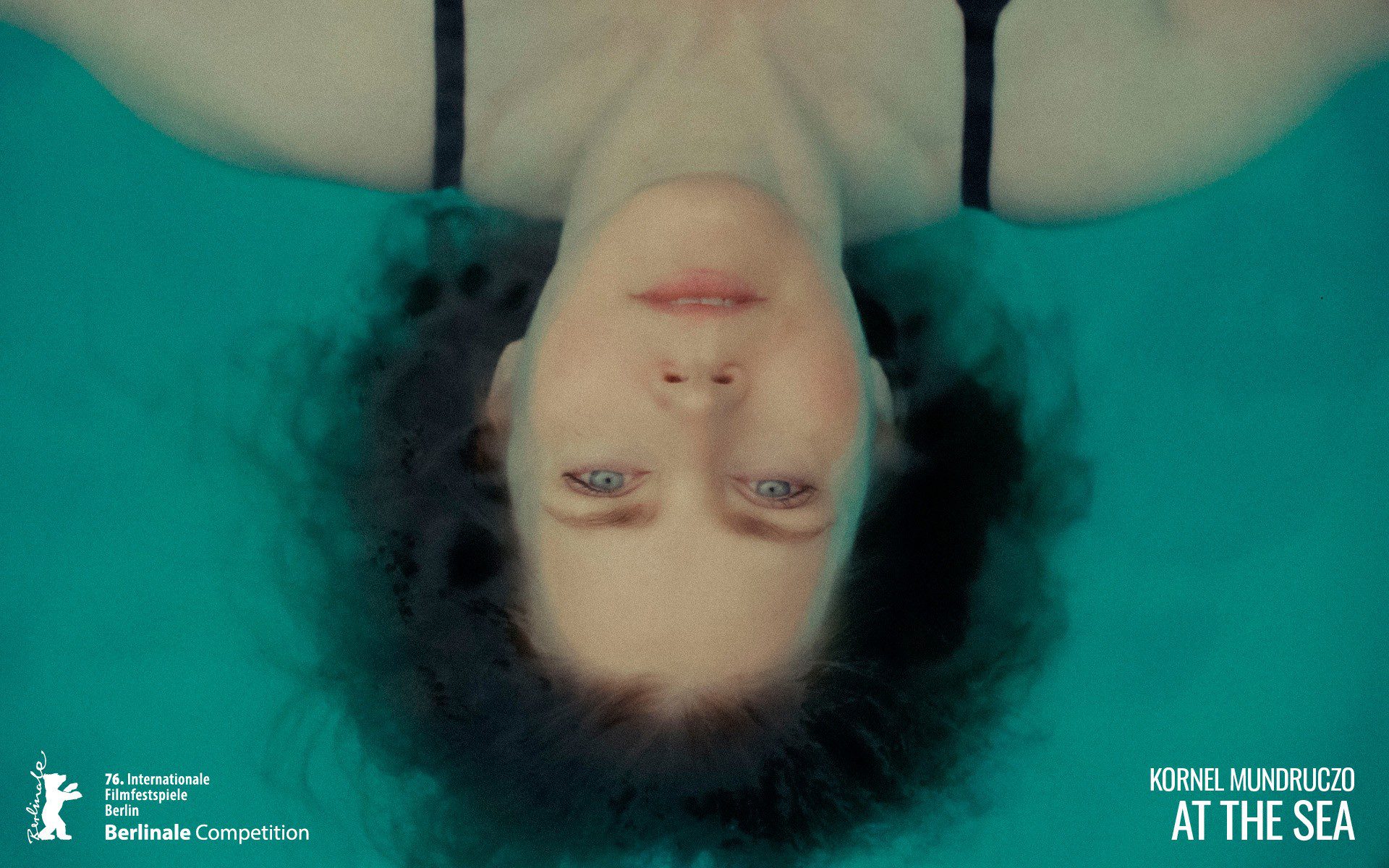
Se há algo de instigante em At the Sea, talvez seus cinco primeiros minutos o sejam. O filme se inicia com um close-up extremo nos olhos inexpressivos e muito azuis de Amy Adams, e ouvimos apenas sua respiração. Aos poucos, o contexto externo vai se revelando à medida que a câmera se afasta, e o mar surge ao fundo. A impressão inicial é a de que estamos diante da iminência de um suicídio. A impressão que se forma é que estamos diante de uma iminência de suicídio. Entretanto, o progressivo distanciamento da personagem a situa em uma apresentação de música indígena à beira-mar – ela toca, claramente desconectada, um bumbo. E essa será a única vez em que seremos surpreendidos ou positivamente enganados por Mundruczó.
At the Sea tinha em mãos duas formas de expressão artística: o próprio cinema e a dança, que se insere organicamente em seu tema. Ainda assim, parece incapaz de se expressar por meio de qualquer uma delas. Não encontra seu espaço nem na linguagem cinematográfica, nem na dimensão corporal e emocional que a dança poderia oferecer. Kornél Mundruczó constrói uma obra que apresenta todos os elementos de um drama intenso, quais sejam, o trauma, o vício, as relações familiares fraturadas, mas os organiza de forma tão previsível e superficial que esvazia sua própria matéria. O filme anuncia conflitos, mas nunca os experimenta, sugere profundidade, mas nunca a alcança, de modo que se torna curiosamente inerte, como o olhar inicial de Laura diante do mar: belo, imóvel e, sobretudo, vazio.
English Version:
A film should not depend on its synopsis or any other prior information to be fully experienced. It needs to exist, to be felt and understood on its own. The one writing this usually enters cinematic experiences in a raw way, devoid of prior information about what is to come. This is a personal choice — there is no deeper motivation here — merely a preference for the feeling of surprise and discovery. The fact is that, after watching At the Sea, directed by Kornél Mundruczó and which competed for the Golden Bear at the 76th Berlinale, reading its synopsis left me doubly surprised. First, by the number of things it feels the need to reveal. Second, by the impression of having had access to a work that is there in its essence and in its story, but not in the reflection it already proposes in advance: “Who is she without the identity that once justified her self-destruction?“
She, as already mentioned, is Laura (Amy Adams), a businesswoman, dancer, and alcoholic who has just left a rehabilitation clinic after months of hospitalization. Her recovery was kept secret: although she was at the head of the dance company founded by her late father, she disappears without any formal justification. Upon being discharged, she discovers that her husband, Martin (Murray Bartlett), sustained her disappearance by claiming that she was in Bali conducting research. Back home, Laura finds no warmth within the family, neither from her husband nor from her children, Josie (Chloe East) and Felix (Redding L. Munsell), and the strangeness of the relationships within that house is evident.
It is necessary to situate this family socially and economically, as they live in a luxury house, with a vast and beautiful garden, by the sea in Cape Cod, Massachusetts. The dance company appears to be the family’s only source of income. There is no doubt that this is a wealthy family: Laura’s hospitalization did not bring any harm to their standard of living, and the lie about her absence sounds acceptable in that context — after all, it seems perfectly plausible and reasonable that someone might disappear for months, without giving any explanations at work, to spend a season in Bali.
Nothing needs to be justified in cinema. Still, when it comes to a classical and conventional narrative, the absence of explanations usually calls for sensations, feelings, or provocations that can fill that gap, so that some thread connects the spectator to the plot or the characters. At the Sea presents alcoholism, trauma, and family drama as challenges to be overcome by the protagonist. Even so, there is nothing there that draws us to this dilemma, that makes us feel it deeply, or that keeps us minimally interested in these people.
Alcoholism is a disease and, as such, does not need to be justified. Trauma is also valid, and Kornél Mundruczó provides us with the necessary background in the form of (excessive and tacky) flashbacks so that we can understand its origin. There is an effort, but there is no solidity whatsoever. Everything is predictable and obvious in the most pathetic way possible. The drama turns into boredom. We do not watch, as the synopsis suggests, a journey of discovering a new sober identity for Laura — the issue is that we do not even feel that there was, there, a consistent justification for her self-destruction. What we see is a disappointing Amy Adams parading between bikinis, beach cover-ups and nightgowns, dealing with her own idleness and addiction, while the children and the husband behave with a revolt that, in turn, also sounds unwarranted.
It is obvious that everyone around Laura will offer her her favorite drink. It is evident that the husband’s distrust in leaving her alone with the youngest son will eventually be confirmed. It is blatant that, during a walk on the beach, the warning for the child to be careful with stingrays will turn into an accident. It is also clear that a hospital will allow a six-year-old boy to remain alone while his mother shares fries with a stranger. Everything is banally premonitory, and At the Sea seems to underestimate our capacity for surprise, or does not even care about it. By the midpoint of the film, what remains is disbelief at the director’s insistence on following the emptiest and least elaborated path possible.
Mundruczó leads us through a torrent of hollow events, and this emptiness reaches its peak in Laura’s relationship with her daughter, Josie. Does the young woman’s rebellion, already almost an adult, stem from her mother’s alcoholism? From the abandonment of the dance company? From the loss of a female reference during the period of hospitalization? The daughter desperately competes for Laura’s attention, and it is even interesting the way she expresses her emotions through dance — perhaps the only moment in which At the Sea manages to provoke some (fragile) emotion. Even so, instead of wishing for reconciliation between them, what remains is rolling our eyes or feeling a certain second-hand embarrassment.
If there is anything intriguing in At the Sea, perhaps its first five minutes are. The film begins with an extreme close-up of Amy Adams’s inexpressive and very blue eyes, and we hear only her breathing. Gradually, the external context reveals itself as the camera moves away, and the sea appears in the background. The initial impression is that we are facing the imminence of a suicide. The impression formed is that we are facing the imminence of a suicide. However, the progressive distancing of the character situates her in a seaside indigenous music performance — she is playing, clearly disconnected, a bass drum. And that will be the only time we will be surprised or positively deceived by Mundruczó.
At the Sea had in its hands two forms of artistic expression: cinema itself and dance, which is organically inserted into its theme. Even so, it seems incapable of expressing itself through either of them. It finds no space in cinematic language, nor in the bodily and emotional dimension that dance could offer. Kornél Mundruczó constructs a work that presents all the elements of an intense drama — trauma, addiction, fractured family relationships — but organizes them in such a predictable and superficial way that it empties its own material. The film announces conflicts but never experiences them, suggests depth but never reaches it, so that it becomes curiously inert, like Laura’s initial gaze at the sea: beautiful, motionless and, above all, empty.


Crítica de cinema, formada pelo Talents Rio da Berlinale e Goethe Institut. Membra do júri da Latin American Critics Awards for European Films e da Comissão de Cinema da APCA (Associação Paulista de Críticos de Arte).