

Ser mulher no mundo de hoje pode, de fato, ser algo aterrorizante. Embora as lutas feministas tenham logrado conquistas significativas e avançado para que hoje possamos ocupar os espaços que ocupamos, e apesar de ser evidente que ainda há um longo caminho a percorrer em termos de igualdade, assistimos, incrédulas, ao crescimento dos feminicídios e da violência contra as mulheres. Em 2025, o Brasil bateu recorde de agressões, atingindo 21 milhões de vítimas. Muito recentemente, no Fórum de Segurança Pública realizado no mês de março deste ano, constatou-se estatisticamente que o país registra, hoje, o maior número de feminicídios dos últimos dez anos: em 2025, foram 1.568 mulheres assassinadas em razão de sua condição de gênero.
A nível de comparação mundial, o Brasil ocupa a 5ª posição em mortes violentas de mulheres, segundo dados divulgados pelo Alto Comissariado das Nações Unidas para os Direitos Humanos (ACNUDH). Estamos atrás apenas de El Salvador, Colômbia, Guatemala e Rússia. Enquanto isso, discursos e movimentos de ódio como o redpill, motivados por questões de gênero, circulam impunes na internet, formando comunidades que de fato pregam, acreditam e disseminam a misoginia, estimulando e normalizando a violência que dela decorre.
Vê-se que estar sujeita a esse tipo de violência provoca danos que ultrapassam em muito aqueles individuais e físicos que atingem diretamente as vítimas. Toda a coletividade que compõe uma geração é arrastada para os traumas da insegurança, do choque e do medo, e é inevitável que lesões tão profundas reverberem também nas gerações que virão. Os avanços são acompanhados de retrocessos, e criar meninas – futuras mulheres – tornou-se hoje um desafio amedrontador.
As consequências do trauma da violência praticada contra as mulheres, diretamente sentidas a partir de um ponto de vista infantil, movem Josephine, filme dirigido por Beth de Araújo, diretora americana com cidadania brasileira, que disputou o Urso de Ouro na 76ª Berlinale e foi o grande laureado do Festival de Sundance, conquistando os prêmios do júri e do público.
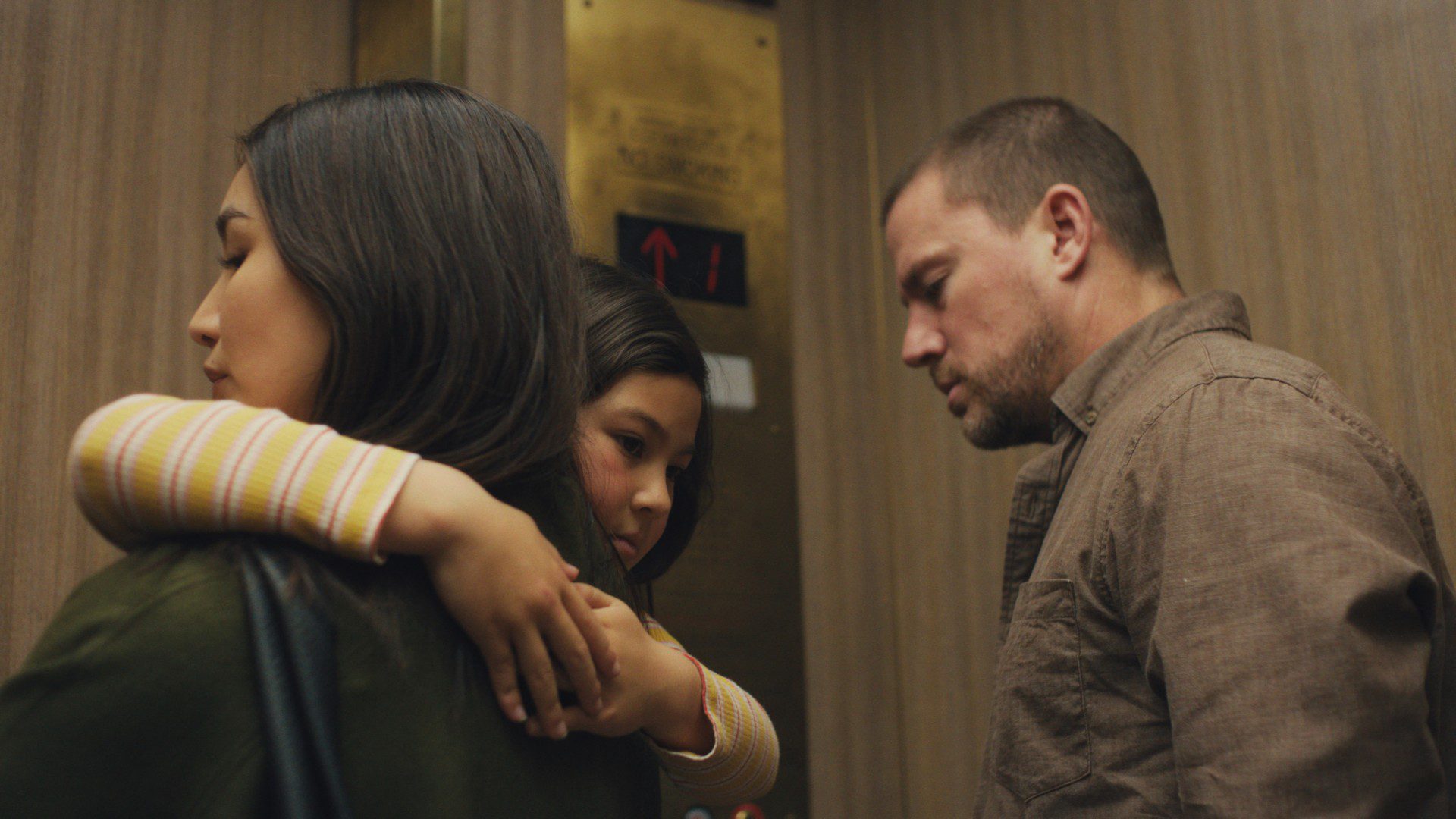
Inspirado nas experiências pessoais da diretora, Josephine acompanha a garota-título, interpretada pela ótima Mason Reeves, que com apenas oito anos, testemunha o estupro de uma corredora num parque estadunidense. Beth de Araújo trabalha a elaboração e o processamento psicológico do crime na criança e em sua estrutura familiar, evidenciando o enorme abismo que se abre quando a percepção de que nenhuma mulher está segura, nem mesmo aquelas que ainda são meninas, se torna real.
Beth de Araújo é frontal ao assumir a câmera como substituta dos olhos da pequena Josephine quando ela presencia a violência sexual. A diretora parece dilatar o tempo de ocorrência do crime como forma de representar a maneira pela qual a memória lida com determinadas experiências, já que a menina não teria permanecido muito tempo sozinha no parque, onde estava acompanhada do pai, Damien (Channing Tatum), para um jogo de futebol. Os trâmites burocráticos que se seguem – a chegada do pai, da polícia, o acolhimento da vítima, o reconhecimento do criminoso, a espera – são relevantes e apresentados em um tempo muito próximo do real, o que se mostra determinante para a leitura que a menina fará a partir dali.
Se, a princípio, Josephine não compreende plenamente o que testemunhou, a (falta de) elaboração, a oscilação e a incapacidade – extremamente compreensível – dos pais diante do que fazer e de como abordar o tema com a filha tornam-se gatilhos inevitáveis para seu comportamento. Ela passa a manifestar o trauma por meio de atitudes violentas diante de outras crianças, tanto na sala de aula quanto em casa, enquanto os pais, Damien e Claire (Gemma Chan), lidam com a situação de maneiras distintas, o que acaba confundindo ainda mais a menina. Para além da perturbação traumática, surge também o peso de uma decisão moral que recai sobre seus ombros infantis: sendo Josephine a única testemunha ocular do crime, deveria ela assumir esse papel diante dos tribunais para que a justiça seja alcançada?
É nesse dilema e no tratamento infantil do trauma que Josephine passa a apresentar muitos problemas, quase a ponto de tornar a experiência fílmica insuportável. A frontalidade e o cuidado com o tempo inicialmente assumidos por Beth de Araújo se perdem diante de uma cascata imediata de desdobramentos que não correspondem à digestão daquela dor íntima e psicológica, sobretudo no que diz respeito à própria Josephine.
Para um filme que se ancora no realismo, a credibilidade de certos comportamentos acaba cedendo lugar a uma necessidade de apenas preencher arcos dramáticos e conduzir a narrativa a destinos já esperados. A uma, mencione-se que, no mesmo dia em que Josephine testemunha o estupro, seus pais, num impulso, a levam a uma loja de brinquedos para que escolha o que quiser, com o evidente objetivo de distrair a criança. A menina opta por uma arma de brinquedo claramente não recomendada para sua idade. A duas, a garota passa a adotar uma postura defensiva contra todos os homens, incluindo o bebê que sua mãe espera, grávida, chegando a desferir socos em sua barriga.
Josephine tampouco resiste à obviedade de fazer a menina presenciar o sexo dos pais e, por esse motivo, voltar-se também contra Damien. Ainda que se compreenda e não se negue que feridas como essas provavelmente jamais se apaguem e sejam processadas de formas muito distintas por cada indivíduo, estamos aqui diante de uma criança que não possui o discernimento necessário e que precisa da proteção dos adultos – e do Estado – para compreender a própria experiência.
Nesse ponto, é perturbador como Josephine se apega à ideia de independência e individualismo na superação dessas cicatrizes. Repita-se: trata-se de uma menina de apenas oito anos, exposta a uma situação de risco, marcada por uma lesão de dimensão inexplicável e colocada, no entanto, em uma condição muito próxima de um abandono psicológico. Em determinado momento, Claire se dirige à filha para aconselhá-la de que somente ela, Josephine, poderá encontrar as ferramentas capazes de apaziguar os danos psicológicos que enfrenta. Ainda que seja possível destacar a maturidade precoce que inevitavelmente decorre da situação, há aqui dois perigos: a isenção de responsabilidade dos pais em seu dever de cuidado para com os filhos, que se concretiza justamente pela orientação e pela disponibilização dos instrumentos necessários para que as crianças compreendam suas dores, e, igualmente, a do Estado, enquanto entidade responsável por zelar pelo melhor desenvolvimento da criança e, de forma indireta, pela própria ocorrência do crime, na medida em que não foi capaz de proteger seus cidadãos.
Em que pese seja bastante interessante que haja incertezas e embates entre Claire e Damien, evidenciando a fragilidade dos adultos e a sensação de incapacidade de cumprir com seus deveres – e quiçá esse seja um dos pontos positivos do filme, que nos permite ver Channing Tatum como um homem um tanto perdido e impotente -, é muito evidente que muitos desses dilemas são inseridos em obediência a um roteiro que privilegia caminhos tortuosos apenas para provocar um efeito dramático específico, geralmente associado à crueza.
De fato, há de se reconhecer que a escolha de representar o estado psicológico da menina por meio de devaneios que a fazem imaginar que o estuprador está em seu quarto carrega um sentido lúdico capaz de expressar a confusão que uma criança pode enfrentar ao processar experiências chocantes. Entretanto, o bom gosto se esgota quando, em uma dessas alucinações, Josephine aparece no colo do criminoso.
De mais a mais, ao atribuir à criança, isto é, ao menor absolutamente incapaz, o dever de fazer a justiça, Josephine novamente isenta o Estado de sua responsabilidade punitiva, individualiza o ato e desprivilegia a coletividade que ele representa. Quando chegamos ao tribunal, a sensação que se impõe é a de que a criminosa é a própria menina, e não o estuprador. É inconcebível imaginar, em uma realidade jurídica minimamente responsável, que uma criança de oito anos ou a própria vítima sejam colocadas frente a frente com seus algozes. É igualmente revoltante que uma garota como Josephine seja submetida a uma pressão absolutamente incoerente com sua idade e com sua posição de testemunha diante da delicadeza daquela situação. Assistir à submissão da personagem ao que aqui se descreve é penoso, o que evidencia a irresponsabilidade do filme no tratamento dessa questão.
Josephine termina por produzir um efeito paradoxal. Ao pretender denunciar a violência de gênero e as marcas que ela imprime na infância, o filme acaba por reproduzir outras formas de violência simbólica ao deslocar para uma criança responsabilidades que pertencem aos adultos e às instituições. A experiência confunde denúncia com exploração dramática irresponsável, e a consequência é que o trauma, que deveria ser compreendido e acolhido, passa a ser instrumentalizado como dispositivo narrativo. Embora seja bonita a forma como a menina acolhe os pais diante do mar de indecisões e incertezas que enfrentam, a sensação final é inquietante: sob um olhar fílmico individualista, até mesmo a justiça se torna mais um peso depositado sobre os ombros de quem menos poderia carregá-lo.
English Review:
Being a woman in today’s world can indeed be something terrifying. Although feminist struggles have achieved significant victories and progressed so that today we can occupy the spaces we occupy, and although it is evident that there is still a long way to go in terms of equality, we watch, incredulous, the growth of femicides and violence against women. In 2025, Brazil set a record for assaults, reaching 21 million victims. Very recently, at the Public Security Forum held in March of this year, it was statistically observed that the country now records the highest number of femicides in the last ten years: in 2025, 1,568 women were murdered because of their gender.
At the level of global comparison, Brazil occupies the 5th position in violent deaths of women, according to data released by the Office of the United Nations High Commissioner for Human Rights (OHCHR). We are behind only El Salvador, Colombia, Guatemala, and Russia. Meanwhile, hateful discourses and movements such as the redpill, motivated by gender issues, circulate unpunished on the internet, forming communities that in fact preach, believe in, and disseminate misogyny, encouraging and normalizing the violence that results from it.
It can be seen that being subjected to this type of violence causes damage that goes far beyond those individual and physical harms that directly affect the victims. The entire collective that makes up a generation is dragged into the traumas of insecurity, shock, and fear, and it is inevitable that such deep wounds will also reverberate in the generations to come. Advances are accompanied by setbacks, and raising girls—future women—has today become a frightening challenge.
The consequences of the trauma of violence practiced against women, directly felt from a child’s point of view, drive Josephine, a film directed by Beth de Araújo, an American director with Brazilian citizenship, which competed for the Golden Bear at the 76th Berlinale and was the great laureate of the Sundance Festival, winning the jury and audience awards.
Inspired by the director’s personal experiences, Josephine follows the titular girl, played by the excellent Mason Reeves, who at only eight years old witnesses the rape of a runner in an American park. Beth de Araújo works on the elaboration and psychological processing of the crime within the child and within her family structure, highlighting the enormous abyss that opens when the perception that no woman is safe—not even those who are still girls—becomes real.
Beth de Araújo is frontal in assuming the camera as a substitute for the eyes of little Josephine when she witnesses the sexual violence. The director seems to dilate the time of the crime’s occurrence as a way of representing the manner in which memory deals with certain experiences, since the girl would not have remained alone in the park for very long, where she was accompanied by her father, Damien (Channing Tatum), for a soccer game. The bureaucratic procedures that follow—the arrival of the father, the police, the reception of the victim, the recognition of the criminal, the waiting—are relevant and presented in a time very close to the real one, which proves decisive for the interpretation the girl will make from that moment on.
If, at first, Josephine does not fully understand what she witnessed, the (lack of) elaboration, the oscillation, and the incapacity—extremely understandable—of the parents regarding what to do and how to address the subject with their daughter become inevitable triggers for her behavior. She begins to manifest the trauma through violent attitudes toward other children, both in the classroom and at home, while the parents, Damien and Claire (Gemma Chan), deal with the situation in different ways, which ends up confusing the girl even more. Beyond the traumatic disturbance, there also emerges the weight of a moral decision that falls upon her childish shoulders: since Josephine is the only eyewitness to the crime, should she assume this role before the courts so that justice may be achieved?
It is in this dilemma and in the childish treatment of trauma that Josephine begins to present many problems, almost to the point of making the film experience unbearable. The frontalness and the care with time initially assumed by Beth de Araújo are lost in the face of an immediate cascade of developments that do not correspond to the digestion of that intimate and psychological pain, especially with regard to Josephine herself.
For a film that anchors itself in realism, the credibility of certain behaviors ends up giving way to a need merely to fill dramatic arcs and lead the narrative toward already expected destinations. First, it should be mentioned that, on the same day Josephine witnesses the rape, her parents, on impulse, take her to a toy store so that she may choose whatever she wants, with the evident objective of distracting the child. The girl chooses a toy gun clearly not recommended for her age. Second, the girl begins to adopt a defensive posture against all men, including the baby her mother is expecting, pregnant, even going so far as to punch her stomach.
Josephine likewise does not resist the obviousness of making the girl witness the parents having sex and, for that reason, turn against Damien as well. Although one may understand and not deny that wounds like these will probably never fade and are processed in very different ways by each individual, we are here faced with a child who does not possess the necessary discernment and who needs the protection of adults—and of the State—to understand her own experience.
At this point, it is disturbing how Josephine clings to the idea of independence and individualism in overcoming these scars. Let it be repeated: this is a girl of only eight years old, exposed to a situation of risk, marked by an injury of inexplicable dimension and placed, nevertheless, in a condition very close to psychological abandonment. At a certain moment, Claire addresses her daughter to advise her that only she, Josephine, will be able to find the tools capable of appeasing the psychological damages she faces. Although it is possible to highlight the precocious maturity that inevitably results from the situation, there are here two dangers: the exemption of responsibility of the parents in their duty of care toward their children, which is realized precisely through guidance and the provision of the necessary instruments for children to understand their pains, and, likewise, that of the State, as the entity responsible for ensuring the best development of the child and, indirectly, for the very occurrence of the crime, insofar as it was not capable of protecting its citizens.
Although it is quite interesting that there are uncertainties and clashes between Claire and Damien, highlighting the fragility of the adults and the feeling of incapacity to fulfill their duties—and perhaps this is one of the positive points of the film, which allows us to see Channing Tatum as a somewhat lost and powerless man—it is very evident that many of these dilemmas are inserted in obedience to a script that privileges tortuous paths merely to provoke a specific dramatic effect, generally associated with crudeness.
Indeed, it must be recognized that the choice to represent the psychological state of the girl through daydreams that make her imagine that the rapist is in her room carries a playful meaning capable of expressing the confusion that a child may face when processing shocking experiences. However, good taste is exhausted when, in one of these hallucinations, Josephine appears sitting on the criminal’s lap.
Moreover, by attributing to the child—that is, to the absolutely incapable minor—the duty of bringing about justice, Josephine once again exempts the State from its punitive responsibility, individualizes the act, and deprioritizes the collectivity that it represents. When we reach the courtroom, the sensation that imposes itself is that the criminal is the girl herself, and not the rapist. It is inconceivable to imagine, in a minimally responsible legal reality, that an eight-year-old child or the victim herself would be placed face to face with their tormentors. It is equally revolting that a girl like Josephine be subjected to pressure absolutely incoherent with her age and with her position as a witness in the delicacy of that situation. Watching the character’s submission to what is described here is painful, which highlights the irresponsibility of the film in the treatment of this issue.
Josephine ends up producing a paradoxical effect. By intending to denounce gender violence and the marks it leaves on childhood, the film ends up reproducing other forms of symbolic violence by shifting onto a child responsibilities that belong to adults and institutions. The experience confuses denunciation with irresponsible dramatic exploitation, and the consequence is that trauma, which should be understood and embraced, comes to be instrumentalized as a narrative device. Although the way the girl embraces her parents in the face of the sea of indecisions and uncertainties they face is beautiful, the final sensation is unsettling: under an individualistic cinematic gaze, even justice becomes yet another burden placed upon the shoulders of those who least could carry it.


Crítica de cinema, formada pelo Talents Rio da Berlinale e Goethe Institut. Membra do júri da Latin American Critics Awards for European Films e da Comissão de Cinema da APCA (Associação Paulista de Críticos de Arte).