

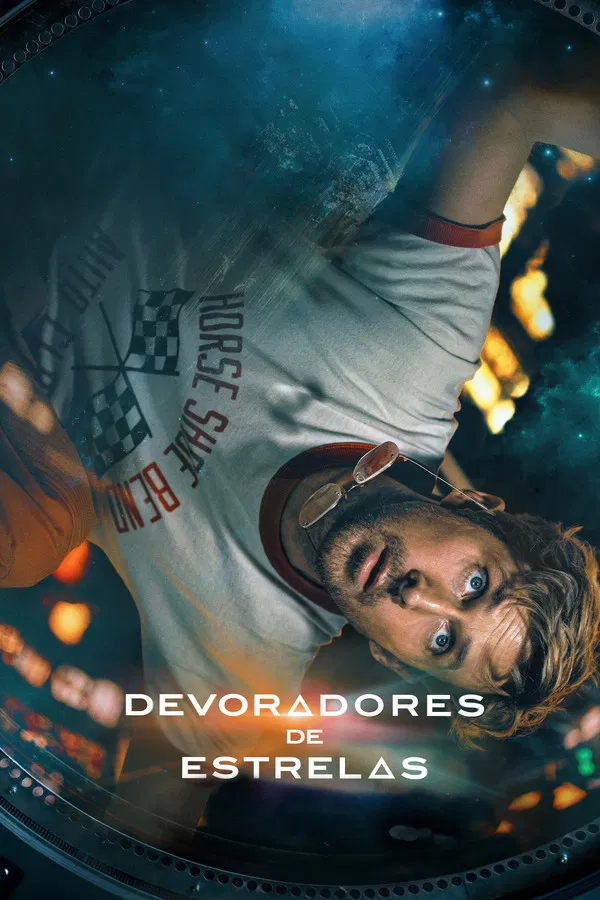
O primeiro grande blockbuster de 2026
Crítica em português
Sinto um prazer cinéfilo muito específico quando estou diante de uma obra ou de um artista que reconhece, com naturalidade e não mera referencialidade, que é o derivado de pioneiros que o antecederam. A criação repudia o vácuo artístico, é um processo de acumulação consciente ou não, e que desagua em um diálogo entre o fazer de antes e o de agora, entre como pensávamos e como pensamos. E este Devoradores de Estrelas, de Phil Lord e Christopher Miller (de Uma Aventura Lego e Anjos da Lei), parte do diálogo com o cânone da ficção científica e da reinvenção bem-humorada em uma narrativa ao mesmo tempo original à sua forma, e humilde o bastante para reconhecer suas origens.
O filme acena para um repertório clássico da ficção científica, de 2001: Uma Odisseia no Espaço a Contatos Imediatos do Terceiro Grau, de Contato e até A Chegada, enquanto narra a história do professor e cientista Ryland Grace (Ryan Gosland), que desperta a bordo de uma espaçonave, sem a lembrança de como parou ali ou da missão que deve realizar. As memórias retornam gradativamente para revelar que parasitas cósmicos – denominados astrofágicos – estão devorando o nosso Sol, diminuindo sua intensidade até provocar uma iminente era do gelo que resultará na extinção de parte significativa da população mundial. Neste cenário da exploração espacial e do temor apocalíptico, no qual tantos já se aventuraram com maior ou menor sucesso, Lord e Miller brincam como crianças reorganizando referências de maneira atraentemente juvenil e curiosa.
Essa leveza e irreverência, aliás, é talvez o traço mais recomendável de diretores, que transitaram a esta ficção científica de orçamento de aproximadamente $250 milhões, sem abdicar do que apresentaram nos trabalhos despojados de antes. É um filme que resgata um encantamento que tipos como Steven Spielberg ou Robert Zemeckis (nos melhores dias) produziam com naturalidade, um que reconhece o que está em jogo, a tensão existencial e os elementos dramáticos envolvidos, mas nem por isto abdica do humor como uma parte fundamental da experiência cinematográfica do blockbuster estadunidense.
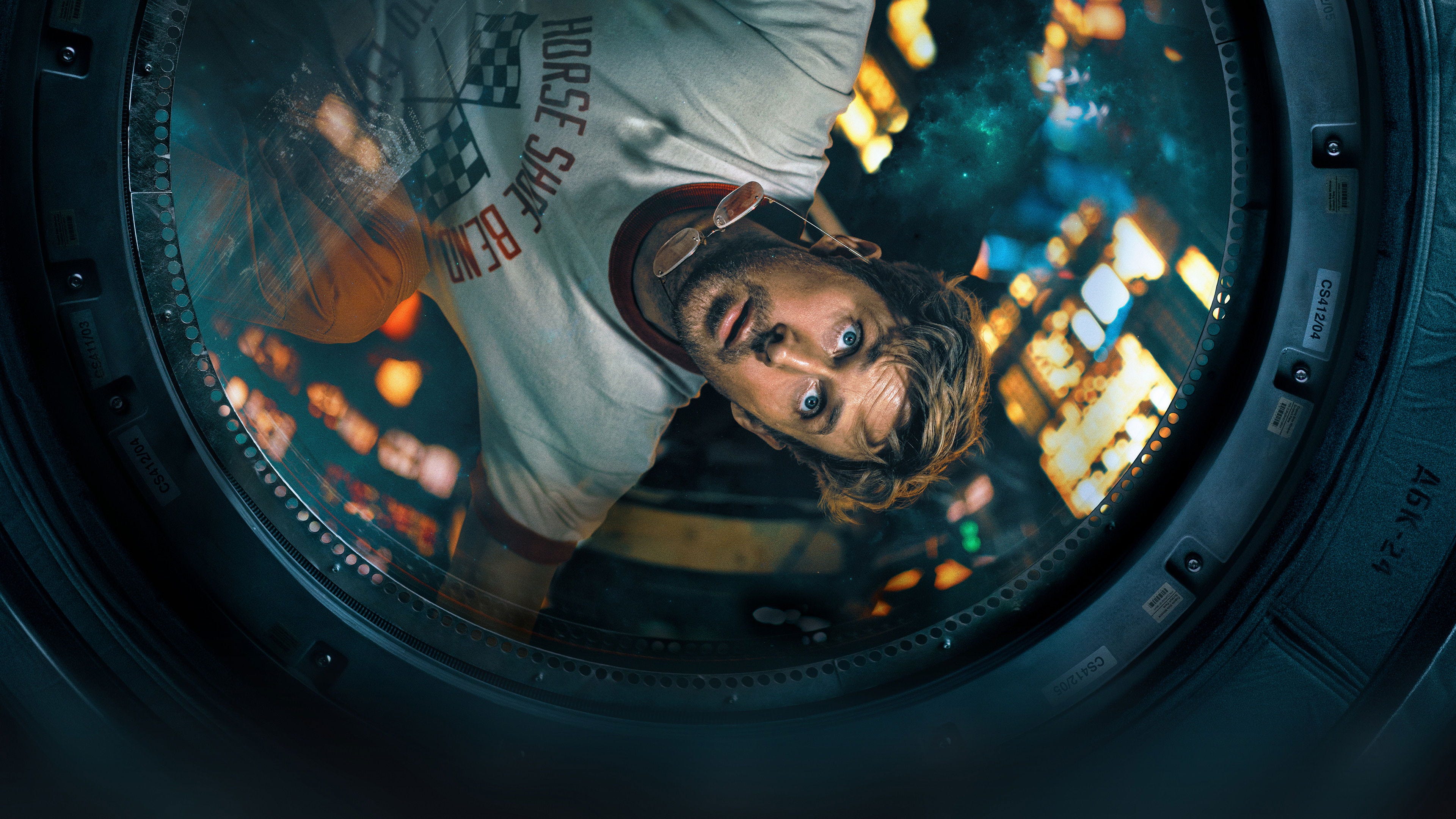
Muito disso se deve à atuação de Ryan Gosling, que sustenta com carisma inabalável, autoconfiança para rir de si mesmo e bastante humanidade, um equilíbrio sofisticado e essencial para o êxito do filme. O Dr. Grace é a estrela de um filme inevitavelmente expositivo: alguém que precisa explicar, às vezes até para si mesmo, não só a física ou teorias narrativas, mas mesmo o passado recente e as suas emoções. Nos flashbacks, descobrirmos como Grace integrou o projeto Hail Mary, encabeçado por Eva (Sandra Hüller), e cujo título tem o nome da jogada desesperada de futebol americano, aquele arremesso de dezenas de jardas que pode virar o resultado da partida; e nos diálogos, que verbalizam pensamentos e descobertas, reconstruímos a trajetória emocional do personagem. E, ainda assim, o filme não se fragiliza, como frequentemente acontece.
Gosling habita a exposição com humanidade. Ainda que o motivo de expor seja o de atender ao público-alvo deste projeto que não estaria confortável caso o personagem permanecesse em silêncio como se espera de alguém isolado, a dupla de diretores e o ator reconhecem humor na insegurança e exageram, de um jeito saudável (digamos), os excessos das descobertas de Grace. Ele não é o herói clássico; é, antes, um sujeito comum lançado em uma circunstância extraordinária. E depositar as experiências do futuro da humanidade em um professor e cientista, bem, é um ato louvável do roteiro.
(spoilers à frente) Essa humanidade encontra seu ápice na relação com o alienígena que cruza seu caminho, que batiza de Rocky, por ser aparentemente uma rocha viva (uma das decisões narrativas mais felizes do filme, aliás, é evitar antropomorfizá-lo). Aliás, a dinâmica entre os dois personagens enriquece ainda mais a narrativa, já que existe algo tocante nas trocas científicas e descobertas mútuas de seres que tentam a sua maneira salvar os seus respectivos mundos. Uma relação que havia sido antevista nas interações entre Grace e Carl (o excelente e generoso Lionel Boyce, de O Urso), na tentativa de resolver problemas aparentemente impossíveis, e que dependem de mais de uma cabeça estimular a outra a pensar além dos limites das certezas individuais ou do conhecimento científico. De certo modo, salvar a Terra ou Erid é só uma conclusão inevitável de um relacionamento entre diferentes construído no entendimento mútuo e na superação dos entraves de comunicação (aqui literalmente!). E em um mundo em que líderes dialogam através da força bruta, que bom assistir a um filme que convida à troca, não à guerra.
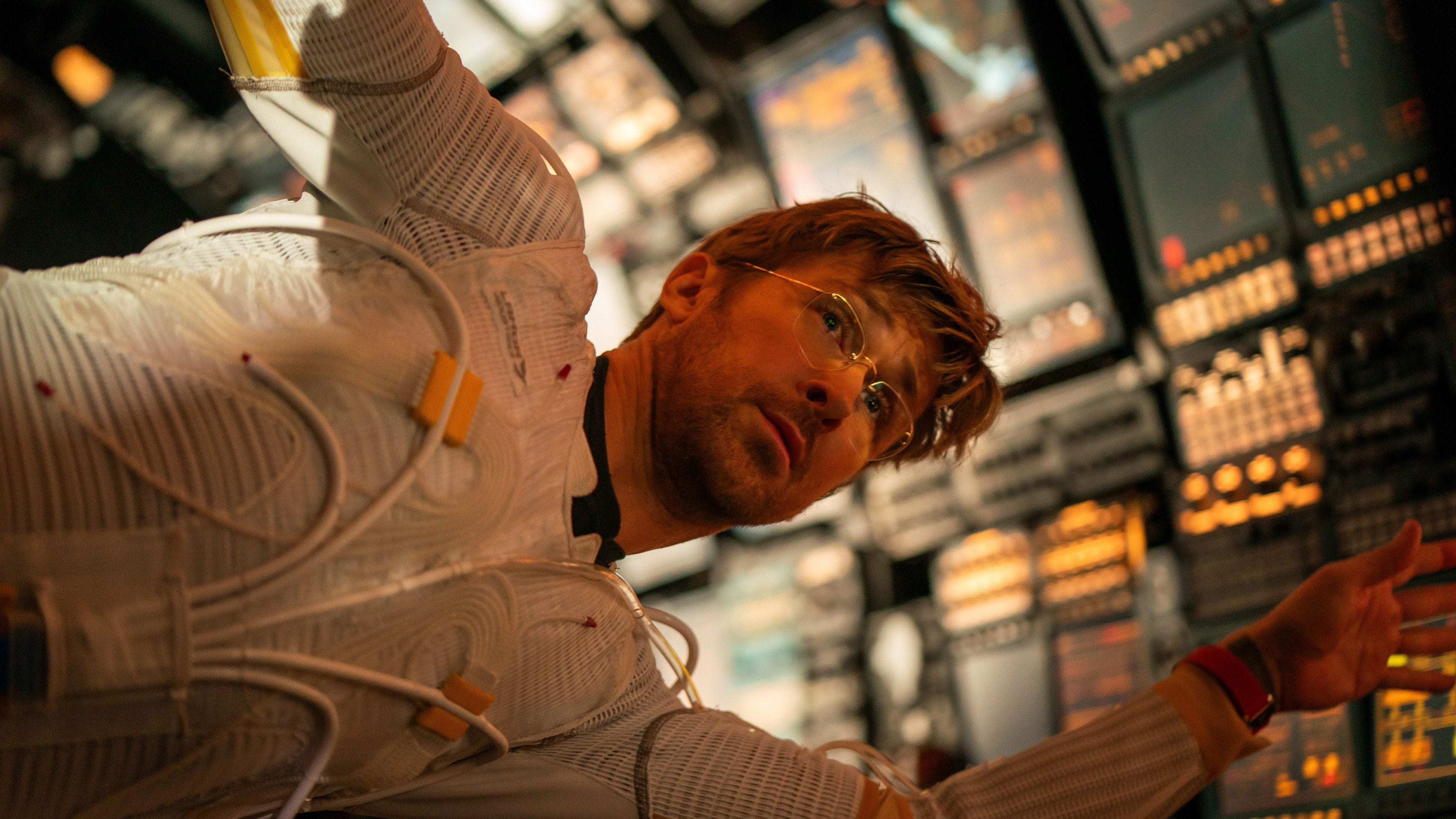
Também revelador da pretensão artística dos diretores é o fato de os efeitos especiais não assumirem o protagonismo. Mesmo quando mais arrebatadores, permanecem na condição de “coadjuvantes”, que cristalizam o mundo no qual de Grace, apesar de não usurparem a vida e alma da narrativa. São as ferramentas de construção, em vez de os substitutos da imaginação, bem como o elenco de apoio: a indicada ao Oscar Sandra Hüller, e a combinação de rigor e sensibilidade esperada de uma personagem em sua posição, e o dublador James Ortiz, que, como a voz do igualmente carismático Rocky, cria um personagem que será, facilmente, um dos mais lembrados da ficção científica contemporânea.
Contudo, nem funciona com a mesma organicidade. Para além da sensação de que o filme tem múltiplos finais, o resultado de múltiplos conflitos que surgem no terceiro ato e a demonstração da relutância dos diretores em se despedir de suas ideias ou de seus personagens, a estrutura do roteiro também me incomodou, na forma como seus flashbacks pipocam dentro da narrativa. Eu não quero afirmar que sejam irrelevantes, porque o papel da crítica não é especular sobre um filme que não existe (embora, sim, eu possa imaginar Devoradores de Estrelas sem os seus flashbacks funcionando tão bem quanto). O que posso afirmar é que os flashbacks não se integram de maneira fluida e natural ao presente narrativo: ou surgem como gatilhos para introduzir informações, ou para justificar decisões emocionais, e na maioria das vezes, travam a narrativa, em vez de impulsioná-la (igual fazem os astrofágicos.
Ainda assim, Devoradores de Estrelas é, acima de tudo, um filme que entende o valor do encantamento no entretenimento, ou a força da metáfora de aprendizado, colaboração e transformação a partir do encontro entre diferentes com um objetivo semelhante, e a importância do humor e da irreverência. Ao fazê-lo, Lord e Miller reconhecem uma característica essencial da ficção científica: o desconhecido não deveria inspirar mero medo ou ansiedade, mas curiosidade que nos impulsiona a saltar no vazio ou a agarrar os arremessos mais improváveis. Quem diria que o primeiro blockbuster do ano não é um que reinventa o gênero, mas que recorda a importância de brincar com os modelos já existentes para criar algo verdadeiramente original.
English Review
I feel a very specific cinephile pleasure when I am faced with a work or an artist who recognizes, naturally and not merely through referentiality, that they are derived from pioneers who came before them. Creation rejects the artistic vacuum; it is a process of accumulation, conscious or not, that flows into a dialogue between what was done before and what is done now, between how we used to think and how we think today. And this Project Hail Mary, by Phil Lord and Christopher Miller (of The Lego Movie and 21 Jump Street), emerges from a dialogue with the canon of science fiction and from a good-humored reinvention in a narrative that is at once original in its form and humble enough to acknowledge its origins.
The film gestures toward a classic science fiction repertoire, from 2001: A Space Odyssey to Close Encounters of the Third Kind, from Contact and even Arrival, while telling the story of professor and scientist Ryland Grace (Ryan Gosling), who awakens aboard a spaceship with no memory of how he got there or of the mission he must carry out. His memories gradually return to reveal that cosmic parasites, named astrophages, are devouring our Sun, reducing its intensity to the point of triggering an imminent ice age that will result in the extinction of a significant portion of the world’s population. In this scenario of space exploration and apocalyptic dread, one in which so many have ventured with varying degrees of success, Lord and Miller play like children rearranging references in an attractively youthful and curious manner.
This lightness and irreverence, in fact, may be the directors’ most commendable trait, as they transition into this approximately $250 million science fiction production without abandoning what they presented in their earlier, more relaxed works. It is a film that recaptures an enchantment that figures like Steven Spielberg or Robert Zemeckis, at their best, used to produce with ease; one that recognizes what is at stake, the existential tension and the dramatic elements involved, yet does not forgo humor as a fundamental part of the cinematic experience of the American blockbuster.

Much of this is due to Ryan Gosling’s performance, which sustains, with unwavering charisma, self-confidence to laugh at himself, and considerable humanity, a sophisticated balance that is essential to the film’s success. Dr. Grace is the star of an inevitably expository film: someone who needs to explain, sometimes even to himself, not only physics or narrative theories, but also the recent past and his own emotions. In the flashbacks, we discover how Grace became part of Project Hail Mary, led by Eva (Sandra Hüller), whose title refers to the desperate American football play, that throw of dozens of yards that can turn the outcome of a game; and in the dialogues, which verbalize thoughts and discoveries, we reconstruct the character’s emotional trajectory. And even so, the film does not weaken, as often happens.
Gosling inhabits the exposition with humanity. Even if the need to explain serves to meet the expectations of a target audience that would not feel comfortable if the character remained silent, as one might expect from someone in isolation, the directing duo and the actor recognize humor in insecurity and exaggerate, in a healthy way, the excesses of Grace’s discoveries. He is not the classical hero; he is, rather, an ordinary man thrown into extraordinary circumstances. And placing the fate of humanity in the hands of a teacher and scientist is, well, a commendable choice by the screenplay.
(spoilers ahead) This humanity reaches its peak in his relationship with the alien he encounters, whom he names Rocky, as it appears to be a living rock, one of the film’s happiest narrative decisions being to avoid anthropomorphizing him. The dynamic between the two characters further enriches the narrative, as there is something deeply touching in the scientific exchanges and mutual discoveries between beings trying, in their own ways, to save their respective worlds. A relationship that had already been foreshadowed in the interactions between Grace and Carl (the excellent and generous Lionel Boyce, from The Bear), in the attempt to solve seemingly impossible problems that require more than one mind pushing the other to think beyond the limits of individual certainty or scientific knowledge. In a way, saving Earth or Erid is merely the inevitable conclusion of a relationship between different beings built on mutual understanding and on overcoming communication barriers, here quite literally. And in a world where leaders communicate through brute force, it is refreshing to watch a film that invites exchange, not war.
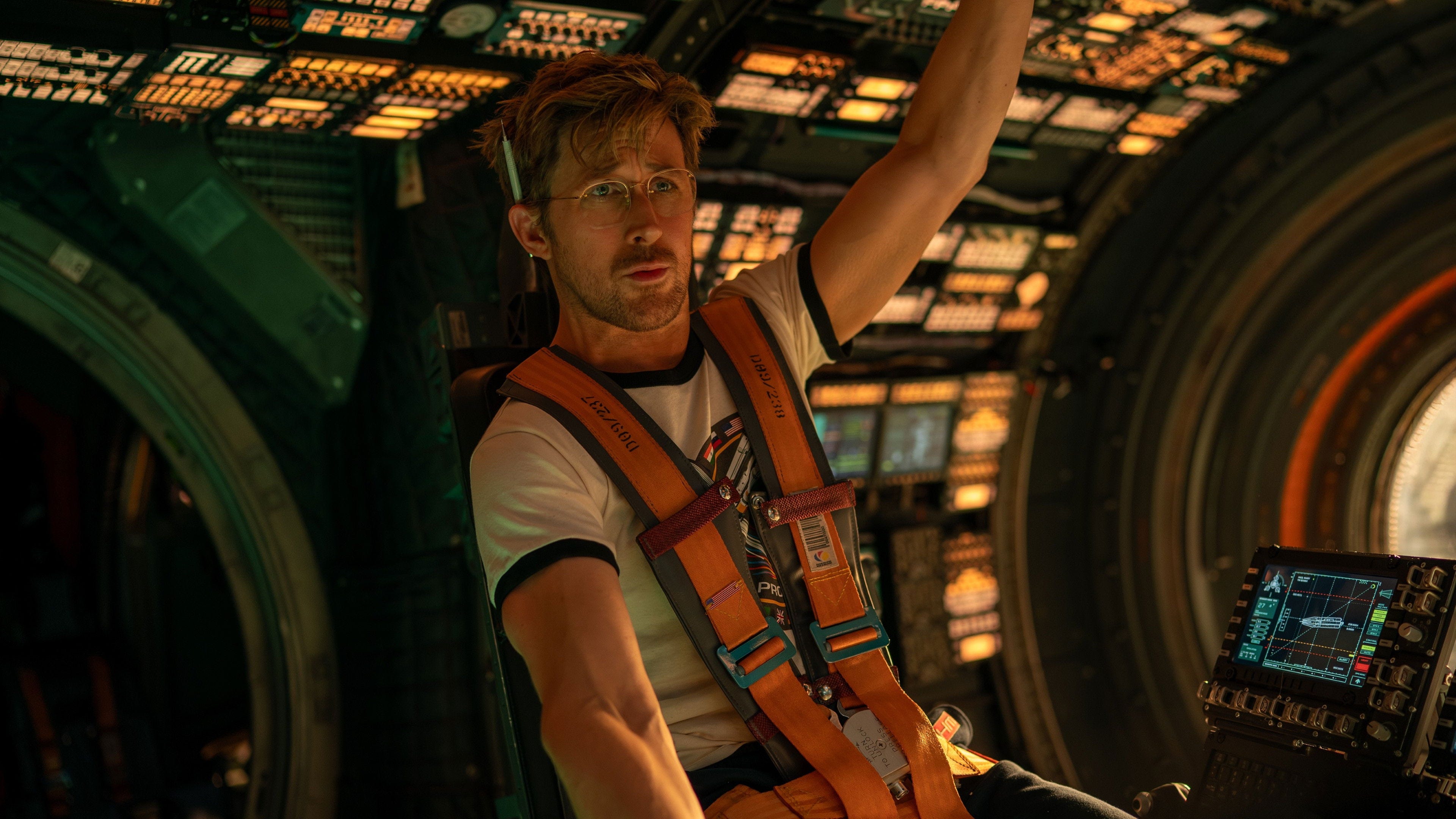
Also revealing of the directors’ artistic ambition is the fact that the special effects do not take center stage. Even at their most overwhelming, they remain in the position of supporting elements, crystallizing Grace’s world without usurping the life and soul of the narrative. They are tools of construction rather than substitutes for imagination, as is the supporting cast: Oscar nominee Sandra Hüller, combining rigor and sensitivity as expected from a character in her position, and voice actor James Ortiz, who, as the voice of the equally charismatic Rocky, creates a character that will easily be one of the most memorable in contemporary science fiction.
However, not everything works with the same organic quality. Beyond the sense that the film has multiple endings, the result of multiple conflicts that arise in the third act and the directors’ reluctance to part with their ideas or characters, the screenplay structure also bothered me in the way its flashbacks pop up throughout the narrative. I do not want to claim they are irrelevant, because the role of criticism is not to speculate about a film that does not exist, although I can imagine Project Hail Mary without its flashbacks working just as well. What I can say is that the flashbacks do not integrate in a fluid and natural way into the present narrative: they either appear as triggers to introduce information or to justify emotional decisions, and most of the time they stall the narrative rather than propel it, much like the astrophages do.
Even so, Project Hail Mary is, above all, a film that understands the value of enchantment in entertainment, the strength of the metaphor of learning, collaboration, and transformation through encounters between different beings with a shared goal, and the importance of humor and irreverence. In doing so, Lord and Miller acknowledge an essential characteristic of science fiction: the unknown should not inspire mere fear or anxiety, but curiosity that pushes us to leap into the void or to grasp the most unlikely throws. Who would have thought that the first blockbuster of the year would not be one that reinvents the genre, but one that reminds us of the importance of playing with existing models to create something truly original.

Crítico de cinema filiado a Critics Choice Association, à Associação Brasileira de Críticos de Cinema, a Online Film Critics Society e a Fipresci. Atuou no júri da 39ª Mostra Internacional de Cinema em São Paulo/SP, do 12º Fest Aruana em João Pessoa/PB, do 24º Tallinn Black Nights Film na Estônia, do 47º TIFF – Festival Internacional de Cinema em Toronto. Ministrante do Laboratório de Crítica Cinematográfica na 1ª Mostra Internacional de Cinema em São Luís (MA) e Professor Convidado do Curso Técnico em Cinema do Instituto Estadual do Maranhão (IEMA), na disciplina Crítica Cinematográfica. Concluiu o curso de Filmmaking da New York Film Academy, no Rio de Janeiro (RJ) em 2013. Participou como co-autor dos livros 100 melhores filmes brasileiros (Letramento, 2016), Documentário brasileiro: 100 filmes essenciais (Letramento, 2017) e Animação Brasileira – 100 Filmes Essenciais (Letramento, 2018). Criou o Cinema com Crítica em fevereiro de 2010 e o Clube do Crítico em junho de 2020.