
Crítica em português
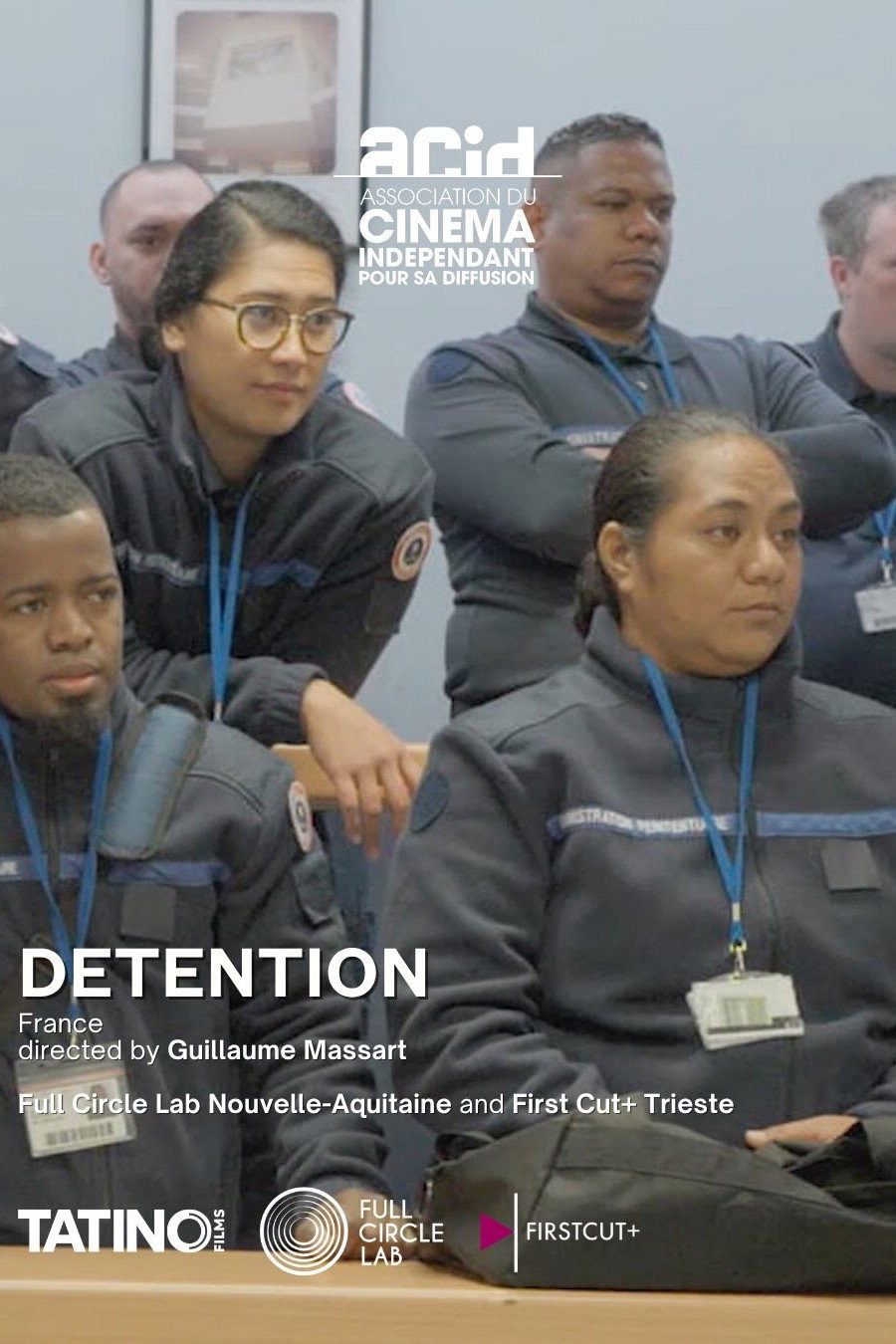
Durante o período entre abril e setembro de 2024, o diretor Guillaume Massart documentou a formação de agentes penitenciários no campus da Escola Nacional de Administração Penitenciária francesa, realizando, em Detention, um filme que claramente dialoga com a tradição observacional de Frederick Wiseman. Um cinema direto de observação menos interventora, no qual o papel do cineasta não é conduzir dramaticamente a realidade, mas de estabelecer os limites da imagem cinematográfica.
Massart pode decidir o posicionamento da câmera, o momento de início e término das filmagens, quais aulas teóricas ou práticas quer acompanhar e, sobretudo, o tempo de permanência para que cada sequência alcance o fim nela mesmo e em relação ao todo, que é o olhar à instituição. O juízo moral, por assim dizer, é deslocado à camada secundária da experiência, ao espectador, que internaliza, aos poucos, aquilo que o Estado francês ensina aos responsáveis por administrar pessoas encarceradas e, simultaneamente, como pretende preservar a dignidade humana dentro de uma estrutura essencialmente repressiva.
A sequência inicial, que se estende por cerca de 10 minutos, estabelece de forma rigorosa o projeto formal e conceitual do documentário em duas frentes complementares. Primeiro, pelo próprio conteúdo da cena, quando um instrutor exige que os alunos permaneçam em pé apesar do desconforto físico e da incompreensão de alguns deles, reforçando a necessidade de submissão ao regulamento penitenciário – neste aspecto, a obediência é uma palavra que passeia por praticamente todas as sequências, mas em um sentido para além do ato em si.
Segundo, pelo rigor cinematográfico de Massart, que estrutura o filme como uma sucessão de blocos observacionais separados por telas pretas que anunciam novas situações, quase como esquetes institucionais que se acumulam para formar um retrato fragmentado daquele universo. À medida que o tempo passa, percebemos que o filme pouco se interessa em individualizar aqueles homens e mulheres. Muitas vezes não sabemos seus nomes, tampouco os de seus instrutores; sabemos mais sobre o que pensam e sentem a respeito do trabalho ou da missão que irão desempenhar, a partir das intervenções, hesitações e olhares capturados pela câmera.
Em determinado momento, por exemplo, um dos agentes questiona a lógica do chamado “kit de boas-vindas” destinado aos presos – um conjunto básico de itens de higiene – ao considerar injusto que ele seja oferecido gratuitamente apenas aos detentos pobres, enquanto os demais precisam comprá-lo. Um comentário que não escapa à direção, porque revela uma reflexão relevante sobre igualdade, dignidade e a isonomia dentro do sistema prisional. E o filme se constrói justamente nesses atritos entre discursos institucional e individual, ou naquilo que escapa, por ex., a falta de disposição de uma interna em se defender apropriadamente durante um treinamento de legítima defesa.
Conforme a narrativa avança, conhecemos parte dos procedimentos que estruturam a função do guarda prisional: a conferência diária e a a contagem dos encarcerados; a vigilância realizada sem armas de fogo, cassetetes ou dispositivos de choque, sustentada sobretudo pela autoridade da voz e da postura corporal; os treinamentos de contenção física, nos quais os agentes aprendem que podem se defender ou até o que configura ataque ou defesa. Um princípio ético que retornará de maneira particularmente significativa na sequência penúltima, quando teoria e prática finalmente entram em contato direto, literalmente.
E o aspecto mais interessante do documentário é observar como esses profissionais são treinados para habitar permanentemente uma contradição: aplicar rigorosamente o regulamento, enquanto aprendem, ao mesmo tempo, a flexibilizá-lo o suficiente para preservar a ordem e a dignidade dos presos. Não por acaso, gosto particularmente de como alguns instrutores definem os encarcerados como os seus “colegas de trabalho”, porque a manutenção de uma prisão depende também de certo grau de adesão e obediência dos próprios detentos, e não apenas de uma lógica autoritária aplicada pura e simplesmente. Há, inclusive, instantes em que determinados instrutores enxergam avanços tecnológicos ou as concessões materiais aos presos não como ameaças à autoridade, mas como mecanismos capazes de reduzir tensões e tornar mais administrável um ambiente naturalmente explosivo, trazendo como exemplo os chuveiros e os telefones instalados nos interiores das celas.
Por outro lado, o documentário jamais romantiza a instituição. As críticas ao sistema emergem de maneira indireta, mas são contundentes ainda assim, sobretudo quando se menciona que a punição disciplinar máxima, que é a condução à unidade disciplinar (ou ao isolamento, pelo que entendi), é aplicada em mais da metade dos casos analisados. Ou quando se naturaliza a existência de um “percentual tolerável” de suicídios dentro do sistema penitenciário, uma expressão cuja própria formulação já carrega algo perturbador. São momentos em que o filme evidencia, por contraste, o quanto ainda existe de estruturalmente falho naquela engrenagem que retira do indivíduo um de seus atributos mais caros, a liberdade, e muitas vezes sem devolvê-los à sociedade dignamente, só com o prazo de validade para retornar.
Contudo, isso não está dentro do recorte da narrativa.
E é um dos elementos mais fascinantes em se tratando de cinema direto: o que está dentro ou fora do recorte. Porque ao dedicar-se ao ato de observar, sem intervir, o cineasta também modifica a maneira como comenta sobre aquela realidade e desloca, não toda, embora parte significa, ao espectador. E aí, chegamos à formatura, realizada sob uma chuva intensa e que parece funcionar como extensão direta da cena introdutória. Como se o filme sugerisse que permanecer em pé, resistir às adversidades, e obedecer à estrutura hierárquica rígida, fosse o começo, meio e fim de uma trajetória profissional inevitavelmente atravessada por dilemas morais. Um encerramento que desloca Detention para uma reflexão mais ampla não apenas sobre a ética do encarceramento, mas também sobre a própria ética do comentário, e de quem documenta.
O filme está na seleção da Mostra ACID do Festival de Cannes 2026.

English review
Between April and September 2024, director Guillaume Massart documented the training of prison officers at the campus of the French National School of Prison Administration, crafting, with Detention, a film that clearly dialogues with the observational tradition of Frederick Wiseman. It is a form of direct cinema rooted in less interventionist observation, in which the filmmaker’s role is not to dramatically steer reality, but rather to establish the boundaries of the cinematic image itself.
Massart may determine the camera’s position, the moment filming begins and ends, which theoretical or practical classes he wishes to follow, and, above all, the duration necessary for each sequence to find its own conclusion both internally and in relation to the whole, which is ultimately the film’s gaze upon the institution. The moral judgment, so to speak, is displaced to a secondary layer of the experience — onto the spectator — who gradually internalizes what the French state teaches those responsible for administering incarcerated individuals and, simultaneously, how it seeks to preserve human dignity within an essentially repressive structure.
The opening sequence, which stretches for roughly ten minutes, rigorously establishes the documentary’s formal and conceptual project along two complementary fronts. First, through the very content of the scene itself, when an instructor demands that the students remain standing despite physical discomfort and the incomprehension expressed by some of them, reinforcing the necessity of submission to prison regulations. In this regard, obedience becomes a word that permeates nearly every sequence, though in a sense extending beyond the act itself.
Second, through Massart’s own cinematic rigor, as he structures the film as a succession of observational blocks separated by black screens announcing new situations, almost like institutional sketches accumulating into a fragmented portrait of that universe. As time passes, we realize the film has little interest in individualizing those men and women. We often do not know their names, nor those of their instructors; what we learn instead is what they think and feel about the work or mission they are preparing to carry out, through the interventions, hesitations, and glances captured by the camera.
At one point, for instance, one of the officers questions the logic behind the so-called “welcome kit” offered to prisoners — a basic set of hygiene items — considering it unfair that it should be provided free of charge only to impoverished inmates, while the others must pay for it themselves. A remark that does not escape the direction of the film, because it reveals a relevant reflection on equality, dignity, and fairness within the prison system. And the documentary is constructed precisely through these frictions between institutional and individual discourse, or through what escapes them — for example, the reluctance of one trainee to properly defend herself during a self-defense exercise.
As the narrative progresses, we become acquainted with part of the procedures structuring the prison guard’s role: the daily inspection and inmate count; surveillance carried out without firearms, batons, or stun devices, sustained above all through the authority of voice and bodily posture; physical restraint training sessions, in which officers learn not only how to defend themselves, but even what constitutes attack or self-defense. An ethical principle that returns in particularly significant fashion during the penultimate sequence, when theory and practice finally collide directly — quite literally.
And the documentary’s most compelling aspect lies in observing how these professionals are trained to permanently inhabit a contradiction: to rigorously enforce regulations while simultaneously learning how to bend them just enough to preserve both order and the prisoners’ dignity. It is no coincidence that I am particularly struck by how some instructors define incarcerated individuals as their “co-workers,” because the maintenance of a prison also depends on a certain degree of adherence and obedience from the inmates themselves, and not merely on the pure and simple application of authoritarian logic. There are even moments when certain instructors perceive technological advances or material concessions to prisoners not as threats to authority, but as mechanisms capable of reducing tensions and making an inherently explosive environment more manageable, citing, for example, the installation of showers and telephones inside prison cells.
On the other hand, the documentary never romanticizes the institution. Criticism of the system emerges indirectly, though no less forcefully for that reason, particularly when it is mentioned that the maximum disciplinary punishment — transfer to the disciplinary unit (or solitary confinement, as I understood it) — is applied in more than half of the cases analyzed. Or when the existence of a “tolerable percentage” of suicides within the prison system is normalized, an expression whose very formulation already carries something deeply disturbing. These are moments in which the film reveals, through contrast, how much remains structurally flawed within a mechanism that strips individuals of one of their most precious attributes — freedom — and often fails to return them to society with dignity, only with an expiration date for release.
However, this lies outside the narrative’s chosen frame.
And this is one of the most fascinating elements of direct cinema: what remains inside or outside the frame. Because by devoting himself to the act of observing, without intervening, the filmmaker also transforms the way he comments on that reality, shifting — not entirely, though in significant part — that responsibility onto the spectator. And then we arrive at the graduation ceremony, held under torrential rain and seeming to function as a direct extension of the opening scene. As if the film were suggesting that standing upright, enduring adversity, and submitting to a rigid hierarchical structure were the beginning, middle, and end of a professional trajectory inevitably shaped by moral dilemmas. An ending that pushes Detention toward a broader reflection not only on the ethics of incarceration, but also on the very ethics of commentary — and of those who document.

Crítico de cinema filiado a Critics Choice Association, à Associação Brasileira de Críticos de Cinema, a Online Film Critics Society e a Fipresci. Atuou no júri da 39ª Mostra Internacional de Cinema em São Paulo/SP, do 12º Fest Aruana em João Pessoa/PB, do 24º Tallinn Black Nights Film na Estônia, do 47º TIFF – Festival Internacional de Cinema em Toronto. Ministrante do Laboratório de Crítica Cinematográfica na 1ª Mostra Internacional de Cinema em São Luís (MA) e Professor Convidado do Curso Técnico em Cinema do Instituto Estadual do Maranhão (IEMA), na disciplina Crítica Cinematográfica. Concluiu o curso de Filmmaking da New York Film Academy, no Rio de Janeiro (RJ) em 2013. Participou como co-autor dos livros 100 melhores filmes brasileiros (Letramento, 2016), Documentário brasileiro: 100 filmes essenciais (Letramento, 2017) e Animação Brasileira – 100 Filmes Essenciais (Letramento, 2018). Criou o Cinema com Crítica em fevereiro de 2010 e o Clube do Crítico em junho de 2020.