
Crítica em português
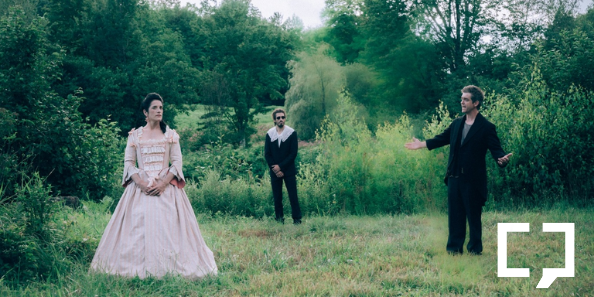
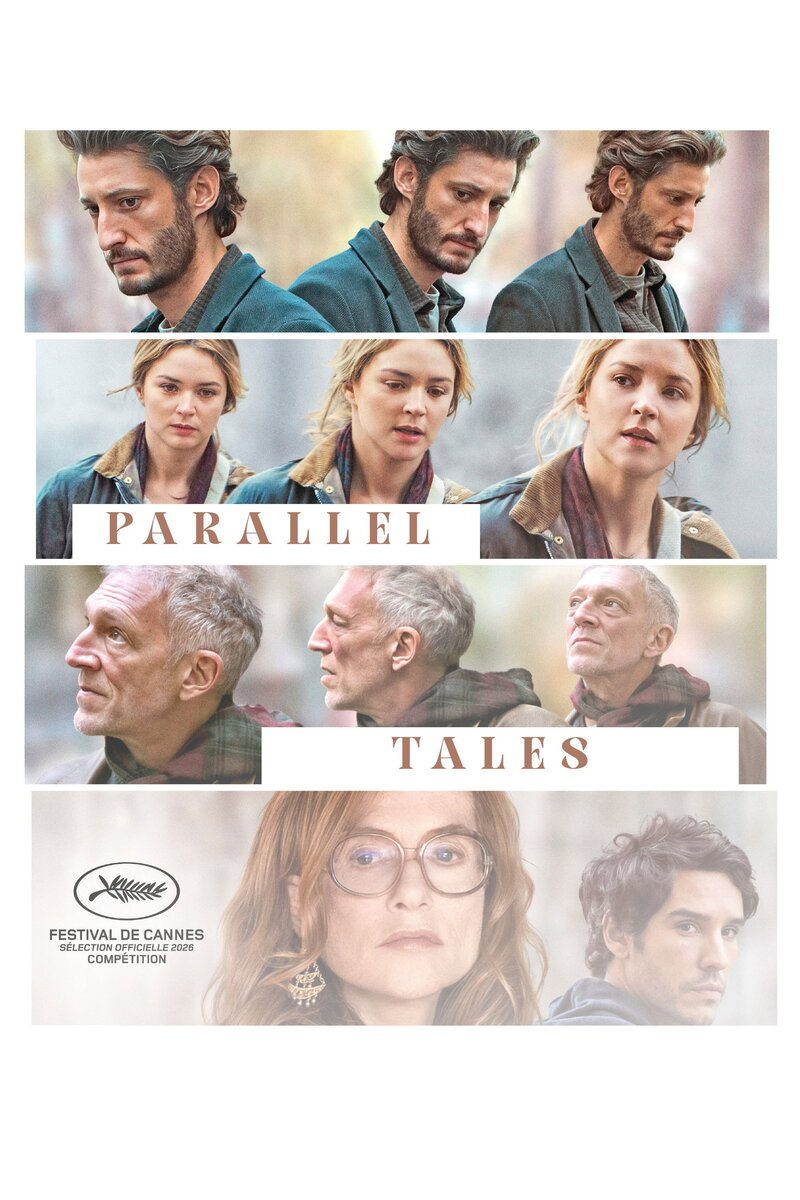
Após a polêmica em torno do roteiro de Um Herói e bem depois de transformar a dissolução da classe média iraniana na obra-prima A Separação, Asghar Farhadi desloca-se novamente para a França em Parallel Tales. Agora, o diretor está interessado na investigação dos limites entre olhar, observação, imaginação e fabricação do real, a partir da experiência de personagens que têm a vida entrelaçada por Adam (Bessa). Inspirado, obviamente, por Alfred Hitchcock e Janela Indiscreta, mas também por Krzysztof Kieślowski e o seu Decálogo, a narrativa transforma o elemento estruturante do cinema, o olhar e o voyeurismo, no que move a narrativa e as narrativas que criamos e imaginamos todos os dias, e que, para algumas pessoas, passam a se tornar o seu ganha-pão, a criação artística. E só somos capazes de criar a partir do mundo que enxergamos além de nossas janelas, ou para dentro da janela de nossa alma – o que não é o caso no filme.
O problema é que o resultado final parece fascinado demais pela própria arquitetura para perceber que os personagens, frequentemente, deixam de existir para além dela.
A protagonista Sylvie, interpretada por Isabelle Huppert, é uma escritora que, mesmo enfrentando um câncer de pulmão, tenta concluir o seu novo romance observando os vizinhos do outro lado da avenida. Da janela de seu apartamento, projeta sobre desconhecidos intrigas amorosas, tensões eróticas, fantasias de traição e violência, convertendo gestos banais em dramaturgia (convencional e datada, segundo a editora interpretada por Catherine Deneuve). Paralelamente, acolhe Adam, um homem socialmente marginalizado que dorme em abrigos, atravessa a cidade sem pagar metrô e carrega na aparência os sinais de abandono social. Sylvie passa a empregá-lo como uma espécie de assistente improvisado, numa relação ambígua em que compaixão, curiosidade e invisibilidade coexistem o tempo inteiro. E é curioso que Adam jamais seja interessante o bastante como são os vizinhos para inspirar alguma trama ou desdobramento da obra de Sylvie – o que é capaz de dizer muito sobre questões sociais sem precisar ser expositivo no processo.
É uma dinâmica que poderia produzir um filme moralmente complexo, sobretudo porque Farhadi sempre demonstrou enorme habilidade para transformar relações aparentemente ordinárias em dramas contundentes. Mas há algo estranhamente esquemático na maneira como Sylvie é concebida. Não porque lhe faltem oportunidades ou ambiguidades, mas porque parecem existir só como uma função temática. A ironia é que a personagem no roteiro de Farhadi se aproxima justamente do tipo de escrita que a própria editora critica. Sylvie é absorvida por pensamentos, por observações e lamentos silenciosos, por associações não ditas entre Adam e os ratinhos que decide abrigar, em vez de exterminar. Mas o filme não a compreende para além disto, mesmo que tenha uma atriz igual a Isabelle Huppert dando-lhe vida. Até a caracterização transversal, como o aparelho auditivo, simplesmente é descartada sem qualquer elaboração ou justificativa.
Do outro lado da rua estão Nita, e os irmãos Nico e Theo, interpretados respectivamente por Virginie Efira, Vincent Cassel e Pierre Niney, um trio que trabalha com foley – a criação artificial de sons para produções audiovisuais. E talvez esteja aí o aspecto mais interessante da narrativa: a forma como Farhadi espelha o trabalho sonoro e a ficção literária e cinematográfica. Se os personagens fabricam os sons dos animais ou da natureza utilizando legumes, lonas ou utensílios cotidianos, Sylvie fabrica as narrativas a partir dos fragmentos desconexos daquilo que vê pela janela. Em ambos os casos, trata-se do ato criativo de imaginar e encontrar equivalências, e atribuir dramaticidade ao cotidiano. No fim, toda representação do real já é uma forma de invenção, imaginação. Ou seja, não há realidade realidade, só mediada e transformada.
O problema é que o filme insiste tanto em sublinhar isso que acaba cansativo. Isto existe no didatismo simbólico – o ato de limpeza de um fogão que se transforma em inspiração – ou verborrágico, quando aprendemos as diferenças entre os humanos dos animais por pensar na morte e por criar histórias como forma de sobreviver no mundo em que estamos. São ideias legítimas, apresentadas com a solenidade de quem acredita estar formulando algo radicalmente novo em vez de apenas abraçar a natureza de thriller B, enriquecido com o pedigree e presença de artistas tarimbados.
Farhadi até tenta reproduzir parte da atmosfera contemplativa e melancólica associada a Kieślowski, ou de intriga típica de Hitchcock, nas sequências que borram os limites entre realidade e ficção, em que o real é construído a partir do que a ficção inspirou nos personagens. E onde começa o livre arbítrio e termina a imaginação. Contudo, a encenação raramente alcança a delicadeza necessária para sustentar tal ambiguidade discursiva. Ao contrário: o mecanismo é tão sinalizado que a sensação de descoberta desaparece; sem esta, também não há maior forma de reflexão, porque tudo é maquinação de um roteiro não para nos deixar livres para pensar mas para ligar os pontos.
Ainda assim, existem lampejos de brilhantismo, e isso não é incomum de um diretor talentoso como é Farhadi. A ideia de apaixonar-se pela maneira como alguém caminha, por exemplo, carrega uma dimensão profundamente poética na composição da sensível Nita; e é apenas uma pena que tanto Sylvie quanto os demais personagens não a percebam senão como uma mulher carregada de erotismo ou uma dama fatal, quando é muito mais do que isto. Também há algo interessante na presença de Adam, interpretado com uma estranho sentimento de delicadeza e risco. O personagem funciona simultaneamente como observador, intruso e catalisador, alguém que furta e absorve os outros e tenta ver o que isto pode provocar na realidade porque está aprendendo a se conhecer nela, creio que pela primeira vez.
O problema é que a narrativa não encontra o equilíbrio entre o tema em abstrato e o drama concreto. Os personagens parecem operar em registros diferentes, como se alguns pertencessem a um thriller hitchcockiano, outros a um melodrama de Kieślowski, outros ainda a um exercício narrativo metalinguístico sobre criação artística. Esta fragmentação desperdiça os medalhões que reuniu – não diferente do que aconteceu há alguns anos em Todos Já Sabem. E o colapso mais evidente surge quando o filme introduz uma cena de estupro já na reta final. Não apenas porque o acontecimento é abrupto – como pode ser na vida -, mas porque não há tempo, nem instrumentos para dar-lhe a devida atenção. A violência aparece quase como o momento artificial de tensão obrigatória que poderia haver num livro pé de chinelo, sem preparação e sem consequências verdadeiramente bem elaboradas, e não numa obra de Farhadi.
Apesar de o diretor discutir incessantemente a fabricação da realidade, o filme raramente convence como experiência humana concreta. É um filme cheio de personagens, mas não de indivíduos. Há inteligência, referências e até imagens genuinamente sofisticadas e evocativas, pois falamos de um dos maiores diretores contemporâneos, mas quase tudo soa excessivamente calculado, como se estivesse interessado em demonstrar o domínio dos mecanismos da ficção do que em permitir que os seus personagens escorreguem e delizem através dele.
Sim, somos todos voyeurs, o filme afirma; sim, todos nós criamos histórias sobre os outros que mal conhecemos; e sim, todos nós somos capazes de influenciar a vida do outro direta, ou indiretamente. A arte pode até nascer da observação da vida, mas às vezes a arte jamais se mostra capaz de capturar, plenamente, a experiência imprevisível, contraditória e poética do que é ser humano. E Parallel Tales é mais um que não conseguiu.
English review
After the controversy surrounding the screenplay of A Hero and long after transforming the dissolution of the Iranian middle class into the masterpiece A Separation, Asghar Farhadi once again relocates to France in Parallel Tales. This time, the director is interested in investigating the boundaries between gaze, observation, imagination, and the fabrication of reality through the experience of characters whose lives become intertwined by Adam (Bessa). Clearly inspired by Alfred Hitchcock and Rear Window, but also by Krzysztof Kieślowski and his Dekalog, the narrative transforms cinema’s foundational element – the gaze and voyeurism – into the force that drives both the story itself and the narratives we create and imagine every day, narratives that, for some people, become their livelihood: artistic creation. And perhaps we are only capable of creating from the world we perceive beyond our windows, or from the window into our own souls – though that is not quite the case here.
The problem is that the final result seems far too fascinated with its own architecture to realize that the characters frequently cease to exist beyond it.
The protagonist Sylvie, played by Isabelle Huppert, is a writer who, even while facing lung cancer, attempts to finish her new novel by observing the neighbors across the avenue. From the window of her apartment, she projects onto strangers romantic intrigues, erotic tensions, fantasies of betrayal, and violence, transforming mundane gestures into dramaturgy – conventional and dated dramaturgy, according to the editor played by Catherine Deneuve. At the same time, she takes in Adam, a socially marginalized man who sleeps in shelters, moves through the city without paying for the metro, and physically carries the marks of social abandonment. Sylvie begins employing him as a kind of improvised assistant in an ambiguous relationship where compassion, curiosity, and invisibility coexist at all times. It is curious that Adam is never considered interesting enough, unlike the neighbors, to inspire any subplot or development in Sylvie’s work – a detail capable of expressing much about social issues without ever becoming overtly didactic.
It is a dynamic that could have produced a morally complex film, especially because Farhadi has always demonstrated enormous skill in transforming seemingly ordinary relationships into devastating dramas. Yet there is something strangely schematic in the way Sylvie is conceived. Not because she lacks opportunities or ambiguities, but because they seem to exist solely as thematic functions. Ironically, Farhadi’s screenplay turns Sylvie into precisely the kind of writing her own editor criticizes. She is consumed by thoughts, observations, and silent lamentations, by unspoken associations between Adam and the mice she chooses to shelter rather than exterminate. But the film never understands her beyond this, even with an actress like Isabelle Huppert bringing her to life. Even transversal characterization elements, such as her hearing aid, are simply discarded without elaboration or justification.
Across the street are Nita, and the brothers Nico and Theo, played respectively by Virginie Efira, Vincent Cassel, and Pierre Niney, a trio who work with foley – the artificial creation of sounds for audiovisual productions. Perhaps this is where the narrative becomes most interesting: in the way Farhadi mirrors sound design with literary and cinematic fiction. If the characters fabricate the sounds of animals or nature using vegetables, tarps, and everyday utensils, Sylvie fabricates narratives from disconnected fragments of what she sees through the window. In both cases, the act of creation involves imagining, finding equivalences, and assigning dramatic weight to the ordinary. Ultimately, every representation of reality is already a form of invention, of imagination. There is no pure reality, only reality mediated and transformed.
The problem is that the film insists so heavily on underlining this point that it eventually becomes exhausting. This emerges through symbolic didacticism – a stove-cleaning scene transformed into artistic inspiration – or through verbose dialogue, when we are told that humans differ from animals because we contemplate death and create stories as a means of surviving the world we inhabit. These are legitimate ideas, but they are presented with the solemnity of someone convinced they are formulating something radically new rather than merely embracing the nature of a B-thriller enriched by the pedigree and presence of seasoned artists.
Farhadi attempts to reproduce part of the contemplative and melancholic atmosphere associated with Kieślowski, or the kind of intrigue typical of Hitchcock, particularly in sequences that blur the boundaries between reality and fiction, where reality itself becomes shaped by what fiction inspires within the characters. It becomes a question of where free will begins and imagination ends. Yet the staging rarely achieves the delicacy necessary to sustain such discursive ambiguity. On the contrary: the mechanism is signaled so insistently that the sensation of discovery disappears; and without discovery, there can be no deeper reflection, because everything becomes the machinery of a screenplay designed not to allow us freedom of thought but merely to connect predetermined dots.
Still, there are flashes of brilliance, which is hardly unusual for a filmmaker as talented as Farhadi. The idea of falling in love with the way someone walks, for instance, carries a deeply poetic dimension in the construction of the sensitive Nita; it is simply unfortunate that neither Sylvie nor the other characters perceive her as anything beyond an eroticized woman or a femme fatale when she is clearly much more than that. There is also something compelling in Adam’s presence, performed with a strange sense of delicacy and danger. The character functions simultaneously as observer, intruder, and catalyst, someone who steals from and absorbs others while attempting to see what this might provoke in reality because he is learning to recognize himself within it – perhaps for the first time.
The problem is that the narrative never finds balance between abstract themes and concrete drama. The characters seem to operate in entirely different registers, as though some belonged to a Hitchcockian thriller, others to a Kieślowskian melodrama, and others still to a metalinguistic exercise about artistic creation. This fragmentation wastes the extraordinary cast Farhadi assembled – not unlike what happened years ago in Everybody Knows. The most evident collapse arrives when the film introduces a rape scene near the very end. Not merely because the event is abrupt – as life itself can be – but because there is neither time nor the dramatic tools necessary to give it the attention it deserves. The violence appears almost like an artificial obligatory moment of tension that might exist in a cheap paperback novel, devoid of preparation and genuine consequences, rather than in a film by Farhadi.
Despite the director’s incessant discussion of the fabrication of reality, the film rarely convinces as a concrete human experience. It is a film full of characters, but not of individuals. There is intelligence, references, and even genuinely sophisticated and evocative imagery, after all we are speaking about one of the greatest contemporary filmmakers, yet almost everything feels excessively calculated, as though Farhadi were more interested in demonstrating mastery over the mechanisms of fiction than in allowing his characters to slip and drift through them.
Yes, the film insists, we are all voyeurs; yes, we all invent stories about people we barely know; and yes, we are all capable of influencing one another’s lives, directly or indirectly. Art may indeed emerge from the observation of life, but sometimes art proves incapable of fully capturing the unpredictable, contradictory, and poetic experience of being human. And Parallel Tales is another example of that failure.

Crítico de cinema filiado a Critics Choice Association, à Associação Brasileira de Críticos de Cinema, a Online Film Critics Society e a Fipresci. Atuou no júri da 39ª Mostra Internacional de Cinema em São Paulo/SP, do 12º Fest Aruana em João Pessoa/PB, do 24º Tallinn Black Nights Film na Estônia, do 47º TIFF – Festival Internacional de Cinema em Toronto. Ministrante do Laboratório de Crítica Cinematográfica na 1ª Mostra Internacional de Cinema em São Luís (MA) e Professor Convidado do Curso Técnico em Cinema do Instituto Estadual do Maranhão (IEMA), na disciplina Crítica Cinematográfica. Concluiu o curso de Filmmaking da New York Film Academy, no Rio de Janeiro (RJ) em 2013. Participou como co-autor dos livros 100 melhores filmes brasileiros (Letramento, 2016), Documentário brasileiro: 100 filmes essenciais (Letramento, 2017) e Animação Brasileira – 100 Filmes Essenciais (Letramento, 2018). Criou o Cinema com Crítica em fevereiro de 2010 e o Clube do Crítico em junho de 2020.