
Crítica em português
Depois de revisitar as ruínas históricas e emocionais da Europa do pós-guerra em Ida e Guerra Fria, o diretor polonês Paweł Pawlikowski retorna a um território parecido em Fatherland. Agora, o diretor desloca a investigação moral de suas obras anteriores para uma figura histórica cuja importância literária entra em conflito com a fragilidade afetiva do homem privado. Acompanhando o retorno de Thomas Mann à Alemanha em 1949, dezesseis anos após abandonar o país diante da ascensão nazista, a narrativa evita o mero retrato biográfico em favor de um estudo melancólico sobre culpa e impotência, algo que dialoga perfeitamente com o espírito do período. E retrata como discursos humanistas, por mais sofisticados que sejam, tornam-se insuficientes diante da deterioração íntima das relações familiares, ecoando a fragilidade das próprias relações humanas.
Já na sequência inicial, Pawlikowski estabelece o eixo dramático que atravessará toda a narrativa. Klaus (Diehl) aparece deitado em uma cama, falando ao telefone com a irmã Erika (Hüller), enquanto um homem desperta e se levanta ao seu lado. Essa encenação, como já é característico do cinema deste autor, evita ênfases dramáticas e deixa que a composição evidencie tudo o que é preciso sobre a dor e a solidão daquele personagem. A escolha de abrir o filme a partir de Klaus, antes mesmo de acompanhar Thomas Mann em seu retorno à Alemanha devastada, revela o eixo dramático de uma narrativa que atravessa leituras, coletivas de imprensa e discussões filosóficas para se encerrar no fracasso dele como pai.
Há uma ironia trágica no fato de Mann, premiado com o Nobel e o Goethe, revelar-se incapaz de proteger o filho da angústia existencial que sente, sendo literalmente aterrorizado pela presença fantasmática do filho como um lembrete cruel de sua impotência. Pawlikowski, porém, não parece interessado em um acerto de contas, mas em expor que, por trás de um monumento do pensamento, há uma carcaça frágil. E que valor possuem os escritos, discursos e reflexões de Mann se estes são incapazes de salvar da autodestruição aquele mais próximo de si? É um dilema que a narrativa insinua, mas não verbaliza, a não ser através de Erika, que comunica o aspecto emocional do mesmo modo que Ingrid Thulin fazia em Morangos Silvestres.
A comparação não é gratuita. Para além da caracterização semelhante entre Hanns Zischler e Victor Sjöström, Fatherland também encontra na relação entre pais e filhos, um dos temas centrais da obra de Ingmar Bergman, e no existencialismo um eixo dramático semelhante, que ainda se expressa através de sonhos. Em certo momento, Mann sonha estar presente ao velório do filho, observando-o de uma posição mais elevada, como se ocupasse um púlpito religioso, espaço onde a narrativa se encerra, inclusive. A passagem sintetiza com precisão a tragédia de um homem que contempla os demais de um ponto elevado, incapaz de descer ao sofrimento daquela cerimônia.
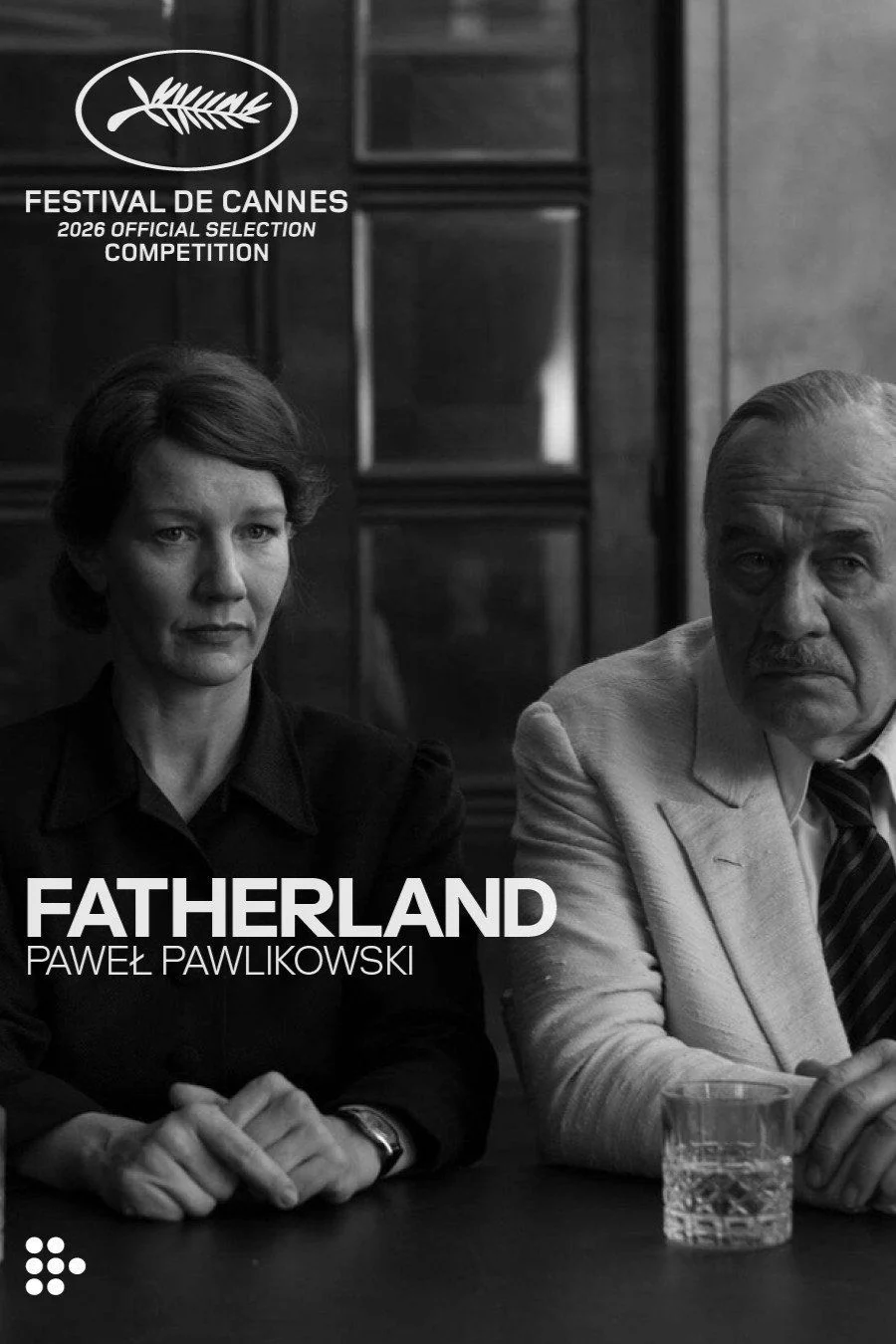
Formalmente, Fatherland preserva a tradição estética consolidada pela parceria entre Paweł e o diretor de fotografia Łukasz Żal, novamente apostando em um preto e branco bastante expressivo em um formato de tela 4:3, que evoca o período histórico, além de confinar os personagens dentro da imagem. Eles parecem comprimidos por enquadramentos rígidos que reforçam tanto a devastação material e espiritual da Alemanha quanto o aprisionamento daquela família.
Mas seria injusto reduzir o trabalho visual do filme a um formalismo decorativo. O que distingue o cinema de Paweł de tantos exercícios formais similares é justamente sua capacidade de utilizar a sofisticação estética como extensão emocional da narrativa. As imagens jamais existem para serem exclusivamente admiradas. Elas também expressam os conflitos internos dos personagens. As estátuas deterioradas que ocupam os jardins da residência, por exemplo, operam simultaneamente como símbolos da decadência europeia, enquanto refletem a própria ruína daqueles indivíduos.
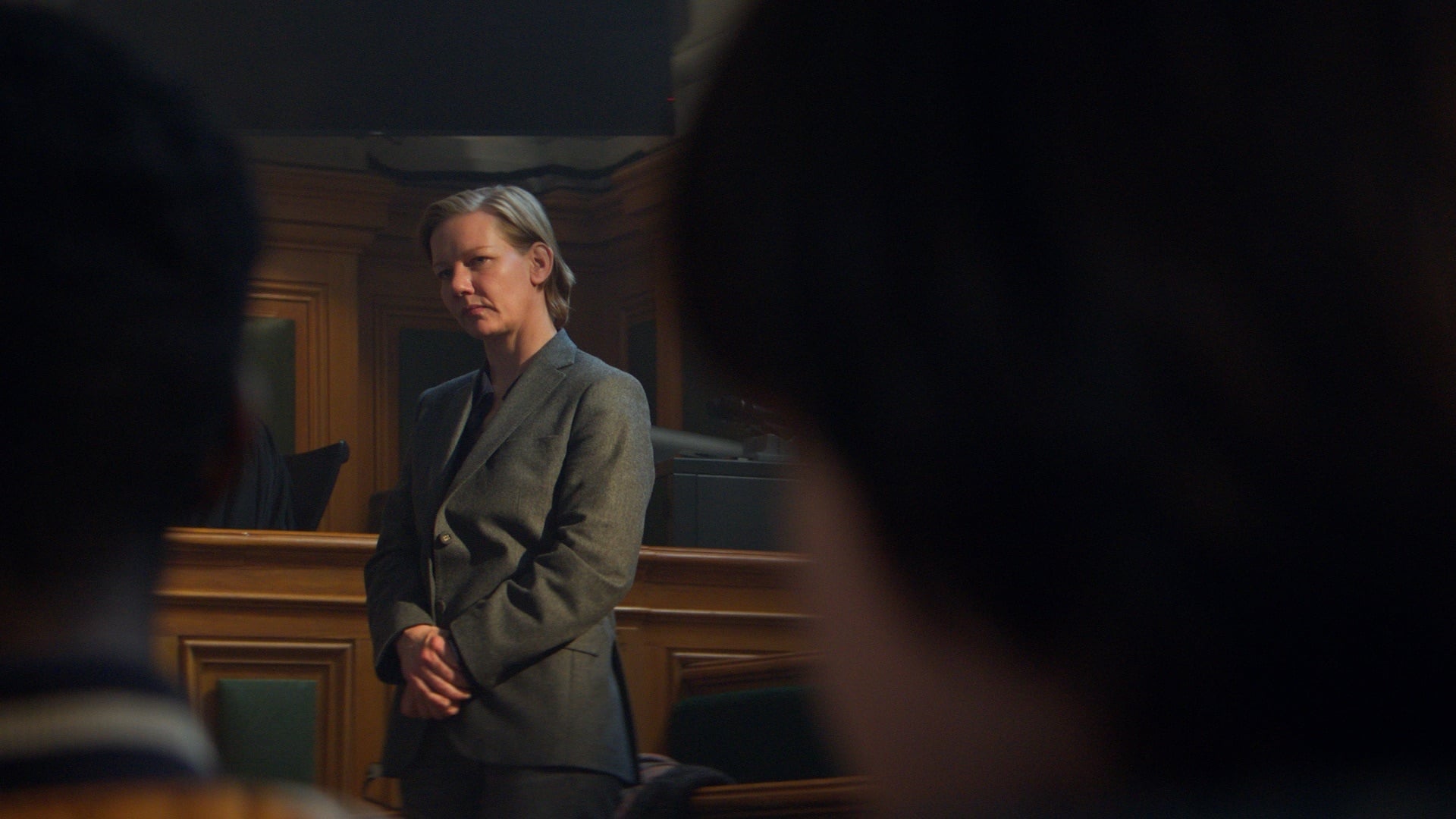
Sandra Hüller oferece uma atuação particularmente complexa em uma personagem que parece mediar a família e os mundos separados que coexistem na narrativa. Enquanto admira o pai, também ressente a sua distância. Ela compreende a sua importância histórica e não ignora o seu abandono afetivo. E, com exceção de um momento particular que funciona como a explosão de uma represa de contenção, Hüller evita o sentimentalismo fácil, porque aprendeu, com o tempo, a converter dor e saudade em sinais de uma maturidade precoce.
É por isso que a sequência na igreja alcança um impacto tão raro e contundente, não apenas porque é o momento em que Hanns Zischler pode experienciar o luto, mas porque tem a seu lado Hüller, que não precisa dizer nada além de sua presença. É uma cena que concilia, com rara precisão, a depuração formalista e a intensidade emocional. Pai e filha em um contra-plongée diante do órgão criam uma imagem que tensiona, inclusive, o realismo, já que a igreja na qual estão se encontra bastante deteriorada pelos ataques da Segunda Guerra Mundial. Só que isto já não é mais importante do que o restabelecimento de uma conexão afetiva que havia sido perdida, talvez para sempre.
Fatherland é, em última instância, um filme sobre insuficiência. A insuficiência da filosofia dos intelectuais diante do sofrimento social imposto pelos brutos; da memória diante da ruína da história; de um pai diante da dor dos filhos.
English review
After revisiting the historical and emotional ruins of postwar Europe in Ida and Cold War, Polish director Paweł Pawlikowski returns to similar territory in Fatherland. This time, however, he shifts the moral investigation of his previous works toward a historical figure whose literary importance clashes with the emotional fragility of the private man. Following Thomas Mann’s return to Germany in 1949, sixteen years after leaving the country in the face of the Nazi rise to power, the narrative avoids the conventional biographical portrait in favor of a melancholic study of guilt and impotence, something that perfectly resonates with the spirit of the period. It portrays how humanist discourses, no matter how sophisticated, become insufficient in the face of the intimate deterioration of family relationships, echoing the fragility of human connections themselves.
From its opening sequence, Pawlikowski establishes the dramatic axis that will run through the entire narrative. Klaus (Diehl) lies in bed speaking on the phone with his sister Erika (Hüller), while a man wakes up and rises beside him. This staging, as is characteristic of the director’s cinema, avoids dramatic emphasis and allows the composition itself to reveal everything necessary about the pain and loneliness surrounding that character. The decision to open the film through Klaus, before even accompanying Thomas Mann on his return to a devastated Germany, reveals the dramatic core of a narrative that moves through readings, press conferences, and philosophical discussions only to culminate in his failure as a father.
There is a tragic irony in the fact that Mann, recipient of both the Nobel and Goethe prizes, proves incapable of protecting his son from the existential anguish consuming him, while being literally haunted by the son’s ghostly presence as a cruel reminder of his own impotence. Pawlikowski, however, does not seem interested in a settling of accounts, but rather in exposing how, behind a monument of intellectual thought, there remains a fragile shell. And what value do Mann’s writings, speeches, and reflections truly possess if they are incapable of saving from self-destruction the person closest to him? It is a dilemma the narrative suggests without ever explicitly verbalizing, except through Erika, who conveys the emotional dimension in much the same way Ingrid Thulin did in Wild Strawberries.
The comparison is not accidental. Beyond the striking resemblance between Hanns Zischler and Victor Sjöström, Fatherland also finds in the relationship between parents and children, one of the central themes of Ingmar Bergman’s work, and in existentialism, a similar dramatic foundation that also manifests itself through dreams. At one point, Mann dreams of attending his son’s funeral, observing him from an elevated position, as though occupying a religious pulpit, the very space where the narrative ultimately concludes. The sequence precisely encapsulates the tragedy of a man who contemplates others from a higher ground, incapable of descending into the suffering contained within that ceremony.
Formally, Fatherland preserves the aesthetic tradition consolidated through the collaboration between Paweł and cinematographer Łukasz Żal, once again embracing a highly expressive black-and-white photography within a 4:3 aspect ratio that evokes the historical period while simultaneously confining the characters within the frame. They appear compressed by rigid compositions that reinforce both Germany’s material and spiritual devastation and the emotional imprisonment of that family.
Yet it would be unfair to reduce the film’s visual work to decorative formalism. What distinguishes Paweł’s cinema from so many similar formal exercises is precisely his ability to use aesthetic sophistication as an emotional extension of the narrative. The images never exist merely to be admired. They also express the characters’ internal conflicts. The deteriorating statues occupying the residence’s gardens, for instance, function simultaneously as symbols of European decadence while also reflecting the ruin of those individuals themselves.
Sandra Hüller delivers a particularly complex performance in a character who seems to mediate both the family and the separate worlds coexisting within the narrative. While she admires her father, she also resents his distance. She understands his historical importance and does not ignore his emotional abandonment. And, with the exception of one particular moment that erupts like the breaking of a containment dam, Hüller avoids easy sentimentality because she has learned, over time, to transform pain and longing into signs of premature maturity.
That is why the church sequence achieves such rare and devastating impact, not only because it is the moment when Hanns Zischler is finally able to experience grief, but because Hüller stands beside him, needing to communicate nothing beyond her mere presence. It is a scene that reconciles formal refinement and emotional intensity with remarkable precision. Father and daughter, framed in a contre-plongée before the organ, create an image that even stretches realism itself, since the church they inhabit remains heavily damaged by the bombings of World War II. Yet this no longer matters more than the restoration of an emotional connection that had been lost, perhaps forever.
Ultimately, Fatherland is a film about insufficiency. The insufficiency of intellectual philosophy before the social suffering imposed by brute forces; of memory before the ruins of history; of a father before the pain of his children.

Crítico de cinema filiado a Critics Choice Association, à Associação Brasileira de Críticos de Cinema, a Online Film Critics Society e a Fipresci. Atuou no júri da 39ª Mostra Internacional de Cinema em São Paulo/SP, do 12º Fest Aruana em João Pessoa/PB, do 24º Tallinn Black Nights Film na Estônia, do 47º TIFF – Festival Internacional de Cinema em Toronto. Ministrante do Laboratório de Crítica Cinematográfica na 1ª Mostra Internacional de Cinema em São Luís (MA) e Professor Convidado do Curso Técnico em Cinema do Instituto Estadual do Maranhão (IEMA), na disciplina Crítica Cinematográfica. Concluiu o curso de Filmmaking da New York Film Academy, no Rio de Janeiro (RJ) em 2013. Participou como co-autor dos livros 100 melhores filmes brasileiros (Letramento, 2016), Documentário brasileiro: 100 filmes essenciais (Letramento, 2017) e Animação Brasileira – 100 Filmes Essenciais (Letramento, 2018). Criou o Cinema com Crítica em fevereiro de 2010 e o Clube do Crítico em junho de 2020.