
Crítica em português
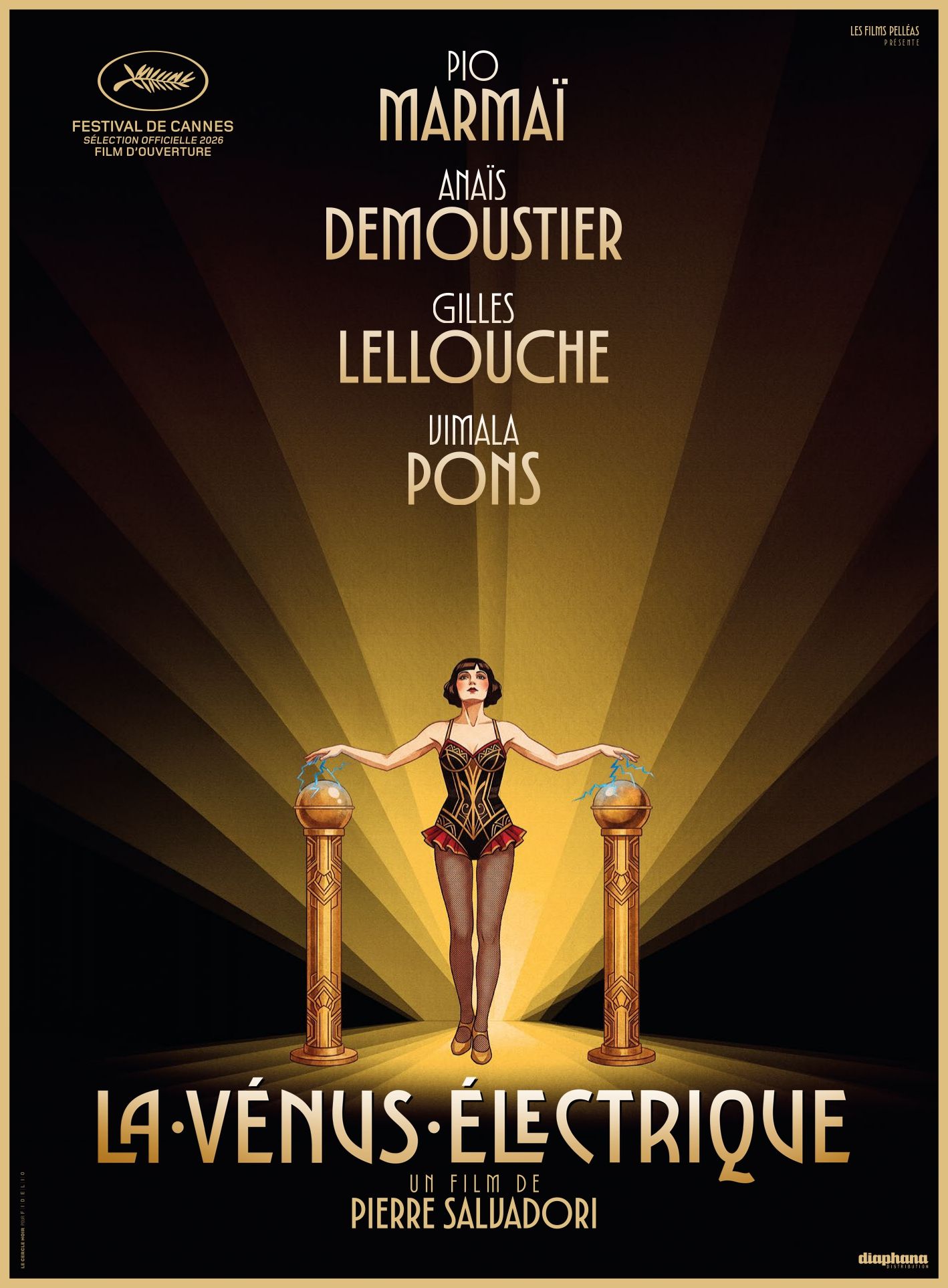
Desde que comecei a participar do Festival de Cannes, portanto há 5 anos, tenho sentimentos ambíguos com os filmes escolhidos para a abertura. Com exceção de Coupez!, todos os demais eram filmes quando não medíocres, ruins, o que me fazia questionar qual motivo de ainda vir participar deste primeiro dia, mesmo que me custasse algumas centenas de euros a mais. Então, você pode imaginar que minha expectativa era baixíssima (para falar a verdade, nem crio expectativas). Mas The Electric Kiss, ou La Vénus Électrique, no idioma original, é bonitinho em boa parte do tempo e até propôs algumas reflexões sobre narrativa e cinema, ao menos até cair no lugar-comum de quem não tem o estofo de bancar algumas escolhas difíceis.
Coerente com o contexto que explora, o de espetáculos circenses e vaudeville, o diretor Pierre Salvadori mostra-se interessado no engano, na artificialidade ou, mais precisamente, no caos criativo e cinematográfico provocado pela ilusão. A sua história rejeita o realismo tacanha e investe na beleza da invenção, que impulsiona a narrativa e a encenação.
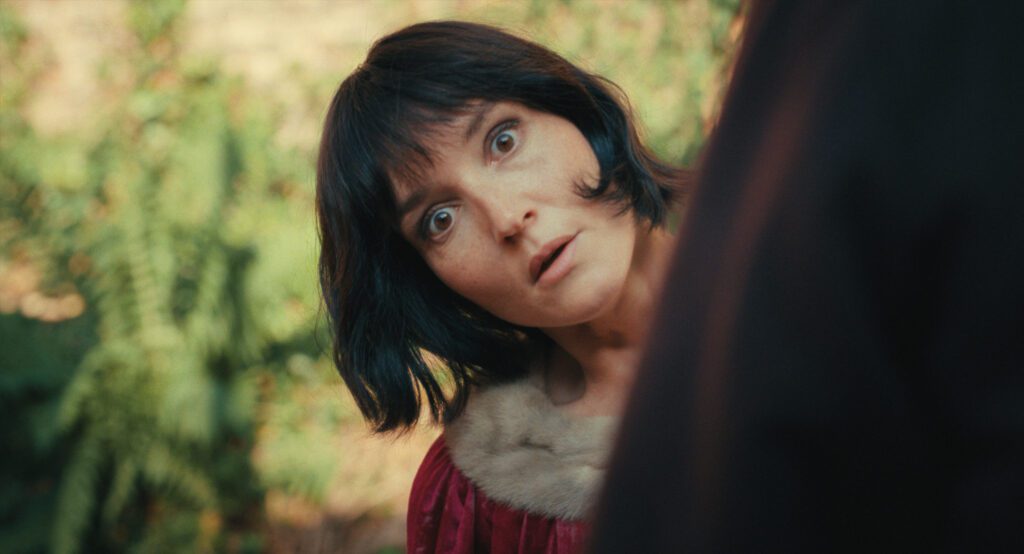
Ambientado na Paris de 1928, pensada e construída como um espaço de espetáculo, o filme acompanha Suzanne (Anaïs Demoustier), que trabalha em um circo como a Vênus Eletrificada. Com a corrente elétrica passando por seu corpo e marcas nas mãos que comprovam isso, Suzanne cobra 30 centavos para dar um beijo eletrificado na boca de homens. Insatisfeita com o que sobra da arrecadação antes de Titus, o dono do circo, deduzir a sua quota parte, Suzanne infiltra-se no camarim da médium Claudia e, involuntariamente, assume a identidade para atender Antoine (Pio Marmaï), um pintor paralisado emocionalmente e incapaz de pintar após a morte da sua esposa, Iréne (Vimala Pons). A partir desse encontro sustentado por uma fraude, Salvadori desenvolve uma comédia farsesca e romântica em que praticamente todos os personagens vivem através de algum tipo de engano.
A mentira, porém, não surge somente como dispositivo cômico. Ela orienta a percepção dos personagens sobre o mundo e si mesmos. É que Suzanne, em conluio com o curador Armand (Gilles Lelouche), finge receber Iréne em sessões mediúnicas a fim de estimular Antoine a voltar a pintar. Embora vítima de um engano, Antoine também mente, ou modifica a realidade quando ainda era um modelo ou, ainda, depois de se tornar um pintor pintando modelos. Ninguém existe fora de algum tipo de encenação ou performance. Assim, Salvadori cria uma relação interessante entre o vaudeville, a pintura e o cinema: todas essas formas exigem, em alguma capacidade, a fabricação de um olhar.
Daí, o filme constantemente evoca a ideia de moldura, recorte e fora de campo (que, aqui, pode ser entendido como fora do engano). Os recortes de Antoine, inspirados por Iréne, reorganizam os quadros originais em busca de imagens mais fortes, preservando nelas alguma incompletude ou mistério. Lembro imediatamente de André Bazin e sua célebre reflexão sobre como a moldura pictórica conduz o olhar para dentro, enquanto o quadro cinematográfico sugere um mundo que continua além dele. Salvadori parece interessado nessa tensão. Ou talvez eu esteja dando crédito em demasia a uma narrativa em que os personagens estão escondendo algo fora do enquadramento – desejos, traumas e interesses.
Isso aparece inclusive na estrutura narrativa. Há um momento particularmente expressivo quando Titus invade abruptamente o quarto de Suzanne enquanto estava lendo (e projetando) o diário de Iréne, interrompendo violentamente este ato, que apenas é retomada após sua saída. O gesto pode parecer pequeno, mas revela uma consciência formal bastante precisa sobre o ponto de vista e a interrupção do fluxo emocional. A narrativa está sempre à beira do precipício, já que, por se tratar de uma história baseada em fraudes, a expectativa é quando as verdades, que já conhecemos, virão à tona. Tem até um quê das comédias malucas (ou screwball), tanto na dinâmica de mal entendidos, quanto na guerra de sexos frequentemente desenvolvida no gênero.
Anaïs Demoustier, aliás, sustenta essa ambiguidade. Sua Suzanne é simultaneamente oportunista, vulnerável, afetiva e calculista, e o filme funciona melhor quando permite que todas essas dimensões coexistam sem simplificá-la (algo que inevitavelmente acontecerá). Porque o que torna a personagem interessante não é exatamente a mentira que ela conta, mas a maneira clichê como gradualmente a performance perde espaço para o sentimento.
É justamente aí, porém, que o filme também começa a evidenciar suas fragilidades. Existe um potencial muito forte para que a narrativa se torne uma reflexão mais amarga sobre as consequências estruturais da exploração masculina. Suzanne foi vendida pelo pai a Titus; Irene permanece aprisionada como figura idealizada dentro da memória masculina; mesmo o talento de Suzanne enquanto performer depende da validação e da mediação de homens que lucram com sua existência. Havia elementos para que o longa se aproximasse de uma espécie de conto cruel sobre mulheres obrigadas a fabricar ilusões para sobreviver no mundo dos homens…
… só que Salvadori hesita diante dessas implicações mais duras. Pouco a pouco, o filme abandona alguma acidez para acomodar-se numa lógica romântica mais confortável. Suzanne termina reduzida, em certa medida, à condição de mulher apaixonada, tentando conquistar o homem amado, enquanto Antoine – apesar de também mentir e até manipulá-la emocionalmente – preserva alguma posição moral, que é reconhecida pela narrativa. Enquanto as mulheres são condenadas por suas mentiras, acidental ou conscientemente, os homens mantém a posição inabalada (ainda que emocionalmente fragilizada).
Salvadori se interessa mais pela funcionalidade narrativa do engano, do que pelas suas circunstâncias ou implicações que inevitavelmente produz. Existe um filme mais ácido, mais melancólico e mais complexo, sufocado por um filme acomodado em convenções adocicadas, já validadas. A direção de arte merece elogios em recriar a Paris dos anos 1920, em particular na cena em que um artista sobe à plataforma elevada e a cidade ao fundo, criada por efeitos visuais, é revelada como se estivéssemos subindo junto a ele. Mas por mais que Salvadori demonstre paixão pelo artifício e pela artificialidade, ao se satisfazer pelo cômodo, termina por negar muito do que havia defendido.
English review
Ever since I started attending the Festival de Cannes five years ago, I’ve had mixed feelings about the films chosen to open the festival. With the exception of Coupez!, all the others were either mediocre or outright bad, which often made me question why I still insisted on coming for this first day, even if it cost me a few hundred extra euros. So you can imagine how low my expectations were (to be honest, I barely create expectations anymore). But La Vénus électrique — or The Electric Kiss, in English — is fairly charming for a good portion of its runtime and even proposes a few interesting reflections on narrative and cinema, at least until it falls back into the kind of convention embraced by films unwilling to commit to more difficult choices.
Consistent with the world it explores — circus attractions and vaudeville performances — director Pierre Salvadori seems fascinated by deception, artificiality or, more precisely, by the creative and cinematic chaos generated through illusion. His story rejects narrow realism and instead embraces the beauty of invention, which becomes the driving force behind both the narrative and the mise-en-scène.
Set in a version of 1928 Paris conceived as a permanent spectacle, the film follows Suzanne (Anaïs Demoustier), who works in a circus attraction as the “Electric Venus.” With electrical current running through her body and marks on her hands proving it, Suzanne charges thirty cents to give men an electrified kiss on the mouth. Dissatisfied with the tiny amount left after Titus, the circus owner, takes his cut, Suzanne sneaks into the dressing room of the medium Claudia and involuntarily assumes her identity in order to receive Antoine (Pio Marmaï), a painter emotionally paralyzed and unable to work since the death of his wife, Irène (Vimala Pons). From this encounter sustained by fraud, Salvadori develops a romantic farce in which nearly every character lives through some form of deception.
The lie, however, is not merely a comedic device. It shapes the way the characters perceive both the world and themselves. Suzanne, in collusion with the gallery owner Armand (Gilles Lellouche), pretends to channel Irène during séances in order to encourage Antoine to paint again. Yet even Antoine, supposedly the victim of this deception, also manipulates reality — first as a model and later as a painter who reshapes the people he paints. No one exists outside some form of staging or performance. In that sense, Salvadori creates an interesting relationship between vaudeville, painting and cinema itself: all of them require, in one way or another, the construction of a gaze.
As a result, the film constantly evokes ideas of framing, cropping and off-screen space — which here could almost be understood as existing outside the deception itself. Antoine’s cutouts, inspired by Irène, reorganize the original paintings in search of stronger images while preserving within them some degree of incompleteness or mystery. I immediately thought of André Bazin and his famous reflection on how the pictorial frame directs the eye inward while the cinematic frame suggests a world continuing beyond its borders. Salvadori seems interested in precisely this tension. Or perhaps I’m giving too much credit to a narrative in which the characters are simply hiding something outside the frame — desires, traumas and personal interests.
This even appears in the film’s structure. There is a particularly expressive moment when Titus abruptly invades Suzanne’s room while she is reading — and projecting herself into — Irène’s diary, violently interrupting the scene, which only resumes after his departure. It may seem like a small gesture, but it reveals a remarkably precise formal awareness regarding point of view and the interruption of emotional flow. The narrative constantly feels as though it is standing at the edge of collapse because, in a story built entirely on fraud, the anticipation lies in wondering when truths we already know will finally surface. There is even something faintly reminiscent of screwball comedies, both in the chain of misunderstandings and in the battle of the sexes so often embedded within that genre.
Anaïs Demoustier, meanwhile, sustains this ambiguity beautifully. Her Suzanne is simultaneously opportunistic, vulnerable, affectionate and calculating, and the film works best whenever it allows all these dimensions to coexist without simplifying her — something that will inevitably happen later on. Because what makes the character compelling is not exactly the lie she tells, but the rather clichéd way in which performance gradually gives way to genuine feeling.
And that is precisely where the film begins to reveal its weaknesses. There is enormous potential for the story to become a much harsher reflection on the structural consequences of male exploitation. Suzanne was sold by her father to Titus; Irène remains imprisoned as an idealized figure within male memory; even Suzanne’s talent as a performer depends on the validation and mediation of men profiting from her existence. The film contains all the necessary elements to become a cruel tale about women forced to manufacture illusions in order to survive in a man’s world…
… except Salvadori hesitates before embracing those darker implications. Little by little, the film abandons some of its sharpness in favor of a safer romantic logic. Suzanne ultimately becomes reduced, to a certain extent, to the role of a woman in love trying to win over the man she desires, while Antoine — despite also lying and emotionally manipulating her — retains a certain moral position validated by the narrative itself. While women are condemned for their lies, whether accidental or deliberate, the men remain comparatively unshaken, even if emotionally fragile.
Salvadori seems far more interested in the narrative functionality of deception than in the circumstances or implications it inevitably produces. There is a sharper, sadder and more complex film suffocated beneath one satisfied with already validated sentimental conventions. Still, the production design deserves praise for recreating 1920s Paris, particularly in the sequence where an artist climbs an elevated platform and the digitally constructed cityscape behind him is revealed as though we ourselves were ascending alongside him. But as much as Salvadori demonstrates a genuine passion for artifice and artificiality, by ultimately settling for the comfortable, he ends up betraying much of what the film initially appeared to defend.

Crítico de cinema filiado a Critics Choice Association, à Associação Brasileira de Críticos de Cinema, a Online Film Critics Society e a Fipresci. Atuou no júri da 39ª Mostra Internacional de Cinema em São Paulo/SP, do 12º Fest Aruana em João Pessoa/PB, do 24º Tallinn Black Nights Film na Estônia, do 47º TIFF – Festival Internacional de Cinema em Toronto. Ministrante do Laboratório de Crítica Cinematográfica na 1ª Mostra Internacional de Cinema em São Luís (MA) e Professor Convidado do Curso Técnico em Cinema do Instituto Estadual do Maranhão (IEMA), na disciplina Crítica Cinematográfica. Concluiu o curso de Filmmaking da New York Film Academy, no Rio de Janeiro (RJ) em 2013. Participou como co-autor dos livros 100 melhores filmes brasileiros (Letramento, 2016), Documentário brasileiro: 100 filmes essenciais (Letramento, 2017) e Animação Brasileira – 100 Filmes Essenciais (Letramento, 2018). Criou o Cinema com Crítica em fevereiro de 2010 e o Clube do Crítico em junho de 2020.