
Crítica em português
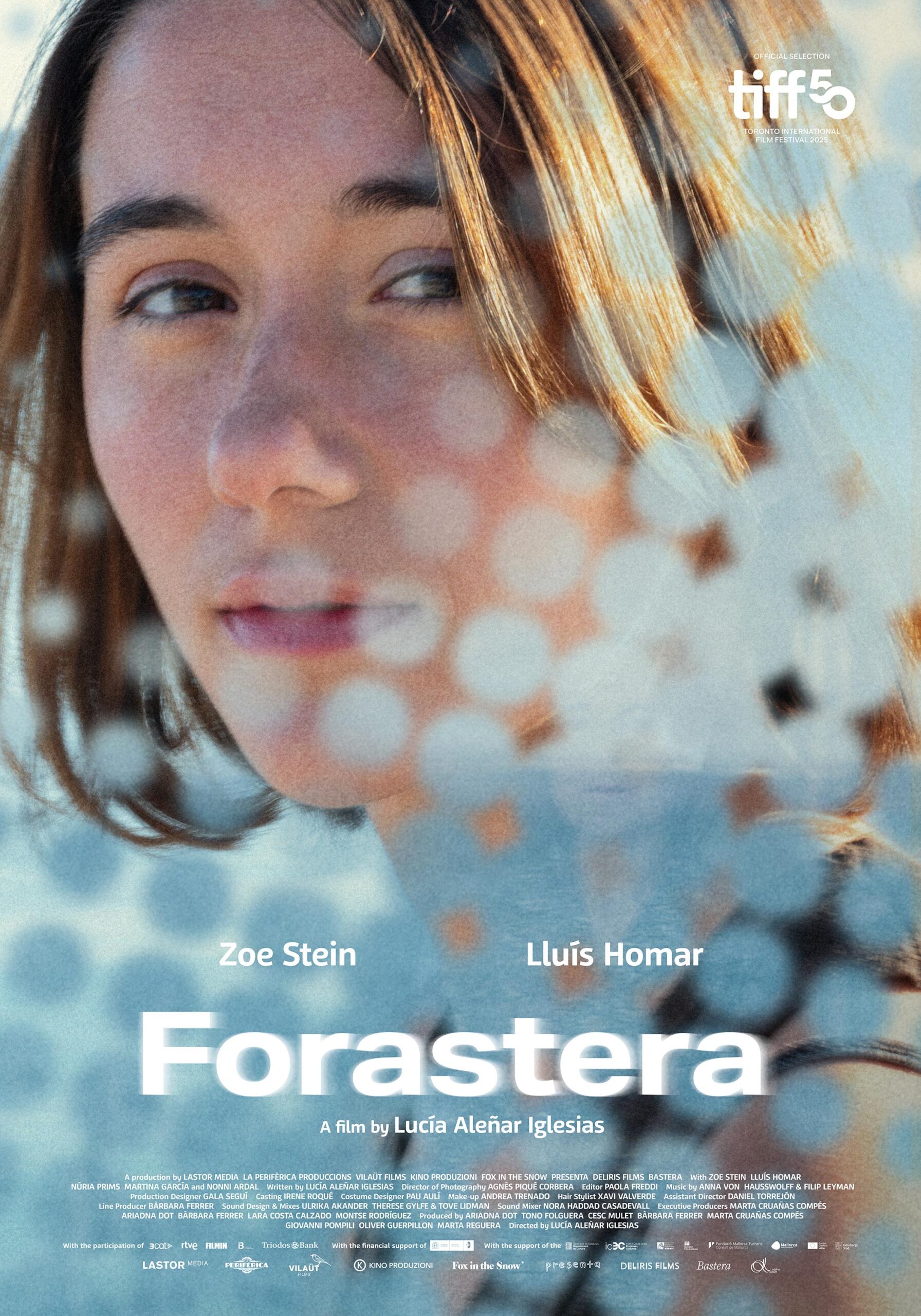
Entre os muitos filmes sobre amadurecimento produzidos todos os anos, crescer é o sinônimo de acumular experiências, atravessar rituais de passagem socialmente reconhecíveis ou de perder a inocência. Raros filmes compreendem que amadurecer é aprender a conviver com ausências e compreender que algumas perdas não podem ser preenchidas, que não podemos trapacear o nosso caminho através do luto, apenas incorporá-lo em nossas vidas. É nesse território fértil e delicado, entre o luto e a construção de uma identidade ainda em formação e aprendizado, que se situa Forastera, a estreia na direção de um longa-metragem de Lucía Aleñar Iglesias.
Ambientado na ilha espanhola de Mallorca, o filme acompanha Cata (Zoe Stein), uma adolescente que passa a temporada de verão junto aos avós, e ao lado da irmã mais nova. Os primeiros momentos são marcados pela leveza característica das narrativas joviais: o mergulho nas águas do Mediterrâneo, as provocações e os afetos entre as irmãs e os flertes amorosos com um turista nórdico. Existe uma sensação de tempo suspenso típica da adolescência, como se o verão pudesse durar indefinidamente e tivéssemos todo o tempo do mundo para a realização dos nossos sonhos e desejos e para as nossas despedidas. A morte súbita da avó Catalina interrompe a aparente estabilidade e transforma a narrativa em algo muito mais complexo do que um relato sobre perda familiar.
O que torna Forastera particularmente interessante é a recusa em transformar o luto em um processo verbalizado pelas regras comuns do melodrama. Lucía confia na capacidade do espectador de preencher os espaços vazios deixados pela narrativa e pela própria protagonista. Cata não possui respostas para aquilo que sente, tampouco sabe a dimensão do vazio deixado pela avó, e o filme tampouco se preocupa em nos fornecer todos os elementos para compreendermos exatamente os mecanismos internos da personagem. Em vez disso, a diretora constrói uma experiência em que o sofrimento se manifesta por meio de comportamentos que oscilam constantemente entre a inocência e algo ligeiramente perturbador.
Esse movimento encontra sua expressão mais significativa quando a jovem passa a ocupar simbolicamente o espaço deixado pela avó. O que, inicialmente, é feito através de pequenas mentiras à irmã ou no telefone, fingindo ser uma outra pessoa, gradualmente evoluiu num processo mais profundo de apropriação. Cata veste as roupas da avó, utiliza seus pertences e passa a habitar espaços que anteriormente pertenciam à figura ausente. O vestido vintage que antes rejeitava transforma-se em uma segunda pele. Não demora para que Cata ache meios de tentar amenizar a dor do avô reproduzindo a avó.
Há algo simultaneamente afetuoso e inquietante na dinâmica, embora o filme nunca apresenta esse comportamento como um sintoma patológico nem como uma manifestação sobrenatural de possessão, digamos. Ao contrário, prefere permanecer em uma zona ambígua onde o amor, a saudade e o desejo de pertencimento tornam-se praticamente indistinguíveis. O título, que significa “estrangeira”, passa então a adquirir múltiplos sentidos. Cata é uma forasteira dentro do próprio processo de amadurecimento, e tenta abreviá-lo saltando o processo emocional que o envolve. Ao mesmo tempo, torna-se uma presença estranha dentro da própria família, alguém que começa a ocupar um espaço que não lhe pertence, e que provoca apreensão na sua mãe, que tem um relacionamento problemático com o pai.
Essa relação entre identidade e ausência encontra um equivalente formal sofisticado na construção visual do longa. Embora a ação se passe em um apartamento privilegiado, com vista para o mar e cercado pela luminosidade do verão mediterrâneo, a diretora opta por enquadramentos frequentemente marcados por espaços apertados. Portas, corredores ou obstáculos criam quadros dentro do quadro, fragmentando a imagem, tal como parece estar fragmentada a personalidade de Cata, e criam ainda a sensação de confinamento, que contrasta imediatamente com o mundo exterior vasto.
É uma escolha particularmente inteligente porque transforma a encenação em uma extensão da subjetividade da protagonista. Enquanto o mar, o céu e os espaços abertos sugerem a liberdade, os enquadramentos insistem em lembrar-nos da existência de barreiras invisíveis. Nisto, é curioso que Cata rejeite a experiência de dirigir, justo aquela que, para os jovens de sua idade, confere a liberdade prometida pela maturidade. Cata habita simultaneamente dois mundos: o da adolescência e o da maturidade disfarçada, mas que esbarra na barreira do real.
Nesse sentido, Forastera aproxima-se menos dos dramas convencionais sobre luto e até mais de determinadas histórias de fantasmas. E não porque existam aparições propriamente ditas ou que a luminária oscilante queira significar algo além da corrente elétrica irregular, é que o filme compreende que a morte raramente elimina uma presença, especialmente uma muito querida. Muitas vezes ela a torna ainda mais intensa. A avó permanece influenciando os vivos através de hábitos, objetos, lembranças e ressentimentos familiares que continuam circulando pelos corredores daquela casa. O fantasma que assombra a narrativa não é sobrenatural, mas emocional.
Essa dimensão torna-se mais relevante na maneira como o filme observa as tensões entre gerações. Ao testemunhar a relação conturbada entre a mãe e o avô, Cata acredita ser capaz de reparar feridas utilizando os recursos limitados de sua compreensão emocional. Existe uma generosidade tocante nessa tentativa, mas também uma ingenuidade que o filme examina com sensibilidade. Afinal, uma das descobertas mais dolorosas do amadurecimento consiste em perceber que nem todos os conflitos podem ser resolvidos pelo chave do afeto, por mais genuíno que ele seja.
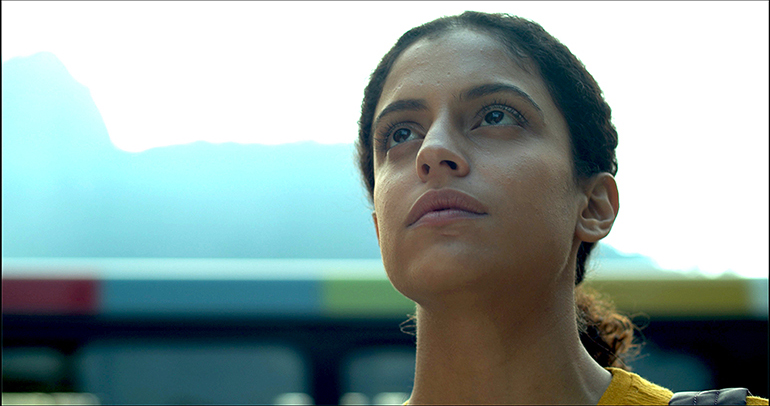
Boa parte da força dramática do filme repousa sobre a interpretação extraordinariamente contida de Zoe Stein. A atriz evita qualquer tipo de demonstração emocional expressiva, construindo uma personagem cuja transformação ocorre quase inteiramente através de sutis mas marcantes alterações de olhar e comportamento. Sua atuação compreende algo fundamental sobre o luto adolescente: que se manifesta como confusão antes de se revelar como tristeza. Lucía Iglesias revela sua confiança no poder do olhar e da sugestão, recusando soluções explicativas – na maior parte do tempo – que poderiam reduzir a complexidade emocional de Cata.
Premiado com o FIPRESCI no Festival Internacional de Cinema de Toronto – um júri do qual tive a oportunidade de integrar no longínquo 2022 -, Forastera encontra sua qualidade justamente nessa capacidade de transformar um processo íntimo de luto em uma reflexão mais ampla sobre amadurecimento. E vice-versa. O filme sugere que crescer talvez signifique aceitar que determinadas ausências jamais serão preenchidas. O máximo que podemos fazer é aprender a conviver com elas, carregando-as conosco como parte inseparável daquilo que nos tornamos. Entre fantasmas emocionais, corredores estreitos e silêncios cuidadosamente observados, Lucía Aleñar Iglesias realiza um estudo delicado e introspectivo sobre a maneira como a perda nos transforma em estranhos para nós mesmos, antes de nos permitir descobrir quem realmente somos.
English Review
Among the many coming-of-age films produced each year, growing up is often treated as a matter of accumulating experiences, crossing socially recognized rites of passage, or losing one’s innocence. Few films understand that maturity is really about learning to live with absences and accepting that some losses cannot be filled—that we cannot cheat our way through grief, only learn to incorporate it into our lives. It is within this fertile and delicate territory, situated between mourning and the construction of an identity still in formation, that Forastera, Lucía Aleñar Iglesias’ feature directorial debut, finds its place.
Set on the Spanish island of Mallorca, the film follows Cata (Zoe Stein), a teenager spending the summer with her grandparents alongside her younger sister. The opening passages are marked by the lightness characteristic of youthful narratives: swimming in the Mediterranean waters, teasing and affection between siblings, and romantic flirtations with a Nordic tourist. There is a sense of suspended time that feels uniquely adolescent, as though summer might last forever and there would always be enough time to fulfill our dreams and desires—and to postpone our goodbyes. The sudden death of Catalina, Cata’s grandmother, shatters that apparent stability and transforms the film into something far more complex than a simple account of familial loss.
What makes Forastera particularly compelling is its refusal to turn grief into a process articulated through the familiar rules of melodrama. Aleñar Iglesias trusts the audience’s ability to fill in the empty spaces left by both the narrative and its protagonist. Cata has no clear answers for what she is feeling, nor does she fully grasp the magnitude of the void left by her grandmother, and the film itself shows little interest in providing us with all the pieces necessary to decode her inner mechanisms. Instead, the director constructs an experience in which suffering manifests itself through behaviors that constantly oscillate between innocence and something faintly unsettling.
This movement finds its most significant expression when the young girl begins to symbolically occupy the space left behind by her grandmother. What initially takes the form of small lies—to her sister or over the telephone, pretending to be someone else—gradually evolves into a deeper process of appropriation. Cata wears her grandmother’s clothes, uses her belongings, and inhabits spaces that once belonged to the absent figure. The vintage dress she once rejected becomes a second skin. Before long, she begins searching for ways to ease her grandfather’s pain by reproducing the presence of the woman he lost.
There is something simultaneously affectionate and disturbing about this dynamic, though the film never presents such behavior as a pathological symptom or as a supernatural possession narrative, so to speak. On the contrary, it chooses to remain within an ambiguous zone where love, longing, and the desire to belong become almost indistinguishable from one another. The title, which translates as “stranger” or “outsider,” gradually acquires multiple meanings. Cata becomes a stranger within her own process of maturation, attempting to shortcut the emotional journey that genuine grief demands. At the same time, she turns into an unfamiliar presence within her own family, someone beginning to occupy a place that does not belong to her, provoking unease in her mother, whose relationship with her father is fraught with unresolved tensions.
This relationship between identity and absence finds a sophisticated formal equivalent in the film’s visual construction. Although the story unfolds within a privileged seaside apartment bathed in the luminosity of the Mediterranean summer, Aleñar Iglesias frequently favors constricted spaces. Doors, hallways, and architectural obstacles create frames within frames, fragmenting the image in much the same way that Cata’s own sense of self appears fragmented. The result is a persistent feeling of confinement that stands in immediate contrast to the vastness of the world outside.
It is a particularly intelligent choice because it transforms mise-en-scène into an extension of the protagonist’s subjectivity. While the sea, the sky, and the open spaces suggest freedom, the framing constantly reminds us of the existence of invisible barriers. In this regard, it is telling that Cata rejects the experience of driving—the very activity that, for many young people her age, represents the freedom promised by adulthood. She inhabits two worlds simultaneously: that of adolescence and that of a borrowed maturity, one that repeatedly collides with the limits imposed by reality.
In this sense, Forastera bears less resemblance to conventional dramas about grief and comes closer to certain kinds of ghost stories. Not because there are actual apparitions, nor because a flickering lamp necessarily signifies anything beyond faulty electrical wiring, but because the film understands that death rarely erases a presence, particularly one that was deeply loved. More often, it intensifies that presence. The grandmother continues to influence the living through habits, objects, memories, and family resentments that still circulate through the corridors of that apartment. The ghost haunting the narrative is not supernatural but emotional.
This dimension becomes even more significant in the way the film observes tensions between generations. Witnessing the troubled relationship between her mother and grandfather, Cata believes she can repair old wounds using the limited resources of her own emotional understanding. There is a touching generosity in that effort, but also a naïveté that the film examines with considerable sensitivity. After all, one of the most painful discoveries of growing up is realizing that not every conflict can be resolved through the key of affection, however genuine that affection may be.
Much of the film’s dramatic power rests on Zoe Stein’s extraordinarily restrained performance. The actress avoids overt displays of emotion, creating a character whose transformation occurs almost entirely through subtle yet striking shifts in gaze and behavior. Her performance understands something fundamental about adolescent grief: that it often manifests first as confusion before revealing itself as sadness. Aleñar Iglesias, in turn, demonstrates remarkable confidence in the power of observation and suggestion, resisting explanatory solutions—most of the time—that might diminish the emotional complexity of her protagonist.
Winner of the FIPRESCI Prize at the Toronto International Film Festival—a jury I had the opportunity to serve on back in the distant year of 2022—Forastera finds its greatest strength in its ability to transform an intimate process of mourning into a broader reflection on maturity. And vice versa. The film suggests that growing up may ultimately mean accepting that certain absences can never truly be filled. The best we can do is learn to live alongside them, carrying them with us as an inseparable part of who we become. Between emotional ghosts, narrow corridors, and carefully observed silences, Lucía Aleñar Iglesias crafts a delicate and introspective study of the ways loss turns us into strangers to ourselves before allowing us to discover who we really are.

Crítico de cinema filiado a Critics Choice Association, à Associação Brasileira de Críticos de Cinema, a Online Film Critics Society e a Fipresci. Atuou no júri da 39ª Mostra Internacional de Cinema em São Paulo/SP, do 12º Fest Aruana em João Pessoa/PB, do 24º Tallinn Black Nights Film na Estônia, do 47º TIFF – Festival Internacional de Cinema em Toronto. Ministrante do Laboratório de Crítica Cinematográfica na 1ª Mostra Internacional de Cinema em São Luís (MA) e Professor Convidado do Curso Técnico em Cinema do Instituto Estadual do Maranhão (IEMA), na disciplina Crítica Cinematográfica. Concluiu o curso de Filmmaking da New York Film Academy, no Rio de Janeiro (RJ) em 2013. Participou como co-autor dos livros 100 melhores filmes brasileiros (Letramento, 2016), Documentário brasileiro: 100 filmes essenciais (Letramento, 2017) e Animação Brasileira – 100 Filmes Essenciais (Letramento, 2018). Criou o Cinema com Crítica em fevereiro de 2010 e o Clube do Crítico em junho de 2020.