
Crítica em português
Desde que surgiu como uma das vozes mais singulares do cinema (neo)musical contemporâneo com o apaixonante Apenas uma Vez, John Carney construiu uma filmografia humanista, doce e preocupada em como a música pode refletir o estado de espírito do compositor e/ou como pode infiltrar-se por entre suas defesas e fissuras, a fim de revelar as emoções que mantêm escondidas. Em vez de ser performance, algo que os musicais clássicos faziam muito bem quando os personagens interrompiam a realidade para cantar as suas dores e alegrias, a música no cinema de Carney é a linguagem emocional, a elaboração dos sonhos não realizados, das oportunidades perdidas, dos desejos. É justamente aí que Hit para Dois talvez represente a experiência mais frustrante de sua carreira.
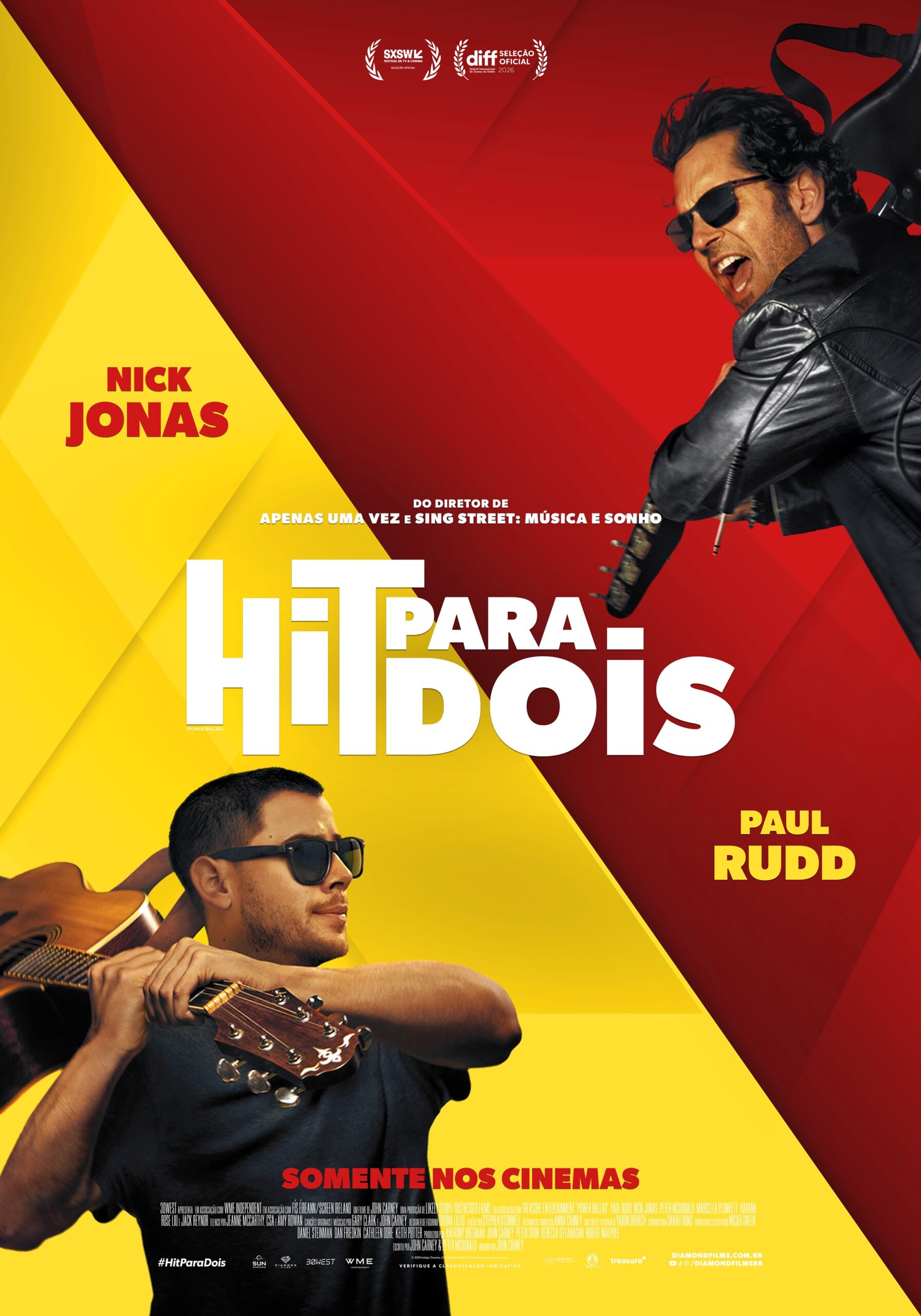
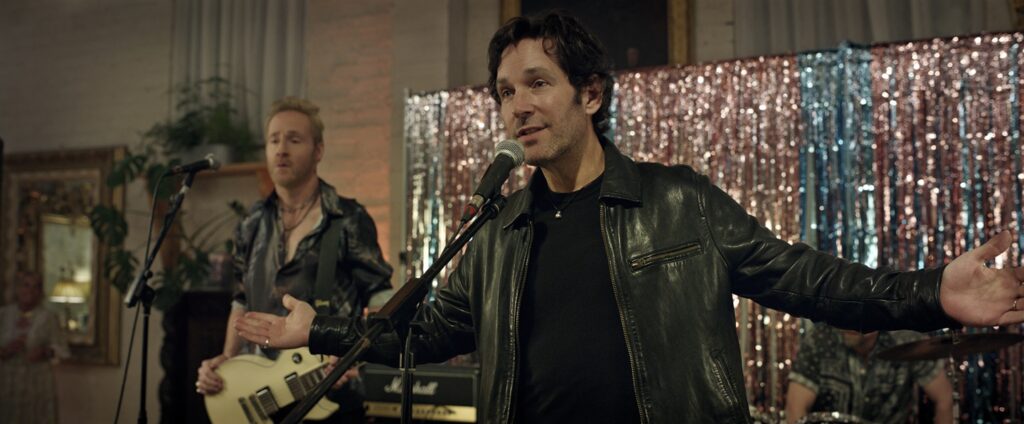
Durante aproximadamente seus quarenta minutos iniciais, o filme parece caminhar exatamente na direção que tornou Carney um autor de um cinema tão especial e charmoso. Rick (Paul Rudd) é um cantor de casamentos que vive entre as responsabilidades familiares e o sonho nunca totalmente abandonado de ser reconhecido como um artista de rock ‘n roll, que abdicou temporiamente para se tornar um homem de família em uma Dublin retratada com a sensibilidade cotidiana do diretor. Num casamento, ele cruza o caminho de Danny (Nick Jonas), o ex-integrante de uma boy band que tenta desesperadamente reconstruir sua credibilidade artística após a fama juvenil ter se esgotado.
O encontro entre os dois produz aquilo que Carney sempre fez melhor: o que é possível obter a partir do encontro de duas vozes, desde o Homem e a Mulher de Apenas uma Vez aos personagens de Keira Knightley e Mark Ruffalo em Mesmo se Nada Der Certo. Há algo tocante, até original, na relação geracional que se estabelece entre Rick e Danny. O veterano não despreza o astro pop por sua origem comercial e nem por sua idade, enquanto o músico mais novo tampouco assume uma postura iconoclasta de quem deseja destruir a geração anterior para afirmar sua própria identidade. Ao contrário, ambos reconhecem talentos mútuos, estabelecem uma troca criativa construída sobre a escuta e o álcool – como substituto de drogas mais pesadas, afinal é um filme comercial. As cenas em que compartilham ideias musicais e gestos cuidadosamente criados para parecer espontâneo evocam justamente a crença humanista que atravessa toda a obra do diretor.
Até o filme desandar…
Danny grava uma das composições de Rick e a transforma em um sucesso mundial, topo de parada de sucessos e trampolim para reiniciar a sua carreira solo, sem lhe conceder os devidos créditos, que poderiam mudar de vez a sua vida artística e financeira. Contudo, esse não é um conflito que Carney tenha trabalhado: a apropriação artística na forma de um furto. Seus personagens roubam da realidade ao redor, e não um do outro. Somado a isso, a desigualdade de poder na indústria musical, a sombra que envolve os dois personagens, para além das suas humanidades. Tudo isso trabalhado a partir de soluções narrativas excessivamente convencionais.
Até então, a qualidade da narrativa residia justamente na coexistência de duas formas distintas de compreender a música. Rick a enxerga como a expressão de afeto, mas também como forma de manter a família. Seus sonhos recorrentes de se apresentar diante de multidões contrastam com a realidade de um homem que utiliza a sua arte para pagar contas, criar a filha e, se tudo correr bem, matriculá-la numa boa faculdade. Danny, por outro lado, encara a música a partir da lógica da indústria cultural, da necessidade de se reinventar e da busca por se manter relevante. A música já deixou de ser fonte de renda – Danny é rico o bastante, como o filme evidencia. Essas visões opostas se materializam em como interpretam a balada furtada, How To Write A Song Without You, que quase enganou meu sentimento. Terminei o filme cantarolando seus versos sensíveis e suaves, em um registro equivocado de que tivesse gostado do filme.
É que, à medida que a trama avança, a construção dramática passa a depender cada vez mais de decisões que desafiam a credibilidade do universo semirrealista apresentado. A figura do empresário (Jack Reynor) é reduzida a uma caricatura unidimensional e ainda por cima não muito inteligente, já que o conflito do filme poderia ser resolvido facilmente com um cheque ou uma ligação telefônica. Tão problemático é o tratamento concedido a Danny. O roteiro parece constantemente hesitar diante da possibilidade de responsabilizá-lo plenamente por suas escolhas. Em um momento ele desconversa; no seguinte, demonstra culpa. Cogita reconhecer a autoria da música mas volta atrás. Se Carney tentou evitar pintá-lo de vilão ou conferir-lhe nuances, falhou duplamente: Danny pode não ser vilão, é mais um moleque mimado que canta para milhões de pessoas, e não tem as nuances que poderia ter porque estão escritas no roteiro, e não na atuação de Jonas. Na realidade, é um personagem apenas indefinido e dramaticamente frágil, porque o filme nunca decide revelá-lo.
O oposto ocorre com Rick. Beneficiado pelo maior tempo de tela e pela interpretação vivaz e melancólica de Paul Rudd, ele gradualmente se transforma na figura emocionalmente mais interessante da narrativa. À medida que a sua composição conquista o mundo, sem que ele participe desse sucesso, a frustração passa a corroer não apenas sua autoestima artística, mas também os seus relacionamentos pessoais. O filme encontra seus momentos mais fortes quando observa a maneira como o ressentimento se infiltra lentamente em sua vida familiar, contamina as amizades e ameaça destruir aquilo que ele construiu ao longo dos anos. A dor de Rick não é apenas o furto da composição, é também a percepção de que tanto amor, dedicação e persistência na música jamais serão suficientes para romper as barreiras invisíveis que o separam do reconhecimento. Quando encontra um cantor de rua que tem sua quantia roubada – uma citação de Apenas uma Vez – Rick incomoda-se com a resignação do cantor que não parte a pé atrás do ladrão… mas de que adiantaria?
É justamente por isso que o terceiro ato se revela tão decepcionante. A narrativa passa a flertar com situações artificiais ou coincidências convenientes, como se a sensibilidade de Carney estivesse contaminada pela artificialidade hollywoodiana. Rick, um homem comum com boletos a pagar, atravessa um continente acompanhado do amigo – um aceno ao personagem interpretado por Rhys Ifans em Um Lugar Chamado Notting Hill -, para protagonizar o confronto dramático apenas interessado em um resultado emocional predeterminado. Não há nada de orgânico nisso tudo, assim como não parece corresponder a Danny vê-lo subir as escadas acompanhados de duas mulheres, como se fosse um astro de rock ‘n roll em uma festa regada a drogas.
O aspecto mais problemático, contudo, não está propriamente nas soluções narrativas, mas naquilo que elas sugerem ideologicamente. Ao fim, Hit para Dois parece defender uma acomodação e resignação, ao contrário do que vinha desenvolvendo. O que deveria ser uma discussão sobre autoria, reconhecimento e exploração artística acaba sendo convertido numa espécie de celebração da resignação. Um trabalhador da música, que teve sua criação apropriada por uma estrutura industrial mais poderosa, termina encontrando satisfação em um reconhecimento simbólico, enquanto o sistema que permitiu essa desigualdade permanece essencialmente intacto, só arranhado na cena meio pastelão no clímax.
As cenas pós-créditos tentam suavizar essa sensação, oferecendo uma perspectiva ligeiramente mais otimista. Ainda assim, permanece a impressão de que o filme escolheu o caminho menos provocador e menos honesto dentre as possibilidades apresentadas a Carney. Não que a resignação não estivesse presente em Apenas uma Vez; é só que aqui, podendo enfrentar as tensões estruturais que ele apresenta, Carney prefere conciliá-las através de um sentimentalismo que, paradoxalmente, enfraquece sua sensibilidade.
Em uma filmografia marcada pela delicadeza com que transformava pequenos gestos ou canções em atos de afirmação humana, essa concessão não somente soa artificial. Ela também representa a rara ocasião em que a sensibilidade característica de John Carney acaba sendo derrotada pelas convenções do próprio roteiro.
Hit para Dois estreia nos cinemas brasileiros 11 de junho.
English review
Since emerging as one of the most distinctive voices in contemporary (neo-)musical cinema with the enchanting Once, John Carney has built a humanistic, warm filmography concerned with how music can reflect the emotional state of its composer and/or infiltrate the defenses and cracks within people in order to reveal the feelings they keep hidden. Rather than functioning as performance—something classical musicals did so well when characters interrupted reality to sing their sorrows and joys—music in Carney’s cinema becomes emotional language itself, the means through which unrealized dreams, missed opportunities, and desires are processed. It is precisely for that reason that Power Ballad may represent the most frustrating experience of his career.
For roughly its first forty minutes, the film seems to be heading exactly in the direction that made Carney such a special and charming filmmaker. Rick (Paul Rudd) is a wedding singer caught between family responsibilities and the dream he never entirely abandoned of being recognized as a rock ‘n’ roll artist—a dream he temporarily sacrificed in order to become a family man in a Dublin portrayed with the director’s characteristic everyday sensitivity. At a wedding, he crosses paths with Danny (Nick Jonas), a former boy band member desperately trying to rebuild his artistic credibility after his teenage fame has faded away.
Their encounter produces what Carney has always done best: exploring what can emerge from the meeting of two voices, from the Guy and Girl of Once to the characters played by Keira Knightley and Mark Ruffalo in Begin Again. There is something touching, even original, about the generational relationship that develops between Rick and Danny. The older musician does not dismiss the pop star because of his commercial origins or his age, while the younger performer never adopts the iconoclastic posture of someone eager to destroy the previous generation in order to affirm his own identity. On the contrary, both recognize each other’s talents and establish a creative exchange built upon listening—and alcohol, which serves as a substitute for harder drugs, after all this is a commercial film. The scenes in which they share musical ideas and gestures carefully designed to appear spontaneous evoke precisely the humanistic belief that runs throughout Carney’s work.
Until the film falls apart.
Danny records one of Rick’s songs and turns it into a worldwide hit, topping the charts and serving as the launchpad for his solo career revival, all without giving Rick the credit that could permanently transform his artistic and financial life. Yet this is not a conflict Carney has ever really explored before: artistic appropriation in the form of theft. His characters usually steal from the world around them, not from one another. Added to this is the imbalance of power within the music industry, the shadow hanging over both men beyond their individual humanity. All of it is ultimately handled through excessively conventional narrative solutions.
Up to that point, the strength of the film lies precisely in the coexistence of two different ways of understanding music. Rick sees it as an expression of affection but also as a means of supporting his family. His recurring dreams of performing before huge crowds contrast with the reality of a man who uses his art to pay bills, raise his daughter, and, if all goes well, send her to a good university. Danny, on the other hand, understands music through the logic of the cultural industry, the need for constant reinvention, and the pursuit of relevance. Music has long ceased to be his primary source of income—Danny is wealthy enough, as the film repeatedly emphasizes. These opposing visions materialize in the way each man relates to the stolen ballad, “How To Write A Song Without You,” a song that nearly fooled my own emotions. I left the theater humming its gentle, heartfelt melody under the mistaken impression that I had enjoyed the film.
The problem is that, as the story progresses, its dramatic construction increasingly depends on decisions that undermine the credibility of the semi-realist world it establishes. The manager character (Jack Reynor) is reduced to a one-dimensional caricature and, to make matters worse, not a particularly intelligent one, since the central conflict could easily be resolved with a check or a phone call. Equally problematic is the treatment afforded to Danny. The screenplay constantly hesitates when faced with the possibility of fully holding him accountable for his actions. One moment he dodges responsibility; the next he feels guilty. He considers acknowledging Rick’s authorship, then backs away. If Carney’s intention was to avoid turning him into a villain or to grant him nuance, he fails on both counts: Danny is not a villain so much as a spoiled kid who happens to sing for millions of people, and he lacks genuine nuance because those complexities exist only on the page, not in Jonas’ performance. In reality, he becomes merely an undefined and dramatically fragile character because the film never decides who he is.
The opposite happens with Rick. Benefiting from greater screen time and from Paul Rudd’s lively yet melancholic performance, he gradually becomes the most emotionally compelling figure in the narrative. As his song conquers the world without him sharing in its success, frustration begins to erode not only his artistic self-worth but also his personal relationships. The film reaches its strongest moments when it observes how resentment slowly infiltrates his family life, contaminates friendships, and threatens to destroy everything he has built over the years. Rick’s pain stems not only from the theft of his composition but also from the realization that all the love, dedication, and persistence he has invested in music may never be enough to break through the invisible barriers separating him from recognition. When he encounters a busker who has had his earnings stolen—a direct reference to Once—Rick is disturbed by the man’s resignation, by his refusal to chase the thief on foot. But what good would it do?
That is precisely why the third act proves so disappointing. The narrative begins flirting with artificial situations and convenient coincidences, as though Carney’s sensitivity had been contaminated by Hollywood artifice. Rick, an ordinary man with bills to pay, crosses an ocean accompanied by a friend—a nod to Rhys Ifans’ character in Notting Hill—only to participate in a dramatic confrontation interested solely in reaching a predetermined emotional outcome. None of it feels organic, just as it never feels believable that Danny would watch him arrive up the stairs flanked by two women as though he were a rock star at a drug-fueled party.
The most troubling aspect, however, is not the narrative contrivances themselves but what they suggest ideologically. By the end, Power Ballad seems to advocate accommodation and resignation, the exact opposite of what it had been developing. What should have been a discussion about authorship, recognition, and artistic exploitation is transformed into a celebration of acceptance. A working musician whose creation has been appropriated by a far more powerful industrial structure ultimately finds satisfaction in symbolic recognition, while the system that enabled such inequality remains essentially untouched, only lightly scratched by a somewhat slapstick sequence during the climax.
The post-credit scenes attempt to soften this impression by offering a slightly more optimistic perspective. Even so, one cannot escape the feeling that the film chose the least provocative and least honest path available to Carney. It is not that resignation was absent from Once; rather, there it emerged organically from the characters and circumstances. Here, despite having the opportunity to confront the structural tensions it introduces, the film chooses to reconcile them through a sentimentalism that paradoxically weakens its own sensitivity.
In a filmography defined by the delicacy with which small gestures and songs could become acts of human affirmation, this concession feels not only artificial. It also represents the rare occasion on which John Carney’s characteristic sensitivity is defeated by the conventions of his own screenplay.
Power Ballad only in theaters, june 5th.

Crítico de cinema filiado a Critics Choice Association, à Associação Brasileira de Críticos de Cinema, a Online Film Critics Society e a Fipresci. Atuou no júri da 39ª Mostra Internacional de Cinema em São Paulo/SP, do 12º Fest Aruana em João Pessoa/PB, do 24º Tallinn Black Nights Film na Estônia, do 47º TIFF – Festival Internacional de Cinema em Toronto. Ministrante do Laboratório de Crítica Cinematográfica na 1ª Mostra Internacional de Cinema em São Luís (MA) e Professor Convidado do Curso Técnico em Cinema do Instituto Estadual do Maranhão (IEMA), na disciplina Crítica Cinematográfica. Concluiu o curso de Filmmaking da New York Film Academy, no Rio de Janeiro (RJ) em 2013. Participou como co-autor dos livros 100 melhores filmes brasileiros (Letramento, 2016), Documentário brasileiro: 100 filmes essenciais (Letramento, 2017) e Animação Brasileira – 100 Filmes Essenciais (Letramento, 2018). Criou o Cinema com Crítica em fevereiro de 2010 e o Clube do Crítico em junho de 2020.