
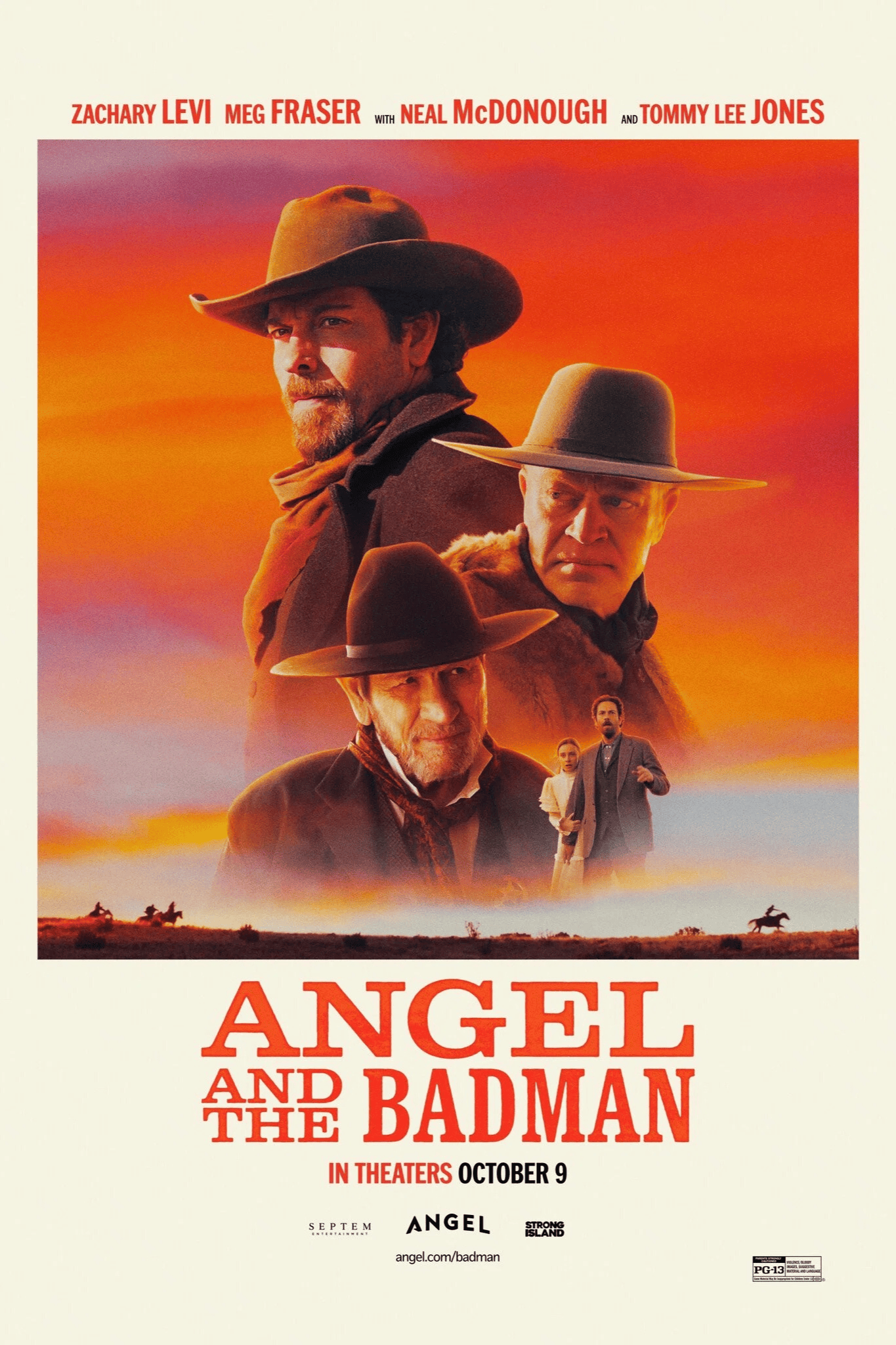
A refilmagem de Angel and the Badman repete e potencializa os mesmos erros do longa original, com ainda mais ênfase à religião em romance sem química.
A escolha da produtora e distribuidora Angel em bancar a refilmagem de um faroeste produzido e protagonizado por John Wayne no século passado me parecia, à primeira vista, uma decisão bastante peculiar, mas até compreensível dentro da recente proposta da empresa em ampliar os próprios horizontes, a fim de dialogar com públicos diversos, para além do nicho que criara no decorrer dos últimos anos. Como um longa pouco lembrado de um dos maiores astros do western norte-americano, optei por conhecer a obra original, Angel and the Badman, lançada em 1947, escrita e dirigida por James Edward Grant. A partir dela, então compreendi a escolha pela nova versão, que de surpreendente mesmo nada tinha: trata-se, na prática, de um romance com fortes elementos cristãos.
Ao conectar as peças, vejo que o longa original até funciona bem como uma síntese da persona de John Wayne para além das telas de cinema e do faroeste. Um ator incrivelmente popular, nunca escondeu do público seu lado político e socialmente conservador, embora não fosse um reacionário convicto – o museu construído em sua homenagem na cidade de Forth Worth, Texas, EUA, trata abertamente desse seu aspecto político que nunca escondera, e no decorrer da carreira, seus filmes levantavam elementos e ideais cristãos, tais como seus personagens heróicos e, geralmente de “moral inabalável”, ao ponto de, dentre outros motivos, até mesmo por orgulho, ter chegado a recusar o papel principal de Dirty Harry (1971), assumido e eternizado posteriormente por Clint Eastwood.
Esse aspecto conservador de Angel and the Badman, no entanto, a partir da distância excessiva entre os personagens principais, acabara se tornando também o seu grande calcanhar de Aquiles, ao passo que a jornada do protagonista fora-da-lei de bom coração, vivido por Wayne, que abandona a vida de crimes tocado pelo amor, perde impacto substancial na medida em que suas interações com o par romântico interpretado por Gail Russell não deixavam de ser, no fundo, superficiais. Era uma questão que também circundava dois outros pontos: uma visão idealizada e demasiada comportada dos Estados Unidos do século XIX, e também parte de um conservadorismo do cinema norte-americano da década de 1940.
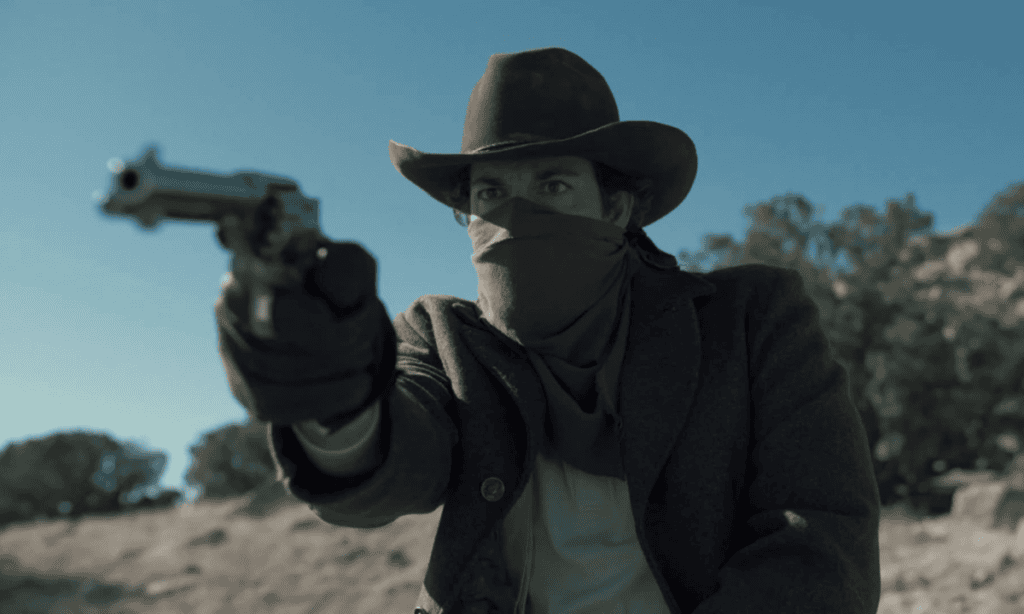
Em uma proposta formal de readaptar a narrativa ao cinema contemporâneo, a versão de Angel and the Badman dirigida por Julio Quintana abandona o aspecto quase teatral do longa original, para apostar em uma decupagem cuja câmera se incorpora melhor aos espaços, transitando mais livremente entre os ambientes, e sobretudo a casa da família protagonista. A linguagem cinematográfica, sem experimentações ou tanta inspiração, busca pela aproximação do público atual a uma história escrita há quase oitenta anos, mantendo o conteúdo, por outro lado, quase inalterado.
Há de reconhecer que o roteiro escrito por Kevin M. Townsend, Christopher Tuffin e Jaime Hernandez refinou algumas passagens e situações que não mais funcionariam em uma refilmagem. É o caso de explorar mais profundamente as intenções do grupo antagonista na perseguição do “herói” Quirt, agora vivido por Zachary Levi, e sua chegada à residência de Penny, interpretada por Meg Fraser, sem o desvio da passagem pelo telégrafo, por exemplo. Surge naturalmente uma ideia maior de verossimilhança não apenas a ser trabalhada pela narrativa, como também pela mise-en-scene.
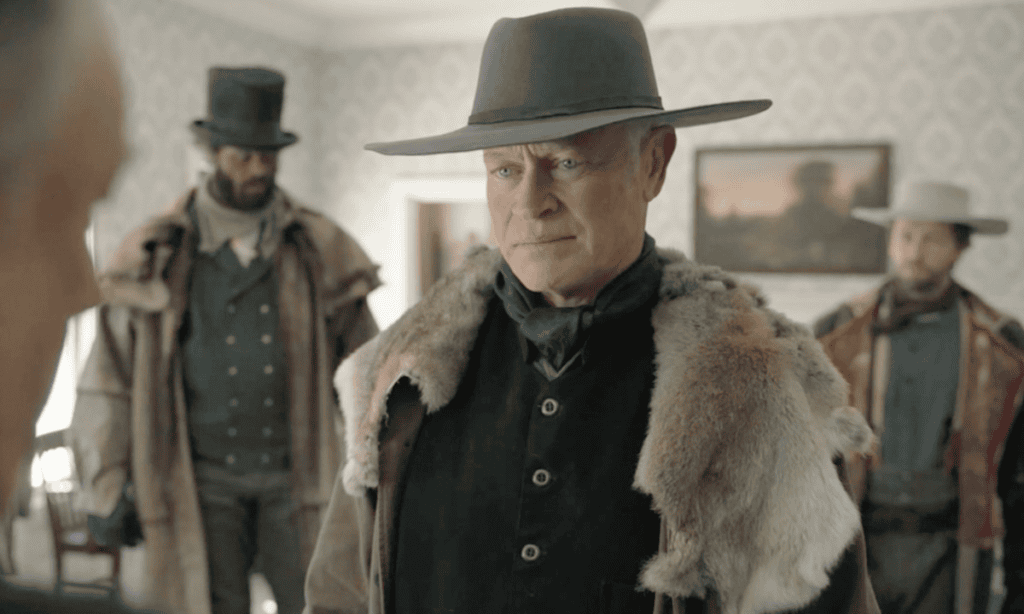
Nos momentos de tensão, Quintana consegue provocar desconforto, tal como Neal McDonough sabe construir um vilão imponente, com o chapéu cobrindo parte do rosto, como meio de reforçar um olhar intimidador. Ainda que os dois outros sujeitos que o acompanham até fortaleçam esse ar ameaçador, incomoda, de forma negativa, o fato de os únicos dois personagens negros e latinos do longa serem justamente encampados como pessoas más (estes vividos por Maurice Greene e Jesús Carús), o que, naturalmente, passa uma sensação ultrapassada, e injustificável, à obra em pleno 2026.
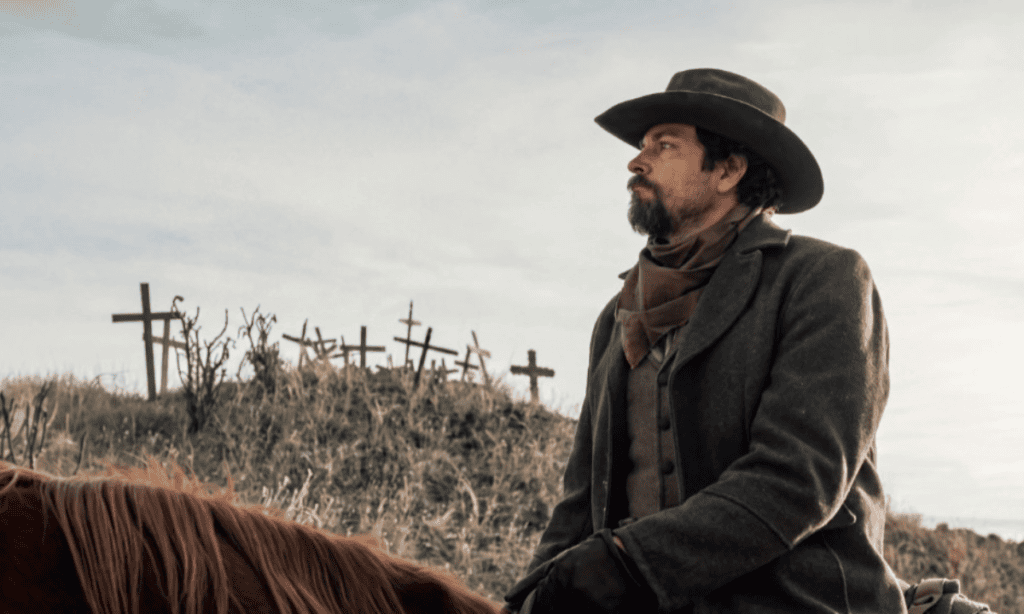
Embora esse refinamento do texto ofereça um pouco mais de naturalidade à narrativa, por outro lado, naquilo que se mantém inalterado, sente-se justamente o peso desse distanciamento em razão de um retrato cristão da paixão entre os personagens. A ausência de contato físico, por exemplo, não seria um problema se as interações entre Quirt e Penny fossem dotadas de algum sentimento que não apenas um amor estritamente platônico.
A partir do símbolo da cruz, muito presente nos espaços na residência da família, cuja decupagem faz questão de voltar seus olhos, e os do público, à sua existência em todos os cômodos, a fim de reforçar a fé cristã de seus personagens, esta refilmagem de Angel and the Badman torna-se cada vez mais conservadora e púdica que o longa original, já bastante comportado. Não é necessariamente um problema inerente à obra base, mas se já não havia muita química entre o casal no outro filme, justamente em razão desta distância segura de aproximação, física e comportamental, aqui sobra ainda menos espaço para comprarmos esse romance. Pelo menos John Wayne compensava um pouco com seu charme, e sua facilidade em se amoldar em um tipo de personagem que estava bastante acostumado a interpretar, o que, por outro lado, falta à Zachary Levi, carismático demais para um temido fora-da-lei.
Então, entre o aprimoramento da narrativa na base da verossimilhança, e o reforço ainda maior à característica religiosa, Julio Quintana faz o entorno dos personagens mais compreensível, porém acaba por repetir exatamente os mesmos erros que enfraqueciam a versão original do longa que refilma. Não que exista uma necessidade de contato físico entre o casal protagonista, por exemplo, mas a falta de proximidade, mesmo que nas mais simples interações, compromete toda uma proposta romântica que nunca se concretiza, para além do aspecto religioso que os circunda, o qual, no fim, parece ser o mais relevante para o filme.
Angel and the Badman será estréia nos cinemas norte-americanos no dia 09 de outubro.
English review
The remake of Angel and the Badman repeats and amplifies the same mistakes of the original feature, with even greater emphasis on religion in a romance without chemistry.
The decision by producer and distributor Angel to back a remake of a western produced and starring John Wayne in the last century seemed, at first glance, like a rather peculiar choice to me, but also understandable within the company’s recent proposal to broaden its own horizons, in order to engage with diverse audiences beyond the niche it had established over the past few years. As a little-remembered feature from one of the greatest stars of American westerns, I chose to get to know the original work, Angel and the Badman, released in 1947, written and directed by James Edward Grant. From there, I understood the choice behind the new version, which, in terms of being surprising, was not surprising at all: it is, in practice, a romance with strong Christian elements.
Connecting the pieces, I see that the original feature even works well as a synthesis of John Wayne’s persona beyond the screens and the western genre. An incredibly popular actor, he never hid his politically and socially conservative side from the public, although he was not a convinced reactionary – the museum built in his honor in Fort Worth, Texas, USA, openly addresses this political aspect that he never concealed, and throughout his career, his films raised Christian elements and ideals, such as his heroic and generally “unshakable morality” characters, to the point that, among other reasons, even out of pride, he ended up refusing the lead role in Dirty Harry (1971), later taken on and immortalized by Clint Eastwood.
This conservative aspect of Angel and the Badman, however, through the excessive distance between the main characters, ended up becoming its great Achilles’ heel as well, while the journey of the good-hearted outlaw protagonist, played by Wayne, who abandons his life of crime after being touched by love, loses substantial impact insofar as his interactions with the romantic partner played by Gail Russell remained, deep down, superficial. It was an issue that also surrounded two other points: an idealized and overly well-behaved vision of nineteenth-century United States, and also part of the conservatism of American cinema in the 1940s.
In a formal proposal to readapt the narrative for contemporary cinema, the version of Angel and the Badman directed by Julio Quintana abandons the almost theatrical aspect of the original feature, opting instead for a découpage in which the camera is better integrated into the spaces, moving more freely between environments, and especially throughout the protagonist family’s home. The cinematic language, without experimentation or much inspiration, seeks to bring a contemporary audience closer to a story written almost eighty years ago, while, on the other hand, keeping the content almost unchanged.
It must be acknowledged that the screenplay written by Kevin M. Townsend, Christopher Tuffin, and Jaime Hernandez refined some passages and situations that would no longer work in a remake. This is the case with exploring more deeply the intentions of the antagonist group in pursuing the “hero” Quirt, now played by Zachary Levi, and his arrival at Penny’s residence, played by Meg Fraser, without the detour through the telegraph office, for example. A greater idea of verisimilitude naturally emerges, one to be worked not only through the narrative, but also through the mise-en-scène.
In moments of tension, Quintana manages to create discomfort, just as Neal McDonough knows how to construct an imposing villain, with his hat covering part of his face as a way of reinforcing an intimidating gaze. Although the two other men who accompany him even strengthen this threatening atmosphere, it is negatively unsettling that the only two Black and Latino characters in the feature are precisely portrayed as evil people (played by Maurice Greene and Jesús Carús), which naturally gives the work an outdated and unjustifiable feeling in 2026.
Although this refinement of the screenplay offers a little more naturalness to the narrative, on the other hand, in what remains unchanged, one feels precisely the weight of this distance because of a Christian portrayal of the characters’ passion. The absence of physical contact, for example, would not be a problem if the interactions between Quirt and Penny were endowed with some feeling beyond strictly platonic love.
Through the symbol of the cross, very present throughout the family’s home, with the découpage making a point of directing its gaze, and that of the audience, toward its presence in every room in order to reinforce the characters’ Christian faith, this remake of Angel and the Badman becomes increasingly more conservative and prudish than the original feature, which was already quite restrained. It is not necessarily a problem inherent to the source material, but if there was already not much chemistry between the couple in the other film, precisely because of this safe distance of physical and behavioral proximity, here there is even less room for us to buy into this romance. At least John Wayne compensated for it somewhat with his charm, and his ease in fitting into a type of character he was quite accustomed to playing, something that, on the other hand, Zachary Levi lacks, being too charismatic for a feared outlaw.
Thus, between improving the narrative through verisimilitude and further reinforcing its religious character, Julio Quintana makes the characters’ surroundings more comprehensible, but ultimately repeats exactly the same mistakes that weakened the original version of the feature he is remaking. Not that there is necessarily a need for physical contact between the protagonist couple, for example, but the lack of closeness, even in the simplest interactions, compromises an entire romantic proposition that never comes to fruition, beyond the religious aspect surrounding them, which, in the end, seems to be the most relevant thing to the film.
Angel and the Badman opens in theaters in the United States on October 9.

Crítico de cinema desde 2019. Formado em crítica de cinema pela Academia Internacional de Cinema (2020), e aluno do Clube do Crítico desde 2021, é criador do Cineolhar e colaborador do Cinema com Crítica.