
O Leão de Ouro do Festival de Veneza 2025 estreia nos cinemas brasileiros, mas será que mereceu o prêmio?
Crítica em português
O cinema de Jim Jarmusch é um gosto adquirido. Mais interessado em registrar a banalidade da existência humana, do que em dramatizá-la, e mais preocupado em expressar com distância e frieza os conflitos dos personagens, em uma espécie de adaptação estadunidense do cinema praticado pelo francês Robert Bresson, Jarmusch atrai e repele com a mesma intensidade. Talvez imagine o cineasta como um tipo de artista plástico trabalhando no cinema, e precisaria adaptar melhor esta ideia, mas há uma qualidade hipnótica em seu cinema que não é facilmente explicada por palavras ou que as dispense inteiramente. É um estilo zen obtido pela câmera, pela trilha sonora e por atuações que rejeitam atuar, rejeitam empostar os diálogos, expressar as emoções e até o gesto de sentir. Em alguns de seus filmes, este estilo cai e se amolda como uma luva: casos de Flores Partidas, muito por causa de Bill Murray, ou de Amantes Eternos, muito devido às figuras que o habitam – vampiros seculares. Em outros filmes, não, e é o caso de Pai Mãe Irmã Irmão.
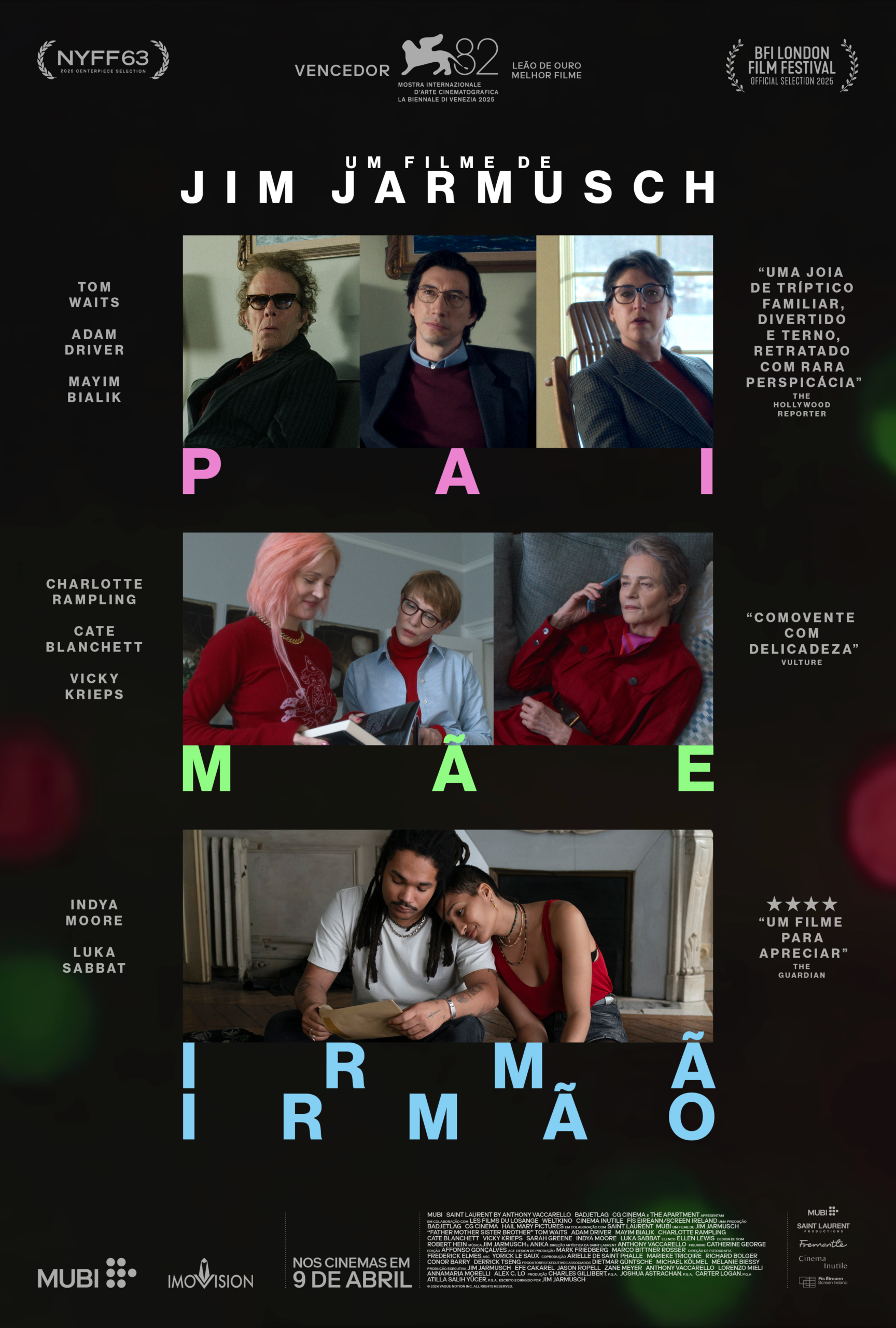
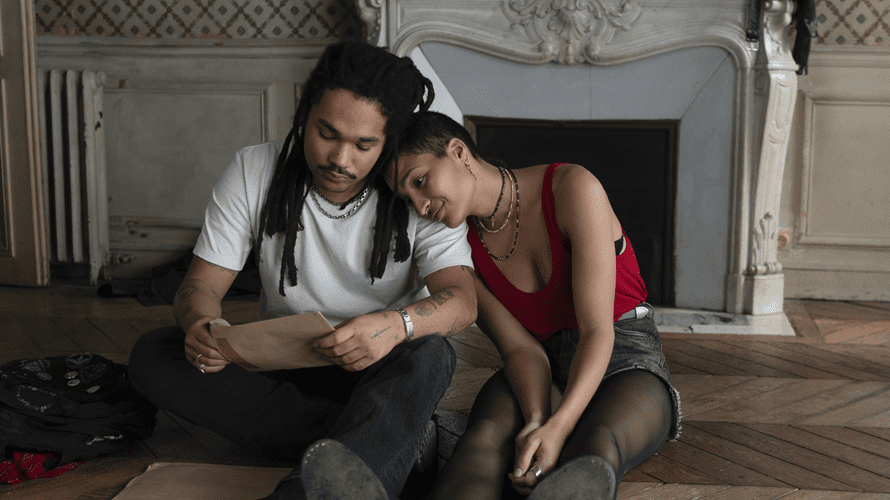
O roteiro é um tríptico sobre relacionamentos humanos e familiares, que não se comunicam senão por elementos circunstanciais: nas três histórias, os filhos viajam para visitar os pais. Jeff (Adam Driver) e Emily (Mayim Bialik) viajam ao interior para encontrar o pai (Tom Waits), que atravessa um momento financeira delicado ou assim acreditam; Tim (Cate Blanchett) e Lilith (Vicky Krieps) viajam à cidade para visitar a mãe (Charlotte Rampling), atualizá-la de suas vidas; finalmente, os gêmeos Skye (Indya Moore) e Bill (Luka Sabbat) retornam à casa onde foram criados, e agora vazia, para prestar homenagem aos pais e reforçar os laços fraternos. Não há conflito aparente. Há apenas o devir e a obrigação ou responsabilidade em ser pai, mãe ou irmã e irmão. Os personagens performam encontros familiares ou protocolares – logo um tanto constrangedores – ou genuínos, nos quais as conversas defluem com afetividade e generosidade.
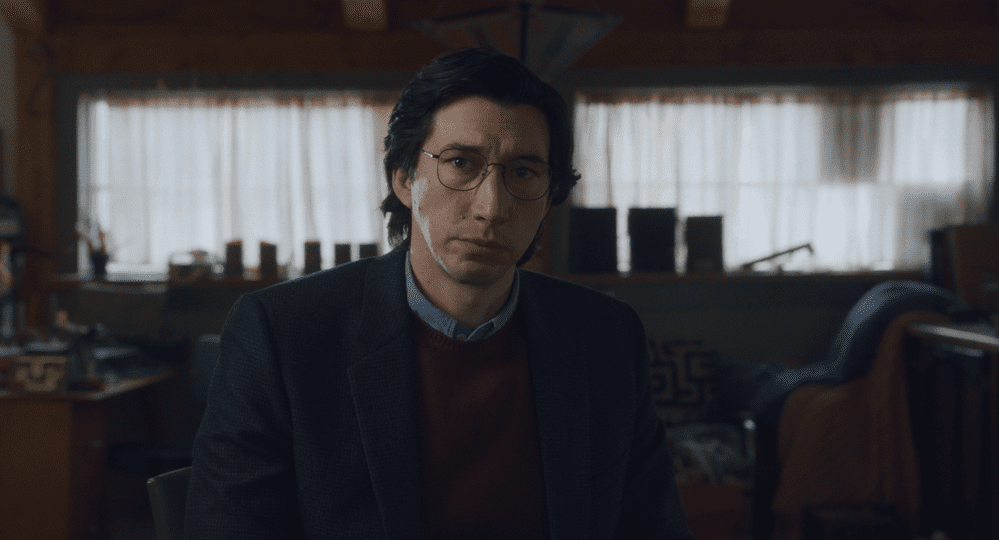
Cada história é composta por rimas internas e externas. As internas são retratadas por elementos construídos dentro de cada encenação e por símbolos (por ex. as cores). Quando Jeff e Emily visitam o Pai, a organização deles no espaço da sala de estar estabelece a dinâmica do encontro – quem está sentado na cadeira que dá para o lago, quem está no sofá. De forma análoga, quando Tim e Lilith sentam à mesa de jantar da Mãe, o arranjo de flor no centro da mesa bloqueia ou não o olhar criando um diálogo específico entre aquelas mulheres. E ainda há o elemento visual das cores dos figurinos, e a leitura de que os filhos carregam sempre uma parte dos pais consigo: o roxo é o forro do casaco do Pai, a mesma cor do suéter de Jeff e do casaco de Emily e do pano de pia sobre a mesa. Já Skye e Bill, para além de só as cores, ainda trazem o elemento da jaqueta de couro ou do branco e vermelho em maior ou menor proporção.
E, externamente, estas histórias independentes unem-se ao redor de elementos circunstanciais: são os skatistas retratados em uma câmera lenta que interrompe o movimento dos corpos e parece fazê-los flutuar; são os comentários sobre a água ou com o que podemos brindar – e acredito que haverá interpretações interessantes sobre como estes elementos dialogam com a narrativa. Mas Pai Mãe Irmã Irmão, para mim, é o tipo de drama em que, embora identifique as rimas narrativas ou visuais, simplesmente não me importo o bastante para refletir e interpretá-las. Não culpo os personagens apáticos ou manipuladores, senão Skye e Bill. Para ser honesto, “o meu ponteiro emocional” mal se movimentou entre a alegria ou tristeza, entre o lamento e a raiva, sinto-me tão indiferente em relação aos personagens que mesmo um ator malandro como é Tom Waits – que já me ganha com a sua voz rouca – ou a atriz que mais admiro no cinema contemporâneo – Cate -não me provocam nada.
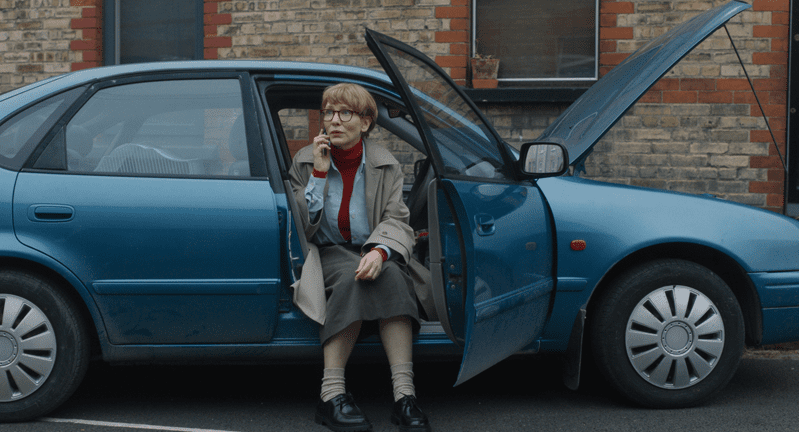
O responsável é Jarmusch. Sinto que o diretor e roteirista subestima a capacidade do espectador, e precisa explicitar o que já está claro, a fim de explicar a piada contida em cada segmento. Os filhos são incapazes de enxergar o Pai senão como este sujeito patético, esquecido e desorganizado ao qual devem alguma satisfação apenas por laços de sangue, e o Pai esconde a própria artimanha debaixo do casaco, o que não escapa ao olhar da filha. Então, a revelação após o carro híbrido alugado pelo filho deixar a propriedade é apenas a redundância que o cineasta entende necessária para que a crítica esteja às claras. É até pior quando penso no encontro de filhas e Mãe, e nas mentiras contadas para parecermos mais bem-sucedidos do que de fato somos. Só não consigo desgostar por causa do olhar de Cate Blanchett – já confessei minha admiração por ela – quando fecha a porta atrás de si e olha para a mãe, procurando uma aprovação que jamais teve.
Só o que sobra, é por este motivo as duas estrelas, é o segmento entre Skye e Bill. E quando os gêmeos recordam, com calor no coração, como os pais foram acolhedores, ali senti a humanidade que faltou por toda a narrativa e que preenche os espaços vazios da casa, onde correram, riram, brincaram, choraram. Eu consigo vê-los por ali, a memória deixa de ser espectro e torna-se uma matéria. É que Jarmusch trivializa o drama convencional cinematográfico, mas isto não significa que, atrás de personagens que falam de forma monótona, de uma desdramatização da encenação ou de um diretor que se revela através de rimas e sutilezas, não haja a genuínia ambição de convidar para conversar sobre a existência humana. É só que esta conversa de Pai Mãe Irmã Irmão despertou, na maior parte do tempo, indiferença.
O filme está em exibição nos cinemas brasileiros desde quinta-feira, 09/04.
English review
Jim Jarmusch’s cinema is an acquired taste. More interested in registering the banality of human existence than in dramatizing it, and more concerned with expressing the characters’ conflicts with distance and coolness, in a kind of American adaptation of the cinema practiced by the French filmmaker Robert Bresson, Jarmusch attracts and repels with equal intensity. I might imagine the filmmaker as a kind of visual artist working in cinema, and I would need to refine that idea, but there is a hypnotic quality to his work that is not easily explained by words, or that might even dispense with them entirely. It is a Zen style achieved through the camera, the soundtrack, and performances that reject acting, reject projecting dialogue, expressing emotions, and even the gesture of feeling. In some of his films, this style settles perfectly: cases like Broken Flowers, largely because of Bill Murray, or Only Lovers Left Alive, largely due to the figures that inhabit it, centuries-old vampires. In other films, it does not, and that is the case with Father Mother Sister Brother.
The screenplay is a triptych about human and familial relationships that communicate only through circumstantial elements: in all three stories, children travel to visit their parents. Jeff (Adam Driver) and Emily (Mayim Bialik) travel to the countryside to meet their father (Tom Waits), who is going through a financially difficult moment, or so they believe; Tim (Cate Blanchett) and Lilith (Vicky Krieps) travel to the city to visit their mother (Charlotte Rampling), to update her on their lives; finally, the twins Skye (Indya Moore) and Bill (Luka Sabbat) return to the house where they were raised, now empty, to pay tribute to their parents and reinforce their fraternal bonds. There is no apparent conflict. There is only becoming and the obligation or responsibility of being a father, mother, sister, or brother. The characters perform family or formal encounters, often somewhat awkward, or genuine ones, in which conversations flow with affection and generosity.
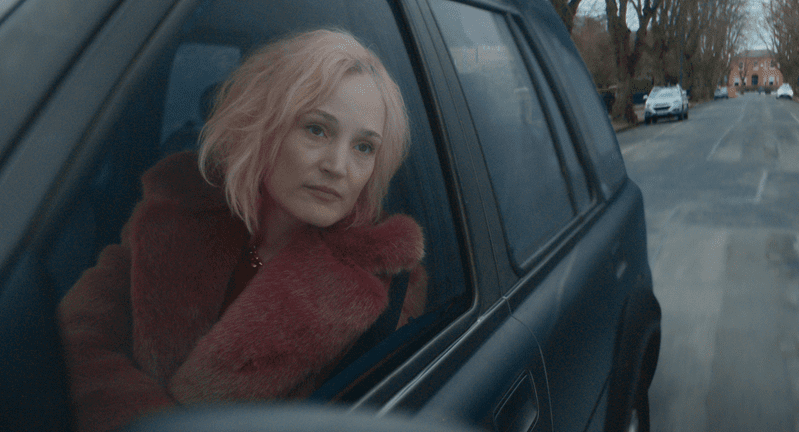
Each story is composed of internal and external rhymes. The internal ones are portrayed through elements constructed within each staging and through symbols, for example, colors. When Jeff and Emily visit the Father, their arrangement in the living room space establishes the dynamic of the encounter, who sits in the chair facing the lake, who sits on the sofa. Similarly, when Tim and Lilith sit at the Mother’s dinner table, the flower arrangement at the center of the table either blocks or allows eye contact, creating a specific dialogue between those women. There is also the visual element of costume colors, and the idea that children always carry a part of their parents with them: purple is the lining of the Father’s coat, the same color as Jeff’s sweater, Emily’s coat, and the dishcloth on the table. Skye and Bill, beyond just colors, also carry the element of the leather jacket or the white and red in varying proportions.
Externally, these independent stories are united around circumstantial elements: the skateboarders filmed in slow motion that interrupts the movement of bodies and seems to make them float; the comments about water or what we can toast with, and I believe there will be interesting interpretations about how these elements dialogue with the narrative. But Father Mother Sister Brother, for me, is the kind of drama in which, although I recognize the narrative or visual rhymes, I simply do not care enough to reflect on or interpret them. I do not blame the apathetic or manipulative characters, except for Skye and Bill. To be honest, my emotional needle barely moved between joy or sadness, between lament and anger. I feel so indifferent toward the characters that even a sly actor like Tom Waits, who already wins me over with his raspy voice, or the actress I most admire in contemporary cinema, Cate Blanchett, provoke nothing in me.
Jarmusch is responsible. I feel that the director and screenwriter underestimates the viewer’s capacity and needs to make explicit what is already clear, in order to explain the joke contained in each segment. The children are unable to see the Father as anything other than this pathetic, forgetful, disorganized man to whom they owe some accountability merely because of blood ties, and the Father hides his own trick beneath his coat, which does not escape the daughter’s gaze. Thus, the revelation after the hybrid car rented by the son leaves the property is merely the redundancy the filmmaker deems necessary to make the critique explicit. It is even worse when I think of the meeting between daughters and Mother, and the lies we tell to appear more successful than we actually are. I simply cannot dislike it because of Cate Blanchett’s gaze – and I have already confessed my admiration for her – when she closes the door behind her and looks at her mother, seeking an approval she never had.
What remains, and this is why I give it two stars, is the segment between Skye and Bill. When the twins recall, with warmth in their hearts, how welcoming their parents were, that is where I felt the humanity that was missing throughout the narrative and that fills the empty spaces of the house where they ran, laughed, played, and cried. I can see them there, memory ceases to be a specter and becomes a substance. Jarmusch may trivializes conventional cinematic drama, but that does not mean that behind characters who speak in a monotone, behind a de-dramatized staging, or behind a director who reveals himself through rhymes and subtleties, there is not a genuine ambition to invite us to reflect on human existence. It is just that this conversation in Father Mother Sister Brother mostly awakened indifference in me.

Crítico de cinema filiado a Critics Choice Association, à Associação Brasileira de Críticos de Cinema, a Online Film Critics Society e a Fipresci. Atuou no júri da 39ª Mostra Internacional de Cinema em São Paulo/SP, do 12º Fest Aruana em João Pessoa/PB, do 24º Tallinn Black Nights Film na Estônia, do 47º TIFF – Festival Internacional de Cinema em Toronto. Ministrante do Laboratório de Crítica Cinematográfica na 1ª Mostra Internacional de Cinema em São Luís (MA) e Professor Convidado do Curso Técnico em Cinema do Instituto Estadual do Maranhão (IEMA), na disciplina Crítica Cinematográfica. Concluiu o curso de Filmmaking da New York Film Academy, no Rio de Janeiro (RJ) em 2013. Participou como co-autor dos livros 100 melhores filmes brasileiros (Letramento, 2016), Documentário brasileiro: 100 filmes essenciais (Letramento, 2017) e Animação Brasileira – 100 Filmes Essenciais (Letramento, 2018). Criou o Cinema com Crítica em fevereiro de 2010 e o Clube do Crítico em junho de 2020.