
Crítica em português
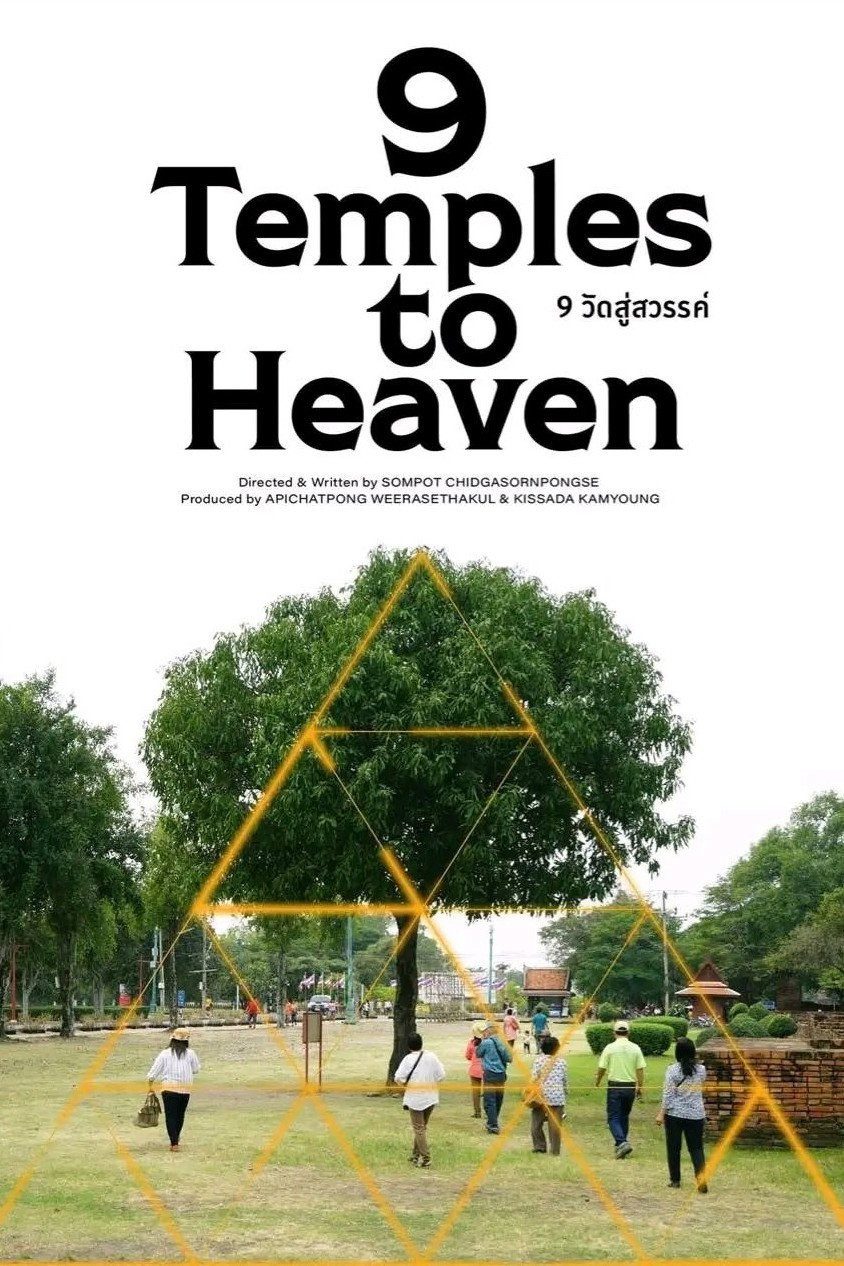
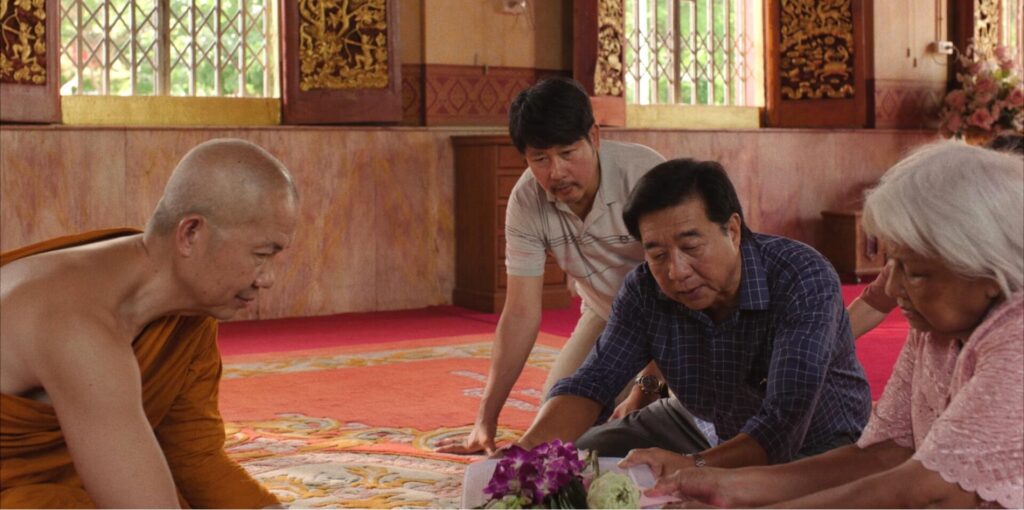
9 Temples to Heaven me lembrou muito Pequena Miss Sunshine. Não me refiro à forma, que não poderia ser mais diferente, mas à crença de que peregrinações familiares podem ser reveladoras, melancólicas e transformadoras. Neste caso, por trás do desejo de alcançar alguma graça para a vida da matriarca da família, estão familiares obrigados a dividir os mesmos espaços de uma van por tempo demais. Sompot Chidgasornpongse, assistente de direção de Apichatpong Weerasethakul, compreende isto ao transformar a visita a nove templos budistas em uma jornada de contemplação de relações familiares desgastadas e de uma relação com a própria fé atravessada mais pelo medo do que pela religião e espiritualidade.
A premissa é irônica ao estabelecer que o motivo pelo qual Sakol (Surachai Ningsanond) deseja empreender essa viagem é a previsão do chefe da morte iminente da matriarca, o que o impele a reunir a família para cumprir um ritual que poderia atrasar esse destino. A viagem não é uma comunhão familiar. Não é uma experiência espiritual genuína. Mas é tão somente o mecanismo de tentar conferir alguma ordem ao caos que é a vida. Isto me lembra da minha infância, quando meu irmão mais velho pedia que eu não mudasse de lugar quando o time dele estava ganhando porque isto poderia provocar azar. O que mobiliza Sakol e meu irmão é a superstição, a tentativa de negociar com o destino: a morte, no caso da narrativa. Sompot não ridiculariza isso, mas observa essa dedicação com a mesma sensibilidade que, imagino, observaria uma pessoa professando genuinamente sua fé. O que Sompot enxerga é a maneira como as sociedades contemporâneas recorrem às religiões, mesmo quando sequer conseguem professar uma oração.
E 9 Temples to Heaven professa muito mais pela forma (o exemplo) do que pelo conteúdo (o dogma). Há bastantes gestos espalhados pelo percurso e imagens evocativas que sintetizam o distanciamento espiritual daqueles personagens. É Pongpol (Jirawut Chiwaruck), filho de Sakol, que acessa o templo não pela entrada, mas por um atalho, porque estava atrasado. É o comentário quase anedótico e revelador do bom humor da narrativa sobre o monge que abandonou a ordem para se casar. A religião, palavra oriunda do latim religare, ou reconectar-se, é o caminho quase protocolar pelo qual passam os personagens em sua relação com a fé e o sagrado. Um protocolo que é também destacado por alguns dos monges em suas rotinas diárias.
O filme me convida a uma reflexão: será que, mesmo quando a religião está esvaziada da fé autêntica e plena da fé burocrática, ainda assim não poderia alcançar o seu resultado, mesmo que por vias tortas? Praticamente nenhum dos personagens acredita, genuinamente, que a peregrinação que fazem impediria, ou não, o destino da avó, mas ainda assim realizam esse trajeto onde podem testemunhar milagres. É o céu ensolarado e prismático transformando-se em um breu noturno. São as formigas escalando árvores altas em um ritmo que os olhos humanos mal podem alcançar. É a avó, que ama dormir e assistir a seus programas de televisão, e que é objeto de devoção de Pongpol e Koon (Poon Sirapob) prinicipalmente.
Interpretada por Amara Ramnarong com uma fragilidade que jamais desliza para o sentimentalismo, a avó é provavelmente a única figura que parece enxergar toda a inutilidade daquela viagem e toma alguma providência a respeito: decide ficar apenas dentro da van. Enquanto os outros tentam “salvá-la” de seu destino profetizado, ela deseja só voltar a casa. Esta ideia de retorno, porém, revela-se em viver uma vida inteira submetida às decisões alheias e incapaz de exercer plenamente a sua vontade. Casada contra o seu desejo, a avó permanece muda em seus apelos porque a vontade de Sakol termina por falar mais alto – ao menos até que a biologia vir cobrar-lhe. Para que protelar uma vida assim, ou parafraseando um monge: às vezes é bom não renascer.
Enquanto a família de Pequena Miss Sunshine reaproximava-se em razão do sonho da inocente Olivia, aqui, a família reaproxima-se a despeito da vontade da avó calejada. E, sim, tudo isto deslocado para uma abordagem contemplativa afeta ao chamado “cinema da lentidão”, tradição à qual o diretor evidentemente se vincula não só por escolha estética, mas por sua proximidade criativa com Weerasethakul. Essa influência é revelada na relação do filme com o tempo e o espaço. As cenas delongam-se além de uma duração que a maioria dos espectadores está acostumada. Esta dilação se torna, inclusive, meditação. Em certo momento, dentro de um templo, a câmera abandona os personagens e começa a vagar, igual às nossas mentes, pelo ambiente, explorando as pinturas no teto, os ornamentos e a arquitetura, enquanto as vozes parecem dissolver-se distantemente.
A fotografia de Jonathan Ricquebourg potencializa essa dimensão contemplativa sem transformar a Tailândia em apenas um cartão-postal. Com a câmera fixa, na maior parte das vezes, o ato de observar o interior dos templos transforma-se em um convite a encontrar o que os diferencia – apesar de se tratarem de uma mesma religião. Em certo momento, esta contemplação é exponencializada, quando Pongpol deixa a van para saber sobre o que os seus familiares estão conversando, enquanto permanecemos no interior do veículo assistindo, sem saber sobre o que falam. Gradualmente, o interesse pelo que falam é superado pela experiência de estar, à medida em que a avó desloca o olhar ao céu.
Também há momentos desconcertantes que escapam a interpretações fechadas – eu tenho a minha, mas não sei se estou sendo injusto por causa do meu catolicismo -, como o instante em que a mão de um monge cobre a mão de Koon antes de o corte conduzir ao toque afetuoso na mão da avó. É um raccord emocional ambíguo, quase inquietante, e que convida a outro tipo de reflexão mais perturbadora. Na maior parte do tempo, 9 Temples to Heaven evita transformar os símbolos em respostas prontas; neste sentido, é até coerente com o discurso sobre religião travado.
Mesmo a estrutura matemática – nove templos se torna uma contagem regressiva inevitável – se torna uma repetição ritualística e até desejável, mais do que apenas organização metódica do roteiro. A cada parada, a reconexão com o budismo sob outro olhar e a revelação das contradições de qualquer religião organizada, que persistem no indivíduo que a representa. Mesmo Buda não podia fugir de contradições: um príncipe, um homem da elite, e não alguém oriundo de camadas populares, e que propôs uma maneira de olhar a vida a partir de sua própria experiência.
No fim, todos, não importa quem seja, devem aprender a lidar com a morte. Alguns a temem; outros tentam evitá-la; e a avó, talvez a única já reconciliada com a sua finitude, é quem permanece encarando serenamente triste para o horizonte que coloca em crise todo o comportamento ao redor. As religiões são, afinal, frutos do desejo coletivo de criar explicações transcendentais do que não podemos materialmente controlar. Um trabalho de estreia e tanto de Sompot Chidgasornpongse.
9 Temples to Heaven está na seleção da Quinzena dos Cineastas do Festival de Cannes 2026.
English review
“9 Temples to Heaven reminded me a great deal of Little Miss Sunshine. I do not mean in terms of form, which could hardly be more different, but rather in the belief that family pilgrimages can be revealing, melancholic, and transformative. In this case, beneath the desire to attain some kind of grace for the family matriarch’s life lies a group of relatives forced to share the confined space of a van for far too long. Sompot Chidgasornpongse, assistant director to Apichatpong Weerasethakul, understands this by transforming the visit to nine Buddhist temples into a journey of contemplation centered on deteriorated family relationships and a connection to faith itself shaped more by fear than by religion or spirituality.
The premise is ironic in establishing that the reason Sakol (Surachai Ningsanond) wishes to undertake this journey is the prediction of the matriarch’s imminent death, which compels him to gather the family in order to perform a ritual that might delay such a fate. The trip is not a familial communion. It is not a genuine spiritual experience. Rather, it is merely a mechanism through which one attempts to impose some kind of order upon the chaos that is life. It reminds me of my childhood, when my older brother would ask me not to change seats whenever his soccer team was winning because doing so might bring bad luck. What motivates Sakol and my brother alike is superstition, the attempt to negotiate with destiny: death, in the case of this narrative. Sompot does not ridicule this impulse, but instead observes such devotion with the same sensitivity with which, I imagine, he would observe someone genuinely professing their faith. What Sompot perceives is the manner in which contemporary societies continue to resort to religion even when they can no longer properly recite a prayer.
And 9 Temples to Heaven communicates far more through form (example) than through content (dogma). There are numerous gestures scattered throughout the pilgrimage, along with evocative images that synthesize the characters’ spiritual distance. Pongpol (Jirawut Chiwaruck), Sakol’s son, enters the temple not through the proper entrance, but by taking a shortcut because he is late. There is the almost anecdotal comment, reflective of the film’s understated humor, regarding the monk who abandoned the order in order to marry. Religion, a word derived from the Latin religare, meaning “to reconnect,” becomes the almost procedural path through which the characters navigate their relationship with faith and the sacred. A protocol that is itself emphasized by some of the monks in their daily routines.
The film invites me toward a reflection: even when religion has been emptied of authentic faith and replaced by bureaucratic faith, might it still somehow achieve its purpose, even if by crooked means? Virtually none of the characters genuinely believe that their pilgrimage could prevent — or fail to prevent — the grandmother’s destiny, and yet they still embark upon this route where miracles may still be witnessed. It is the sunny, prismatic sky slowly transforming into nocturnal darkness. It is the ants climbing tall trees at a rhythm human eyes can barely follow. It is the grandmother, who loves sleeping and watching television programs, and who becomes the principal object of devotion for Pongpol and Koon (Poon Sirapob).
Played by Amara Ramnarong with a fragility that never slips into sentimentality, the grandmother is likely the only figure capable of perceiving the futility of the entire trip and actually taking action accordingly: she chooses to remain inside the van. While the others attempt to “save” her from her prophesied fate, she merely wishes to return home. This idea of returning home, however, reveals itself as the experience of having spent an entire lifetime subjected to the decisions of others and incapable of fully exercising her own will. Married against her wishes, the grandmother remains silent in her appeals because Sakol’s will ultimately speaks louder — at least until biology comes to collect its debt. Why prolong such a life, or, to paraphrase one of the monks: sometimes it is better not to be reborn.
Whereas the family in Little Miss Sunshine gradually reconnects because of innocent Olive’s dream, here the family reconnects despite the wishes of the worn-down grandmother. And yes, all of this is displaced into a contemplative approach associated with the so-called “slow cinema,” a tradition to which the director clearly belongs not only because of aesthetic choice, but also due to his creative proximity to Weerasethakul. This influence becomes evident in the film’s relationship with time and space. Scenes extend beyond the duration most spectators are accustomed to. This dilation itself becomes a form of meditation. At one point, inside a temple, the camera abandons the characters and begins to wander — just like our minds — throughout the environment, exploring ceiling paintings, ornaments, and architecture while the voices gradually dissolve into the distance.
The cinematography by Jonathan Ricquebourg enhances this contemplative dimension without reducing Thailand to a mere postcard. With a mostly static camera, the act of observing the interior of the temples becomes an invitation to perceive what differentiates them despite belonging to the same religion. At a certain moment, this contemplation becomes even more pronounced when Pongpol leaves the van in order to find out what his relatives are discussing while we remain inside the vehicle, listening without understanding what is being said. Gradually, interest in the conversation is overtaken by the experience of simply being there, as the grandmother slowly shifts her gaze toward the sky.
There are also unsettling moments that resist closed interpretations — I have my own reading, though I wonder whether my Catholicism makes me unfair in this regard — such as the instant in which a monk’s hand covers Koon’s hand before the cut transitions to the affectionate touch of the grandmother’s hand. It is an ambiguous, almost disturbing emotional raccord that invites another, more troubling kind of reflection. For the most part, 9 Temples to Heaven avoids transforming symbols into ready-made answers; in this sense, it remains coherent with the very discourse on religion that it develops.
Even the mathematical structure — nine temples becoming an inevitable countdown — turns into a ritualistic and even desirable repetition rather than merely a methodical organizational device within the screenplay. At each stop, there is a reconnection with Buddhism through a different perspective and a revelation of the contradictions inherent to any organized religion, contradictions that persist within the individual who represents it. Even Buddha himself could not escape contradiction: a prince, a man of the elite rather than someone emerging from the popular classes, who nevertheless proposed a way of understanding life rooted in his own experience.
In the end, everyone, regardless of who they are, must learn how to confront death. Some fear it; others attempt to avoid it; and the grandmother, perhaps the only one already reconciled with her own finitude, remains serenely — though sadly — staring toward the horizon, a gaze that destabilizes all the surrounding behavior. Religions are, after all, the product of a collective desire to create transcendental explanations for what we cannot materially control. An extraordinary debut feature by Sompot Chidgasornpongse.

Crítico de cinema filiado a Critics Choice Association, à Associação Brasileira de Críticos de Cinema, a Online Film Critics Society e a Fipresci. Atuou no júri da 39ª Mostra Internacional de Cinema em São Paulo/SP, do 12º Fest Aruana em João Pessoa/PB, do 24º Tallinn Black Nights Film na Estônia, do 47º TIFF – Festival Internacional de Cinema em Toronto. Ministrante do Laboratório de Crítica Cinematográfica na 1ª Mostra Internacional de Cinema em São Luís (MA) e Professor Convidado do Curso Técnico em Cinema do Instituto Estadual do Maranhão (IEMA), na disciplina Crítica Cinematográfica. Concluiu o curso de Filmmaking da New York Film Academy, no Rio de Janeiro (RJ) em 2013. Participou como co-autor dos livros 100 melhores filmes brasileiros (Letramento, 2016), Documentário brasileiro: 100 filmes essenciais (Letramento, 2017) e Animação Brasileira – 100 Filmes Essenciais (Letramento, 2018). Criou o Cinema com Crítica em fevereiro de 2010 e o Clube do Crítico em junho de 2020.