
Crítica em português
Em festivais de cinema, filmes como Hope não são somente distrações bem-vindas, mas escolhas necessárias para o cérebro já cansado de acompanhar aquilo que se convencionou denominar drama – que muitas vezes se tornou a negação do próprio gênero; uma conversa que podemos e devemos retomar depois. Se as comédias já são escassas, o que afirmar da presença dos filmes dos gêneros fantásticos (horror, fantasia e ficção científica) na Seleção Oficial do mais prestigiado festival de cinema? Então, de certo modo, aprecio que uma óbvia sessão da meia-noite tenha sido selecionada, sobretudo por se tratar de um filme B, em que os subtextos e metáforas são substituídos, ou ao menos relativizados, por uma ação direta e frontal. Ainda assim, há alguns problemas graves que impedem o filme de ser marcante por seus próprios méritos, quando comparado ao restante de uma seleção mais ortodoxa.
Escrito e dirigido pelo sul-coreano Na Hong-jin, de The Wailing, Hope tem início com uma investigação corriqueira do chefe de polícia de Hope Harbor, Bum-seok (Jung-Min), depois de ter sido encontrada a carcaça mutilada de um boi. A princípio, poderia ser um urso; hipótese descartada em favor de um tigre, o que já seria problemático para a cidadezinha. A verdade é que há algo mais bizarro e inesperado na região, um monstro, digamos assim. E creio que eu não deva ir além dessas informações para preservar as surpresas, descobertas e reviravoltas que o espectador terá. Contudo, em meio a isso, o roteiro introduz algumas informações literais ou imagéticas sugestivas de que algo pode ter relação com a Coreia do Norte, direta ou metaforicamente, nem que seja apenas a paranoia provocada pela ameaça constante do regime totalitário do norte.
O filme toma uma decisão muito boa ao delimitar espacialmente a narrativa, uma cidade aparentemente desconectada do resto do país, e o tempo da ação, quase inteiramente desenvolvido em tempo real com subtramas paralelas. Isto já é evidente na sequência inicial que, similar a Mad Max: Estrada da Fúria, é uma grande set-piece de ação com quase uma hora de duração, em que Bum-seok percorre um cenário de terra arrasada a fim de tentar descobrir e impedir o que está provocando tantas mortes e destruição. E o protagonista parece sobreviver mais por sorte – por exemplo, quando é arremessado da carroceria de uma caminhonete -e mais pela incompetência coletiva ao redor do que por mérito próprio, enquanto percorre as ruas labirínticas de Hope Harbor.
Ao revelar o monstro ou a criatura, o filme mergulha de cabeça no território do cinema B. Não só em razão de sua natureza, mas especialmente pela maneira como os personagens agem, reagem e tomam decisões, com bastante irreverência – duvido que alguém consiga se manter sério enquanto escuta o relato de um sobrevivente com diarreia. Por causa desse cenário menos realista, mais absurdista, a encenação pode tomar algumas decisões sem que o espectador se sinta desrespeitado em sua inteligência, como a resiliência sobre-humana de um personagem-chave da narrativa.
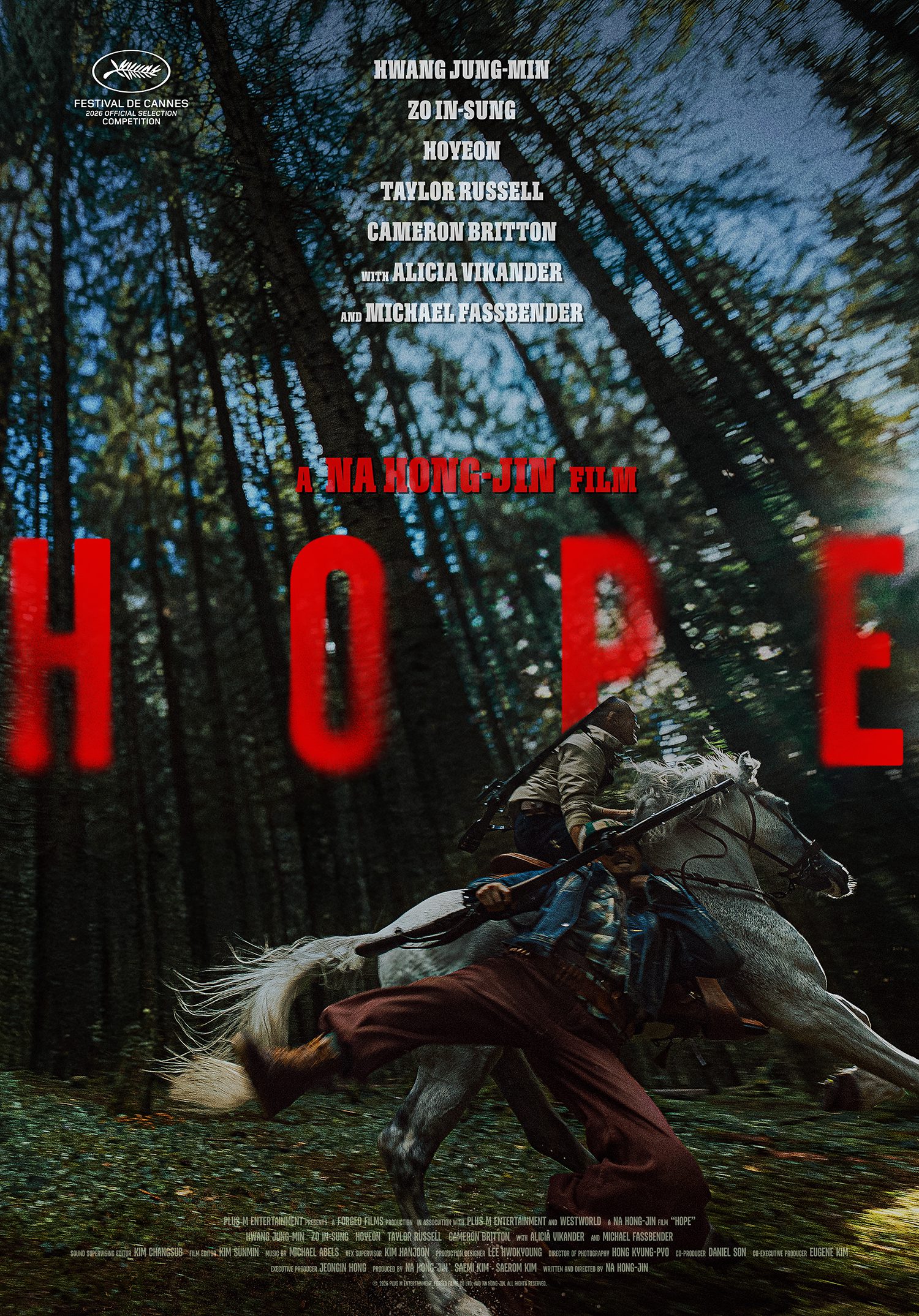
Entretanto, apesar da narrativa B, a estética é de filme A. A direção de fotografia de Kyung-pyo Hong parece ter aprendido com John Ford, ao menos aquele interpretado por David Lynch em Os Fabelmans, mantendo a câmera muito próxima ao solo, com o horizonte acima dos personagens, diminuindo-os dentro de um cenário inicialmente urbano e, depois, natural. A razão de aspecto (ou o tamanho da tela) confere à encenação a grandiosidade que a narrativa merece, enquanto parece isolar os personagens e, no interior da floresta, aprisioná-los entre as árvores. É um contraponto visualmente coerente com a maneira exagerada com que os personagens agem e reagem diante da ameaça que enfrentam.
Há também um elemento industrial que admiro: o cinema sul-coreano apresentando-se como alternativa ao cinema estadunidense, que detém — ou detinha — o monopólio de filmes como este. Com um orçamento de mais de 60 milhões de dólares, Na Hong-jin elabora e desenvolve um cenário convincente com o auxílio da direção de arte e de efeitos visuais que não servem apenas à criação da criatura. E, apesar de apreciar a liberdade criativa da narrativa, faltou um pouco mais de disciplina.
Algumas cenas são repetitivas ou redundantes: não em termos de distribuição narrativa da informação ao público, que se mantém escassa como a situação pede, mas em sequências de ação excessivamente prolongadas. Quantas vezes Bum-seok precisa percorrer o mesmo cenário e esbarrar em situações e obstáculos semelhantes? Ou quantos disparos Sung-ae (Hoyeon) precisará realizar a fim de retardar o avanço da criatura até que uma determinada ação seja concluída? Além do mais, a sensação é de que os personagens não aprendem absolutamente nada e continuam utilizando munições que sabem ser ineficazes. Tudo isso contribui para uma produção inchada cujos 160 minutos diminuem, ao menos para mim, o potencial de entretenimento que deveria proporcionar.
É também decepcionante que o filme flerte com Alien, Avatar, e até Velozes e Furiosos e Não! Não Olhe! na criação de um universo que parece mais derivativo do que referencial, enquanto frustrantemente incompleto. Pois Hope é, evidentemente, uma parte inicial de um projeto maior, embora isso não exima Na Hong-jin de pensar em um desfecho conclusivo, mesmo enquanto plantava a semente de um universo mais amplo. Até especulo se, em edições futuras, uma provável continuação será exibida neste Cannes Film Festival, bem como na Seleção Oficial, o que criará um problema ao júri, que pode ter visto ou não o filme original.
De todo modo, o Cannes Film Festival também precisa de filmes com perseguições de carro, fugas a cavalo, monstros, criaturas e toda a ação que os dramas sociais, históricos e humanos que ocupam a maior parte da seleção certamente não possuem. Um filme como Hope me faz bem enquanto espectador, embora eu tivesse preferido que fosse um filme melhor dentro de sua própria proposta.
Ah, e se não citei os personagens interpretados por Michael Fassbender e Alicia Vikander, e é difícil evitar os nomes deles em publicações e críticas sobre o filme, é apenas para preservar o direito do espectador de descobrir sozinho, como eu próprio pude fazer. Todo festival deveria ter um Hope para chamar de seu.
O filme está na Seleção Oficial do Festival de Cannes 2026.
English review
At film festivals, movies like Hope are not merely welcome distractions, but necessary choices for a brain already exhausted from following what has conventionally come to be called drama — which has often become the negation of the genre itself; a conversation we can and should return to later. If comedies are already scarce, what can be said about the presence of genre films (horror, fantasy, and science fiction) in the Official Selection of the world’s most prestigious film festival? So, in a way, I appreciate that such an obvious midnight screening was selected, especially because it is a B-movie, one in which subtexts and metaphors are replaced — or at least relativized — by direct and frontal action. Even so, there are some serious problems that prevent the film from becoming memorable on its own merits when compared to the rest of a more orthodox selection.
Written and directed by South Korean filmmaker Na Hong-jin, director of The Wailing, Hope begins with a routine investigation led by Hope Harbor police chief Bum-seok (Jung-Min) after the mutilated carcass of an ox is found. At first, it could have been a bear; that hypothesis is discarded in favor of a tiger, which would already be problematic enough for the small town. The truth is that there is something far stranger and more unexpected in the region — a monster, let us say. And I believe I should not go beyond that information in order to preserve the surprises, discoveries, and twists awaiting the viewer. Still, amid all this, the screenplay introduces literal and visual hints suggesting that something may relate to North Korea, either directly or metaphorically, even if only through the paranoia generated by the constant threat of the totalitarian regime to the north.
The film makes a very smart decision by spatially delimiting the narrative within a town seemingly disconnected from the rest of the country, while also restricting the timeframe of the action, which unfolds almost entirely in real time through parallel subplots. This is already evident in the opening sequence which, similar to Mad Max: Fury Road, functions as a massive action set-piece lasting nearly an hour, in which Bum-seok traverses a devastated landscape trying to discover and stop whatever is causing so much death and destruction. The protagonist seems to survive more through luck — for instance, when he is thrown from the back of a pickup truck — and through the collective incompetence surrounding him than through any actual merit of his own, as he wanders through the labyrinthine streets of Hope Harbor.
Once the monster or creature is revealed, the film fully embraces the territory of B-cinema. Not only because of the creature’s nature, but especially because of the way the characters act, react, and make decisions, all with considerable irreverence — I doubt anyone could keep a straight face while listening to the testimony of a survivor suffering from diarrhea. Because of this less realistic and more absurdist framework, the staging can make certain choices without the viewer feeling insulted intellectually, such as the superhuman resilience of one key character in the narrative.
And yet, despite its B-movie narrative, the aesthetics belong to an A-film. Cinematographer Kyung-pyo Hong seems to have learned from John Ford — or at least from the John Ford embodied by David Lynch in The Fabelmans — keeping the camera very close to the ground, with the horizon positioned above the characters, diminishing them within settings that are first urban and later natural. The aspect ratio (or simply the size of the screen) grants the staging the grandeur the narrative deserves, while simultaneously isolating the characters and, deep inside the forest, trapping them between the trees. It becomes a visually coherent counterpoint to the exaggerated way the characters behave and react before the threat confronting them.
There is also an industrial aspect I admire: South Korean cinema presenting itself as an alternative to American cinema, which holds — or once held — the monopoly over films like this. With a budget surpassing 60 million dollars, Na Hong-jin constructs and develops a convincing world with the assistance of production design and visual effects that serve purposes beyond merely creating the creature. And although I appreciate the narrative’s creative freedom, it needed a bit more discipline.
Some scenes are repetitive or redundant: not in terms of how information is distributed to the audience — which remains appropriately scarce — but in the excessive prolongation of action sequences. How many times does Bum-seok need to traverse the same environment and stumble into similar situations and obstacles? Or how many shots must Sung-ae (Hoyeon) fire in order to delay the creature’s advance until a certain action is completed? Moreover, the feeling persists that the characters learn absolutely nothing and continue using ammunition they already know to be ineffective. All of this contributes to a bloated production whose 160-minute runtime diminishes, at least for me, the entertainment value it should provide.
It is also disappointing that the film flirts with Alien, Avatar, and even Fast & Furious and Nope in creating a universe that feels more derivative than referential, while frustratingly incomplete. Because Hope is, quite evidently, merely the opening chapter of a larger project, though that does not absolve Na Hong-jin from the responsibility of crafting a conclusive ending even while planting the seeds for a broader universe. I even speculate whether, in future editions, a likely sequel will screen at the Cannes Film Festival and perhaps even in the Official Selection, which would create a problem for the jury — who may or may not have seen the original film.
In any case, the Cannes Film Festival also needs films with car chases, horseback escapes, monsters, creatures, and all the action that the social, historical, and human dramas dominating most of the lineup certainly lack. A film like Hope does me good as a viewer, although I would have preferred it to be a better film within its own proposal.
And if I have not mentioned the characters played by Michael Fassbender and Alicia Vikander — and it is difficult to avoid their names in reviews and publications about the film — it is only to preserve the viewer’s right to discover those surprises alone, just as I was able to do myself. Every festival should have a Hope to call its own.

Crítico de cinema filiado a Critics Choice Association, à Associação Brasileira de Críticos de Cinema, a Online Film Critics Society e a Fipresci. Atuou no júri da 39ª Mostra Internacional de Cinema em São Paulo/SP, do 12º Fest Aruana em João Pessoa/PB, do 24º Tallinn Black Nights Film na Estônia, do 47º TIFF – Festival Internacional de Cinema em Toronto. Ministrante do Laboratório de Crítica Cinematográfica na 1ª Mostra Internacional de Cinema em São Luís (MA) e Professor Convidado do Curso Técnico em Cinema do Instituto Estadual do Maranhão (IEMA), na disciplina Crítica Cinematográfica. Concluiu o curso de Filmmaking da New York Film Academy, no Rio de Janeiro (RJ) em 2013. Participou como co-autor dos livros 100 melhores filmes brasileiros (Letramento, 2016), Documentário brasileiro: 100 filmes essenciais (Letramento, 2017) e Animação Brasileira – 100 Filmes Essenciais (Letramento, 2018). Criou o Cinema com Crítica em fevereiro de 2010 e o Clube do Crítico em junho de 2020.