
Crítica em português
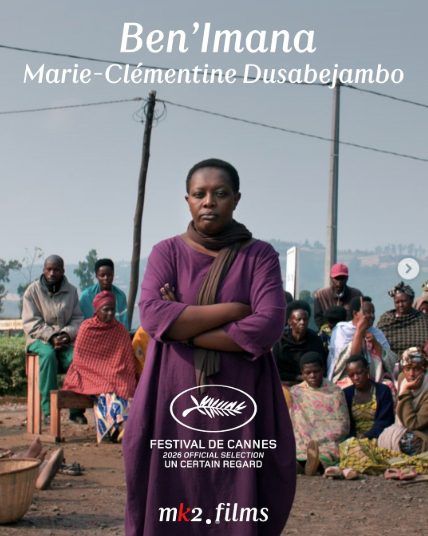
Estreia em longas-metragens da cineasta autodidata ruandesa Marie-Clémentine Dusabejambo, Ben’imana dialoga não somente com o genocídio tutsi em Ruanda, mas com as histórias de todas as nações que rejeitam o passado, não responsabilizam os que cometeram e mancharam de terror e sangue a sociedade, e preferem anistiá-los ou perdoá-los como se isto pudesse apagar a memória e consertar o presente. É um filme simultaneamente universal e específico; e a sua universalidade não se restringe à forma como a cineasta abordou o tema, mas também em seu retrato de mães e do feminino.
Apesar de o genocídio estar presente em absolutamente cada imagem, cada silêncio e cada relação humana, Ben’imana troca a barbárie propriamente dita pelas consequências, sobretudo, nas mulheres que carregam na memória e no corpo a história daquela vila devastada. O roteiro desloca-se a 2012, momento em que os tribunais populares se aproximavam do encerramento, um período politicamente bem delicado porque a justiça se confunde com a tentativa de produzir uma reconciliação nacional forçada. Muitos dos julgamentos serviam-se da palavra de uma pessoa contra a de outra; e na maioria das vezes, o perdão era a exigência para que se mantivesse a estabilidade e convivência da sociedade. Desta forma, o filme apresenta-se como um convite à reflexão entre crime e castigo, perdão e esquecimento, com um discurso rico sobre as contradições existentes naquele período.
No centro da narrativa está Vénéranda (Clémentine), sobrevivente do genocídio e figura respeitada dentro da comunidade, responsável por organizar o grupo de apoio em que as mulheres da comunidade tentam revisitar dores que jamais puderam ser verbalizadas. É uma personagem fascinante porque encarna simultaneamente duas forças opostas: ao mesmo tempo em que promove espaços de escuta e memória coletiva, também se torna defensora de uma lógica do apagamento, como se continuar vivendo dependesse da capacidade de soterrar determinadas verdades. Essa contradição explode quando Tina (Kessia), sua filha, aparece grávida e precisa lutar para manter a sua bolsa de estudos. Para assegurar o seu futuro, a jovem necessita descobrir quem foi seu pai, uma informação sonegada pela mãe, a despeito do clamor da tia Suzanne (Isabelle).
A partir desse conflito familiar, Ben’Imana gradualmente revela a dimensão política do silêncio, juntamente com as subtramas que correm paralelamente e os relatos daquelas mulheres no grupo de apoio que preenchem a nossa imaginação com as imagens das violências não vistas. Vénéranda resiste em falar não apenas porque a memória é dolorosa, mas porque pretende proteger a sua filha, uma metáfora até óbvia mas eficiente em que as personagens assumem, respectivamente, a feição de Estado e cidadão. O silêncio pode ser – não digo que seja – uma forma de preservar a dignidade do sofrimento proporcionado pela memória. Essa percepção atravessa todo o filme. E é a sua reflexão mais fascinante: quando calar a verdade é melhor do que expressá-la?
A diretora comunica isto mantendo Vénéranda em primeiro plano ou reposicionndo-la visualmente no centro das cenas, a partir de rack focus ou de decisões formais, como se o corpo daquela mulher fosse o espaço onde as contradições históricas de Ruanda coexistissem e fossem encenadas. Ela é simultaneamente vítima, mediadora, sobrevivente e ainda guardiã de alguns segredos que prefere silenciar. E há uma delicadeza na maneira como a encenação rejeita o melodrama em favor de rostos em close-ups ou em primeiríssimos planos – onde podemos enxergar os detalhes do rosto de cada personagem.
Essas imagens tornam-se ainda mais poderosas graças à edição sonora. Os lamentos humanos (ou femininos) entreouvidos ao fundo da cena acabam se misturando com os sons da natureza, como se essas dores estivessem assustadoramente inscritas na natureza. E um dos momentos mais belos e doloroso do filme acontece durante o jantar organizado para homenagear os filhos mortos de uma das mulheres da comunidade; os pratos dispostos ao redor da mesa, e apenas Lisa sentado. Ao fundo, escutamos um coro melancólico baixo de vozes femininas que inicialmente parece parte da trilha sonora, mas que aos poucos se dissolve dentro do ambiente.
Marie-Clémentine preocupa-se com as marcas visíveis e invisíveis, individuais e coletivas, deixadas sobre os corpos (alguns, violados), as casas (algumas, destruídas) e as relações familiares (algumas, deterioradas). O genocídio não é perpetuado na violência, e nem abstraído, mas revelado concretamente na vida das mulheres.
Talvez o filme não consiga responder plenamente às perguntas que levanta, e talvez nem seja um filme o espaço apropriado para isto. Não há como medir as consequências da verdade senão quando entendemos o que isto significada para Tina, nem como medir as do silenciamento quando este é feito por uma mãe que procura, de sua maneira, o melhor para a sua filha. Ben’Imana toca em todas essas questões sem encontrar as suas respostas na encenação dramática. E ao dispersar-se às personagens coadjuvantes, o roteiro explora as facetas desse dilema com maior complexidade, mostrando que não há respostas simples que podem ser dadas. Só há vidas que reagem de formas distintas às dores por que passaram.
Existe algo extremamente poderoso na forma como a diretora resgata essas mulheres da posição de vítimas históricas, para sujeitos que continuam tentando produzir sentido para suas existências após o colapso do mundo ao redor através da fala ou da ação. Ben’Imana não é exatamente um filme sobre o genocídio, mas é um filme sobre mulheres tentando sobreviver ao fato de continuarem vivas depois dele. E talvez seja justamente essa diferença que o torne tão delicado, tão doloroso e tão necessário.
O filme está na seleção Um Certo Olhar do Festival de Cannes 2026.
English review
The feature debut of self-taught Rwandan filmmaker Marie-Clémentine Dusabejambo, Ben’Imana engages not only with the Tutsi genocide in Rwanda, but with the histories of every nation that rejects its past, refuses to hold accountable those who stained society with terror and bloodshed, and instead chooses amnesty or forgiveness as though such gestures could erase memory and repair the present. It is a film that is simultaneously universal and deeply specific; and its universality does not stem solely from the way the filmmaker approaches the subject, but also from its portrayal of mothers and femininity itself.
Although the genocide is present in absolutely every image, every silence and every human relationship, Ben’Imana replaces the direct depiction of barbarity with its consequences, especially upon the women who carry within their bodies and memories the history of that devastated village. The screenplay moves to 2012, a moment when the popular courts were approaching their conclusion, an especially delicate political period because justice became entangled with the attempt to produce a forced national reconciliation. Many of the trials relied upon one person’s word against another’s; and most of the time, forgiveness became the necessary condition for preserving social stability and coexistence. In this way, the film presents itself as an invitation to reflect upon crime and punishment, forgiveness and forgetting, constructing a rich discourse around the contradictions embedded within that historical period.
At the center of the narrative is Vénéranda (Clémentine), a genocide survivor and respected figure within the community, responsible for organizing the support group in which women attempt to revisit pains that could never truly be verbalized. She is a fascinating character because she simultaneously embodies two opposing forces: while promoting spaces of listening and collective memory, she also becomes a defender of erasure, as though continuing to live depended upon the ability to bury certain truths. This contradiction explodes when Tina (Kessia), her daughter, appears pregnant and must fight to maintain her scholarship. In order to secure her future, the young woman needs to discover who her father was — information deliberately withheld by her mother despite the pleas of her aunt Suzanne (Isabelle).
From this family conflict onward, Ben’Imana gradually reveals the political dimension of silence, alongside the parallel subplots and the testimonies of the women within the support group, whose stories fill our imagination with unseen images of violence. Vénéranda resists speaking not only because memory is painful, but because she seeks to protect her daughter — an almost obvious yet effective metaphor in which the characters respectively assume the roles of State and citizen. Silence can be — I am not saying that it necessarily is — a way of preserving the dignity of suffering shaped by memory. This perception runs throughout the entire film. And it becomes its most fascinating reflection: when is concealing the truth better than expressing it?
The director communicates this by constantly keeping Vénéranda in the foreground or visually repositioning her at the center of scenes through rack focus and formal compositional choices, as though that woman’s body were the very space where Rwanda’s historical contradictions coexist and are continuously reenacted. She is simultaneously victim, mediator, survivor and guardian of secrets she chooses to silence. And there is remarkable delicacy in the way the mise-en-scène rejects melodrama in favor of close-ups and extreme close-ups, allowing us to observe every detail etched upon the faces of the characters.
These images become even more powerful thanks to the sound design. The human — or rather feminine — laments heard faintly beneath the scenes gradually merge with the sounds of nature, as though those pains had been terrifyingly inscribed into the landscape itself. One of the film’s most beautiful and devastating moments occurs during the dinner organized to honor the dead children of one of the women in the community; the plates arranged around the table, with only Lisa seated there. In the background, we hear a low melancholic chorus of female voices that initially seems to belong merely to the score, but slowly dissolves into the environment itself.
Marie-Clémentine is concerned with the visible and invisible marks, both individual and collective, left upon bodies (some violated), homes (some destroyed), and family relationships (some irreparably deteriorated). The genocide is neither perpetuated through spectacle nor abstracted into historical distance, but revealed concretely within the lives of women.
Perhaps the film cannot fully answer the questions it raises — and perhaps cinema is not the appropriate space to answer them at all. There is no way to measure the consequences of truth except when we understand what it means for Tina, nor to measure the consequences of silence when it comes from a mother who seeks, in her own way, what she believes is best for her daughter. Ben’Imana touches all these questions without necessarily resolving them through dramatic closure. And by dispersing itself among the secondary characters, the screenplay explores the many facets of this dilemma with greater complexity, showing that there are no simple answers available. There are only lives reacting differently to the pains they endured.
There is something profoundly powerful in the way the filmmaker rescues these women from the position of historical victims and transforms them into subjects still attempting to produce meaning for their existence after the collapse of the world around them, whether through speech or through action. Ben’Imana is not exactly a film about genocide; it is a film about women trying to survive the fact that they remained alive after it. And perhaps it is precisely this distinction that makes it so delicate, so painful and so necessary.

Crítico de cinema filiado a Critics Choice Association, à Associação Brasileira de Críticos de Cinema, a Online Film Critics Society e a Fipresci. Atuou no júri da 39ª Mostra Internacional de Cinema em São Paulo/SP, do 12º Fest Aruana em João Pessoa/PB, do 24º Tallinn Black Nights Film na Estônia, do 47º TIFF – Festival Internacional de Cinema em Toronto. Ministrante do Laboratório de Crítica Cinematográfica na 1ª Mostra Internacional de Cinema em São Luís (MA) e Professor Convidado do Curso Técnico em Cinema do Instituto Estadual do Maranhão (IEMA), na disciplina Crítica Cinematográfica. Concluiu o curso de Filmmaking da New York Film Academy, no Rio de Janeiro (RJ) em 2013. Participou como co-autor dos livros 100 melhores filmes brasileiros (Letramento, 2016), Documentário brasileiro: 100 filmes essenciais (Letramento, 2017) e Animação Brasileira – 100 Filmes Essenciais (Letramento, 2018). Criou o Cinema com Crítica em fevereiro de 2010 e o Clube do Crítico em junho de 2020.