
Crítica em português
Embora todos saibam que não se deve julgar um livro pela capa, alguns títulos parecem “prometer” algo – se você me acompanha, sabe a dor que é escrever este verbo dentro de um contexto em que obras de arte não prometem nada a ninguém. Superado isso, o título evoca uma espécie de combinação entre animalidade, maternidade e pertencimento (sempre), e que a diretora e roteirista franco-costarriquenha Valentina Maurel substitui por um drama familiar incomum na superfície, mas convencional no âmago, alinhado a uma tradição de “filmes de festivais“. Um filme povoado por personagens emocionalmente inadequados e machucados, conflitos internos expressos em traumas e enraizados profundamente, uma encenação fragmentada organizada a partir do ponto de vista da protagonista, Elsa.
A narrativa acompanha Elsa, mulher que retorna da Bélgica à Costa Rica após anos estudando na Europa, e cuja história anterior só pode ser conhecida se fizermos uma leitura nas entrelinhas. A menção pela mãe de um relacionamento com um estudante de antropologia e a reação de Elsa sugerem ou o término do romance ou até a desconexão com a mãe, que desconhece a vida da filha, por exemplo. Assim, o retorno temporário ao lar – mas qual é este lar? – simboliza o olhar de fora às tensões familiares ou aos conflitos dramáticos preexistentes na vida de cada membro, e rapidamente compreendemos que a função narrativa e dramática de Elsa é menos de ser personagem, e mais de ser espectadora da ruína emocional dos outros.
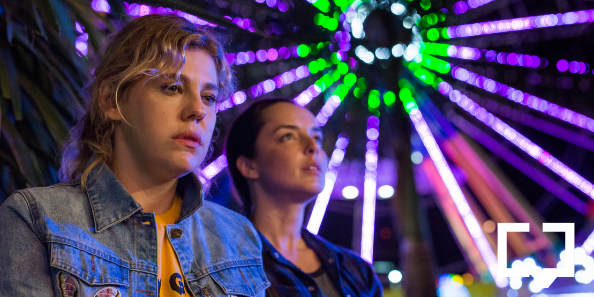
Ao reencontrar a família, Elsa percebe que cada um dos seus membros parece habitar uma realidade paralela. A mãe, Isabel (Marina de Tavira), tem tentado se reapropriar de sua identidade após ter emprestado o seu corpo aos homens com quem se relacionou ou às suas filhas. Ela parece resgatar o passado fisicamente, na cirurgia plástica que deixou hematomas no rosto, e simbolicamente, depois de ser convidada a republicar a coletânea de poemas eróticos que escreveu na juventude. O seu corpo submetido às pressões injustas que as mulheres de sua idade são se torna o símbolo material do desejo de preservação de poemas que não dialogam mais consigo – por não sentir mais o desejo que sentia.
Já o pai, Nahuel (Reinaldo Amién), é definido pela presença rarefeita dentro da narrativa. Um símbolo da negligência parental e conjugal, Nahuel é uma consequência de uma sociedade patriarcal, apesar de carregar consigo o ônus de participar dela. A melancolia no olhar é a de quem sabe que jamais conseguirá restabelecer os laços que foram rompidos. As suas tentativas de contato com as filhas são rasas, mal arranham a superfície de quem de fato são, e não é em vão que o desejo de apresentar a sua namorada à Elsa é só retórica disfarçada de desejo.
Mas é na relação entre Elsa e a irmã caçula, Amalia (Mariangel Villegas), que o filme encontra o núcleo dramático. Amalia mora sozinha na antiga casa da família, cujo abandono e descaso serve como atalho para compreender a bagunça de seu estado psíquico. A dificuldade de adentrar na casa só acrescenta mais a este simbolismo, representando a inacessibilidade de acessar e de fazer a limpeza nos cômodos que representam a sua psiquê. Se Elsa parece distante na maior parte do tempo, Amalia acumulou até se tornar imune às mediações racionais. Ela personagem fala sobre espíritos, de sonhos/pesadelos em que é estuprada, convive com personagens marginais e parece habitar este espaço entre presença e ausência, conferindo-lhe uma imprevisibilidade impossível de ser rotulada.
Se os personagens aderem a uma arquitetura dramática reconhecível, formalmente a narrativa não é muito diferente. A câmera na mão e a profundidade rasa de campo comprimem os personagens nos quadros instáveis, enquanto os tons azulados intensificam uma sensação de distanciamento emocional. A Costa Risca se torna um não lugar: ruas sombrias e vazias à noite, interiores sufocantes e casas que são o produto das dores, dos traumas e fracassos de cada um. Essa encenação prejudica alguma forma de conexão emocional, e simplesmente perdi o interesse nos dividendos de Isabel, se ou quando publicasse o livro, ou no gatilho que a sua poesia desperta na filha sexualmente frustrada.
Mesmo que o animal maternal do título seja esse tecido invisível que aproxima e sufoca mães e filhas, ou irmãs que desaprenderam a se amar, Valentina cria uma obra tão rarefeita que, quando surge o conflito calculado do terceiro ato e a sua resolução idem, pouco ou nada havia com o que eu me importasse. Apesar de ser um filme habitado por personagens intensas e por dramas que gritam para que nós os escutemos, ironicamente é um filme anestesiado. Não muito diferente de Elsa, que parece incapaz de sentir prazer apesar de se esforçar e buscá-lo.
Mesmo sem produzir qualquer forma de envolvimento emocional, senão racional, Forever Your Maternal Animal ainda assim revela uma diretora atenta à maneira como a atmosfera pode comunicar o desgaste familiar além de exposições convencionais, e como os silêncios, as hesitações e os olhares expressam o subtexto exposto nos diálogos. Eu pude não ter me envolvido – lamento por isto -, mas admito o esforço em tornar aquelas personagens mais do que apenas… personagens.
Forever your Maternal Animal está na seleção oficial da mostra Un Certain Regard do Festival de Cannes 2026.
English review
Although everyone knows you should not judge a book by its cover, some titles seem to “promise” something — and if you follow my work, you know how painful it is for me to even write this verb within a context where works of art promise nothing to anyone. Once that contradiction is overcome, the title evokes a combination of animality, motherhood, and belonging (forever), which French-Costa Rican writer-director Valentina Maurel ultimately replaces with a family drama that may appear unusual on the surface but is rather conventional at its core, aligned with a recognizable tradition of “festival films.” A film populated by emotionally maladjusted and wounded characters, internal conflicts expressed through deeply rooted traumas, and a fragmented mise-en-scène organized around the protagonist Elsa’s point of view.
The narrative follows Elsa, a young woman who returns from Belgium to Costa Rica after years studying in Europe, though her previous story can only be understood through implication and subtext. Her mother’s mention of a relationship with an anthropology student — and Elsa’s reaction to it — suggests either the end of that romance or perhaps a deeper disconnection between mother and daughter, one in which the mother no longer truly knows her child’s life. Thus, Elsa’s temporary return home — but what exactly is “home” here? — symbolizes the outsider’s gaze upon preexisting family tensions and emotional fractures. It quickly becomes clear that Elsa’s narrative and dramatic function is less that of an active protagonist and more that of a spectator witnessing the emotional ruin surrounding her.
Upon reuniting with her family, Elsa realizes that each member seems to inhabit a parallel reality. Her mother, Isabel (Marina de Tavira), has been attempting to reclaim an identity after spending years lending her body to the men she loved or to her daughters. She appears to retrieve the past both physically, through plastic surgery that leaves bruises across her face, and symbolically, after being invited to republish the collection of erotic poems she wrote in her youth. Her body, subjected to the unfair pressures imposed on women her age, becomes the material symbol of a desire to preserve poems that no longer correspond to who she is — precisely because she no longer feels the desire she once did.
Meanwhile, the father, Nahuel (Reinaldo Amién), is defined by his sparse presence within the narrative. A symbol of parental and marital negligence, Nahuel is both a consequence of patriarchal structures and someone who carries the burden of participating in them. The melancholy in his gaze belongs to a man who understands he will never truly repair the bonds that have already been broken. His attempts to connect with his daughters remain shallow, barely scratching the surface of who they actually are, and it is no coincidence that his supposed desire to introduce his girlfriend to Elsa feels more like rhetoric disguised as affection.
But it is within the relationship between Elsa and her younger sister Amalia (Mariangel Villegas) that the film finds its dramatic core. Amalia lives alone in the family’s former home, whose abandonment and neglect serve as a shortcut toward understanding the chaos of her psychological state. The difficulty of physically entering the house only deepens this symbolism, representing the impossibility of accessing — and cleaning — the rooms that metaphorically embody her psyche. If Elsa appears emotionally distant for most of the film, Amalia has accumulated so much pain that she seems immune to rational mediation altogether. She speaks of spirits, of dreams and nightmares in which she is assaulted, associates with marginal figures, and exists in this unsettling space between presence and absence, giving her an unpredictability that resists categorization.
If the characters adhere to a recognizable dramatic architecture, formally the film is not much different. The handheld camera and shallow depth of field compress the characters inside unstable frames, while the bluish tones intensify a constant feeling of emotional detachment. Costa Rica itself becomes a non-place: dark empty streets at night, suffocating interiors, and homes that seem to materialize the pain, trauma, and failures of those who inhabit them. This staging ultimately undermines any stronger emotional connection, and I gradually lost interest in Isabel’s emotional dividends — whether or not she would publish the book — or in the emotional trigger her poetry awakens in her sexually frustrated daughter.
Even if the “maternal animal” of the title represents that invisible fabric that both connects and suffocates mothers and daughters, or sisters who have forgotten how to love one another, Valentina Maurel creates a work so rarefied that, by the time the carefully calculated third-act conflict arrives — along with its equally calculated resolution — there was little left for me to emotionally invest in. Despite being inhabited by intense characters and dramas practically screaming to be heard, the film is, ironically, anesthetized. Not unlike Elsa herself, who seems incapable of experiencing pleasure despite constantly seeking and pursuing it.
Even without generating any real emotional involvement beyond intellectual engagement, Forever Your Maternal Animal still reveals a filmmaker attentive to how atmosphere can communicate familial deterioration beyond conventional exposition, and to how silences, hesitations, and glances express the subtext hidden beneath the dialogue. I may not have connected with the film — and I regret that — but I can still acknowledge the effort to make those women feel like something more than merely… characters.

Crítico de cinema filiado a Critics Choice Association, à Associação Brasileira de Críticos de Cinema, a Online Film Critics Society e a Fipresci. Atuou no júri da 39ª Mostra Internacional de Cinema em São Paulo/SP, do 12º Fest Aruana em João Pessoa/PB, do 24º Tallinn Black Nights Film na Estônia, do 47º TIFF – Festival Internacional de Cinema em Toronto. Ministrante do Laboratório de Crítica Cinematográfica na 1ª Mostra Internacional de Cinema em São Luís (MA) e Professor Convidado do Curso Técnico em Cinema do Instituto Estadual do Maranhão (IEMA), na disciplina Crítica Cinematográfica. Concluiu o curso de Filmmaking da New York Film Academy, no Rio de Janeiro (RJ) em 2013. Participou como co-autor dos livros 100 melhores filmes brasileiros (Letramento, 2016), Documentário brasileiro: 100 filmes essenciais (Letramento, 2017) e Animação Brasileira – 100 Filmes Essenciais (Letramento, 2018). Criou o Cinema com Crítica em fevereiro de 2010 e o Clube do Crítico em junho de 2020.