

Crítica em português
James Gray é um cineasta temática e estilisticamente muito consistente. A Nova York dos anos 70 ou 80, as histórias criminais, a crise da masculinidade em homens aparentemente fortes, e Paper Tiger parece um retorno a sua obra original após viajar ao espaço em Ad Astra ou refletir sobre o amadurecimento em Armageddon Time. E para além desses elementos, o seu cinema é profundamente melancólico, à medida em que seus personagens aprendem que os valores e princípios que aprenderam não servem para sustentá-los nos dias de hoje. E, acima de tudo, o seu cinema é elegante. Há um verniz de sofisticação nos dramas de homens moldados por ambientes violentes e/ou competitivos, que deterioram ou arruínam o coração de seu cinema, a família.
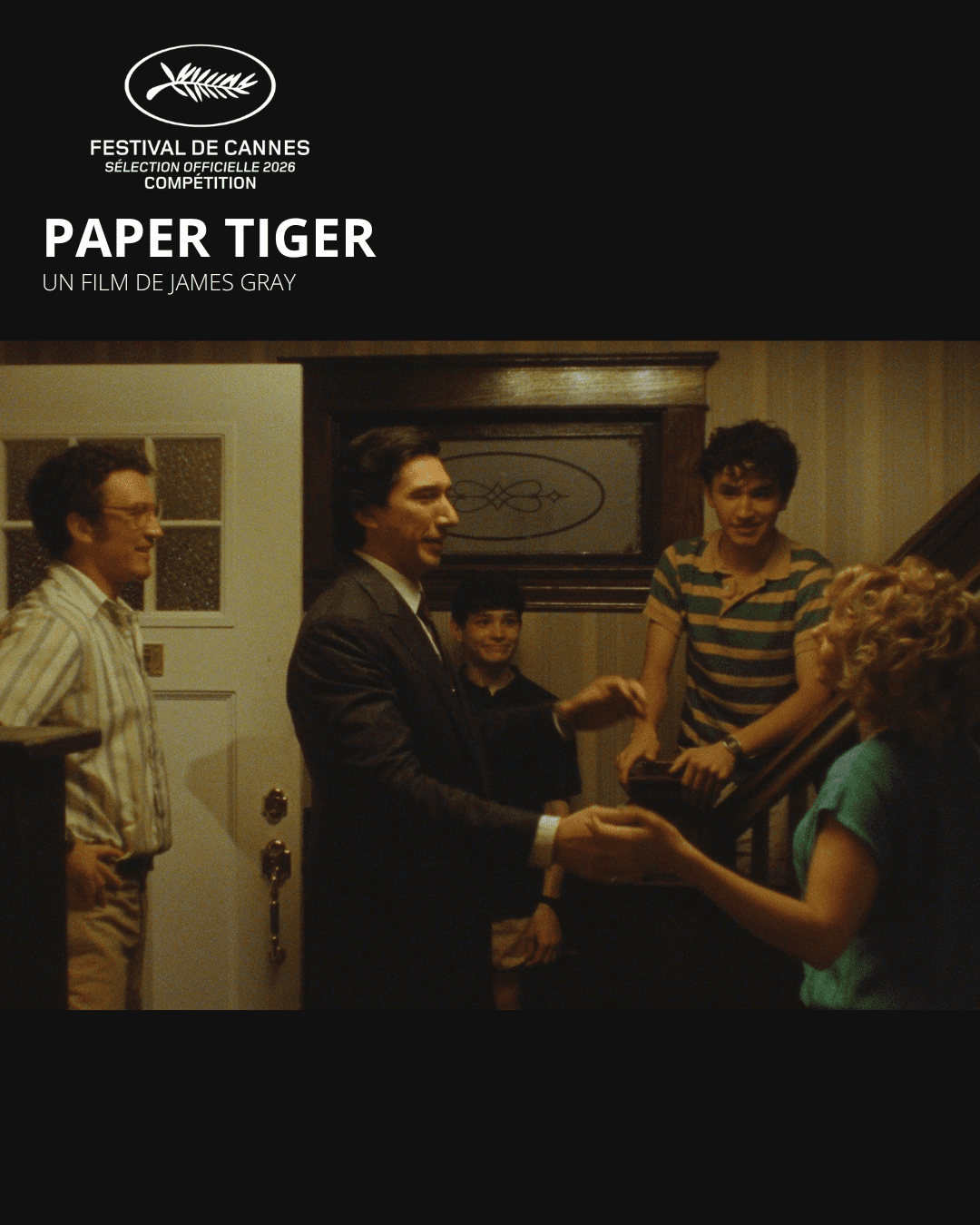
O roteiro de Paper Tiger estrutura-se ao redor de dois irmãos Gary e Irwin Pearl, interpretados respectivamente por Adam Driver e Miles Teller, personagens que parecem representar duas manifestações distintas, embora conectadas, da crise masculina contemporânea e de uma obsessão em associar a prosperidade econômica com a prosperidade humana. Gary é um ex-policial, agora um self-made man, um sujeito que tenta lucrar da forma como pode, preferencialmente dentro da Lei, e que encontra uma oportunidade após a máfia italiana deixar de controlar o negócio local, dando espaço aos russos, que não compreendem as regulamentações que devem seguir. É aí onde entraria o irmão caçula Irwin, graduado e mestre, certinho e obediente à Lei. Só que as coisas não acontecem como deveriam, e logo a família de Irwin, a esposa Hester (Scarlett Johansson) e seus dois filhos ficam sob ameaça do crime organizado.
E eu gosto muito de como Adam Drive apropria-se de Gary: os seus ternos caros, o seu traquejo social herdado da época de detetive e a sua postura de rei do pedaço revelam alguém que transformou sua identidade em espetáculo de autoridade. Gray, contudo, não o reduz em uma caricatura, há um elemento humano relacionado ao afeto por Irwin e sua família. Um pai de família, trabalhador e bastante ético, Irwin é um homem sufocado pelo patriarcado construído para protegê-lo e favorecê-lo. Mas, agora, obrigado a sustentar a faculdade dos filhos, Irwin tem que procurar alternativas para ganhar mais. E se Gray não caricaturiza Irwin, tampouco torna Gary um pai moralmente ou socialmente superior.
O filme compreende que o capitalismo corrompe a ética e moral porque até a honestidade e a família estadunidense passam a depender de quanto você ganha… e quando 10 mil dólares são prometidos a Gary por Irwin, a expressão de Teller e Johansson expressam tudo que precisamos saber. É onde entra o crime organizado russo, e desta vez, Gray torna os personagens caricaturas que o cinema já apresentou tantas vezes, salvo o chefão da organização, especialmente quando ameaçam os filhos de Gary.
Nesse sentido, Paper Tiger expande sua discussão sobre masculinidade. É que os filhos, de alguma maneira, funcionam como se fossem os espelhos do pai e do tio. É fácil reparar, a partir dos jovens adolescentes (the boys como Hester os denomina), o processo de legado desta masculinidade – especialmente se formos considerar o destino da mãe. Gray talvez esteja sugerindo que esses jovens estão condenados a reproduzir as mesmas estruturas que envolvem o pai e o tio.
Mas se os homens ocupam o centro da narrativa, o filme encontra sua consciência na personagem de Scarlett Johansson, uma figura que é simultaneamente intensa e resiliente, e marginalizada e invisibilizada – inclusive literalmente. Ela tenta manter a unidade familiar, apesar de enfrentar, praticamente sozinha, a descoberta de um tumor que pode ser fatal. Hester aparece sozinha em momentos decisivos, indo a consultas médicas ou tomandos as decisões difíceis sem o amparo emocional, sustentando o peso doméstico porque é o que pode fazer com o mundo que lhe é dado. Paper Tiger, inconscientemente, entende que as mulheres são obrigadas a suportar as responsabilidades e compromissos afetivos invisíveis, e Johansson é extremamente eficaz em tornar Hester um símbolo de mágoa e cansaço, sem cometer um equívoco de romantizar o seu sofrimento.
E Gray é um diretor elegante, com algumas sequências revelando um controle de atmosfera, encenação e tempo para acentuar o drama e a experiência. A invasão da casa de Gary é um exemplo evidente: uma cena construída a partir de uma ideia dilatada no tempo e espaço a fim de maximizar a vulnerabilidade daquele homem dentro do local que deveria ser o mais seguro. A cena se alonga precisamente porque o diretor deseja que o espectador experimente esse incômodo latente, e se algo me tira do sério é exatamente a necessidade de tornar os russos caricaturas – também nessa passagem.
Da mesma forma, a sequência ambientada no interior de um milharal transforma aquele espaço em que se vê pouco e se escuta menos – afinal, os aviões sobrevoam a cada momento. É um ambiente que materializa, visualmente, a condição psicológica de Irwin, encurraldo ou a constatação do que é, de fato, um tigre de papel, ou seja, uma figura que apenas parece ameaçadora na ideia.
E Paper Tiger é um retorno competente às origens do cineasta. Porque Gray reencontra aquilo que sempre diferenciou o seu cinema de outros dramas criminais: a compreensão de que violência masculina advém de estruturas econômicas e obrigações familiares e afetivas, enraizadas na ideia do sonho americano. Seus personagens erram, machucam, e se destroem não porque sejam maus, e é fácil enxergar um desfecho em que as coisas não saiam dos trilhos, mas porque aprenderam desde cedo que masculinidade significa suportar pressão sem demonstrar fragilidade, e Iriwin tenta, a todo momento, mascarar o seu medo diante do destino inevitável.
O resultado é um filme sólido e profundamente triste, que utiliza o universo criminal para sublimar homens fortes e investigar a falência emocional de modelos masculinos que não têm ou não deveriam ter espaço no mundo contemporâneo. Um filme amargo e doloroso.
O filme está na Seleção Oficial do Festival de Cannes 2026.
English review
James Gray is a filmmaker of remarkable thematic and stylistic consistency. The New York of the 1970s and 1980s, crime stories, and the crisis of masculinity in seemingly strong men have always defined his cinema, and Paper Tiger feels like a return to his original body of work after venturing into space with Ad Astra or reflecting on coming-of-age in Armageddon Time. Beyond these recurring elements, however, his cinema is profoundly melancholic, as his characters gradually realize that the values and principles they were taught can no longer sustain them in the contemporary world. Above all, his cinema is elegant. There is a veneer of sophistication covering dramas about men shaped by violent and/or competitive environments, environments that ultimately corrode or destroy the emotional core of his films: the family.
The screenplay of Paper Tiger is structured around two brothers, Gary and Irwin Pearl, played respectively by Adam Driver and Miles Teller, characters who seem to embody two distinct yet interconnected manifestations of the contemporary masculine crisis and of the obsession with associating economic prosperity with human fulfillment. Gary is a former cop turned self-made man, someone who tries to profit however he can, preferably within the law, and who identifies an opportunity after the Italian mafia loses control over the local business scene, leaving room for the Russians, who do not understand the regulations they are expected to follow. That is where his younger brother Irwin enters the picture: educated, disciplined, and obedient to the law. Yet things do not unfold as they should, and soon Irwin’s family — his wife Hester (Scarlett Johansson) and their two children — finds itself threatened by organized crime.
And I particularly like the way Adam Driver inhabits Gary: the expensive suits, the social confidence inherited from his years as a detective, and his posture as king of the neighborhood all reveal someone who has transformed his identity into a performance of authority. Gray, however, refuses to reduce him to caricature; there remains a deeply human element tied to his affection for Irwin and his family. A hardworking and ethical family man, Irwin is a character suffocated by the very patriarchy designed to protect and privilege him. Yet now, forced to pay for his children’s college education, he needs to search for alternative ways to earn more money. And while Gray avoids caricaturing Irwin, he likewise refuses to frame Gary as morally or socially superior.
The film understands that capitalism corrupts ethics and morality because even honesty and the idealized American family become dependent on how much money one earns… and when ten thousand dollars are promised to Gary by Irwin, the expressions on Miles Teller and Scarlett Johansson say everything we need to know. That is when the Russian organized crime enters the story, and this time Gray turns the characters into the kinds of caricatures cinema has already shown countless times, with the exception of the organization’s boss, especially once Gary’s children become threatened.
In this sense, Paper Tiger expands its discussion of masculinity. The children, in some way, function as mirrors of both the father and the uncle. It is easy to notice, through these adolescent boys — “the boys,” as Hester calls them — the process through which this masculinity is inherited, especially if we consider the mother’s fate. Gray perhaps suggests that these young men are condemned to reproduce the same structures that entrap both their father and uncle.
But while men occupy the center of the narrative, the film discovers its conscience in Scarlett Johansson’s character, a figure who is simultaneously intense and resilient, yet marginalized and invisible — literally so at times. She attempts to preserve the family unit despite facing, almost entirely alone, the discovery of a potentially fatal tumor. Hester appears alone during decisive moments, attending medical appointments or making difficult decisions without emotional support, carrying the domestic burden because it is the only thing she can do within the world she has been given. Paper Tiger unconsciously understands that women are forced to shoulder invisible emotional responsibilities and commitments, and Johansson is extraordinarily effective in turning Hester into a symbol of grief and exhaustion without ever romanticizing her suffering.
And Gray remains an elegant filmmaker, with several sequences revealing an extraordinary command of atmosphere, staging, and temporal rhythm in order to intensify drama and emotional experience. The home invasion sequence at Gary’s house is an evident example: a scene constructed around an idea stretched through time and space in order to maximize the vulnerability of that man inside the place that should theoretically be the safest. The sequence extends precisely because the director wants the spectator to inhabit that latent discomfort, and if there is something that frustrates me, it is precisely the insistence on turning the Russians into caricatures — including in this scene.
Likewise, the sequence set within a cornfield transforms that space into an environment where little can be seen and even less can be heard — after all, airplanes constantly fly overhead. It becomes a setting that visually materializes Irwin’s psychological condition, his sense of entrapment, or perhaps the realization of what a paper tiger truly is: a figure that only appears threatening as an abstract idea.
And Paper Tiger is a competent return to the filmmaker’s origins because Gray reconnects with what always distinguished his cinema from other crime dramas: the understanding that masculine violence emerges from economic structures and familial and emotional obligations rooted in the mythology of the American Dream. His characters make mistakes, hurt others, and destroy themselves not because they are inherently evil — in fact, it is easy to imagine a version of events where everything does not spiral out of control — but because they were taught from an early age that masculinity means enduring pressure without ever revealing fragility, and Irwin constantly attempts to mask his fear in the face of an inevitable destiny.
The result is a solid and deeply sorrowful film that uses the criminal universe to sublimate strong men while investigating the emotional collapse of masculine models that no longer have — or perhaps should no longer have — a place in the contemporary world. A bitter and painful film.

Crítico de cinema filiado a Critics Choice Association, à Associação Brasileira de Críticos de Cinema, a Online Film Critics Society e a Fipresci. Atuou no júri da 39ª Mostra Internacional de Cinema em São Paulo/SP, do 12º Fest Aruana em João Pessoa/PB, do 24º Tallinn Black Nights Film na Estônia, do 47º TIFF – Festival Internacional de Cinema em Toronto. Ministrante do Laboratório de Crítica Cinematográfica na 1ª Mostra Internacional de Cinema em São Luís (MA) e Professor Convidado do Curso Técnico em Cinema do Instituto Estadual do Maranhão (IEMA), na disciplina Crítica Cinematográfica. Concluiu o curso de Filmmaking da New York Film Academy, no Rio de Janeiro (RJ) em 2013. Participou como co-autor dos livros 100 melhores filmes brasileiros (Letramento, 2016), Documentário brasileiro: 100 filmes essenciais (Letramento, 2017) e Animação Brasileira – 100 Filmes Essenciais (Letramento, 2018). Criou o Cinema com Crítica em fevereiro de 2010 e o Clube do Crítico em junho de 2020.