
Crítica em português
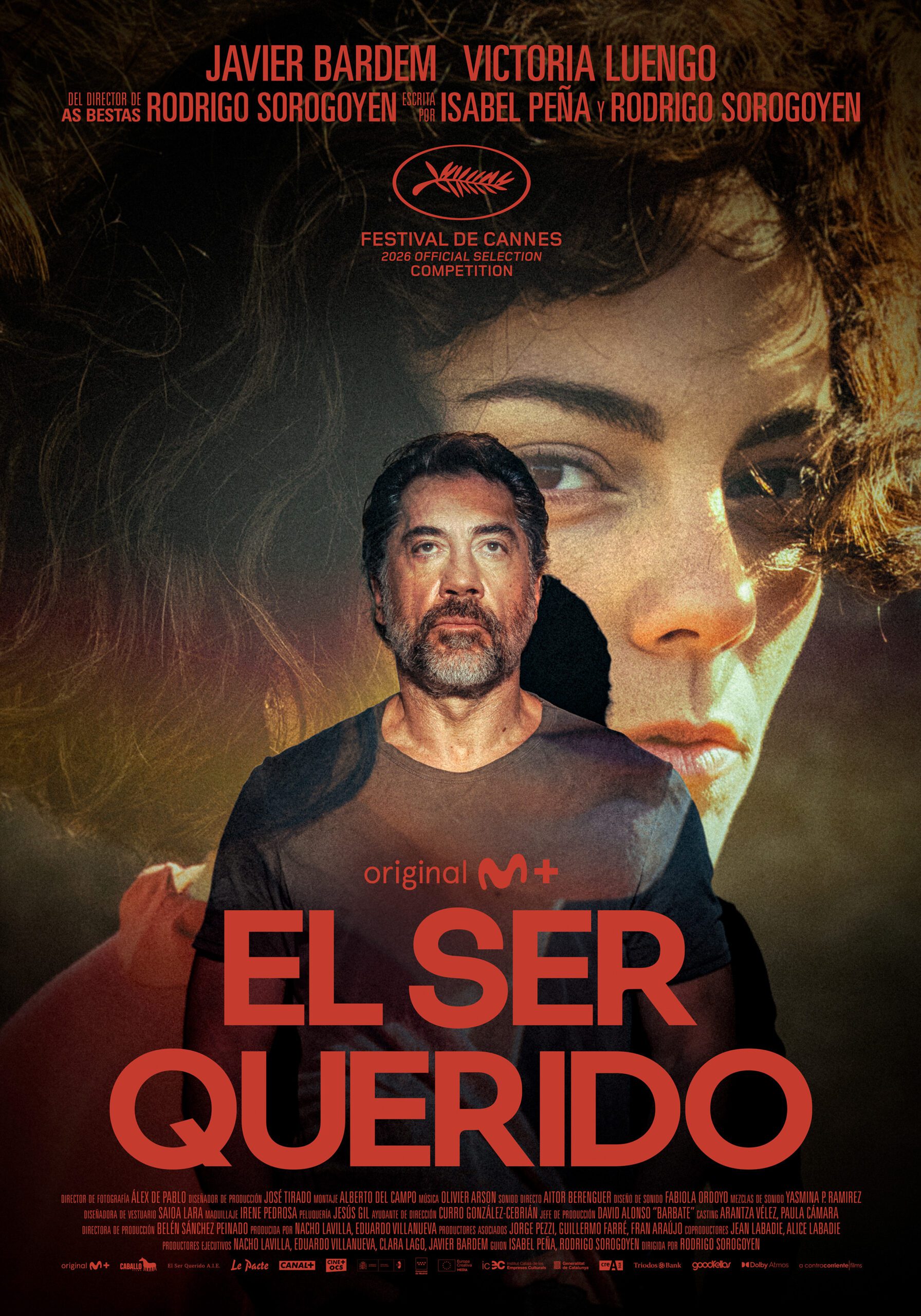
Os filmes não são apenas o quê contam, mas como contam; não são sobre o conteúdo, mas sobre a forma, ou melhor, são sobre a relação indissociável entre a história e o mecanismo pelo qual é contada. Isto fica bastante claro em The Beloved, ou El Ser Querido, em espanhol, em como o diretor e roteirista Rodrigo Sorogoyen, mas também o diretor ficcional Esteban Martínez, buscam mecanismos para expressar o que não conseguem expressar literalmente e, no caso de Esteban, para sobreviver à sua culpa. Agora, diferentemente de As Bestas, que era um drama e thriller com uma construção dramática mais clássica, este The Beloved está mais interessado na relação entre a encenação e a verdade, entre a forma cinematográfica e o que esta revela, esconde e transforma.
Isso já se anuncia de maneira extraordinária na longa sequência inicial – provavelmente uma das melhores cenas dirigidas por Sorogoyen. Durante mais de 20 minutos, acompanhamos o reencontro entre Esteban (Bardem), um cineasta consagrado, e Emilia (Luengo), sua filha. A cena é uma bomba-relógio que não explode… ao menos não de uma maneira óbvia, mas que se revela na incomunicabilidade entre pai e filha. Ele refaz as mesmas perguntas, como quem tenta estabelecer um canal de comunicação ou controlar uma situação da forma como faz nos sets de seus filmes premiados; ele é interrompido pela garçonete, que informa que a cozinha do restaurante não pode preparar o seu prato favorito; ele é analisado, julgado e contestado pelo olhar e pela memória da filha. Tudo isto numa sequência, em teoria, simples: o plano de Esteban, o contra plano de Emilia e o texto interpretado vividamente pelos atores, mas se eleva por articular o quê com o como a partir da aproximação ou do distanciamento da câmera. Em um instante, estamos relativamente confortáveis assistindo à conversa entre pai e filha – por mais tenso que seja o subtexto; noutro momento, estamos a alguns centímetros do rosto dos personagens, confinados às suas dores, angústias e decepções. Ao fim, o convite: Esteban quer que Emilia participe de seu próximo filme.
No processo, Esteban tenta reescrever retrospectivamente o sofrimento da filha através de um discurso que mistura culpa e manipulação emocional. Emilia verbaliza os seus ressentimentos em uma sessão de cinema de Kill Bill vol. 2, no qual enxergou a face de seu pai, e este desloca a conversa para a forma diversa como se recorda da mesma situação. Porque The Beloved não é apenas sobre um pai tentando se reaproximar da filha. É sobre um homem acostumado a controlar ambientes, discursos e pessoas porque esta é a sua função de diretor. E a autoridade que exerce nos sets é o resultado de um prestígio artístico, de uma imponência e impaciência e da maneira como é capaz de manipular vínculos afetivos – salvo com a produtora interpretada por Marina Foïs. O set de filmagens se torna uma extensão emocional de quem é, ou um meio de exercício de sua autoridade.
Por isso que a filmagem de uma cena aparentemente trivial de um almoço entre os personagens do filme-dentro-do-filme seja ainda mais angustiante do que a cena de abertura. É posterior à discussão com Emilia realizada na noite anterior, carregando consigo ressentimento e frustração, e é um momento no qual acontecem coisas que Esteban não pode controlar: a câmera treme, os atores não comem a comida à mesa do jeito que gostaria, os atores sorriem, e rapidamente tudo degringola em um cenário de tensão administrado por um tirano. A sua obsessão criativa é abusiva e constrangedora e, mais do que isto, devolve Emilia a um estado de infantilidade, no qual o pai determina sua filha a comer direito. Enfim, Esteban reconquista temporariamente o elo paterno que havia perdido ao abandonar Emilia, mas a que custo e de que forma?
E Bardem é extraordinário exatamente porque jamais interpreta Esteban como apenas um tirano intimidador; ele é atraente, sedutor, às vezes calmo, e certamente melancólico em como tenta acessar o que é inacessível. Esteban talvez ame genuinamente Emilia, apenas não consegue fazê-lo fora de suas estruturas de controle. Já Luengo, por sua vez, oferece ao filme sua dimensão mais dolorosa. Porque ainda que Emilia nunca seja construída como a vítima passiva, notamos o espaço afetivo que poderia ser preenchido pela figura paterna, muita raiva acumulada e um desejo inconsciente de ser validada e reconhecida por Esteban – não o pai, mas o diretor. A relação entre os atores não é desigual, como alguém poderia esperar de um ator tão imponente como é Bardem, mas é de uma construção mútua num terreno hostil e irregular.
Por falar em irregularidade, existe um virtuosismo impressionante na maneira como Sorogoyen trabalha a edição sonora. Em determinado momento, o som das ondas do mar invade e abafa parcialmente uma cena, até uma personagem colocar fones de ouvido e escutar o que queria – algo que gostaria de ter comigo em uma cena na qual Emilia se reencontra com um personagem no centro de Madri. Já em outro instante, a respiração de Ernesto invade o silêncio até que percebemos não estar mais acompanhando o momento presente da filmagem, mas o momento posterior de assistir ao copião na sala de edição. E a trilha sonora que atravessa o restaurante e lentamente se transforma quase num tema subjetivo de Emilia revela um Ernesto capaz apenas de enxergar a filha quando mediado por um elemento do cinema.
O problema é que Sorogoyen parece frequentemente incapaz de confiar plenamente na força do próprio drama que construiu com tanta sofisticação. Como se sentisse a necessidade de reafirmar a sua presença autoral através de intervenções estéticas, o diretor alterna entre preto e branco, a fotografia mais saturada, as mudanças de razão de aspecto e diferentes texturas visuais – que criam um sentimento que já estamos assistindo à versão dos bastidores e não nos falaram. Em alguns momentos, Sorogoyen confunde “mais direção” com “melhor direção”, e eu tenho para mim que o filme funciona muito por causa do diretor, e às vezes até mesmo a despeito dele.
Melhor são os olhares entre pai e filha ao longo das filmagens. Emilia observando discretamente o pai dirigir. Esteban observando a filha se divertir. Há uma delicadeza nesses instantes, como se ambos recriassem através do olhar o afeto e carinho que jamais construíram. De novo, mediados através do cinema, porque Ernesto só sabe se expressar emocionalmente assim (não é em vão que, em certo momento, um personagem tenha questionado qual o tema pessoal de um filme que parece tão impessoal, e a resposta está na cara dele: Emilia).
No fundo, The Beloved é um filme sobre um homem que passou tanto tempo tentando controlar narrativas que perdeu completamente a capacidade de ouvir e sentir o sofrimento que ajudou a produzir, e dar os passos necessários para reconstruir o que havia sido perdido. E Sorogoyen, mesmo quando exagera formalmente, compreende a trajetória de um homem que confunde autoridade com amor, talento e genialidade com legitimidade, trabalho como substitutivo do afeto. O filme é muito menos sobre a reconciliação do que é sobre egoísmo emocional e a melancolia de Ernesto, e como terminar enxergando as suas dores como motor criativo artístico, do que como feridas que precisam ser curadas.
Provavelmente o cara vai ganhar mais uma Palma de Ouro ou um Oscar de Filme Estrangeiro, mas não vai ser o pai que nunca pôde ser.
O filme está na Seleção Oficial do Festival de Cannes 2026.
English review
Films are not merely about what they tell, but how they tell it; they are not about content alone, but about the inseparable relationship between the story and the mechanism through which it is conveyed. This becomes especially clear in The Beloved, or El Ser Querido in Spanish, in the way director and screenwriter Rodrigo Sorogoyen — but also the fictional director Esteban Martínez — search for mechanisms capable of expressing what they cannot articulate literally and, in Esteban’s case, of surviving his own guilt. Now, unlike The Beasts, which operated as a drama-thriller with a more classical dramatic structure, The Beloved is far more interested in the relationship between mise-en-scène and truth, between cinematic form and what it reveals, conceals, and transforms.
This already announces itself extraordinarily in the extended opening sequence — probably one of the finest scenes Sorogoyen has ever directed. For more than twenty minutes, we follow the reunion between Esteban (Javier Bardem), an acclaimed filmmaker, and Emilia (Victoria Luengo), his daughter. The scene is a ticking time bomb that never explodes — at least not in any obvious way — but instead reveals itself through the profound inability of father and daughter to communicate. He repeats the same questions, as if trying either to establish a channel of communication or to control the situation the same way he controls the sets of his award-winning films; he is interrupted by the waitress informing him that the restaurant kitchen cannot prepare his favorite dish; he is analyzed, judged, and challenged by the gaze and memory of his daughter. All of this unfolds within a sequence that is, in theory, simple: Esteban’s shot, Emilia’s reverse shot, and dialogue vividly embodied by the actors, yet elevated through the articulation of what and how via the camera’s proximity or distance. In one instant, we are relatively comfortable observing the conversation between father and daughter — however tense the subtext may be; in the next, we are mere inches from their faces, confined within their pain, anxieties, and disappointments. And at the end comes the invitation: Esteban wants Emilia to participate in his next film.
In the process, Esteban attempts to retrospectively rewrite his daughter’s suffering through a discourse that blends guilt with emotional manipulation. Emilia verbalizes her resentment during a screening of Kill Bill Vol. 2, in which she saw the face of her father, while he shifts the conversation toward the different ways each of them remembers the same event. Because The Beloved is not merely about a father attempting to reconnect with his daughter. It is about a man accustomed to controlling environments, discourses, and people because that is his very function as a director. And the authority he exercises on set is the result of artistic prestige, personal imposingness, impatience, and the way he manipulates emotional bonds — with the exception of the producer played by Marina Foïs. The film set becomes either an emotional extension of who he is or a means through which he exercises authority.
That is why the filming of an apparently trivial lunch scene within the film-within-the-film becomes even more agonizing than the opening sequence. It occurs after the previous night’s argument with Emilia, carrying with it accumulated resentment and frustration, and it becomes a moment in which things happen that Esteban cannot control: the camera shakes, the actors fail to eat the food the way he wants them to, they smile unexpectedly, and suddenly everything spirals into a landscape of tension managed by a tyrant. His creative obsession is abusive and humiliating and, more than that, it reduces Emilia to a state of infantilization in which her father instructs her on how to eat properly. In the end, Esteban temporarily regains the paternal bond he lost when he abandoned Emilia — but at what cost, and through what means?
And Bardem is extraordinary precisely because he never plays Esteban as merely an intimidating tyrant; he is attractive, seductive, sometimes calm, and unmistakably melancholic in the way he attempts to access what is fundamentally inaccessible. Esteban perhaps genuinely loves Emilia; he simply cannot do so outside structures of control. Luengo, meanwhile, gives the film its most painful dimension. Because although Emilia is never constructed as a passive victim, we can still perceive the emotional void that could have been filled by a paternal figure, the immense accumulated rage, and the unconscious desire to be validated and recognized by Esteban — not as a father, but as a director. The relationship between the actors is not unequal, as one might expect opposite a performer as imposing as Bardem, but rather mutually constructed upon hostile and unstable terrain.
Speaking of instability, there is remarkable virtuosity in the way Sorogoyen handles sound editing. At one point, the sound of ocean waves invades and partially drowns out a scene until a character puts on headphones and listens only to what she wishes to hear — something I personally wished I could do during a later sequence in which Emilia reunites with another character in downtown Madrid. Elsewhere, Ernesto’s breathing invades the silence until we realize we are no longer watching the present moment of filming but rather the later moment of watching dailies inside the editing room. And the musical theme drifting through the restaurant, slowly transforming into something almost subjective to Emilia, reveals an Ernesto capable of perceiving his daughter only when mediated through cinema itself.
The problem is that Sorogoyen often seems incapable of fully trusting the strength of the drama he has constructed with such sophistication. As though compelled to reaffirm his authorial presence through aesthetic interventions, the director alternates between black-and-white photography, oversaturated imagery, shifting aspect ratios, and varying visual textures — creating the sensation that we are already watching some kind of behind-the-scenes version without having been told so. At times, Sorogoyen mistakes “more direction” for “better direction,” and I suspect the film works largely because of the director, while occasionally functioning in spite of him.
More effective are the glances exchanged between father and daughter throughout the production. Emilia discreetly observing her father direct. Esteban watching his daughter have fun. There is a tenderness within these moments, as though both were recreating through observation the affection and intimacy they never truly built together. Again, mediated through cinema, because Ernesto only knows how to express himself emotionally in that manner (it is no coincidence that, at one point, a character questions what personal theme could possibly exist within a film that feels so impersonal, and the answer is staring directly at him: Emilia).
At its core, The Beloved is a film about a man who spent so much time trying to control narratives that he completely lost the ability to hear and feel the suffering he himself helped produce, let alone take the necessary steps to rebuild what had been destroyed. And Sorogoyen, even when formally excessive, understands the trajectory of a man who confuses authority with love, talent and genius with legitimacy, work with emotional substitute. The film is far less about reconciliation than it is about emotional selfishness and Ernesto’s melancholy, about how he ultimately transforms his own pain into artistic creative fuel rather than recognizing it as a wound that needs healing.
He will probably end up winning another Palme d’Or or an Academy Award for Best International Feature — but he still will not become the father he never managed to be.

Crítico de cinema filiado a Critics Choice Association, à Associação Brasileira de Críticos de Cinema, a Online Film Critics Society e a Fipresci. Atuou no júri da 39ª Mostra Internacional de Cinema em São Paulo/SP, do 12º Fest Aruana em João Pessoa/PB, do 24º Tallinn Black Nights Film na Estônia, do 47º TIFF – Festival Internacional de Cinema em Toronto. Ministrante do Laboratório de Crítica Cinematográfica na 1ª Mostra Internacional de Cinema em São Luís (MA) e Professor Convidado do Curso Técnico em Cinema do Instituto Estadual do Maranhão (IEMA), na disciplina Crítica Cinematográfica. Concluiu o curso de Filmmaking da New York Film Academy, no Rio de Janeiro (RJ) em 2013. Participou como co-autor dos livros 100 melhores filmes brasileiros (Letramento, 2016), Documentário brasileiro: 100 filmes essenciais (Letramento, 2017) e Animação Brasileira – 100 Filmes Essenciais (Letramento, 2018). Criou o Cinema com Crítica em fevereiro de 2010 e o Clube do Crítico em junho de 2020.