

Crítica em português
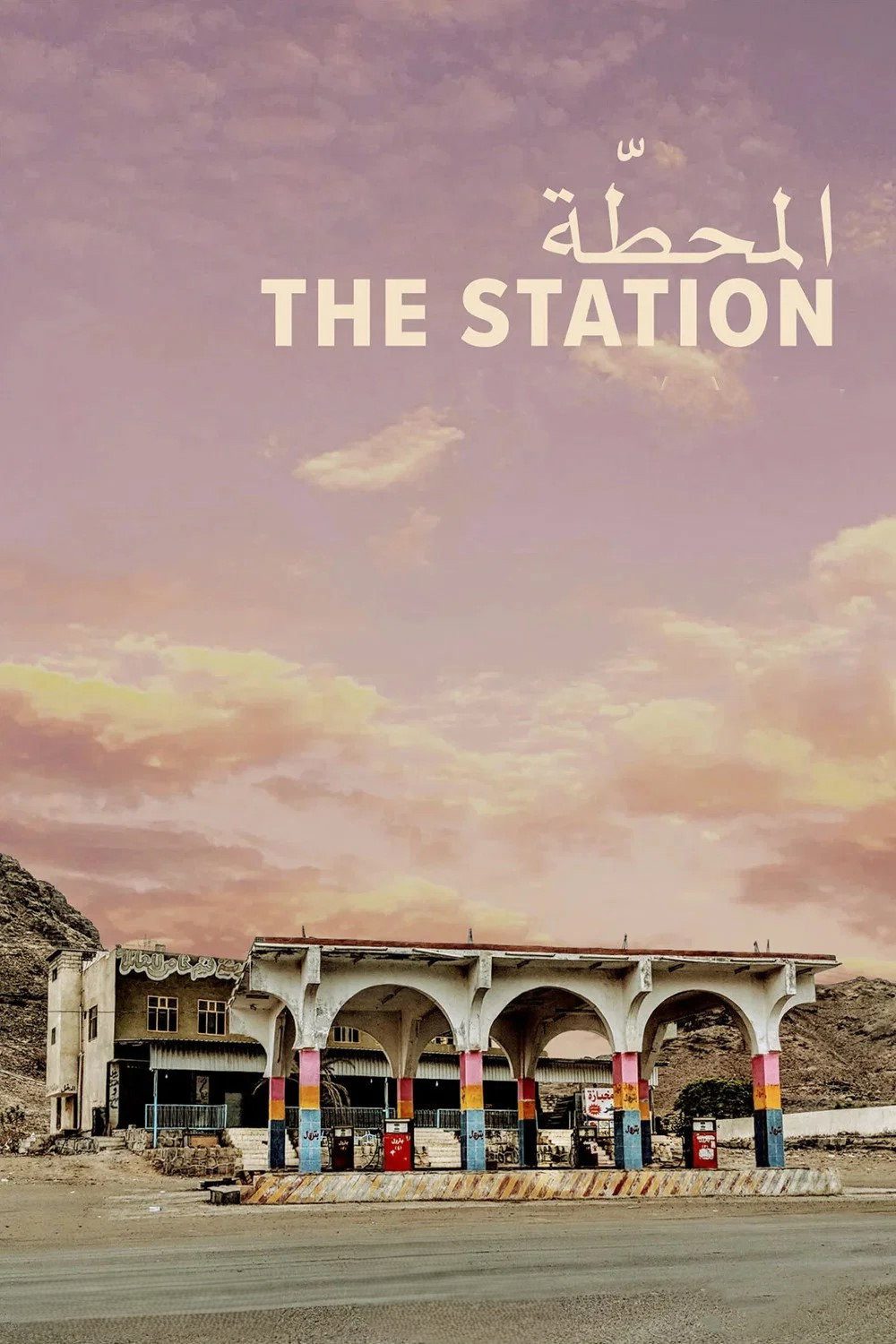
Há um risco em tentar traduzir uma realidade tão específica e devastada como a do Iêmen, país na península arábica que desde 2014 está em uma guerra civil, em uma narrativa que busca, simultaneamente, denunciar, humanizar e construir uma alegoria universal. The Station, da iemenita-escocesa Sara Ishaq, assume esse risco, transformando-o na espinha dorsal que estrutura, especifica e universaliza a narrativa. Enquanto os homens partem para a guerra, são as mulheres que sustentam a continuidade da vida social. As mulheres sem os homens – e, curiosidade, logo pensei no livro de Haruki Murakami – reconfiguram essa realidade social em uma sem armas, sem violência, sem política declarada, ainda que, paradoxalmente, haja a presença visível, ou não, da opressão em tudo isso.
Ambientado em uma vila fictícia, o roteiro coescrito por Sara ao lado de Nadia Eliewat constrói um microcosmo que simboliza, no lugar de apenas representar, as tensões históricas e culturais de uma região mais ampla até mesmo do que as fronteiras do país. Este cenário não é escolhido gratuitamente, e permite que Sara explore uma dimensão inespecífica, em que o debate sobre a continuidade da violência e das consequências sobre os corpos – masculinos, da infância à adolescência, e femininos – extravasa a realidade geopolítica do Iêmen. Claro, a estratégia da narrativa levanta a questão inevitável: até que ponto esta universalização não comprime e minimiza as complexidades locais, simplificando o que se pretende debater?
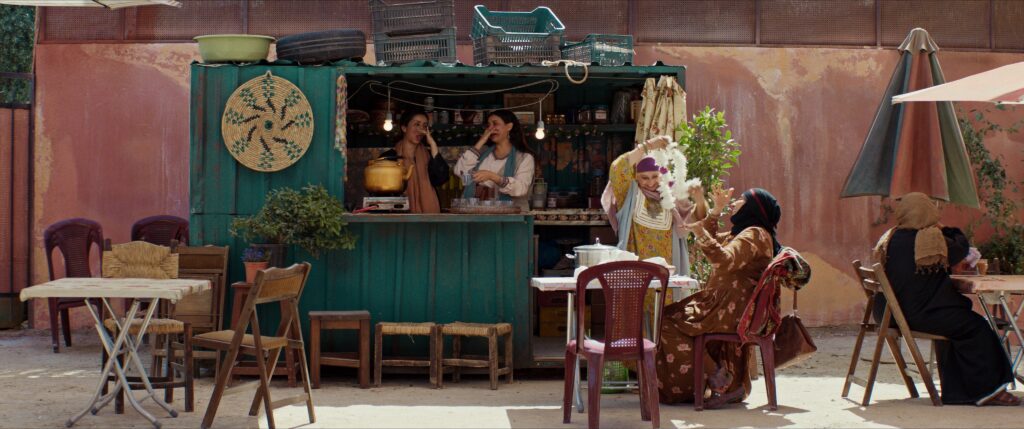
No centro da narrativa está Layal (Manal Al-Mulaiki), a figura que encarna uma espécie de liderança informal baseada não na autoridade, mas no afeto. A liderança, de fato, é exercida por Um Abdallah (Shorooq Mohammed), a esposa do xeique. Mas Layal é capaz de reunir e criar um espaço neutro, onde as mulheres podem existir para além das imposições patriarcais e bélicas que as cercam. Elas podem se ver livres do chador, elas podem beber, fumar, conversar… e viver momentaneamente sem temer ou ansiar o mundo de fora.
É nesse espaço que se articula uma sororidade que o filme trata com evidente interesse. Mulheres que, fora dali, estariam separadas por etnias, conflitos ou hierarquias sociais, encontram no posto mantido por Layal um terreno comum. Um gesto aparentemente banal, mas que tem um elemento político poderoso, no qual o afeto é capaz de unir o que a força, a violência e o ódio desunem. O roteiro evita, no entanto, as idealizações ao evidenciar que a sororidade é heterogênea. A relação de Layal com a sua irmã, Shams (Abeer Mohammed), é um espaço de tensões mal resolvidas, da mesma maneira que Layal e Um Abdallah também não enxergam o mundo da mesma forma. E Um Abdallah não demora até cobrar de Layal o quinhão devido: o alistamento do irmão caçula, Laith (Rashad Khaled), após completar os 12 anos de idade.
É o elemento mais perturbador da narrativa: a presença de crianças que já operam dentro da lógica da guerra. Meninos de 12, 13, 14 anos que ocupam checkpoints, que impõem autoridade, que reproduzem discursos e práticas violentas sem possuir ainda qualquer capacidade real de discernimento dos motivos pelos quais empunham as mesmas armas de fogo, que eram replicadas em pedaços de madeira, antes de se alistarem. Esta realidade, na qual crianças brincam de guerra ou fazem guerra, explicita a naturalização da violência, não limitado ao contexto do Iêmen, mas dentro de uma política de governos ao redor do mundo, que trocam o currículo básico por um currículo militar e desumanização.
Nesse sentido, The Station constrói uma dialética eficiente, embora por vezes inconsistente, entre as diferentes formas de violência. De um lado, a violência institucionalizada, exercida por esses meninos/soldados que acreditam cumprir um dever quase sagrado, alimentados por promessas ideológicas que mal compreendem (a de que virgens esperam-nos no paraíso). De outro, uma violência pontual e instrumental, como a realizada por Ahmed (Saleh Al-marshahi) em um determinado momento para ajudar a restituir Laith à sua família. No roteiro, Sara condena o emprego da força, mas reconhece que, em alguns contextos, a sobrevivência depende dela. Esta ambiguidade não enriquece o debate proposto – já que parece uma solução hesitante -, embora reforce a imagem derradeira, um plano aéreo de um cemitério povoado por mártires.
Em contraste com a violência dos homens (e das crianças), as mulheres resistem. Um dos momentos mais emblemáticos ocorre quando as mulheres se posicionam diante do portão do posto, utilizando seus próprios corpos para impedir a entrada dos soldados. Com o gesto de remover e arremessar ao alto seus véus, impedim o avanço e se libertam de um elemento historicamente associada à opressão. A imagem é poderosa, narrativa e conceitualmente, e sintetiza o esforço narrativo de celebrar os gestos não violentos em favor dos gestos de afeto e humanização.
Sara também as humaniza ao aproximar a câmera de seus personagens, e acompanhá-los em suas atividades diárias, em suas interações e hesitações. Há a criação de um espaço de intimidade e cumplicidade parecido com aquela zona temporariamente segura criada por Layal. Ainda assim, ao realizar este esforço de identificar a humanidade por trás da especificidade, e até de dividir a sociedade entre etnias rivais mas que são tão iguais de perto que podem se infiltrar umas nas outras, Sara abdica de um aprofundamento histórico que pode frustrar e até sugerir o envernizamento da realidade para ser mais palatável aos circuitos internacionais (pelos quais o filme certamente passeará).
Apesar dessas ressalvas, The Station permanece um filme relevante, sobretudo por sua capacidade de recentrar a narrativa nas mulheres que, historicamente, ocupam as margens das histórias de guerra, especialmente em países patriarcais iguais o Iêmen. Ao deslocar o foco dos campos de batalha para um posto gerido por uma mulher, Sara reconfigura a ideia de resistência em um ato de criar, numa escala menor, um espaço em que existências e vivências ainda sejam possíveis. Quando, à distância, vemos este espaço de afeto e resistência abandonado, podemos notar que, apesar de tudo, o fato de se recusar a desaparecer pode nos dar esperança em um amanhã melhor e sem armas, nem guerras.
The Station está selecionado na Semana da Crítica no Festival de Cannes 2026.
English Review
There is a risk in attempting to translate a reality as specific and devastated as that of Yemen, a country in the Arabian Peninsula that has been engulfed in civil war since 2014, into a narrative that seeks, simultaneously, to denounce, humanize, and construct a universal allegory. The Station, by Yemeni-Scottish filmmaker Sara Ishaq, embraces this risk, transforming it into the backbone that structures, specifies, and universalizes its narrative. While men depart for war, it is women who sustain the continuity of social life. Women without men, and interestingly, one is reminded of Haruki Murakami, reconfigure this social reality into one without weapons, without violence, without declared politics, even if, paradoxically, oppression remains visibly or invisibly present throughout.
Set in a fictional village, the screenplay co-written by Sara alongside Nadia Eliewat constructs a microcosm that symbolizes, rather than merely represents, the historical and cultural tensions of a region that extends beyond the country’s borders. This setting is far from arbitrary, allowing Sara to explore an undefined dimension in which the debate over the continuity of violence and its consequences on bodies, male bodies from childhood to adolescence, and female bodies, spills beyond Yemen’s geopolitical reality. Naturally, this narrative strategy raises an inevitable question: to what extent does this universalization compress and minimize local complexities, simplifying what it seeks to examine?
At the center of the narrative is Layal (Manal Al-Mulaiki), a figure who embodies a form of informal leadership grounded not in authority, but in affection. Leadership, in fact, is exercised by Um Abdallah (Shorooq Mohammed), the sheikh’s wife. Yet Layal is the one capable of gathering and creating a neutral space, where women can exist beyond the patriarchal and war-driven impositions that surround them. There, they are free from the chador; they can drink, smoke, talk, and momentarily live without fearing or yearning for the world outside.
It is within this space that a form of sorority emerges, one the film approaches with evident interest. Women who, outside of it, would be divided by ethnicity, conflict, or social hierarchy find common ground in the station maintained by Layal. It is an apparently banal gesture, yet one imbued with strong political significance, in which affection becomes capable of uniting what force, violence, and hatred divide. The screenplay avoids idealization, however, by emphasizing that this sorority is heterogeneous. Layal’s relationship with her sister, Shams (Abeer Mohammed), is marked by unresolved tensions, just as Layal and Um Abdallah do not see the world in the same way. And it does not take long before Um Abdallah demands what is due: the enlistment of Layal’s younger brother, Laith (Rashad Khaled), once he turns 12.
This is the narrative’s most disturbing element: the presence of children already operating within the logic of war. Boys aged 12, 13, 14 occupying checkpoints, asserting authority, reproducing violent discourses and practices without possessing any real capacity to understand the reasons for wielding the very firearms they once mimicked with pieces of wood before enlistment. This reality, in which children either play at war or wage it, lays bare the normalization of violence, not limited to Yemen, but reflective of broader governmental policies around the world that replace basic education with militarization and dehumanization.
In this sense, The Station constructs an effective, though at times inconsistent, dialectic between different forms of violence. On one hand, institutionalized violence, exercised by these boy-soldiers who believe they are fulfilling an almost sacred duty, fueled by ideological promises they barely comprehend, such as the notion of virgins awaiting them in paradise. On the other, a punctual and instrumental violence, such as that enacted by Ahmed (Saleh Al-Marshahi) at a key moment to help return Laith to his family. Within the screenplay, Sara condemns the use of force, yet acknowledges that, in certain contexts, survival depends on it. This ambiguity does not necessarily enrich the proposed debate, as it comes across more as a hesitant resolution, even if it reinforces the film’s final image, an aerial shot of a cemetery filled with martyrs.
In contrast to male violence, and that of children, women resist. One of the film’s most emblematic moments occurs when they position themselves at the station’s gate, using their own bodies to prevent the soldiers’ entry. In removing and throwing their veils into the air, they halt the advance while simultaneously freeing themselves from an element historically associated with oppression. The image is powerful both narratively and conceptually, encapsulating the film’s effort to celebrate nonviolent gestures in favor of affection and humanization.
Sara further humanizes these women by bringing the camera close to her characters, following them through daily routines, interactions, and hesitations. There is a construction of intimacy and complicity that mirrors the temporarily safe zone created by Layal. Still, in striving to reveal humanity beyond specificity, and even in depicting rival ethnic groups that, upon closer inspection, are nearly indistinguishable, Sara ultimately relinquishes a deeper historical engagement. This may frustrate some viewers and even suggest a certain polishing of reality to make it more palatable for international circuits, through which the film will undoubtedly travel.
Despite these reservations, The Station remains a relevant film, above all for its ability to recenter the narrative on women who have historically occupied the margins of war stories, particularly in patriarchal countries such as Yemen. By shifting the focus from the battlefield to a station run by a woman, Sara Ishaq reconfigures the idea of resistance as an act of creation, on a smaller scale, of a space where lives and experiences can still exist. When, from a distance, we see this space of affection and resistance abandoned, it becomes clear that, despite everything, the refusal to disappear may still offer hope for a better tomorrow, one without weapons or wars.

Crítico de cinema filiado a Critics Choice Association, à Associação Brasileira de Críticos de Cinema, a Online Film Critics Society e a Fipresci. Atuou no júri da 39ª Mostra Internacional de Cinema em São Paulo/SP, do 12º Fest Aruana em João Pessoa/PB, do 24º Tallinn Black Nights Film na Estônia, do 47º TIFF – Festival Internacional de Cinema em Toronto. Ministrante do Laboratório de Crítica Cinematográfica na 1ª Mostra Internacional de Cinema em São Luís (MA) e Professor Convidado do Curso Técnico em Cinema do Instituto Estadual do Maranhão (IEMA), na disciplina Crítica Cinematográfica. Concluiu o curso de Filmmaking da New York Film Academy, no Rio de Janeiro (RJ) em 2013. Participou como co-autor dos livros 100 melhores filmes brasileiros (Letramento, 2016), Documentário brasileiro: 100 filmes essenciais (Letramento, 2017) e Animação Brasileira – 100 Filmes Essenciais (Letramento, 2018). Criou o Cinema com Crítica em fevereiro de 2010 e o Clube do Crítico em junho de 2020.