
Crítica em português
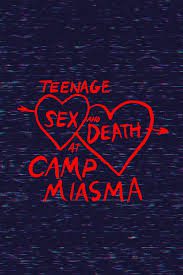
Miasma é o odor pútrido que emana de animais ou vegetais em decomposição. É também o que emana do acampamento que carrega este nome, cenário de um horror slasher à la Sexta-Feira 13, para cujo reboot a cineasta queer Kris (Hannah Einbinder) foi contratada para dirigir. Quando viaja para a locação onde foram realizadas as filmagens do original – o campo Tivoli – em busca de inspiração e de um norte dramático para a produção, Kris encontra a garota final do filme, a reclusa Billy Presley (Gillian Anderson). É o ponto de partida de Teenage Sex and Death at Camp Miasma, de Jane Schoenbrun, diretora do horror desconstruído Eu Vi o Brilho da TV. Ou woke, como ironiza a própria narrativa.
A bem da verdade, Camp Miasma não é apenas um horror elevado – terminologia tacanha cunhada pelos mesmos defensores do chamado pós-horror. É um horror que reflete a partir deste conceito de elevação para, literalmente, penetrar na matéria-prima cinematográfica e expelir – ou gestar – sua própria substância imagética. Posso soar confuso, mas a narrativa não é. Ao menos toma todo o cuidado para expressar literalmente o que tem a dizer. Na cena inicial, quando o assassino slasher crava sua lança em uma adolescente, parece penetrar na própria matéria fílmica. Este ato de penetração, fálico tanto pela definição freudiana quanto pelo histórico do subgênero slasher, é também cinematográfico. Ele fecunda a matéria fílmica, algo que a diretora explorará graficamente mais à frente, fecundando também a imaginação do espectador.
Uma imaginação que já é estimulada, como se estivéssemos em preliminares, quando Jane cria uma espécie de cidadezinha habitada por pessoas esquisitas que poderiam ter saído de um filme de David Lynch. Talvez essa sensação seja potencializada pela escalação de Patrick Fischler, que participou de Cidade dos Sonhos, ou pelo comportamento errático do recepcionista do hotel onde Kris se hospeda, interpretado por Kevin McDonald. É uma imaginação que penetra a artificialidade daquele espaço ermo – onde o pior costuma acontecer no horror –, pintado por cores expressivas que aludem ao seu caráter onírico.
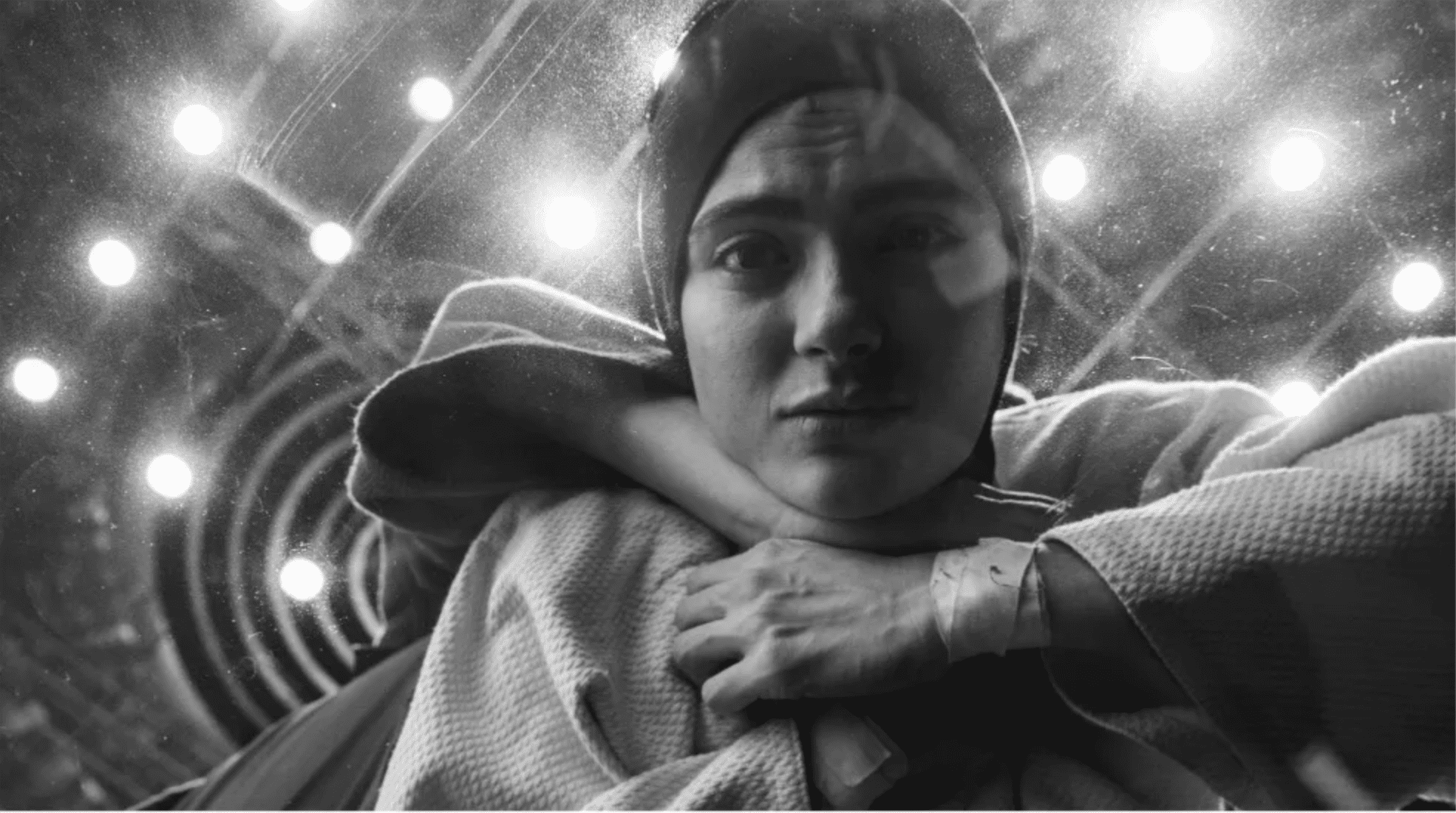
Nesse ambiente, a diretora explora tropos clássicos do horror: o sobressalto (ou jump scare) mencionado por Kris, os rangidos da madeira, os esguichos de sangue que sucedem mutilações caricatas. Mas seu maior trunfo está na dinâmica criada por Hannah Einbinder e Gillian Anderson. Kris se empolga ao acreditar ter realizado um achado arqueológico cinematográfico ao reencontrar a garota final, mas a sensação constante é a de que tudo também pode ser uma armadilha, em direção à qual ela caminha avidamente sem perceber. Sua curiosidade e ingenuidade estão em oposição à ambiguidade facilmente reproduzida por Gillian Anderson, com ecos de uma Norma Desmond – embora Billy não demonstre qualquer interesse em retornar ao estrelato que abandonou. Sua presença é maliciosamente atraente e envolvente, e Jane sabe explorar o que a atriz tem de melhor enquanto cria composições e oposições fascinantes pelo que revelam. Em determinado momento, a silhueta de Billy é posicionada diante de uma tela de cinema em branco, imagem que estabelece um raccord com a de Kris no meio do campo Tivoli… ou Miasma, já não sabemos.
Essa confusão é desejada por um filme que aproxima conceitos opostos e/ou complementares: realidade e fantasia – porque, no fim das contas, no cinema tudo é a mesma coisa; prazer voyeurístico e prazer erótico, em que este é preenchido por aquele quando se trata da relação cinéfila; sexo e morte, impulsos que se encontram em um momento capital de explosão de sangue, fluidos e desejo; e, finalmente, identidades e gêneros binários que coexistem em proporções distintas dentro de um mesmo indivíduo, criando experiências inéditas de gênero. Daí para a exploração formal promovida pela diretora é apenas um salto lógico. Em certo momento, Jane compartilha a perspectiva subjetiva de seu assassino, alternando-a com o steadicam que acompanha, um a um, os assassinatos que ele comete. Camp Miasma compreende que a experiência cinematográfica jamais é apenas objetiva ou subjetiva: ela nasce justamente do encontro entre ambas.
Contudo, apesar de apreciar as discussões formais, estéticas e psicológicas que o filme provoca – tenho convicção de que uma revisitação revelará ainda mais camadas, ou talvez desafie as certezas que imagino ter construído agora –, não consigo ignorar alguns incômodos relacionados às interpretações que o filme me despertou. Subjetividade, não é mesmo? Para além de assistir a uma história em que uma pessoa oprimida pela violência transfóbica passa a reproduzir mecanismos de opressão, tenho sentimentos ambíguos sobre a maneira como Billy revela o que sentiu nos sets de filmagem. Algo que, potencializado pela imposição vocal de Gillian Anderson – capaz de comunicar segurança e controle emocional desde Arquivo X até Sex Education –, me deixou em dúvida entre ter sido abusada, perceber-se como vítima desse abuso e reproduzi-lo sobre outra pessoa.
E, no fim, permanece a sensação de que a montanha pariu um rato. Ou de que toda essa experimentação formal, estética e narrativa culmine na reafirmação de que o desejo e o prazer feminino constituem atos de resistência dentro de um gênero que historicamente advogou a ideologia conservadora da repressão sexual, sob a lâmina afiada e fálica do patriarcado. Cá estou eu: apaixonado por muito do que Jane realizou, repelido por outros aspectos – e vendo tudo isso coexistir dentro da mesma experiência cinematográfica. De certo modo, sinto que este talvez seja o sentimento mais genuíno que Camp Miasma poderia provocar em mim.
O filme está na seleção da mostra Um Certo Olhar, do Festival de Cannes 2026.
English review
Miasma is the putrid odor that emanates from animals or plants in decomposition. It is also what emanates from the camp that bears this name, the setting of a slasher horror in the vein of Friday the 13th, for whose reboot the queer filmmaker Kris (Hannah Einbinder) has been hired to direct. When she travels to the location where the original film was shot – the Tivoli camp – in search of inspiration and a dramatic direction for the production, Kris encounters the original film’s final girl, the reclusive Billy Presley (Gillian Anderson). This is the starting point of Teenage Sex and Death at Camp Miasma, by Jane Schoenbrun, director of the deconstructed horror film I Saw the TV Glow. Or woke, as the narrative itself jokingly suggests.
Truth be told, Camp Miasma is not merely elevated horror – a narrow-minded term coined by the same defenders of so-called post-horror. It is a horror film that reflects upon this very notion of elevation in order to literally penetrate cinematic raw material and expel – or gestate – its own imagetic substance. I may sound confusing, but the narrative is not. At the very least, it takes great care in expressing literally what it wants to say. In the opening scene, when the slasher killer drives his spear into a teenage girl, he seems to penetrate the filmic material itself. This act of penetration, phallic both in Freudian terms and within the historical tradition of the slasher subgenre, is also cinematic. It fertilizes the filmic matter, something the director will later explore graphically while also fertilizing the viewer’s imagination.
An imagination already stimulated – as if we were engaged in foreplay – when Jane creates a sort of small town populated by eccentric people who could have wandered out of a David Lynch film. Perhaps that sensation is intensified by the casting of Patrick Fischler, who appeared in Mulholland Drive, or by the erratic behavior of the hotel receptionist where Kris stays, played by Kevin McDonald. It is an imagination that penetrates the artificiality of that remote space – where the worst usually happens in horror cinema – painted in expressive colors that allude to its dreamlike nature.
Within this environment, the director explores classic horror tropes: the jump scare mentioned by Kris, the creaking wood, the spurts of blood that follow caricatural mutilations. But the film’s greatest strength lies in the dynamic created by Hannah Einbinder and Gillian Anderson. Kris becomes excited at the prospect of having unearthed a kind of cinematic archaeological discovery upon reuniting with the final girl, yet there is a constant sensation that everything may also be a trap toward which she eagerly walks without realizing it. Her curiosity and naivety stand in opposition to the ambiguity effortlessly conveyed by Gillian Anderson, with echoes of Norma Desmond – although Billy demonstrates no interest whatsoever in returning to the stardom she abandoned. Her presence is maliciously attractive and engaging, and Jane knows exactly how to explore the best qualities of the actress while also constructing fascinating compositions and oppositions through what they reveal. At one point, Billy’s silhouette is positioned before a blank movie screen, an image that establishes a raccord with Kris standing in the middle of Tivoli camp… or Miasma, as we no longer know.
This confusion is intentional in a film that brings together opposing and/or complementary concepts: reality and fantasy – because, after all, in cinema they ultimately become the same thing; voyeuristic pleasure and erotic pleasure, where the latter is fulfilled through the former when it comes to cinephilic desire; sex and death, impulses that converge in a pivotal moment of blood, fluids, and desire erupting simultaneously; and finally, identities and binary genders coexisting in varying proportions within the same individual, creating unprecedented gender experiences. From there to the director’s formal experimentation is merely a logical step. At a certain point, Jane shares the subjective perspective of her killer, alternating it with the steadicam that follows, one by one, the murders he commits. Camp Miasma understands that the cinematic experience is never merely objective or subjective: it emerges precisely from the encounter between the two.
However, despite appreciating the formal, aesthetic, and psychological discussions the film provokes – I am convinced that a revisit will reveal even more layers, or perhaps challenge the certainties I imagine having constructed now – I cannot ignore certain discomforts related to the interpretations the film stirred within me. Subjectivity, right? Beyond watching a story in which a person oppressed by transphobic violence begins reproducing mechanisms of oppression, I also have ambiguous feelings regarding the way Billy reveals what she experienced on film sets. Something that, amplified by Gillian Anderson’s vocal authority – capable of communicating confidence and emotional control ever since The X-Files through Sex Education – left me uncertain between having been abused, perceiving oneself as the victim of that abuse, and reproducing it upon someone else.
And in the end, what remains is the sensation that the mountain labored and brought forth a mouse. Or that all of this formal, aesthetic, and narrative experimentation ultimately culminates in reaffirming that female desire and pleasure constitute acts of resistance within a genre that has historically advocated the conservative ideology of sexual repression beneath the sharp, phallic blade of patriarchy. Here I am: enamored with much of what Jane accomplished, repelled by other aspects – and witnessing all of it coexist within the same cinematic experience. In a certain way, I feel that this may be the most genuine feeling Camp Miasma could provoke in me.

Crítico de cinema filiado a Critics Choice Association, à Associação Brasileira de Críticos de Cinema, a Online Film Critics Society e a Fipresci. Atuou no júri da 39ª Mostra Internacional de Cinema em São Paulo/SP, do 12º Fest Aruana em João Pessoa/PB, do 24º Tallinn Black Nights Film na Estônia, do 47º TIFF – Festival Internacional de Cinema em Toronto. Ministrante do Laboratório de Crítica Cinematográfica na 1ª Mostra Internacional de Cinema em São Luís (MA) e Professor Convidado do Curso Técnico em Cinema do Instituto Estadual do Maranhão (IEMA), na disciplina Crítica Cinematográfica. Concluiu o curso de Filmmaking da New York Film Academy, no Rio de Janeiro (RJ) em 2013. Participou como co-autor dos livros 100 melhores filmes brasileiros (Letramento, 2016), Documentário brasileiro: 100 filmes essenciais (Letramento, 2017) e Animação Brasileira – 100 Filmes Essenciais (Letramento, 2018). Criou o Cinema com Crítica em fevereiro de 2010 e o Clube do Crítico em junho de 2020.