
Crítica em português
Under a Bad Star é um filme sobre uma violência perturbadora que, longe de ser a exceção, parece integrar o cotidiano social das relações humanas e domésticas: a violência emocional, verbal, psíquica, física e sexual contra a mulher, praticada através de atos ou gestos grandes ou pequenos, pontuais ou repetidos, barulhentos ou silenciosos. Uma violência que, se não for cortada na raiz, pode contaminar gerações futuras profunda e irreversivelmente. É dentro desse espaço desconfortável e, às vezes, insuportável que essa narrativa dirigida, escrita, fotografada e montada por Lola Cambourieu e Yann Berlier encontra a sua força criativa e destrutiva.
A cena inicial já sugere precisamente a abordagem e o foco dos diretores. Em meio a uma família aparentemente comum e progressista – assim a interpretei -, cercada por referências artísticas e liberdades, desponta Malone (Anouk Berlier-Cambourieu), uma criança de 7 ou 8 anos desobediente e respondona. Ela critica o avô e, sem qualquer filtro, repete algumas palavras e ofensas de maneira automática, como se somente reproduzisse discursos que já ouviu sem compreender seus significados. Indiferente ao conteúdo, é a maneira agressivamente emocional que chama mais a atenção. Sob o olhar da mãe Kiki (Noëmie Édé-Decugis), que leva uma bolsa de gelo à cabeça, dos tios e dos avós, Malone faz o que quer fazer porque, como iremos observar, reproduz o meio no qual convive.
Ela não é somente a abstração do trauma, mas a consequência material ecossistema abusivo no qual está. Um ambiente absorvido e, em certa extensão, normalizado por Kiki, subjugada pela insegurança masculina de seu companheiro, Alex (Hugo Carton). Antes, porém, de o espectador mergulhar frontalmente na relação abusiva, a narrativa posiciona Kiki em um treino de luta livre, reclamando com os parceiros de treino (todos homens) por pegarem leve com ela. A ironia desta passagem só se fará ser compreendida porque Alex não “pega leve”, e a tragédia é a incapacidade de mãe e pai notarem como isso influencia no comportamento errático da filha.
Eu acho a narrativa muito corajosa em suas provocações. Mesmo que Kiki não tenha responsabilidade pela violência a que está submetida – a culpa NUNCA é da vítima! -, até que ponto a permanência dela naquele ambiente não produz consequências irreversíveis na formação emocional de sua filha? Kiki é a vítima de Alex, mas sua impossibilidade de se enxergar vítima pode torná-la a corresponsável na violência sofrida pela filha. Os diretores não oferecem respostas para essa contradição, nem recorrem a simplificações morais. O que a narrativa faz é expor um ambiente doméstico no qual mãe e filha estão emocionalmente aprisionados ao ciclo de abusos, sem poder vislumbrar saídas.
Nesse cenário, discussões banais ganham dimensões ameaçadoras, quando se transformam em explosões de insegurança e fragilidade do homem, que se realiza na agressão física, como meio torpo de restaurar sua masculinidade. E é curioso que quando Alex entra em conflito com um vendedor de frangos, após os insultos, empurrões e até a violência física, esses homens encontram uma fraternidade improvisada e uma reconciliação em torno do ato de chorar. Alex afirma tê-lo feito, pela última vez, quando Malone nasceu; o vendedor vai além. Igual a um ator treinado, ele é capaz de provocar o choro sob o comando. Essa masculinidade contemporânea parece ser revelada em torno da brutalidade, mas também da performance.
Essa camaradagem momentânea jamais encontra equivalente quando Kiki retorna para casa sem as compras que havia prometido trazer. É o estopim de um horror, iniciado na irresponsabilidade doméstica, deslocado à frustração sexual e ao ciúme doentio, todos temperados com pedidos de desculpa e juras de amor. Nesse ínterim, é bastante incômodo Kiki repetir o apelido carinhoso bebê – que, pessoalmente, considero assustador em sua dimensão infantilizadora – diante das agressões que sofre. Queremos que a personagem acorde do transe e que pare de repetir que Alex é o homem de sua vida, como se precisasse fazê-lo para acreditar nisso.
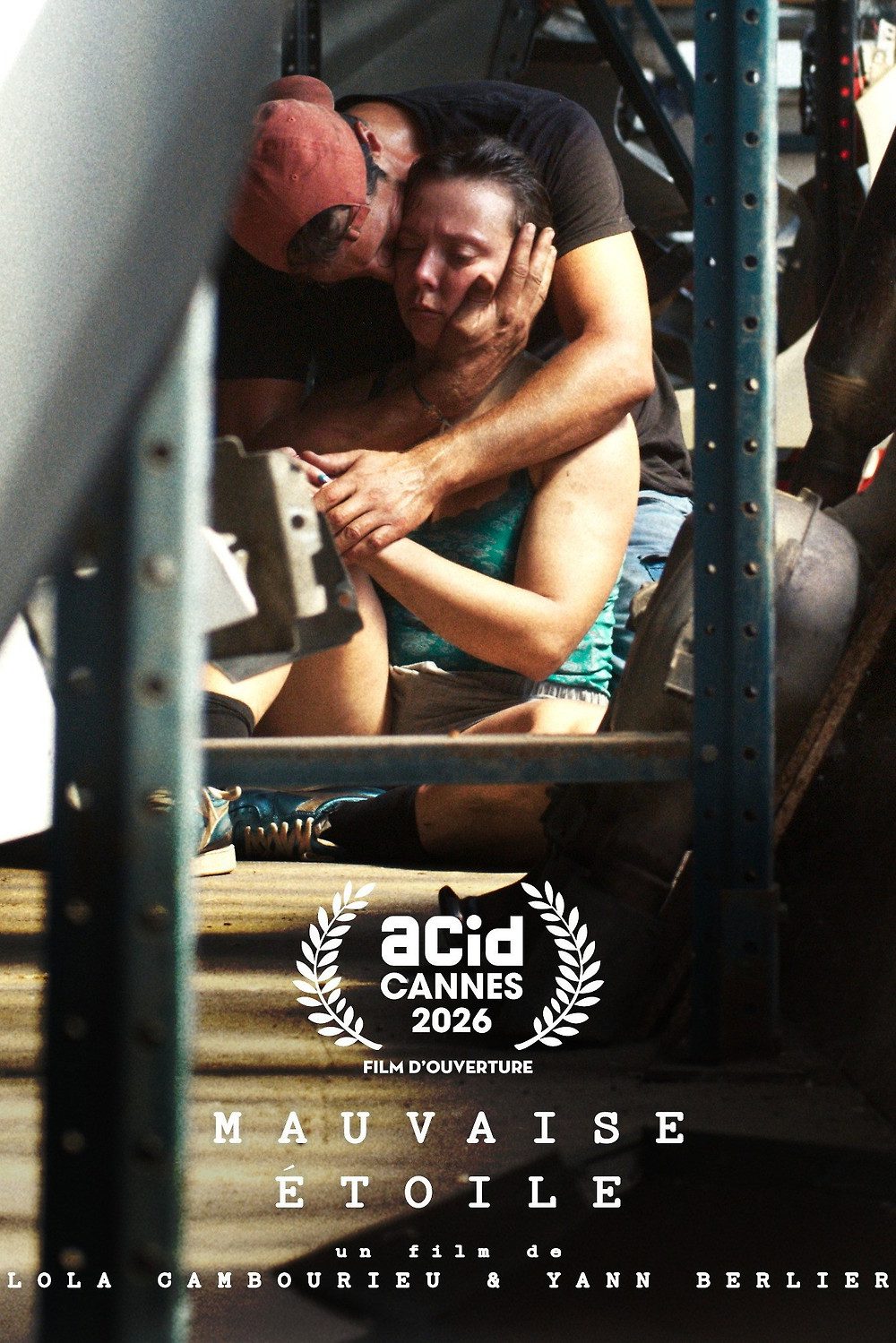
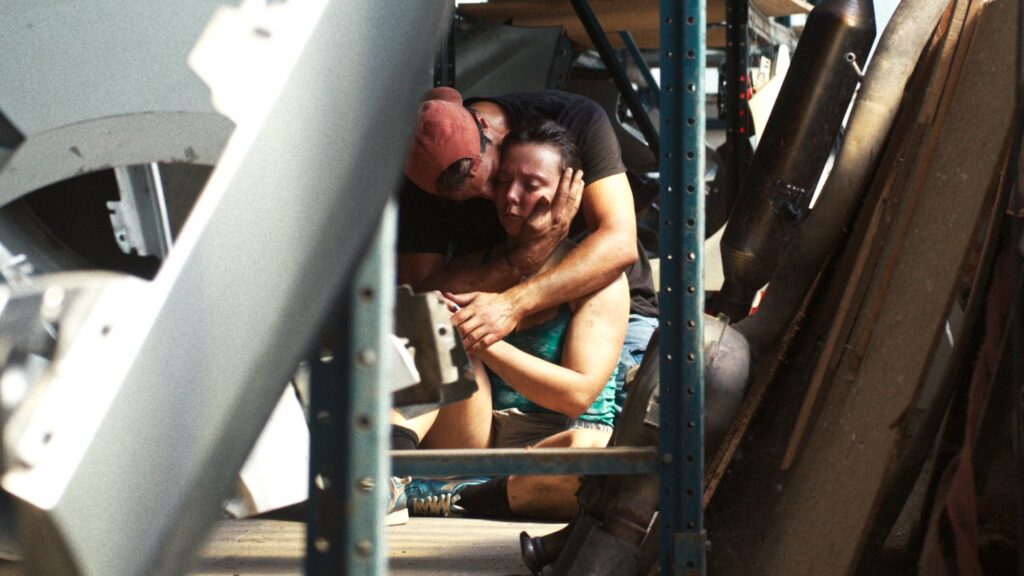
Dos olhares reprovadores às palavras e ofensas, as agressões manifestam-se nos gritos e sons de copos quebrados escutados por Malone na escada que dá pro andar superior. Depois, a agressão é explicitada na imobilização violenta supostamente para “acalmar” Kiki – ainda por cima, acusada de haver bebido demais – até a deterioração psicológica e o ato envolvendo um halter. O filhote de pássaro adotado e mantido sob os cuidados da filha acaba sendo o registro metfórico dela acolhendo a sua inocência perdida.
Formalmente, Under a Bad Star investe numa duração excessiva de suas sequências. Os diretores alongam-nas até o limite do suportável, criando uma experiência inescapável que obriga o espectador a permanecer dentro da violência sem os alívios tradicionais da montagem. E um elemento agravante é a câmera na mão, que desestabiliza o olhar e torna a ação incerta e imprevisível, igual a Alex. Eu tive até uma sensação de que o filme estaria longe demais – não no registro da violência, mas em como a perpetua no tempo.
Mas há um propósito estético nesse excesso. A repetição da violência não surge como a exploração gratuita, mas como mecanismo de cristalização e conscientização. O filme quer tornar impossível ignorar aquilo que tantas sociedades contemporâneas têm aprendido a naturalizar: abusos masculinos frequentemente são absorvidos como parte ordinária da experiência feminina, enquanto às mulheres resta apenas engolir o choro, administrar os danos psicológicos e tentar impedir que essas feridas contaminem também as próximas gerações. O que Kiki, claramente, não tem conseguido fazer.
O calor do sul da França desempenha um papel metafórico na atmosfera humana e paisagística. Os incêndios florestais e os pássaros que caem dos ninhos parecem as consequências ambientais de um calor que também consome e satura a vida doméstica, e que Alex apareça, em sua primeira cena, à frente da piscina só acentua a importância deste elemento. Não que países frios não tenham violência doméstica, mas é impossível refletir com clareza sob o calor – e talvez até seja difícil se enxergar a vítima de um homem abusivo.
E o filme é doloroso mesmo por não oferecer uma catarse. Não há libertação, não há justiça nem vingança emocional. O que permanece é a percepção de que a violência doméstica existe; que homens emocionalmente frágeis e covardes existem; que mulheres aprisionadas em ciclos de violência e dependência afetiva existem; que crianças condenadas a amadurecer sufocadas por galhos e espinhos, e onde não há amor, existem. Lola Cambourieu e Yann Berlier transformaram o cotidiano em um horror psicológico reconhecível na França, no Brasil e no restante do mundo, desconfio.
Under a Bad Star, ou Mauvaise Étoile em francês, está na seleção da Mostra ACID do Festival de Cannes 2026.
English review
Under a Bad Star is a film about a disturbing form of violence that, far from being an exception, seems deeply embedded in the social and domestic fabric of human relationships: emotional, verbal, psychological, physical, and sexual violence against women, enacted through acts and gestures both large and small, isolated or repeated, loud or silent. A violence that, if not cut at its root, can contaminate future generations profoundly and irreversibly. It is within this uncomfortable — and at times unbearable — space that the narrative directed, written, photographed, and edited by Lola Cambourieu and Yann Berlier finds both its creative and destructive force.
The opening scene already suggests, with remarkable precision, the directors’ approach and focus. Amid an apparently ordinary and progressive family — at least as I interpreted it — surrounded by artistic references and personal freedoms, emerges Malone (Anouk Berlier-Cambourieu), a disobedient and confrontational seven- or eight-year-old child. She criticizes her grandfather and, without any filter, repeats certain words and insults automatically, as though merely reproducing discourses she has heard without fully understanding their meanings. Indifferent to the content itself, what stands out most is the aggressively emotional manner in which she expresses them. Under the gaze of her mother Kiki (Noëmie Édé-Decugis), carrying an ice pack against her head, alongside uncles and grandparents, Malone does whatever she wants because, as we gradually realize, she reproduces the environment in which she lives.
She is not merely the abstraction of trauma, but the material consequence of the abusive ecosystem surrounding her. An environment absorbed and, to some extent, normalized by Kiki, herself subjugated by the masculine insecurity of her partner Alex (Hugo Carton). Before the spectator directly plunges into the abusive relationship, however, the narrative places Kiki in a wrestling practice session, complaining that her training partners — all men — are taking it easy on her. The irony of this passage only becomes fully understandable later, because Alex certainly does not “go easy,” and the tragedy lies in both mother and father being incapable of perceiving how deeply this affects their daughter’s erratic behavior.
I find the film extraordinarily courageous in its provocations. Even though Kiki bears no responsibility for the violence inflicted upon her — the victim is NEVER to blame — to what extent does her permanence within that environment produce irreversible consequences in her daughter’s emotional development? Kiki is Alex’s victim, but her inability to recognize herself as one may also render her partially complicit in the violence suffered by her child. The directors offer no answers to this contradiction, nor do they resort to moral simplifications. What the narrative does instead is expose a domestic environment in which both mother and daughter remain emotionally imprisoned within a cycle of abuse, incapable of envisioning an escape.
Within this context, banal arguments acquire threatening dimensions, transforming into explosions fueled by male insecurity and fragility, realized through physical aggression as a clumsy attempt to restore masculinity. And it is curious that when Alex enters into conflict with a chicken vendor, after insults, shoving, and even physical violence, the two men eventually find an improvised fraternity and reconciliation centered around the act of crying. Alex claims the last time he cried was when Malone was born; the vendor goes even further. Like a trained actor, he can summon tears on command. Contemporary masculinity here appears revealed not only through brutality, but also through performance.
That fleeting camaraderie, however, never finds an equivalent when Kiki returns home without the groceries she had promised to bring. It becomes the trigger for a nightmare initiated through domestic irresponsibility, displaced into sexual frustration and pathological jealousy, all tempered with apologies and declarations of love. Meanwhile, it is profoundly unsettling to hear Kiki repeatedly use the affectionate nickname “baby” — which I personally find terrifying in its infantilizing dimension — in the midst of the abuse she suffers. We desperately want the character to awaken from her trance and stop insisting that Alex is “the man of her life,” as though she must constantly repeat it in order to believe it herself.
From judgmental glances to verbal humiliation, the aggression manifests through screams and the sounds of breaking glasses heard by Malone from the staircase leading upstairs. Later, the violence becomes explicit in the brutal immobilization supposedly intended to “calm” Kiki down — while she is simultaneously accused of having drunk too much — culminating in psychological deterioration and the scene involving a dumbbell. The baby bird adopted and placed under Malone’s care ultimately becomes the film’s metaphorical register of a child attempting to shelter her own lost innocence.
Formally, Under a Bad Star invests heavily in the excessive duration of its sequences. The directors stretch scenes to the limits of endurance, creating an inescapable experience that forces the viewer to remain trapped within the violence without the traditional relief offered by editing. An aggravating element is the handheld camera, which destabilizes the gaze and renders the action uncertain and unpredictable, much like Alex himself. At times, I even felt the film might be going too far — not necessarily in the representation of violence itself, but in the way it prolongs and perpetuates it over time.
Yet there is a clear aesthetic purpose behind this excess. The repetition of violence does not emerge as gratuitous exploitation, but as a mechanism of crystallization and awareness. The film seeks to make it impossible to ignore what so many contemporary societies have learned to normalize: male abuse is frequently absorbed as an ordinary component of female existence, while women are left merely to swallow their tears, manage the psychological damage, and attempt to prevent those wounds from contaminating future generations as well. Something Kiki is clearly incapable of doing.
The heat of southern France plays a metaphorical role within both the human and landscape atmosphere. Wildfires and birds falling from their nests seem like environmental consequences of a heat that also consumes and saturates domestic life, and Alex’s first appearance beside the swimming pool only reinforces the importance of this element. Not that colder countries are free from domestic violence, but it is difficult to think clearly under unbearable heat — and perhaps equally difficult to recognize oneself as the victim of an abusive man.
And the film is painful precisely because it refuses catharsis. There is no liberation, no justice, no emotional revenge. What remains instead is the awareness that domestic violence exists; that emotionally fragile and cowardly men exist; that women trapped within cycles of abuse and emotional dependency exist; that children condemned to mature suffocated by branches and thorns, in places where love no longer exists, also exist. Lola Cambourieu and Yann Berlier have transformed everyday life into a recognizable psychological horror — in France, in Brazil, and, I suspect, throughout the rest of the world.

Crítico de cinema filiado a Critics Choice Association, à Associação Brasileira de Críticos de Cinema, a Online Film Critics Society e a Fipresci. Atuou no júri da 39ª Mostra Internacional de Cinema em São Paulo/SP, do 12º Fest Aruana em João Pessoa/PB, do 24º Tallinn Black Nights Film na Estônia, do 47º TIFF – Festival Internacional de Cinema em Toronto. Ministrante do Laboratório de Crítica Cinematográfica na 1ª Mostra Internacional de Cinema em São Luís (MA) e Professor Convidado do Curso Técnico em Cinema do Instituto Estadual do Maranhão (IEMA), na disciplina Crítica Cinematográfica. Concluiu o curso de Filmmaking da New York Film Academy, no Rio de Janeiro (RJ) em 2013. Participou como co-autor dos livros 100 melhores filmes brasileiros (Letramento, 2016), Documentário brasileiro: 100 filmes essenciais (Letramento, 2017) e Animação Brasileira – 100 Filmes Essenciais (Letramento, 2018). Criou o Cinema com Crítica em fevereiro de 2010 e o Clube do Crítico em junho de 2020.