

Crítica em português
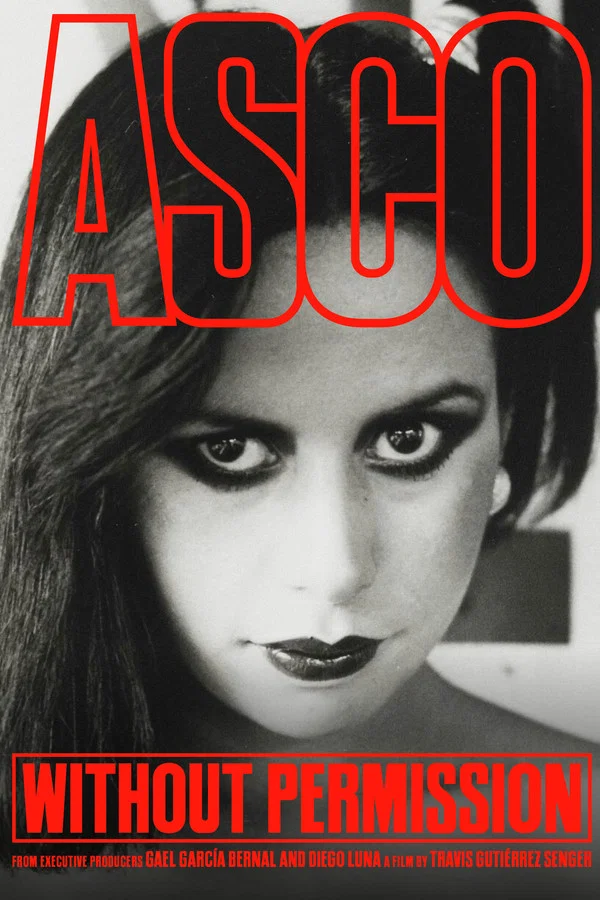
A arte pode ser o grito necessário para reconhecermos a existência de alguém e a presença de alguma dor. A arte pode ser o resgate da memória para reconhecermos que a história é como uma edificação construída um pavimento de cada vez. A arte pode ser a celebração de pessoas que deram voz à comunidade mexicana estadunidense para reconhecermos o papel de cada um deles em uma luta histórica. A arte é muitas coisas. Citei só algumas porque o documentário ASCO: Without Permission tenta ser um pouco de cada uma delas.
O ASCO nasceu à sombra dos movimentos chicanos da Califórnia que protestaram pacificamente contra a Guerra do Vietnã e os índices elevados de recrutamento na comunidade, a desigualdade e exclusão social, e o elevado índice de desemprego. Uma série de protestos que terminou em tragédia quando a polícia de Los Angeles reagiu de maneira violenta, provocando a morte de três pessoas e inúmeros feridos. A reação se deu, dentre outras formas, através da arte dissidente, revolucionária e transgressora. Contudo, de minha brasilidade, não quero aparentar conhecer senão superficialmente esse período da história, embora compreenda os mecanismos como a arte pode tornar-se processo de cura e empoderamento.
Nesse sentido, o documentário de Travis Gutiérrez Senger parte de um gesto de recuperação da história. Em um cenário contemporâneo em que a dissidência artística é absorvida e diluída pela mesma estrutura capitalista que, antes, era responsável por sua marginalização, a narrativa revive um período em que a invisibilidade, desigualdade, exclusão e violência sociais da comunidade chicana se transformaram no combustível criativo de uma arte verdadeiramente revolucionária.
Formado por Harry Gamboa Jr., Gronk, Willie Herrón III e Patssi Valdez, o ASCO surgiu nesta Los Angeles desumana – especialmente para aqueles que o poder considerava menos humanos – e converteu arte em um instrumento de resistência política, sobrevivência econômica e afirmação identitária. Nesse contexto, o mérito primário do documentário está justamente em situar historicamente essa emergência. Ao reconstruir as condições que permitiram o aparecimento do grupo, o filme evidencia como os seus integrantes não apenas enfrentaram a ausência de oportunidades, como a presença de representações estereotipadas que reduziam a experiência chicana às imagens fabricadas pelo imaginário dominante.
O bandido. A empregada doméstica. O traficante de drogas. A mulher sensual. O cinema hollywoodiano cansou de ocupar estes papéis com atores chicanos (ou latino-americanos, de forma geral) para galvanizar uma imagem falsa que pretendiam comercializar. Isto não é exclusividade do cinema, já que a campanha de difamação do chicano era também difundida pelos telejornais que alimentavam pânico, insegurança e preconceito contra a comunidade.
Nesse sentido, ASCO: Without Permission acerta ao revelar que a produção artística do coletivo representava simultaneamente intervenção estética e disputa por formas de representação subtraídas. O que estava em jogo era a contestação dos mecanismos que balizavam como a comunidade era vista fora dela e, especialmente, como a comunidade era vista por si mesma. Não é incomum que a propaganda dessas artes dominantes seja tão poderosa que o chicano deseje negociar sua identidade, comunidade e seus valores para se aderir ao padrão. E padrão é tudo o que o ASCO não era.
Nesse ponto que surge o paradoxo da narrativa, pois é irônico – não de boas maneiras – assistir a um documentário dedicado a um coletivo que construiu sua identidade artística a partir da ruptura de convenções transformar-se em um documentário convencional. Embora o discurso celebre a radicalidade do ASCO, a estrutura narrativa frequentemente adota os procedimentos mais familiares já conhecidos: a organização cronológica e a contextualização histórica, as cabeças influentes que criaram o ASCO e os depoimentos daqueles que foram influenciadas pelo grupo, a ascensão, consagração e dissolução em 1987.
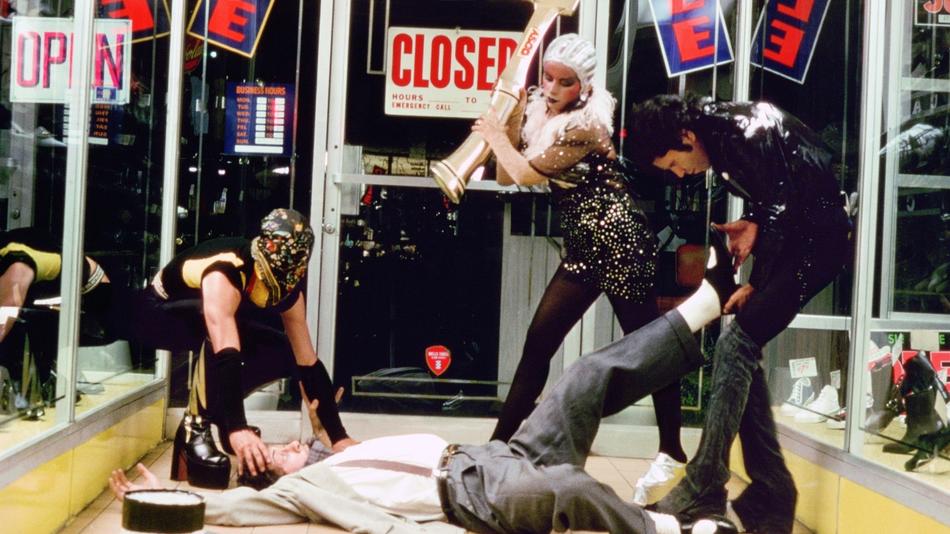
A convenção não compromete o documentário como peça informativa, memorial e celebração, mas o reduz como estética. Enquanto o grupo repelia categorizações e desafiava o padrão transitando entre grafite, performance, intervenção urbana e fotografia, a narrativa é apenas o que tantas são em nível formal. Mesmo diante das possibilidades apresentadas pelos No Movies – as fotografias promocionais falsas que simulavam filmes que jamais seriam produzidos -, Singer permanece dentro de uma zona de conforto desapontante.
Ainda que o material de arquivo, as fotografias e os relatos sejam valiosos, permanece a sensação de que a linguagem não aprendeu nada com a radicalidade do tema. E, curiosamente, os melhores momentos surgem quando a direção permite que a influência estética do ASCO contamine a própria construção do documentário. Neste sentido, as sequências que incorporam trabalhos de artistas contemporâneos ou que dialogam com a tradição dos “No Movies” introduzem uma energia diferente, menos preocupada em informar e mais interessada em criar experiências visuais que revelem o legado do grupo.
Por falar em legado, o filme sugere que a influência do grupo pode ser percebida em todos aqueles artistas – não somente chicanos – que encontraram maneiras originais e vanguardistas de serem vistos e se enxergarem fora dos contornos da indústria e do mercado dominante. É o motivo porque o documentário é relevante, mesmo quando suas escolhas são menos ousadas do que o objeto mereceria. A despeito de sua abordagem convencional, ASCO preserva a compreensão de que a arte produzida pelo grupo é uma estratégia de sobrevivência e um manifesto reivindicatório de corpos e experiências historicamente invisibilizados, marginalizados ou desumanizados.
Eu até termino com uma ponta de frustração, mas ao mesmo tempo feliz por ter tomado conhecimento de um grupo que desconhecia. É, sem dúvida, um gesto afirmativo de artistas que as forças dominantes preferiram ocultar.
English review
Art can be the necessary cry that allows us to recognize someone’s existence and the presence of a particular pain. Art can be the recovery of memory that reminds us history is built like a structure, one floor at a time. Art can be the celebration of people who gave a voice to the Mexican American community, allowing us to recognize the role each of them played in a historical struggle. Art can be many things. I mention only a few because ASCO: Without Permission attempts to be a little bit of all of them.
ASCO emerged in the shadow of the Chicano movements in California that peacefully protested the Vietnam War, the disproportionately high rates of military recruitment within the community, social inequality and exclusion, and widespread unemployment. A series of demonstrations that ended in tragedy when the Los Angeles police responded with violence, resulting in three deaths and countless injuries. Among other forms, the response came through dissident, revolutionary, and transgressive art. Yet, speaking from my Brazilian perspective, I do not wish to pretend I possess anything more than a superficial understanding of this period in history, even though I understand the ways in which art can become a process of healing and empowerment.
In that sense, Travis Gutiérrez Senger’s documentary begins with an act of historical recovery. In a contemporary landscape where artistic dissent is absorbed and diluted by the same capitalist structures that were once responsible for its marginalization, the film revisits a period in which the invisibility, inequality, exclusion, and social violence experienced by the Chicano community were transformed into the creative fuel for a truly revolutionary form of art.
Formed by Harry Gamboa Jr., Gronk, Willie Herrón III, and Patssi Valdez, ASCO emerged within this inhumane Los Angeles—especially for those whom power considered less than fully human—and transformed art into a tool of political resistance, economic survival, and cultural affirmation. In this context, the documentary’s primary achievement lies precisely in situating that emergence historically. By reconstructing the conditions that enabled the group’s formation, the film demonstrates how its members faced not only a lack of opportunities but also the burden of stereotypical representations that reduced the Chicano experience to images manufactured by the dominant imagination.
The outlaw. The domestic servant. The drug dealer. The sensual woman. Hollywood cinema repeatedly assigned these roles to Chicano actors—or, more broadly, to Latin American performers—in order to reinforce a false image it wished to commercialize. This was not exclusive to cinema, since the campaign to vilify Chicanos was also spread through television news broadcasts that fueled fear, insecurity, and prejudice against the community.
In this respect, ASCO: Without Permission succeeds in revealing that the collective’s artistic production represented both an aesthetic intervention and a struggle over denied forms of representation. What was at stake was a challenge to the mechanisms that determined how the community was viewed by outsiders and, perhaps more importantly, how the community viewed itself. It is not uncommon for the propaganda of dominant artistic forms to become so powerful that Chicanos feel compelled to negotiate their identity, their community, and their values in order to conform to an imposed standard. And conformity was the one thing ASCO was not.
It is at this point that the film’s central paradox emerges, for there is something ironic—and not in a good way—about watching a documentary devoted to a collective whose artistic identity was built upon breaking conventions become a conventional documentary itself. Although the film celebrates ASCO’s radicalism, its narrative structure frequently adopts familiar procedures: chronological organization, historical contextualization, interviews with the figures who created ASCO and those who were influenced by it, followed by the group’s rise, recognition, and eventual dissolution in 1987.
This conventional approach does not undermine the documentary as an informative, commemorative, or celebratory work, but it does diminish it aesthetically. While the collective rejected categorization and challenged norms through graffiti, performance, urban interventions, and photography, the film remains formally similar to countless others. Even when presented with the possibilities suggested by the No Movies—the staged promotional photographs for films that would never actually be produced—Senger remains within a disappointingly comfortable zone.
Although the archival footage, photographs, and testimonies are valuable, one cannot escape the feeling that the film’s language has learned little from the radical nature of its subject. Curiously, its strongest moments emerge when the direction allows ASCO’s aesthetic influence to seep into the documentary’s own construction. In this regard, the sequences incorporating works by contemporary artists or engaging directly with the tradition of the No Movies introduce a different kind of energy, one less concerned with informing than with creating visual experiences capable of conveying the collective’s legacy.
Speaking of legacy, the film suggests that ASCO’s influence can be found among all artists—not only Chicano artists—who discovered original and avant-garde ways of being seen and seeing themselves beyond the boundaries imposed by dominant industries and markets. That is why the documentary remains relevant even when its choices are less daring than its subject deserves. Despite its conventional approach, ASCO preserves the understanding that the art produced by the collective functioned as both a strategy of survival and a manifesto demanding recognition for bodies and experiences that had historically been rendered invisible, marginalized, or dehumanized.
I finish the film with a measure of frustration, but also with genuine gratitude for having discovered a group I previously knew nothing about. Without question, ASCO represents an act of affirmation by artists whom dominant forces would have preferred to keep hidden.

Crítico de cinema filiado a Critics Choice Association, à Associação Brasileira de Críticos de Cinema, a Online Film Critics Society e a Fipresci. Atuou no júri da 39ª Mostra Internacional de Cinema em São Paulo/SP, do 12º Fest Aruana em João Pessoa/PB, do 24º Tallinn Black Nights Film na Estônia, do 47º TIFF – Festival Internacional de Cinema em Toronto. Ministrante do Laboratório de Crítica Cinematográfica na 1ª Mostra Internacional de Cinema em São Luís (MA) e Professor Convidado do Curso Técnico em Cinema do Instituto Estadual do Maranhão (IEMA), na disciplina Crítica Cinematográfica. Concluiu o curso de Filmmaking da New York Film Academy, no Rio de Janeiro (RJ) em 2013. Participou como co-autor dos livros 100 melhores filmes brasileiros (Letramento, 2016), Documentário brasileiro: 100 filmes essenciais (Letramento, 2017) e Animação Brasileira – 100 Filmes Essenciais (Letramento, 2018). Criou o Cinema com Crítica em fevereiro de 2010 e o Clube do Crítico em junho de 2020.