
Crítica em português
É óbvio que o artista não cria do vazio, mas do conteúdo enxergado através da janela que aponta para a sociedade e para dentro de si. E também me parece óbvio que as imagens cinematográficas não são inocentes nem ingênuas: enquanto refletem o mundo, influem neste mesmo mundo, propagam ideais e defendem comportamentos pelos personagens fictícios em frente às câmeras. Que o aborto seja uma temática recorrente, e que seja caríssima para mulheres, é apenas uma consequência igualmente óbvia do momento em que a sociedade está e das consequências para as mulheres.
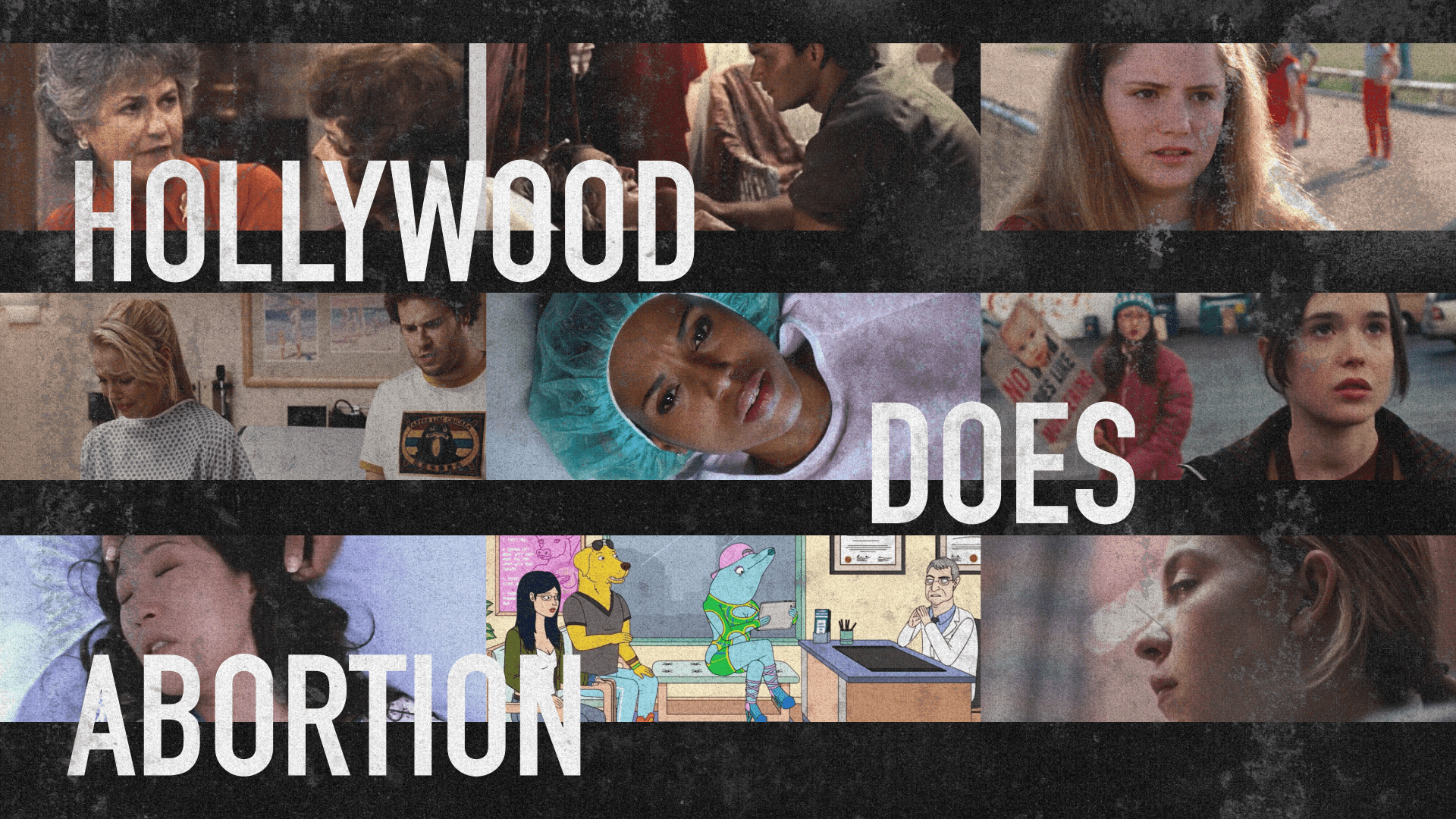
Esse preâmbulo é para discutir o documentário codirigido por Barbara Attie, Janet Goldwater e Mike Attie, Hollywood Does Abortion, que realiza simultaneamente dois movimentos: uma investigação de como o audiovisual estadunidense registrou as transformações culturais em torno do aborto ao longo das últimas cinco décadas e uma exposição de como essas mesmas representações ajudaram a moldar ou condicionar a percepção pública sobre um dos temas mais polarizadores da sociedade contemporânea. Um tema explosivo com o poder de ganhar ou perder eleições.
O resultado é uma obra assumidamente enciclopédica, cuja força está na amplitude de seu recorte. Partindo dos anos 1970 e da histórica decisão de Roe v. Wade, que reconheceu constitucionalmente o direito ao aborto nos Estados Unidos, o documentário percorre um vasto conjunto de filmes, séries e programas populares para mapear as múltiplas formas pelas quais a interrupção da gravidez foi representada na cultura de massa estadunidense. A jornada culmina inevitavelmente na revogação desse precedente jurídico em 2022, transformando a obra não apenas em uma arqueologia cinematográfica sobre o tema, mas também em um comentário sobre um presente em que direitos antes considerados consolidados voltaram a ser objeto de disputa.
O que é fascinante, embora esperado, do documentário é a percepção de que as suas imagens jamais parecem neutras. Mesmo quando o audiovisual ignora o tema ou tergiversa em torno dele, já assume uma posição. Quando recupera os episódios da série Maude (1972), por exemplo, o documentário relembra o momento em que a televisão aberta estadunidense abordava o tema de forma surpreendentemente honesta e desdramatizada. Não se tratava de militância nem panfletagem, mas da compreensão de que o aborto poderia ser apresentado como uma decisão da vida adulta da mulher, e não como um instrumento para gerar culpa, punição ou tragédia.
Essa perspectiva torna-se ainda mais evidente quando o filme revisita produções como Dirty Dancing, que, embora seja principalmente lembrada por sua história romântica e pela ascensão da personagem interpretada por Jennifer Grey, tem no aborto o ponto de virada e conflito que impulsiona a história. Mais importante é a maneira respeitosa e não estigmatizada, com que o procedimento é discutido na narrativa. Algo que não me recordava, devo admitir, e que mostra a importância de documentários iguais a esse que escavam o armário do audiovisual.
Ao longo das décadas seguintes, entretanto, as representações começam a mudar. Como o documentário recorda, a influência política do movimento conservador e da religião evangélica reorganizou o cenário político e elegeu Ronald Reagan. O ex-ator transformou-se em um garoto-propaganda do movimento Pró-Vida, composto por pessoas que, não ironicamente, são favoráveis às guerras ao redor do mundo, patrocinadas pelos Estado Unidos, ou, para não viajar muito longe, ao abandono de vidas que parecem considerar menos importantes. Aí, o cinema e a televisão gradualmente passaram a reproduzir um conjunto de mecanismos de estigmatização: a culpa e o arrependimento, a vergonha, a desistência do procedimento de última hora e o recém descoberto instinto materno, e roteiros que transformam a gravidez não planejada na oportunidade de amadurecimento moral de mulheres, e ainda de homens.
Nesse sentido, uma das contribuições mais interessantes da obra está em demonstrar como determinadas convenções dramáticas acabam produzindo efeitos ideológicos, mesmo quando não pretendem fazê-lo explicitamente. Filmes bem sucedidos como Juno ou Ligeiramente Grávidos, que não são necessariamente peças de propaganda anti-aborto e pró-vida, terminam por sê-lo: seja quando uma mulher jovem decide levar a gravidez a termo e doar o bebê para uma família que não pode engravidar, seja quando uma mulher bem-sucedida decide manter a gravidez ao lado de um banana que precisa amadurecer para alcançá-la. O que o documentário observa é a repetição constante de soluções narrativas e a criação de um repertório simbólico que influencia a forma como o público compreende o tema, mesmo que as estatísticas apontem exatamente o contrário. O cinema galvaniza uma visão de mundo imprecisa, e isso termina por influenciar a política.
É justamente nesse ponto que Hollywood Does Abortion se aproxima de reflexões mais amplas sobre o próprio papel do cinema. Afinal, a questão deixa de ser apenas o aborto, também pensado como um meio para debater a relação entre representação e realidade. Como já dito, o cinema reflete valores já existentes, mas também ajuda a consolidá-los, normalizá-los ou questioná-los. Em outras palavras, não se trata apenas de perguntar o que Hollywood pensa sobre determinado assunto, mas de compreender como Hollywood é parte da criação desse pensamento.
Formalmente, o documentário adota uma estrutura cronológica tradicional e baseada em entrevistas, imagens de arquivo ou trechos de obras audiovisuais. É uma produção didática à sua maneira, e que tem, na montagem, a qualidade de entrecortar um contingente muito grande de referências com um dinamismo. O filme assume o prazer de redescobrir o cinema e de revelar os aspectos negligenciados de obras muito populares, ou de dar atenção a obras ignoradas.
A escolha de privilegiar vozes majoritariamente femininas e concentrar nelas o eixo de reflexão também se revela acertada e até natural, uma vez que o tema afeta e mobiliza diretamente as mulheres. Diretoras, roteiristas, atrizes, pesquisadoras ou críticas culturais oferecem depoimentos que ajudam a contextualizar tanto a evolução das representações, quanto os impactos que essas imagens produzem(iram) na vida cotidiana. Por exemplo, como raramente a mulher negra foi representada nessa discussão, algo que apenas ocorreu com a série Scandal, de Shonda Rhimes. Nisto, o documentário examina o protagonismo de muitas figuras do cinema e da televisão em lutar contra os interesses corporativos e publicitários que prefeririam, se pudessem, silenciar o tema.
Naturalmente, Hollywood Does Abortion possui uma posição bastante clara. Contudo, seu mérito não está em convencer os espectadores de uma determinada posição ideológica, mas em demonstrar como toda representação carrega implicações que ultrapassam os limites da ficção. Ao examinar cinco décadas de cinema e televisão, o documentário evidencia que o debate sobre o aborto jamais aconteceu apenas nos tribunais, nos parlamentos ou nas campanhas eleitorais, mas especialmente nas salas de cinema, nos programas favoritos de televisão assistidos diariamente por milhões de pessoas.
O filme é uma reflexão sobre o poder das imagens em uma sociedade profundamente mediada por elas. É um convite a revisitar uma pergunta tão antiga quanto o cinema pós-invento: o cinema reflete o mundo que existe do lado de fora ou ajuda a criá-lo? A resposta sugerida é que fazem ambas as coisas ao mesmo tempo, algo que torna o cinema uma das forças culturais mais influentes de ontem e sempre.
Hollywood Does Abortion está na programação do Festival de Tribeca 2026.
English review
It is obvious that artists do not create out of a vacuum, but from the material they perceive through the window that looks both toward society and inward toward themselves. It also seems obvious to me that cinematic images are neither innocent nor naïve: while they reflect the world, they also influence that same world, propagate ideas, and advocate behaviors through the fictional characters placed before the camera. That abortion remains a recurring subject – and one of profound importance to women – is merely an equally obvious consequence of the historical moment society inhabits and of the consequences this issue carries for women’s lives.
This preamble serves as an introduction to Hollywood Does Abortion, the documentary co-directed by Barbara Attie, Janet Goldwater, and Mike Attie, which simultaneously performs two movements: an investigation into how American audiovisual culture has recorded the cultural transformations surrounding abortion over the last five decades and an examination of how those same representations have helped shape or condition public perception of one of the most polarizing issues in contemporary society. An explosive topic with the power to win or lose elections.
The result is an openly encyclopedic work whose strength lies in the breadth of its scope. Beginning in the 1970s and with the landmark Roe v. Wade decision, which constitutionally protected the right to abortion in the United States, the documentary traverses a vast collection of films, television series, and popular programs in order to map the many ways in which abortion has been represented within American mass culture. The journey inevitably culminates in the overturning of that legal precedent in 2022, transforming the film not merely into a cinematic archaeology of the subject, but also into a commentary on a present in which rights once thought secure have once again become contested.
What is fascinating, though perhaps not surprising, about the documentary is its recognition that images are never truly neutral. Even when audiovisual works ignore the subject or dance around it, they have already taken a position. When the film revisits episodes of Maude (1972), for instance, it recalls a moment when American network television approached abortion with a surprising degree of honesty and without excessive dramatization. This was neither activism nor propaganda, but rather an understanding that abortion could be presented as an adult decision made by a woman, not merely as a mechanism for generating guilt, punishment, or tragedy.
This perspective becomes even clearer when the documentary revisits works such as Dirty Dancing. Although the film is primarily remembered for its romance and for the coming-of-age journey of Jennifer Grey’s character, abortion serves as the turning point and central conflict that propels the narrative. More importantly, the procedure is discussed in a respectful and non-stigmatizing manner. I must admit that I had not remembered this aspect particularly well, which only reinforces the value of documentaries like this one that rummage through the archives of audiovisual history.
Over the following decades, however, those representations begin to change. As the documentary reminds us, the political influence of conservative movements and evangelical Christianity helped reshape the American political landscape and contributed to the election of Ronald Reagan. The former actor became a spokesperson for the Pro-Life movement, composed of people who, not without irony, often support wars around the world financed by the United States or, to avoid traveling too far afield, the abandonment of lives they appear to regard as less important. Gradually, cinema and television began reproducing a series of mechanisms of stigmatization: guilt and regret, shame, last-minute reversals, newly discovered maternal instincts, and narratives that transform unplanned pregnancies into opportunities for the moral growth of women – and often men as well.
In that sense, one of the documentary’s most compelling contributions lies in demonstrating how certain dramatic conventions end up producing ideological effects, even when they do not explicitly intend to do so. Successful films such as Juno or Knocked Up are not necessarily anti-abortion or pro-life propaganda pieces, yet they ultimately function in that direction: whether through a young woman choosing to carry a pregnancy to term and place the child with an adoptive family, or through a successful woman deciding to keep a pregnancy alongside a man-child who must mature in order to deserve her. What the documentary identifies is the constant repetition of narrative solutions and the creation of a symbolic repertoire that shapes how audiences understand the issue, even when statistical reality points elsewhere. Cinema galvanizes an imprecise worldview, and that worldview ultimately influences politics.
It is precisely here that Hollywood Does Abortion expands into broader reflections about the role of cinema itself. Ultimately, the issue ceases to be abortion alone and becomes a means of discussing the relationship between representation and reality. As previously noted, cinema reflects values that already exist, but it also helps consolidate, normalize, or challenge them. In other words, the question is not merely what Hollywood thinks about a particular issue, but how Hollywood actively participates in the creation of that thinking.
Formally, the documentary adopts a traditional chronological structure built around interviews, archival footage, and excerpts from audiovisual works. It is an educational production in its own way, yet one whose editing finds considerable energy in the ability to weave together an enormous volume of references with remarkable dynamism. The film embraces the pleasure of rediscovering cinema, revealing neglected aspects of famous works while also drawing attention to productions that have largely been forgotten.
The decision to privilege predominantly female voices and place them at the center of the discussion also proves both natural and effective, given that the issue directly affects and mobilizes women. Directors, screenwriters, actresses, scholars, and cultural critics offer testimony that helps contextualize both the evolution of these representations and the impact those images have had – and continue to have – on everyday life. For example, the documentary notes how Black women were rarely represented within these discussions, something that only began to change with series such as Scandal, created by Shonda Rhimes. In doing so, the film examines the role played by many figures within film and television who fought against corporate and commercial interests that would have preferred, if possible, to silence the subject altogether.
Naturally, Hollywood Does Abortion adopts a very clear position. Its achievement, however, does not lie in persuading viewers to embrace a particular ideological stance, but rather in demonstrating how every representation carries implications that extend beyond the boundaries of fiction. By examining five decades of cinema and television, the documentary shows that the debate over abortion never took place solely in courts, legislatures, or electoral campaigns, but also – and perhaps especially – in movie theaters and in the television programs watched daily by millions of people.
The film ultimately becomes a reflection on the power of images within a society deeply mediated by them. It invites viewers to revisit a question almost as old as post-invention cinema itself: does cinema reflect the world that exists outside the screen, or does it help create that world? The answer suggested here is that it does both at once, a dual capacity that makes cinema one of the most influential cultural forces of yesterday, today, and always.
Hollywood Does Abortion had its world premiere at Tribeca Film Festival 2026, at Spotlight Documentary section.

Crítico de cinema filiado a Critics Choice Association, à Associação Brasileira de Críticos de Cinema, a Online Film Critics Society e a Fipresci. Atuou no júri da 39ª Mostra Internacional de Cinema em São Paulo/SP, do 12º Fest Aruana em João Pessoa/PB, do 24º Tallinn Black Nights Film na Estônia, do 47º TIFF – Festival Internacional de Cinema em Toronto. Ministrante do Laboratório de Crítica Cinematográfica na 1ª Mostra Internacional de Cinema em São Luís (MA) e Professor Convidado do Curso Técnico em Cinema do Instituto Estadual do Maranhão (IEMA), na disciplina Crítica Cinematográfica. Concluiu o curso de Filmmaking da New York Film Academy, no Rio de Janeiro (RJ) em 2013. Participou como co-autor dos livros 100 melhores filmes brasileiros (Letramento, 2016), Documentário brasileiro: 100 filmes essenciais (Letramento, 2017) e Animação Brasileira – 100 Filmes Essenciais (Letramento, 2018). Criou o Cinema com Crítica em fevereiro de 2010 e o Clube do Crítico em junho de 2020.