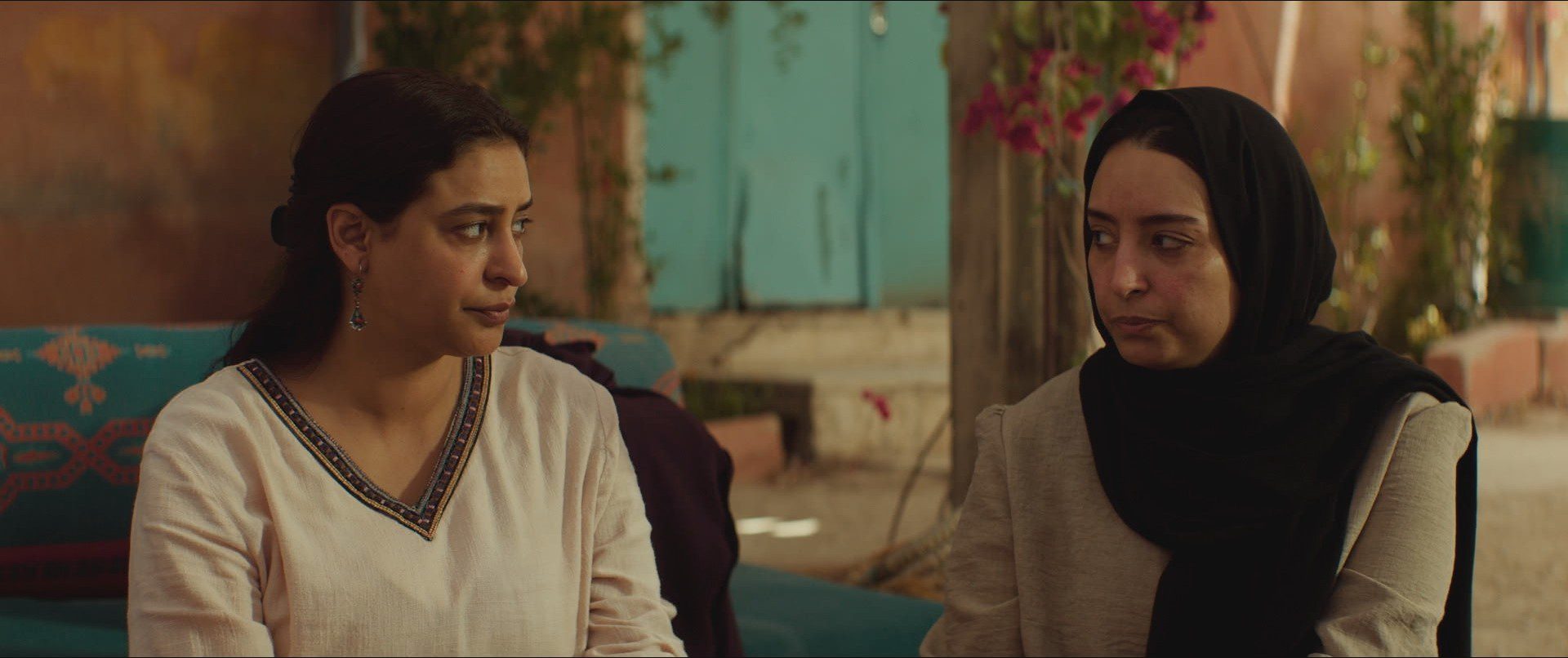


O Grande Prêmio do Júri no Festival de Berlim deste ano, Salvação, inicia com uma disputa de terras em uma aldeia remota turca entre os Hazerans, que cuidam da terra e dos animais, e habitam nas casas por entre as ruelas estreitas da cidade alta, e o Bezarins, que retornaram depois do aparente término da ameaça terrorista, reclamando os campos verdes na cidade baixa. Já o território que interessa a Emin Alper é o da imaginação coletiva: um espaço em que medo, ressentimento, religião, crise da masculinidade e memória história se combinam em um processo de transformação de homens comuns de família em bárbaros assassinos.
Inspirado no massacre real ocorrido em 2009, Emin evita qualquer tentação documental. No lugar disso, elabora uma parábola de alcance universal, em que a violência não é o produto de fatos, mas de narrativas criadas para justificá-la. Apesar da inspiração na realidade, existe algo shakespeariano na tragédia encenada na narrativa. Ele é desenvolvida a partir do conjunto particularmente perigoso de inseguranças e frustrações de homens que acreditam que a sua reputação e honra estão sendo manchadas por uma percepção turva da realidade.
No centro da tragédia está Mesut (Caner Cindoruk), que materializa todas as inseguranças da narrativa. O avô escolheu o neto caçula Ferit (Feyyaz Duman) para herdar a posição de xeique da vila e, com esta, renome e riqueza. Mesut resignou-se, porém não aceitou a escolha. A volta à casa é acompanhada de pesadelos: em um deles, a sua esposa, Gulsum (Ozlem Tas), é sexualmente tomada por uma força invisível; esse ciúme é acentuado em razão de causos que escuta dos habitantes locais. E piora ainda mais após descobrir que a esposa está grávida de gêmeos, algo que supersticiosamente associa à influência do demônio. Para além disso, ressente à inação de Ferit que não toma ação e posição contra o retorno de Bezarins, já que acredita que, por ter permanecido e ter pago o preço do conflito armado, tem direito àquelas terras mais do que os papéis de propriedade emitidos pelo Estado ausente.
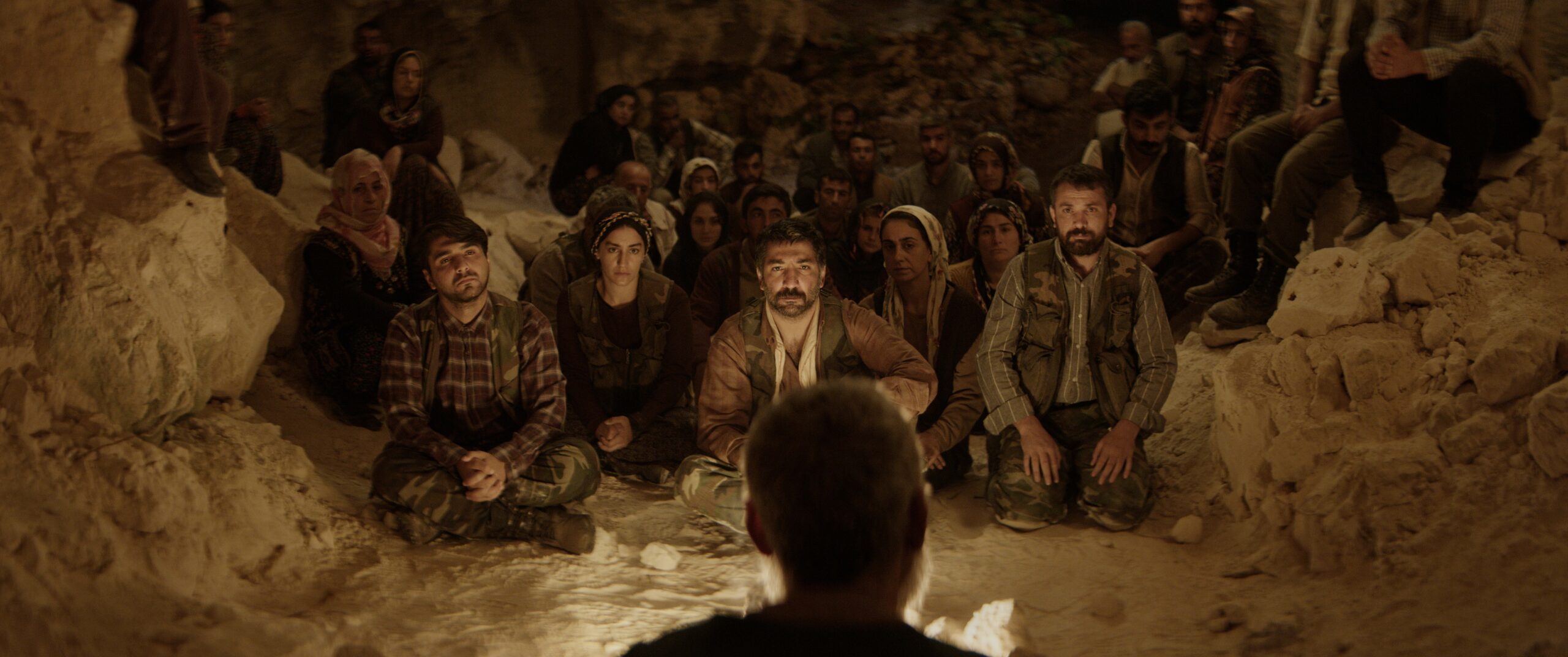
Apesar de Mesut, o roteiro acertadamente recusa separar seus personagens entre heróis e vilões. Mesmo quando identifica claramente o mecanismo da radicalização e fanatismo, Alper não transforma os personagens em caricaturas a fim de defender uma ideia, mas enxerga todo o processo pelo qual homens cometem atrocidades acreditando estarem cobertos pela justiça. A princípio, Mesut não é encarado e nem revelado como um fanático, e a sua radicalização acontece lentamente, alimentada por frustrações e humilhações e pela sentimento de impotência. Enquanto isso, o xeique defende um discurso conciliador, mas a sua posição privilegiada – e visualmente retratada em um plano belíssimo – também o distancia das dificuldades enfrentadas pelos demais. Diante de seus privilégios, é fácil manter sua retórica de paz.
No meio disso tudo, os sonhos. As manifestações de um inconsciente que convida a ações não racionais apresentam-se como elementos espirituais e sobrenaturais. São nesses espaços que os homens (e as mulheres) confundem-se e interpretam erroneamente os sintomas de que têm muito o que elaborar, embora não tenham sido ensinados a fazê-lo, em uma sociedade patriarcal na qual as mulheres raramente participam da vida pública. Os personagens, especialmente Mesut, empregam tais mensagens divinas, delírios paranoicos ou só projeções do inconsciente para deslocar a responsabilidade de suas escolhas e decisões. Salvação retrata uma realidade em que a responsabilidade é substituída pela obediência à revelação. O mais aterrorizante é perceber como isso não está limitado a uma vila turca; mas espalhado ao redor do mundo e empregado por líderes hábeis em explorar ressentimentos para alimentar o ódio.
Alper encena essa confusão entre sonho e realidade, ou como o sonho dissolve-se no real com uma inteligência de jamais optar por dois estilos para discerni-los. Aos poucos, o espectador também deixa de distinguir onde termina a experiência da realidade e onde começa a construção onírica do protagonista, e se não fossem os sobressaltos do despertar, permaneceríamos sem saber se estávamos assistindo a um horror fantástico ou a um horror que frutifica de um retrato realista da sociedade. Salvação é um retrato em que sonhos e fantasmas tornam-se mais poderoso do que fatos.

Os terroristas atirados na caçamba da caminhonete no início da narrativa são praticamente uma abstração. Existem muito mais como ideia do que como presença concreta. Tornam-se bodes expiatórios, tanto para que os poderosos mantenham e expandam o seu poder quanto para que os homens comuns escondam suas ações vis. Substitua terrorista por comunista, e você tem uma perspectiva histórica de como a figura abstrata do Outro que ameaça o nosso estilo de vida é e tem sido usada para dividir as tribos. Agora jogue nesse barril de pólvora a religião, e pronto.
Nesse cenário, o Estado permanece praticamente ausente. Ele só surge quando necessita convocar mais homens para combater inimigos externos ou para restaurar uma ordem já arruinada, quando não destruída. A sua omissão evidencia que o vácuo de poder costuma ser e é rapidamente ocupado por lideranças religiosas ou pelos ditos “homens fortes“, capazes de oferecer respostas simples para problemas extremamente complexos. E que normalmente envolvem opressão, brutalidade e morte.
Ao lado dos diretores de fotografia Baris Aygen e Ahmet Sesigürgil, Alper faz com que a paisagem montanhosa impressione pela beleza e também pela opressão e confinamento. O horizonte está inalcançável. A cordilheira cerca os personagens como uma muralhas natural, de modo que impede qualquer forma de fuga, inclusive simbólica. Mesmo os espaços abertos carregam uma atmosfera sombria, sobretudo à noite, quando a vida se confunde com sonho.
Nessa paisagem por vezes árida, Alper entende que o ódio é fertilizado com facilidade. Ele cresce onde existe desigualdade, insegurança e sensação permanente de injustiça, e não é difícil enxergar uma narrativa alternativa em que os Bezarins – praticamente ausentes de todo o filme – sejam encarados como os vilões por subjugarem os Hazerans. De certa forma, quando citei Shakespeare no início do texto, eu mal havia refletido como Salvação remete a Hamlet: sejam pelas visões, seja pelo sentimento de injustiça e impotência, seja porque, quando a sociedade briga entre si, abre espaço para que os Fortimbrás (os inimigos externos) tomem com facilidade o castelo – o fato de a imagem da vila à distância remeter a uma fortaleza só reforça esse olhar.
Diante desse cenário, a tragédia é inevitável não porque os seus personagens sejam monstruosos, mas porque permanecem incapazes de imaginar uma alternativa ao ressentimento que não a barbárie. A manipulação religiosa, a masculinidade frágil e ressentida, ou a memória transformada em arma e a fabricação do inimigo tornam o filme dolorosamente contemporâneo. Para um filme que passeia por sonhos, o resultado final desagua, infelizmente, na realidade.
Salvação estreou nos cinemas brasileiros quinta-feira (2).
English review
Salvation, winner of this year’s Grand Jury Prize at the Berlin International Film Festival, opens with a land dispute in a remote Turkish village between the Hazerans, who tend the land and livestock while living among the narrow alleyways of the upper settlement, and the Bezarins, who return after the apparent end of the terrorist threat to reclaim the fertile green fields of the lower valley. Yet the territory that truly interests writer-director Emin Alper is that of the collective imagination: a space where fear, resentment, religion, masculine insecurity, and historical memory converge in the transformation of ordinary family men into murderous barbarians.
Inspired by the real-life massacre that took place in 2009, Alper avoids any temptation toward documentary realism. Instead, he crafts a universal parable in which violence emerges not from facts themselves, but from the narratives invented to justify them. Despite its grounding in reality, the film possesses something unmistakably Shakespearean. Its tragedy unfolds through a particularly dangerous combination of male insecurities and frustrations, as men become convinced that their honor and reputation have been tainted by a distorted perception of reality.
At the center of this tragedy is Mesut (Caner Cindoruk), who embodies every insecurity coursing through the narrative. His grandfather chose the younger grandson, Ferit (Feyyaz Duman), to inherit the position of village sheikh, along with the prestige and wealth that accompany it. Mesut resigned himself to the decision, but never truly accepted it. His homecoming is haunted by nightmares: in one, his wife, Gulsum (Ozlem Tas), is sexually violated by an invisible force. His jealousy intensifies as he listens to gossip circulating among the villagers, and worsens after discovering that Gulsum is pregnant with twins – something he superstitiously interprets as the work of the devil. Beyond that, he resents Ferit’s passivity toward the Bezarins’ return. Having stayed behind and paid the price of the armed conflict, Mesut believes his claim to the land outweighs any title deeds issued by an absent state.
Yet despite Mesut’s central role, the screenplay wisely refuses to divide its characters into heroes and villains. Even as it clearly identifies the mechanisms behind radicalization and fanaticism, Alper never reduces his characters to ideological caricatures. Instead, he carefully observes the process through which ordinary men commit atrocities while genuinely believing they are acting in the name of justice. Mesut is neither introduced nor revealed as a fanatic. His radicalization unfolds gradually, nourished by humiliation, frustration, and an overwhelming sense of powerlessness. Meanwhile, the sheikh preaches reconciliation, yet his privileged position- captured in one of the film’s most striking compositions – also distances him from the hardships endured by everyone else. From within comfort and privilege, advocating peace is considerably easier.
Then come the dreams. Manifestations of an unconscious that urges irrational action appear as spiritual, even supernatural experiences. It is within these spaces that men and also women lose themselves, misreading symptoms of inner conflicts they have never learned to process, in a patriarchal society where women are rarely allowed to participate in public life. The characters, especially Mesut, treat these visions as divine messages, paranoid delusions, or projections of the unconscious in order to shift responsibility away from their own choices. Salvation portrays a world in which accountability gives way to obedience toward revelation. What is most disturbing is realizing that this is hardly confined to a remote Turkish village. It is a mechanism replicated across the globe, repeatedly exploited by leaders skilled at weaponizing resentment to cultivate hatred.
Alper stages this dissolution of the boundary between dreams and reality with remarkable intelligence, never resorting to distinct visual styles to separate one from the other. Gradually, the audience also loses the ability to distinguish where lived experience ends and the protagonist’s dreamscape begins. Were it not for the jolting awakenings, we would never know whether we were watching a supernatural horror film or a horror story born from an unsettlingly realistic portrait of society. In Salvation, dreams and ghosts become more powerful than facts themselves.
The terrorists whose bodies are tossed into the back of a pickup truck at the beginning of the film remain almost entirely abstract. They exist far more as an idea than as an actual presence. They become scapegoats, serving both those in power who seek to preserve and expand their authority and ordinary men attempting to conceal their own vile actions. Replace terrorist with communist, and one gains a historical perspective on how the abstract figure of the threatening Other has long been used to divide societies into hostile tribes. Add religion to this powder keg, and the explosion becomes inevitable.
Within this landscape, the state is virtually absent. It appears only when it needs to recruit more men to fight external enemies or restore an order that has already collapsed, if not been completely destroyed. Its absence reveals how quickly power vacuums are filled by religious leaders or so-called “strongmen,” figures who promise simple solutions to extraordinarily complex problems. Those solutions, more often than not, involve oppression, brutality, and death.
Working alongside cinematographers Baris Aygen and Ahmet Sesigürgil, Alper turns the mountainous landscape into something both breathtaking and oppressive. The horizon always seems unattainable. The surrounding mountain range encloses the characters like a natural fortress, denying them any possibility of escape, whether literal or symbolic. Even the open spaces carry an oppressive atmosphere, particularly at night, when waking life begins to merge with dreams.
Within this sometimes barren landscape, Alper understands that hatred is remarkably fertile. It flourishes wherever inequality, insecurity, and a persistent sense of injustice take root. It is not difficult to imagine an alternate version of the story in which the Bezarins – who remain largely absent throughout the film – would instead emerge as villains for dispossessing the Hazerans. In fact, when I invoked Shakespeare at the beginning of this review, I had not yet fully realized just how strongly Salvation echoes Hamlet: through its visions, its overwhelming sense of injustice and impotence, and because when a society turns against itself, it inevitably leaves the gates open for the Fortinbrases, or the external enemies, to seize the castle with ease. The fact that the village, viewed from afar, resembles a fortified citadel only reinforces this reading.
Against this backdrop, tragedy becomes inevitable, but not because the characters are inherently monstrous, instead because they remain incapable of imagining any alternative to resentment other than barbarism. Religious manipulation, fragile and wounded masculinity, memory transformed into a political weapon, and the manufacture of an enemy make Salvation a painfully contemporary film. For a story that spends so much time wandering through dreams, its final destination is, unfortunately, reality.

Crítico de cinema filiado a Critics Choice Association, à Associação Brasileira de Críticos de Cinema, a Online Film Critics Society e a Fipresci. Atuou no júri da 39ª Mostra Internacional de Cinema em São Paulo/SP, do 12º Fest Aruana em João Pessoa/PB, do 24º Tallinn Black Nights Film na Estônia, do 47º TIFF – Festival Internacional de Cinema em Toronto. Ministrante do Laboratório de Crítica Cinematográfica na 1ª Mostra Internacional de Cinema em São Luís (MA) e Professor Convidado do Curso Técnico em Cinema do Instituto Estadual do Maranhão (IEMA), na disciplina Crítica Cinematográfica. Concluiu o curso de Filmmaking da New York Film Academy, no Rio de Janeiro (RJ) em 2013. Participou como co-autor dos livros 100 melhores filmes brasileiros (Letramento, 2016), Documentário brasileiro: 100 filmes essenciais (Letramento, 2017) e Animação Brasileira – 100 Filmes Essenciais (Letramento, 2018). Criou o Cinema com Crítica em fevereiro de 2010 e o Clube do Crítico em junho de 2020.