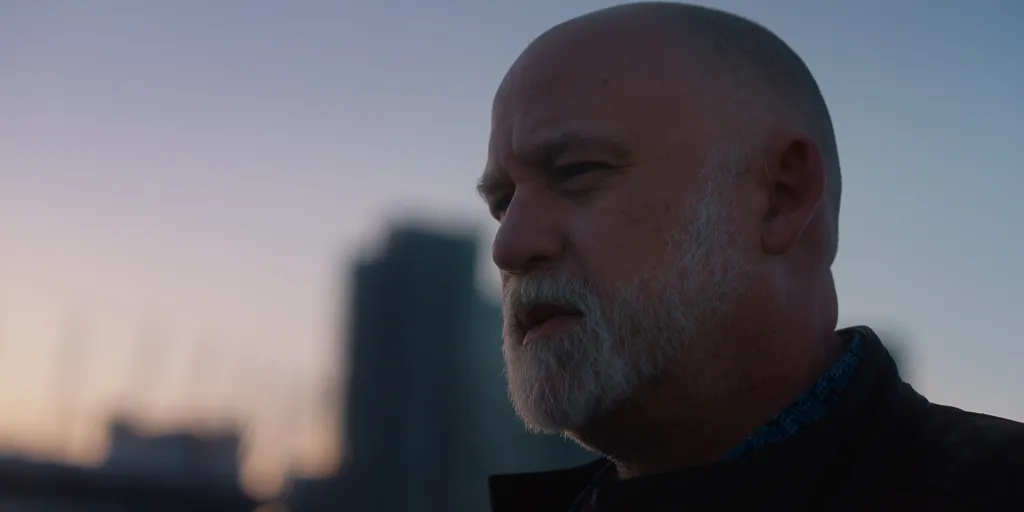

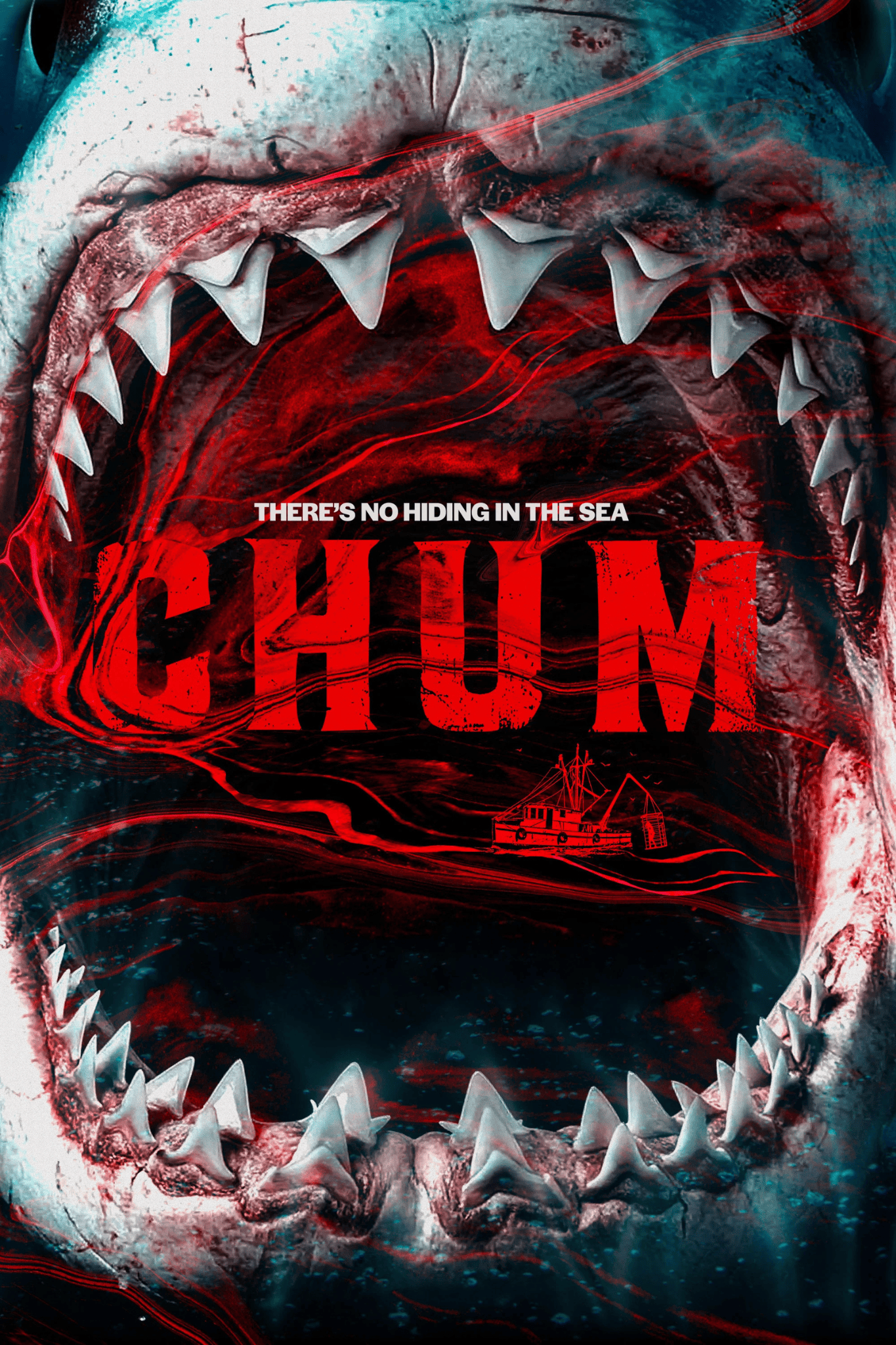
Reciclando ideias e navegando pelo mar do óbvio em relação aos filmes de tubarão, Chum não tem nada de novo a propor. A obra se leva a sério demais, trabalha seus efeitos com inteligência artificial generativa e toma contornos problemáticos na única ideia fresca que apresenta em sua narrativa.
Todos os anos são lançados um incontável número de filmes de tubarão, dos mais variados tipos e qualidades – uns de propostas absurdas, e outros mais pé no chão, na medida do possível. Não é à toa, os estúdios não fazem isso por amor ao animal ou ao cinema, mas sim porque há público para tanto. Curiosamente, foi nesse “subgênero” do terror (filmes de tubarão/ataque de animais) que se cunhou a perspectiva moderna de “blockbuster”, com o clássico Tubarão de Spielberg de 1975 – o suprassumo dos tubarões cinematográficos, e sobre o qual, por outro lado, também se popularizou o termo “mockbuster”, tendo Sharknado como um dos maiores exemplos, seguido por mais uma infinidade de outros filmes do tipo.
Quando o cineasta Kleber Mendonça Filho escreveu algumas palavras despretensiosas na rede Letterboxd sobre o longa Sob as Águas do Sena, dirigido por Xavier Gens, foi assertivo na perspectiva sobre a qual colocou o subgênero, e, nesse sentido, faço das palavras dele também as minhas: “eu já vi muito filme de tubarão desde Tubarão, a ladeira é íngreme para quem se aventura no gênero, a obra prima de Spielberg ‘fu***’ todo mundo, o que fica, nos melhores casos, é a diversão, melhor ainda se chegar a níveis totalmente absurdos como aqui”. Se valia para o referido filme, que se aproveitava da temática para explorar uma situação de fato absurda e improvável (com tubarões no rio Sena, no coração de Paris), o mesmo não pode ser dito a respeito de Chum, que, de tão convencional, se torna entediante pela absoluta falta de ineditismo na premissa, com menos ainda a oferecer em sua execução desinteressada.
Em Chum, um casamento na paradisíaca ilha de Malta torna-se cenário de um grande pesadelo quando um rápido e divertido passeio de barco entre os noivos e seus amigos mais próximos é atacado por um tubarão, que não deveria estar circulando por aquelas águas. Quando acreditam receber ajuda de um aparente pescador, descobrem ter de lidar também com uma segunda ameaça – um assassino obstinado, que pretende os usar como isca para caçar o animal em uma jornada de vingança.
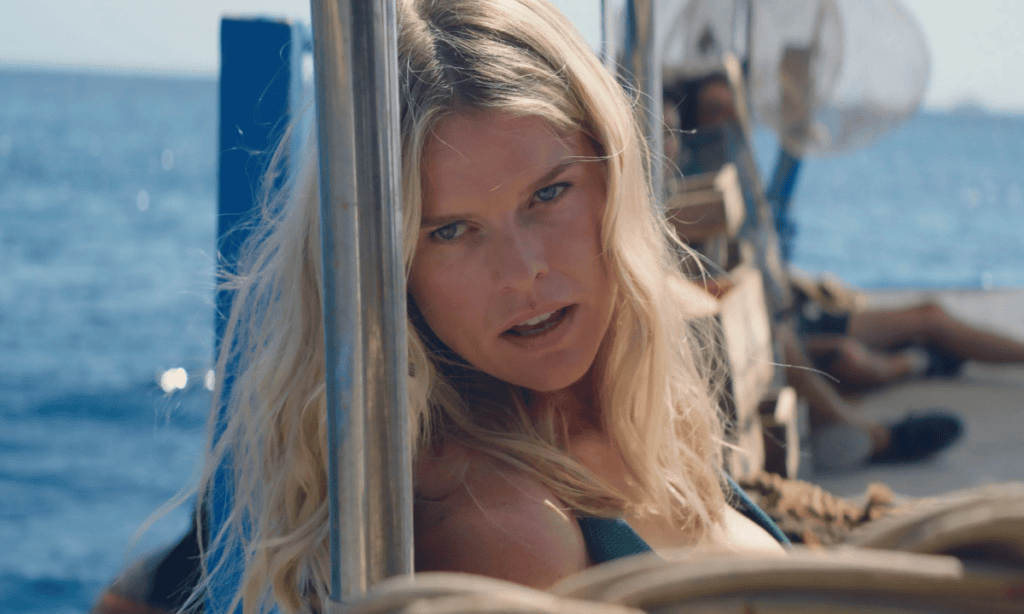
Alice Eve, em cena de Chum.
Chega a ser impressionante a maneira como cinco roteiristas (Dick Grunert, Ryan R. Johnson, James Kondelik, Joe Leone e Jonathan Zuck) se mostraram incapazes de juntos pensar em algo minimamente original, quando a narrativa soa derivativa desde o princípio, pegando ideias de outros tantos filmes, sem nada de novo a acrescentar. Se ainda essas junções de Tubarão, por exemplo, no que se refere à caça do animal, com Animais Perigosos, na parte que envolve o assassino obstinado, se fizesse com um elo mais bem delineado, talvez Chum encontrasse algo para chamar de seu. Mas a articulação de todas essas ideias é absolutamente insuficiente para atrair um mínimo do interesse do espectador.
A longa sequência inicial, por exemplo, é um elemento deslocado da narrativa até o encontro com o misterioso pescador/caçador. Através de uma narração com texto bastante cafona, soando artificial na medida em que busca por algum sentido poético, pouco estabelece de fato senão por uma ideia de vingança óbvia, a partir de um trauma. Seguindo para o casamento, os protagonistas – e todos os demais personagens envolvidos na viagem de barco, próximos do casal – carecem de personalidade ou qualquer mínimo estabelecimento. Há uma enorme barreira que nos separa deles, porquanto o roteiro nunca se esforça para que os conheçamos de fato, para além de algumas características básicas, que nos dão indícios rasos de como podem reagir frente às situações de perigo com base nas personalidades frágeis. Chega a ser tão superficial que nem mesmo as relações entre eles são exploradas – são amigos de trabalho, infância, a quanto tempo eles se conhecem? Nada disso se mostra uma preocupação do filme, e nem mesmo os graus de lealdade e intimidade que haveria entre eles.
Tamanho é o desinteresse por aqueles personagens que o próprio elenco se mostra um tanto desnorteado na maneira como encarná-los, fruto de uma direção despreocupada, assinada por Jonathan Zuck, possivelmente mais preocupado em rodar o filme rapidamente do que buscando por alguma qualidade. Nem mesmo Alice Eve, que assume o crédito também de produtora no projeto, é capaz de oferecer uma interpretação convincente de uma noiva em crise no próprio casamento, quando sempre parece estar lendo textos e falas prontas, sem qualquer traço de espontaneidade ou mesmo de medo diante das situações que enfrenta – e isso porque ela oferece a melhor das interpretações no elenco, ao lado de Jim Klock, em piloto automático como vilão.
E a sucessão dos eventos narrativos também não contribui para uma maior imersão, quando o filme apenas acontece e se estende por oitenta minutos em razão da completa inverossimilhança de seu desenrolar. Esse não é necessariamente um problema quando existem elementos fantásticos ou assumidamente absurdos, nonsense, trabalhados pela narrativa, o que passa longe de ser o caso aqui também. Por diversas vezes os personagens poderiam enfrentar o vilão, ou mesmo fugir, se o roteiro não os obrigasse a perder todas as lutas ou falharem em seus movimentos até o momento que decide ser o ideal para terminar. Torna-se um exercício de subestimar a inteligência, e abusar da boa vontade do espectador, que passa a ficar entediado quando o filme deixa bastante claro que só irá avançar, e parar de se repetir, no momento decisivo.
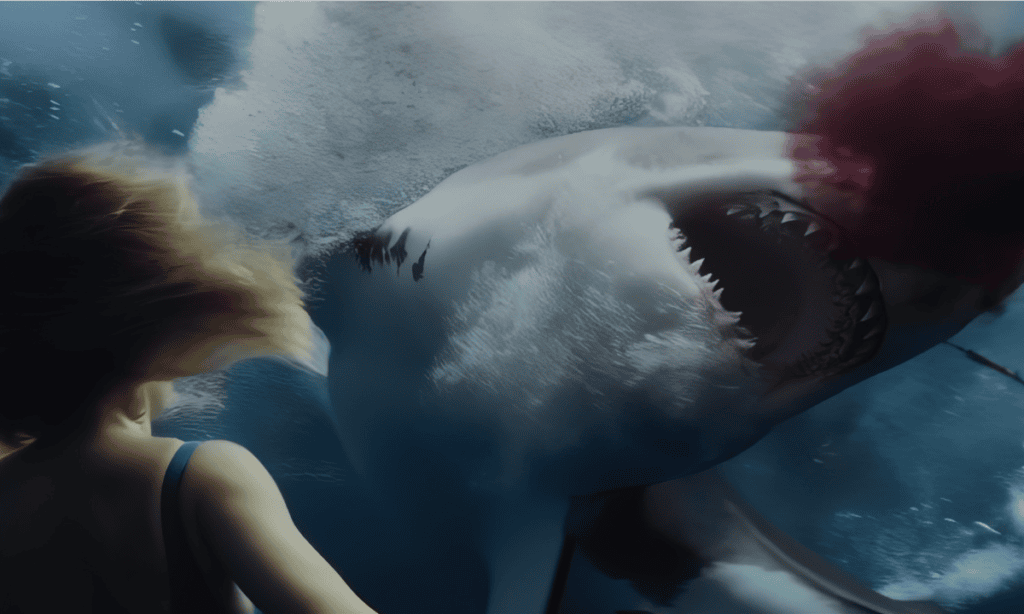
Alice Eve e um tubarão gerado por inteligência artificial em cena de Chum.
Notei, então, o quão ineficaz é o conjunto geral da obra quando percebi que achava mais interessante o drama do casal recém-casado enfrentando uma crise moral e ética por conta de suas opostas linhas de trabalho do que, realmente, pela trama do tubarão – cujas cenas, inclusive, são todas feitas com o uso de inteligência artificial generativa, para piorar ainda mais a falta de personalidade do projeto – ou do assassino caçador. Talvez até pudesse ser o único ponto do filme que se sobressaísse ao restante, se, ao final, não chegasse à conclusão problemática que apontara tentar evitar, ao transformar a personagem de Alice Eve em uma esposa-troféu, justamente o que ela declara batalhar a vida toda para não acontecer. No fim, Chum é só mais um filme de tubarão genérico, que não consegue nem se diferenciar de um mar de iguais, é incapaz de trabalhar a ação, terror ou drama com criatividade, e tampouco é divertido, quando se leva a sério demais, e subestima a inteligência do próprio espectador, como se estivesse disposto a aceitar qualquer coisa produzida com má vontade.
Chum será lançado nas plataformas digitais do Reino Unido no dia 17 de agosto. No Brasil, ainda não há previsão de lançamento.
English review
Recycling familiar ideas and drifting through every shark-movie cliché imaginable, Chum has nothing new to offer. It takes itself far too seriously, relies on generative artificial intelligence for its visual effects, and ultimately stumbles into problematic territory with the only seemingly fresh idea it introduces.
Every year, countless shark movies are released, ranging from the utterly absurd to the relatively grounded – as grounded as films about killer sharks can be. Studios certainly do not keep making them out of affection for either sharks or cinema, but because there is an audience for them. Curiously, it was within this very “subgenre” of horror (shark films and animal-attack movies) that the modern concept of the blockbuster was born with Spielberg’s 1975 classic Jaws – the definitive cinematic shark film. At the same time, it also gave rise to the popularization of the term “mockbuster,” with Sharknado standing as one of its most recognizable examples, followed by an endless stream of similar productions.
When filmmaker Kleber Mendonça Filho wrote a few casual words on Letterboxd about Xavier Gens’ Under Paris, he perfectly captured the perspective from which I also see this subgenre: “I’ve seen a lot of shark movies since Jaws. It’s a steep hill to climb for anyone venturing into the genre. Spielberg’s masterpiece screwed everyone over. At their very best, these films are simply fun – even better when they embrace complete absurdity, as this one does.” If that statement applied to Under Paris, which cleverly used its premise to explore a genuinely outrageous and improbable scenario – sharks swimming through the Seine in the heart of Paris – the same cannot be said of Chum. So relentlessly conventional that it becomes tedious, the film suffers from an entirely unoriginal premise and even less inspiration in its disinterested execution.
In Chum, a wedding on the idyllic island of Malta turns into a nightmare when a quick recreational boat trip involving the bride, groom, and their closest friends is attacked by a shark that should not even be inhabiting those waters. Just when they believe they have been rescued by what appears to be a local fisherman, they discover they are facing a second threat – a relentless killer who intends to use them as bait in order to hunt down the animal as part of his quest for revenge.
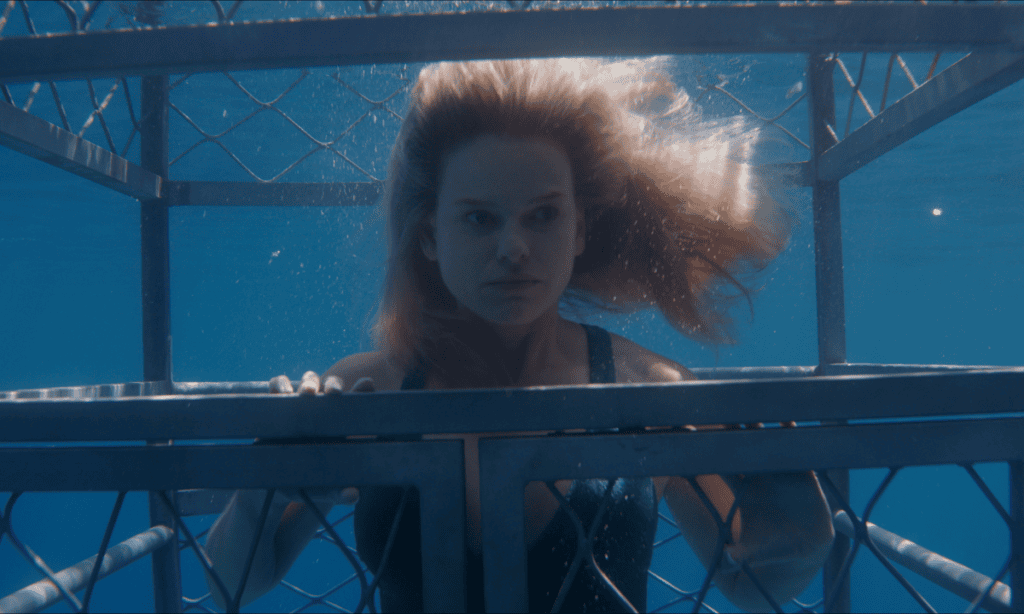
Alice Eve in Chum scene.
It is genuinely astonishing that five screenwriters (Dick Grunert, Ryan R. Johnson, James Kondelik, Joe Leone, and Jonathan Zuck) could collectively fail to come up with anything remotely original. From the very beginning, the narrative feels derivative, borrowing ideas from countless other films without adding anything of its own. Had its combination of Jaws – particularly the shark hunt – and Dangerous Animals – through the obsessive killer – been connected by a more carefully developed narrative bridge, perhaps Chum might have discovered an identity of its own. Instead, the way these ideas are assembled is far too weak to sustain even the slightest interest.
The lengthy opening sequence, for instance, feels completely disconnected from the rest of the narrative until the protagonists encounter the mysterious fisherman-hunter. Accompanied by narration whose overwrought prose sounds painfully artificial in its attempts at poetic significance, it establishes very little beyond an obvious revenge motive rooted in past trauma. Once the story shifts to the wedding, the protagonists – along with every other passenger aboard the boat – are almost entirely devoid of personality or meaningful development. An enormous emotional barrier separates the audience from these characters because the screenplay never makes any effort to allow us to truly know them beyond a handful of superficial traits suggesting how they might react when danger arises. The writing is so shallow that it never even explores the relationships between them – are they childhood friends, coworkers, lifelong companions? How long have they known each other? None of these questions seem to concern the film, nor does it care to establish the levels of trust, intimacy, or loyalty that exist among them.
Such is the film’s indifference toward its own characters that even the cast appears uncertain about how to portray them, a consequence of Jonathan Zuck’s equally indifferent direction, which often feels more interested in finishing the shoot quickly than in achieving any meaningful level of quality. Not even Alice Eve, who also serves as a producer on the project, manages to deliver a convincing performance as a bride facing a crisis within her own marriage. She constantly seems to be reciting prepared dialogue without the slightest trace of spontaneity or genuine fear in the situations she encounters – despite ultimately giving the strongest performance in the cast, alongside Jim Klock, who sleepwalks through the role of the villain.
The progression of the narrative does little to improve the viewing experience either, as the film merely drifts through its eighty-minute runtime on the back of an entirely implausible series of events. Implausibility is hardly a problem when a story openly embraces fantasy or deliberate absurdity, but that is not the case here. Time and again, the characters have clear opportunities either to confront the villain or simply escape, yet the screenplay repeatedly forces them to lose every confrontation or fail every attempt until it arbitrarily decides the ending should finally arrive. The result is an exercise in underestimating the audience’s intelligence while exhausting its goodwill, leaving viewers increasingly bored as the film makes it abundantly clear that it will only move forward when it chooses to stop repeating itself.
It was at that point that I realized just how ineffective the film truly is, because I found myself far more interested in the moral and ethical conflict faced by the newly married couple, whose opposing professional careers place strain on their relationship, than in either the shark storyline – whose scenes are, incidentally, created entirely through generative artificial intelligence, further stripping the production of any sense of personality – or the hunter himself. That conflict might even have become the film’s one genuinely compelling element had it not arrived at a deeply problematic conclusion that contradicts the very issue it initially seemed intent on criticizing, ultimately reducing Alice Eve’s character to the role of a trophy wife – precisely the fate she explicitly says she has spent her entire life fighting to avoid. In the end, Chum is merely another generic shark movie, unable to distinguish itself from an ocean of similar productions. It fails to approach action, horror, or drama with even a hint of creativity, and it is not entertaining either, taking itself far too seriously while consistently underestimating the audience’s intelligence, as though viewers should simply accept whatever has been carelessly put before them.
Chum will be released on digital platforms in the United Kingdom on August 17.

Crítico de cinema desde 2019. Formado em crítica de cinema pela Academia Internacional de Cinema (2020), e aluno do Clube do Crítico desde 2021, é criador do Cineolhar e colaborador do Cinema com Crítica.