
Crítica em português
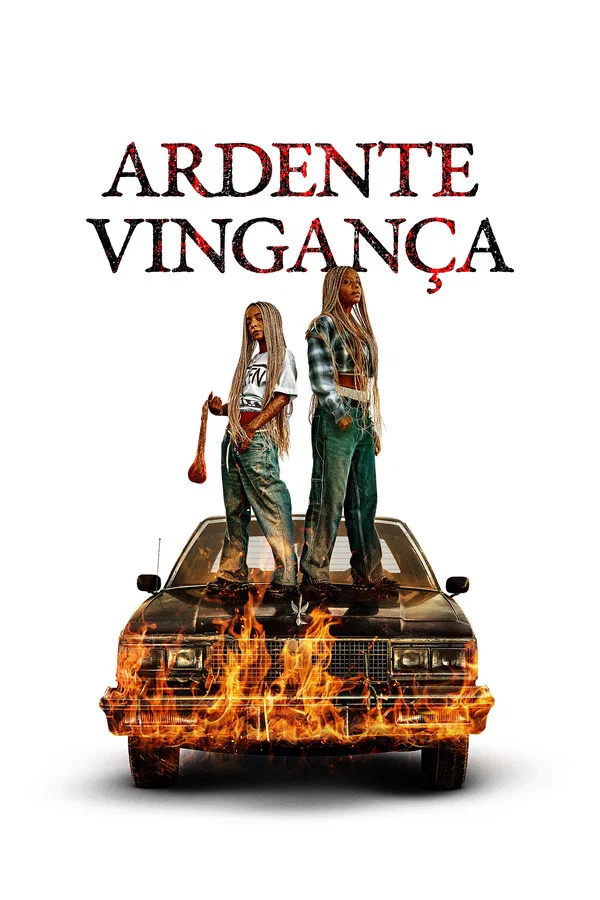
A adaptação de uma peça teatral em uma obra cinematográfica costuma estar contaminada ou marcada – talvez seja uma formulação mais apropriada – pelo favorecimento do texto falado em detrimento da potência da imagem, que, no cinema, reina. Então, de alguma forma, estou positivamente encantado em como Aleshea Harris transformou a sua peça vencedora do Prêmio Obbie, que é conferido a produções teatrais independentes, ou de fora da Broadway, em uma narrativa imagética e ritmicamente envolvente como acontece em Ardente Vingança.
Desde sempre, as irmãs gêmeas Rancine (Kara Young) e Anaia (Mallori Johnson) somente puderam contar uma com a outra depois de um “acidente” ter queimado as irmãs de modos diferentes. Anaia teve o seu rosto todo queimado e deformado; Rancine, a sua mão e alma. Esta chama incandescente aumenta após a mãe confidenciar o crime do ex-companheiro, que ateou fogo nela e nas filhas, e de elas prometerem vingá-la. É essa jornada de vingança, que também é uma jornada de autodescoberta, que estrutura a narrativa. Isso, claro, e a dupla de protagonistas.
Rancine e Anaia são conectadas o bastante que são capazes de conversar telepaticamente apenas trocando olhares e gestos. Elas até chegam a sonhar os mesmos sonhos. E nós, embora ignorantes do idioma secreto das personagens, podemos espiar dentro de suas cabeças as frases que aparecem na tela, com fontes escolhidas para denunciar a emoção ou euforia de cada uma. Para além dos laços sanguíneos ou dessa telepatia, as irmãs parecem o espelho metafórico uma da outra, numa leitura sofisticada de O Retrato de Dorian Gray. Anaia é o reflexo queimado da alma de Rancine, que herdou alguma coisa apodrecida do pai, ainda que orientada por motivos, à princípio, menos desumanos.
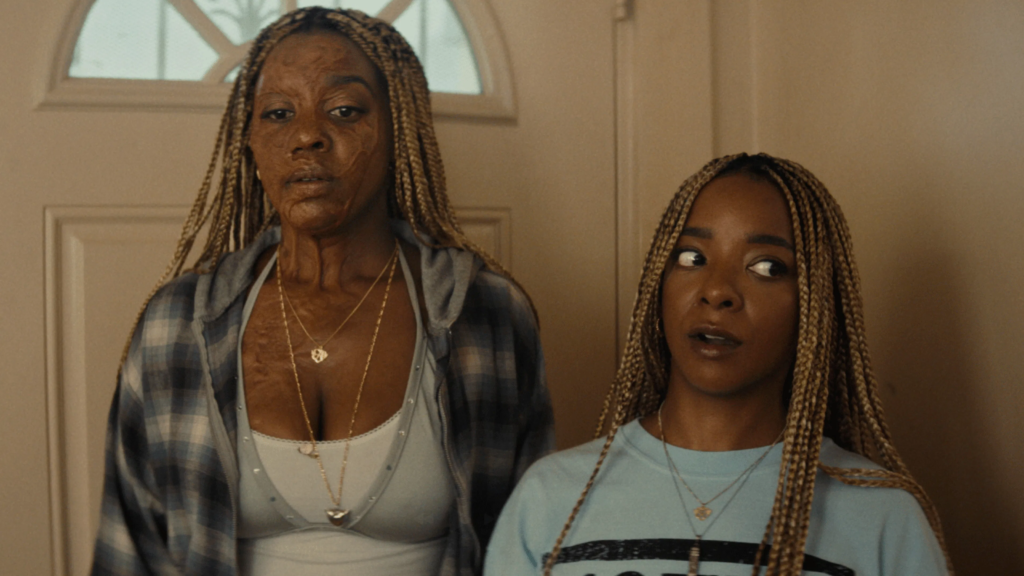
É nessa telepatia compartilhada que Harris encontra a solução cinematográfica para um material originalmente teatral. No lugar de depender de diálogos explicativos para tornar visível a intimidade entre as personagens, a diretora converte estímulos e sentimentos em imagens. As palavras que surgem na tela, as alterações tipográficas, os enquadramentos que aproximam e afastam as irmãs ou a forma como os seus corpos ocupam o espaço funcionam como uma tentativa de manifestar estados emocionais. Ardente Vingança torna isso o método da narrativa. Mesmo quando seus personagens falam muito, a minha impressão é a de que a narrativa continua sendo conduzida por gestos, olhares e imagens que servem para estabelecer as relações invisíveis entre as personagens.
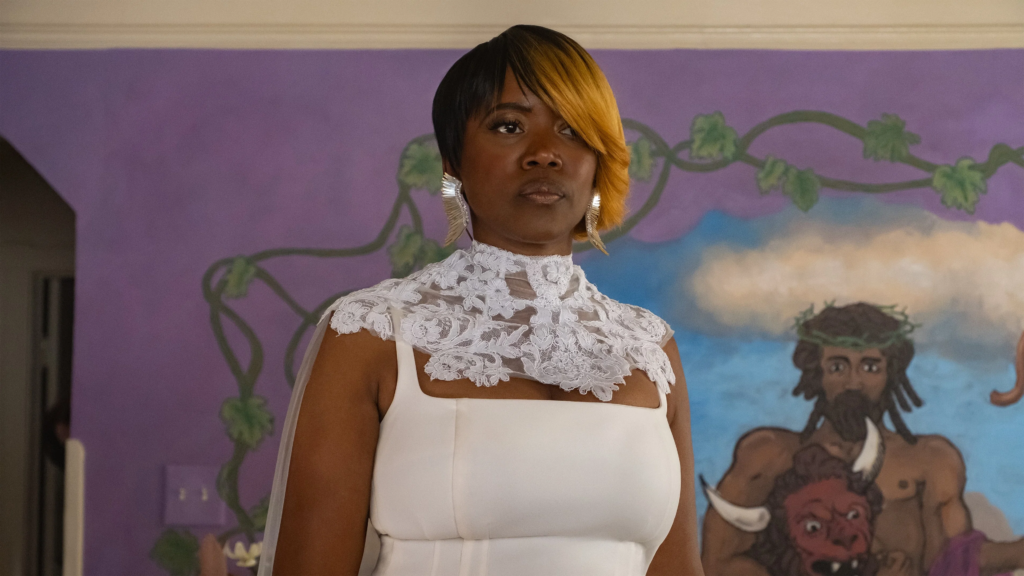
Já que mencionei o romance escrito por Oscar Wilde, essa é somente uma das referências acidentais ou não da narrativa. Há algo de A Cor Púrpura na maneira como uma irmã protege a outra, vista como feia pelos demais, enquanto a estrutura de uma vingança dividida em etapas lembra Bela Vingança. A cada personagem visitada, seja a pastora interpretada por Erika Alexander, seja o advogado vivido por Mykelti Williamson, que, apesar de ter tido a língua cortada, mantém o espírito verborrágico da profissão, seja a socialite encarnada por Janelle Monáe, Rancine e Anaia chegam mais perto de seu destino: confrontar o pai (Sterling K. Brown, cuja aparente calma ou cujo tom de voz são inversamente proporcionais à maldade que infligiu – e ainda inflige).
É difícil também não pensar em Pecadores. Se neste filme Fumaça e Fuligem eram empurrados para direções opostas pela influência do racismo e da assimilação cultural, aqui as irmãs de Ardente Vingança são divididas pela “herança” deixada por um pai abusivo. Em ambos os casos, derrotar uma força externa é apenas uma parte para impedir que essa força sobreviva dentro daqueles que foram suas vítimas. Isso é ainda mais visível quando o mal torna-se legado. Quando os oprimidos começam a utilizar as ferramentas com as quais foram oprimidos. Anaia hesita diante da retribuição porque consegue enxergar a insensatez da vingança; em contrapartida, Rancine se banha no sangue que jorra em seu rosto, incapaz de perceber que talvez esteja só reproduzindo a mesma estrutura contra a qual luta.
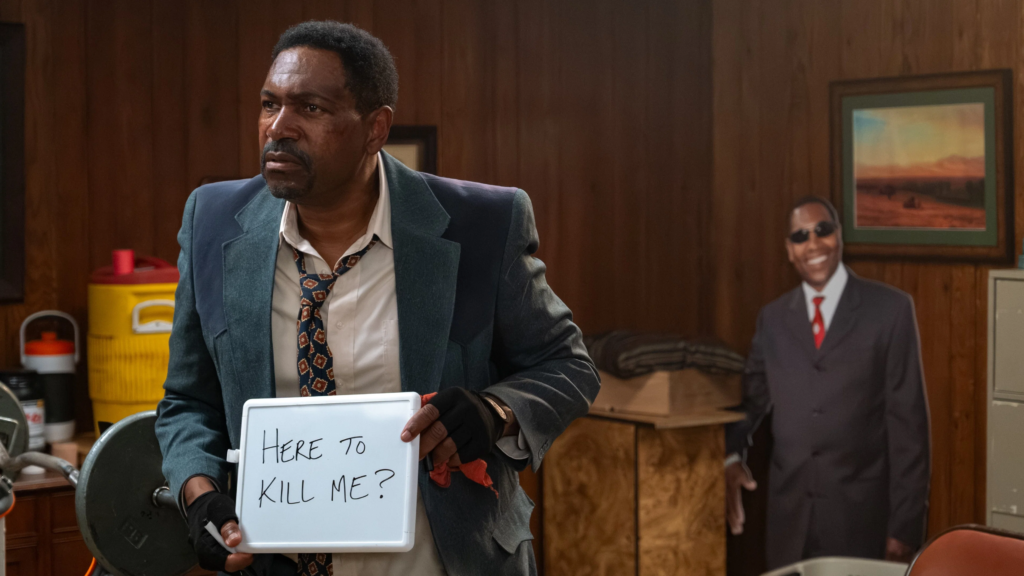
A ideia de que a pessoa oprimida pode se transformar em opressora não é absurda, mesmo que Rancine seja movida por sentimentos aparentemente justos. Neste aspecto, a maneira com que a direção torna presente o abuso doméstico é elegante. O flashback no qual a mãe narra a violência que sobreviveu é também uma oportunidade para mostrar o quanto o passado permanece presente, porque alguns traumas, por mais elaborados que sejam na terapia, permanecem vivos. O flashback não é só a exigência para que a narrativa seja feita clara ao espectador, é ainda a maneira de obrigá-lo a sentir na pele algo parecido com o calor destrutivo do fogo no corpo.
Nesse sentido, para além de ser a origem do trauma ou o combustível da vingança, o fogo também desempenha um papel central no filme de Aleshea. Embora as cicatrizes das irmãs funcionem como um mecanismo visual e narrativo de caracterização, ainda adquirem uma dimensão de um lembrete permanente de que as violências não terminam quando o ato se encerra. O crime do pai permanecerá inscrito no corpo da ex-companheira e das filhas. O passado não retorna. Mesmo que as irmãs pareçam bem resolvidas, a realidade é que o passado nunca as deixou inteiramente. E o fogo continua ardente, de maneiras distintas, dentro de cada personagem.
Talentosa não só com as palavras ou os temas, mas com as possibilidades do audiovisual, Aleshea acabou me fazendo recordar uma entrevista de Maya Angelou, na qual fala, para um entrevistador branco, que há ritmos na arte negro que nós, críticos brancos, talvez não sejamos capazes de perceber para além da discussão textual, ou mesmo subtextual. Há um ritmo cultural em Ardente Vingança que eu não saberia descrever completamente: um ritmo que começa no som das unhas postiças batucando contra a mesa, atravessa a edição sonora e termina no movimento dos corpos dentro das imagens. Não é um ritmo narrativo no sentido tradicional, daquele que é deduzido na montagem, mas um conjunto de gestos, insinuações e movimentos. Algumas vezes errático; em outras vezes, ansioso e inquieto, como Ezequiel, o filho da pastora, que tenta defender o pai apesar de ter sido abandonado por ele.
Afinal, Aleshea enxerga o patriarcado pelo que ele é: uma estrutura em que filhos homens rejeitados ou marginalizados defendem essa estrutura insensata encampada pelo pai, ou em que as mulheres violentadas emocional e fisicamente defendem o homem, e em que só uma força revolucionária, necessariamente violenta, é capaz de interromper o ciclo de opressão. Com uma espécie de funda em mãos, que gira acima da cabeça, à semelhança da funda com que Davi derrotou Golias, Rancine e Anaia partem em uma jornada que poderá custar suas almas. Ou recompensá-las com a libertação. A vingança pode libertar, mas também pode aprisionar aquele que a executa.
Ardente Vingança está disponível no catálogo da AMAZON PRIME VÍDEO.
English review
The adaptation of a stage play into a film is often marked by a tendency to privilege dialogue over the expressive power of the image, which remains cinema’s defining language. That is why I found myself genuinely impressed by the way Aleshea Harris transforms her Obie Award-winning play, originally staged Off-Broadway, into a work as visually inventive and rhythmically dynamic as Is God Is.
Since childhood, the twin sisters Rancine (Kara Young) and Anaia (Mallori Johnson) have had only each other after an “accident” left them scarred in radically different ways. Anaia’s face was burned beyond recognition; Rancine’s hand, and perhaps her soul. That smoldering fire intensifies after their mother reveals the crime committed by her former partner, who set her and her daughters ablaze, prompting the sisters to swear revenge. It is this pursuit of vengeance, inseparable from a journey of self-discovery, that gives the film its narrative shape. That, and the extraordinary chemistry between its two protagonists.
Rancine and Anaia share a bond so profound that they communicate telepathically through little more than glances and gestures. They even dream the same dreams. Though we remain outsiders to their private language, Harris grants us access to their inner thoughts through words projected directly onto the screen, their typography shifting to reflect each sister’s emotional state or bursts of exhilaration. Beyond blood ties or telepathy, the sisters become each other’s metaphorical reflection, recalling a particularly sophisticated variation on The Picture of Dorian Gray. Anaia embodies the charred reflection of Rancine’s inner self, a woman who has inherited something rotten from her father, even if, at least initially, her motivations remain far more understandable than his.
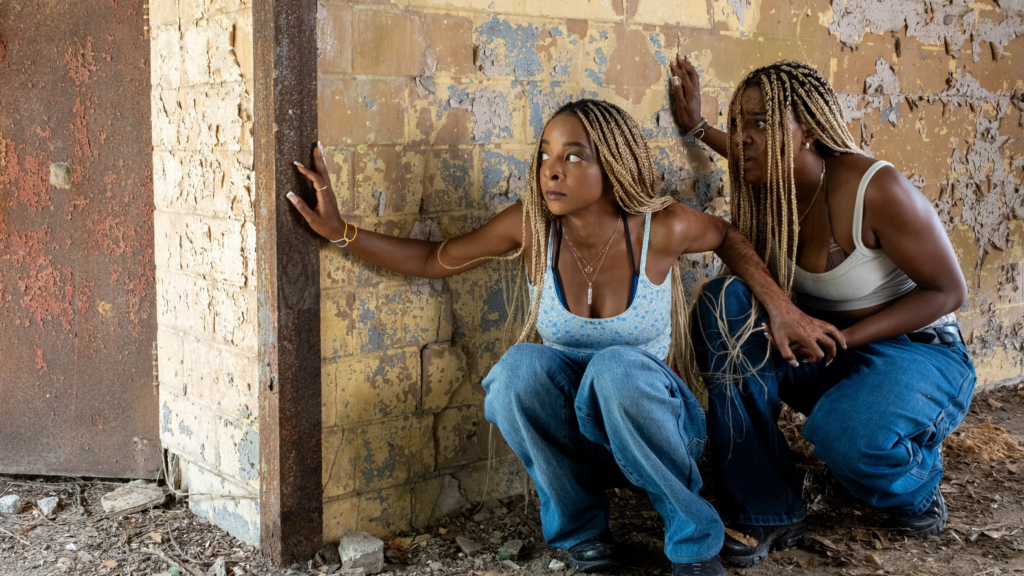
It is precisely within this shared consciousness that Harris discovers the cinematic equivalent for material that was originally theatrical. Rather than relying on explanatory dialogue to communicate intimacy, she translates emotional impulses into visual language. The words appearing on screen, the shifts in typography, the framing that alternately draws the sisters together and pushes them apart, even the way their bodies inhabit the frame, all function as manifestations of interior states. Is God Is turns this strategy into its governing cinematic principle. Even during its most dialogue-heavy scenes, the film feels driven less by spoken language than by gestures, gazes and visual associations that reveal the invisible currents connecting its characters.
Since I have already invoked Oscar Wilde, his novel is only one among several references, deliberate or otherwise, that echo throughout the film. There are unmistakable traces of The Color Purple in the way one sister protects the other, condemned by everyone else as ugly, while the episodic structure of revenge inevitably recalls Promising Young Woman. Each encounter, whether with the pastor played by Erika Alexander, the lawyer portrayed by Mykelti Williamson, who continues speaking with remarkable verbosity despite having had his tongue cut out, or the socialite embodied by Janelle Monáe, brings Rancine and Anaia one step closer to their ultimate destination: confronting their father. Sterling K. Brown delivers one of the film’s most unsettling performances, his composed demeanor and measured voice standing in inverse proportion to the cruelty he inflicted – and continues to inflict.
It is equally difficult not to think of Sinners. If that film portrayed Smoke and Stack being pulled toward opposite destinies by the competing forces of racism and cultural assimilation, Is God Is similarly divides its sisters through the poisonous inheritance left behind by an abusive father. In both cases, defeating an external enemy is only part of the struggle; the greater challenge lies in preventing that violence from surviving within those it once victimized. This becomes especially striking when evil itself turns into inheritance, when the oppressed begin wielding the very instruments through which they were oppressed. Anaia hesitates because she recognizes the futility of revenge. Rancine, by contrast, revels in the blood splattering across her face, unable to perceive that she may simply be reproducing the very structure she believes herself to be resisting.
The notion that the oppressed may eventually become oppressors is hardly implausible, even when Rancine’s motivations initially appear morally justified. Here, Harris proves remarkably elegant in the way she renders domestic abuse present. The flashback in which the mother recounts the violence she survived serves not merely as exposition, but as evidence that the past refuses to remain in the past. Some traumas, no matter how thoroughly processed in therapy, never entirely disappear. The flashback is not simply there to clarify the plot; it becomes a way of forcing the audience to experience something resembling the destructive heat of fire itself.
Fire, then, is far more than the source of trauma or the fuel for revenge. It becomes one of the film’s central metaphors. The sisters’ scars are not merely visual markers of character but enduring reminders that violence continues long after the violent act has ended. Their father’s crime remains inscribed upon the bodies of both his former partner and his daughters. The past does not return because, in truth, it never fully leaves. However composed the sisters may appear, they continue carrying that fire within them, each in profoundly different ways.
Harris’s talent extends well beyond her command of language or thematic complexity. Watching Is God Is, I found myself recalling an interview in which Maya Angelou tells a white interviewer that there are rhythms within Black art that white critics may never fully perceive beyond textual, or even subtextual, interpretation. There is indeed a cultural rhythm running through Is God Is that I would struggle to define completely: a rhythm that begins with the sound of acrylic nails tapping against a table, flows through the film’s intricate sound design, and culminates in the choreography of bodies moving within the frame. It is not rhythm in the conventional narrative sense, created primarily through editing, but something more elusive, composed of gestures, pauses, insinuations and movement. At times erratic; at others anxious and restless, much like Ezekiel, the pastor’s son, who remains determined to defend the very father who abandoned him.
Ultimately, Harris understands patriarchy for what it is: a structure in which rejected or marginalized sons continue defending the irrational order embodied by their fathers, while women subjected to emotional and physical abuse often find themselves protecting the very men responsible for their suffering. Breaking that cycle requires a revolutionary force, one that is inevitably violent. Armed with what resembles David’s sling, spinning above their heads before striking its target, Rancine and Anaia embark upon a journey that may ultimately cost them their souls. Or reward them with liberation. Vengeance can be liberating, but it can also imprison the one who chooses to carry it out.

Crítico de cinema filiado a Critics Choice Association, à Associação Brasileira de Críticos de Cinema, a Online Film Critics Society e a Fipresci. Atuou no júri da 39ª Mostra Internacional de Cinema em São Paulo/SP, do 12º Fest Aruana em João Pessoa/PB, do 24º Tallinn Black Nights Film na Estônia, do 47º TIFF – Festival Internacional de Cinema em Toronto. Ministrante do Laboratório de Crítica Cinematográfica na 1ª Mostra Internacional de Cinema em São Luís (MA) e Professor Convidado do Curso Técnico em Cinema do Instituto Estadual do Maranhão (IEMA), na disciplina Crítica Cinematográfica. Concluiu o curso de Filmmaking da New York Film Academy, no Rio de Janeiro (RJ) em 2013. Participou como co-autor dos livros 100 melhores filmes brasileiros (Letramento, 2016), Documentário brasileiro: 100 filmes essenciais (Letramento, 2017) e Animação Brasileira – 100 Filmes Essenciais (Letramento, 2018). Criou o Cinema com Crítica em fevereiro de 2010 e o Clube do Crítico em junho de 2020.