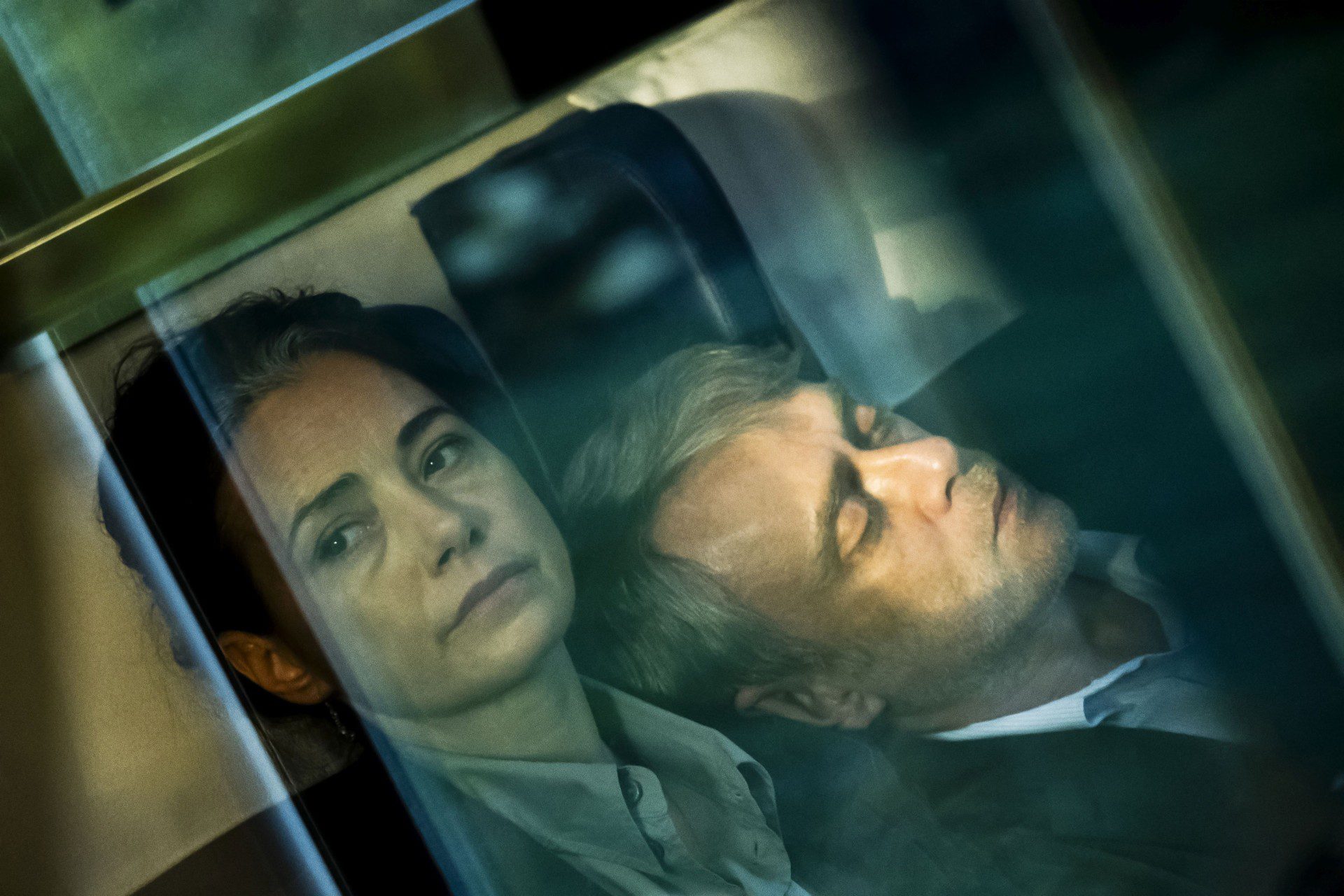


O cinema como forma de devolver aos homens as restrições das mulheres
Quando comecei a estudar o cinema iraniano, deparei-me com uma contradição que me parece essencial para compreender boa parte da produção do país, especialmente os filmes protagonizados por mulheres. O cinema iraniano construiu uma tradição de realismo, de observação do cotidiano e de atenção às relações sociais, mas as personagens femininas precisavam, em muitas situações, inclusive as domésticas, obedecer diante da câmera a regras de vestimenta e comportamento que não correspondiam necessariamente àquilo que aconteceria na vida privada. Uma atriz precisa aparecer coberta mesmo em situações em que uma mulher normalmente não estaria, até mesmo dormindo! A justificativa é que a tela de cinema é entendida como um espaço público, portanto a representação feminina deve obedecer às mesmas regras impostas à aparência das mulheres em público. Ghasideh Golmakani conhece essa contradição muito bem.
É desse paradoxo que nasce o inicialmente irreverente e depois profundamente reflexivo Head to Head, primeiro longa-metragem de ficção escrito e dirigido por Golmakani. O filme começa como uma comédia sobre um set de filmagem e, gradualmente, se transforma em drama, mas a mudança de tom não é o abandono do humor, mesmo quando rir é desconfortável. A diretora recruta o absurdo e a metalinguagem como uma maneira de iluminar a realidade iraniana que é ainda mais absurda. Bahar (Satari) é uma diretora que decide fazer um filme em que os homens precisam vestir-se como mulheres, invertendo as regras de vestimenta e comportamento, obrigando os atores a experimentar o conjunto de restrições que, para as mulheres iranianas, fazem parte da rotina.
A primeira imagem do filme dentro do filme já estabelece esse jogo metalinguístico, e a contradição que me refiro no parágrafo inicial. Uma mulher entra vestida em uma piscina, e a reação imediata é de estranhamento, afinal, que pessoa entraria na água vestida daquela maneira? A resposta, dentro da lógica criada por Golmakani, é a mulher iraniana representada em um filme iraniano. Essa brincadeira se desdobra quando percebemos que, na obra dentro da obra, os homens precisam assumir as vestes típicas, os limites para não provocar e a experiência de desconforto de ser considerada inferior na sociedade. Não é só uma inversão de papéis, porque, se assim fosse, esse filme se esgotaria em um curta-metragem, mas um experimento cinematográfico que nos obriga a refletir o que acontece com o corpo masculino quando é submetido às mesmas restrições que o corpo feminino.
Mulheres não podem levantar os braços excessivamente para evitar marcar o contorno do corpo; não devem rir de maneira que revele demais a boca; nem se mover rapidamente de modo a expor determinadas partes do corpo; e, aí delas caso mexam demais o corpo na dança. Tudo pode ser considerado provocador. A irreverência nasce do desconforto, já que os atores reclamam do calor, das roupas, da dificuldade para se movimentar, de ter de dormir com o lenço (o chador) na cabeça. Os atores do filme dentro do filme só mimetizam o que os atores de Golmakani experienciam, em uma das camadas da boneca russa narrativa.
Enquanto isso, uma equipe majoritariamente feminina (assistente de direção, editora de som etc.) circula sem as mesmas regras dentro daquele espaço de trabalho aparentemente seguro. O corpo, então, deixa de ser somente um corpo filmado e se transforma em corpo em crise. Aquilo que em outros filmes precisaria ser naturalizado pelo espectador agora é colocado diante dele como absurdo, porque os homens estão sofrendo aquilo que antes não precisavam sequer perceber, embora façam ressalvas ou críticas com maior veemência do que as mulheres jamais fariam.
Assim, a narrativa convida o espectador a refletir sobre o modo de produção do cinema iraniano, como também sobre a experiência na sociedade do país. O filme é metalinguístico não apenas porque acompanha uma diretora filmando outra obra, mas porque transforma o processo de produção em assunto, criando mais uma camada adicional de metalinguagem: quando a câmera do diretor de fotografia Ebi começa a registrar os bastidores, há uma incerteza sobre o quê de fato é o filme de Bahar (e mesmo de Golmakani). As diretoras – a da ficção e a da realidade – flertam com o limite que separa o real da encenação, aproximando-se do cinema de Jafar Panahi, em que o dispositivo cinematográfico se torna um elemento da narrativa.
Golmakani reforça essa intenção ao diferenciar essas camadas audiovisuais. As imagens do filme que Bahar está realizando usam uma câmera distinta e uma estética mais próxima do cinema de guerrilha, clandestino, enquanto o filme principal prefere planos estáticos e uma composição voltada para os corpos e as roupas dentro do enquadramento. A diferença ajuda a sedimentar o conflito entre aquilo que está sendo produzido e aquilo que está sendo vivido. Só que toda a operação é colocada em risco quando a Polícia Moral – apenas o conceito dela já me provoca calafrio – descobre a localização secreta do filme. O que era uma comédia se torna em um drama. Neste momento, em que Bahar está em risco, a metalinguagem deixa de ser só uma estratégia formal para recuperar a sua dimensão política.
E Bahar não é uma heroína perfeita, mas uma artista que às vezes não confia nos artistas com que trabalha o bastante para confidenciar o que deseja produzir. Ela é contraditória, tanto quanto Sina (Naderi), o ator mais rebelde do elenco, que desafia a autoridade de Bahar e ameaça a continuidade da produção. A jornada dos dois termina levando-os a compreender que a luta das mulheres não é uma luta exclusivamente feminina, mas de toda a sociedade, porque também impactam os homens, ainda que de maneiras distintas.
E mesmo com apenas 75 minutos aproximadamente, Head to Head desenvolve uma experiência que começa no absurdo e desemboca em uma reflexão dramática e política. A comédia se torna o ponto de partida para que a narrativa revele, com competência, aquilo que a realidade esconde. Rir ou satirizar um problema igual a esse costuma ser um dos meios mais acessíveis de visibilizá-lo para nós todos. Pois, bastante premiado no mundo inteiro, o cinema iraniano enquanto tenta representar a realidade, termina por assisti-la interferir no modo como a realidade pode ser representada. Golmakani transformou o ato de filmar e o projeto metalinguístico em geral em uma discussão sobre quem pode criar, como criar, e como um corpo pode ou não ser representado diante de uma câmera.
Por isso que a imagem de um pulso feminino para fora da janela do carro, segurando o lenço que simboliza a prisão, permanece como uma das mais bonitas do filme. Há ali uma libertação cujo discurso encerra-se na imagem, igual todo o filme. E que filme.
O filme está na seleção oficial do Festival de Toronto (TIFF) 2026.
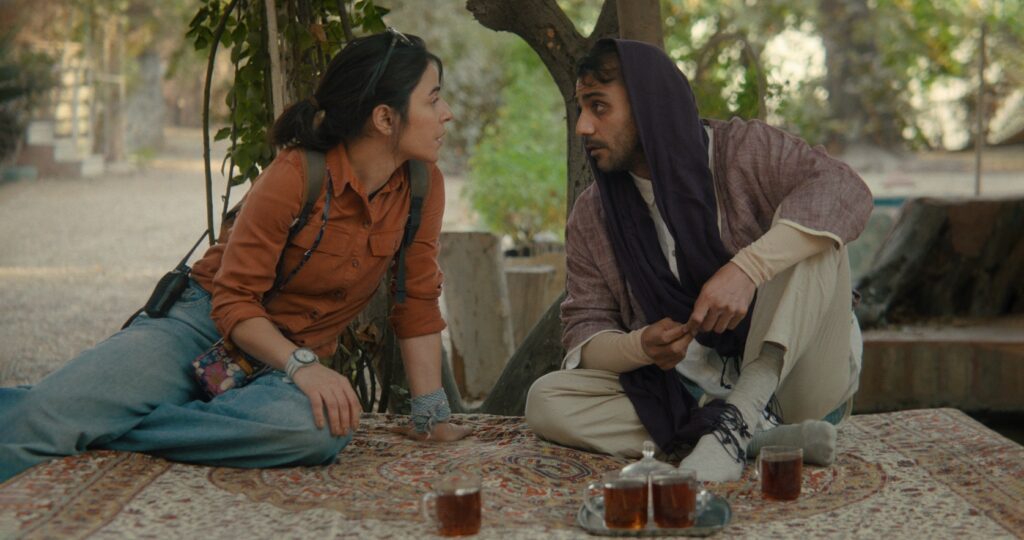
Cinema as a Way of Returning Women’s Restrictions to Men
When I began studying Iranian cinema, I encountered a contradiction that seems essential to understanding much of the country’s filmmaking, especially films centered on women. Iranian cinema has built a tradition of realism, of observing everyday life and paying close attention to social relationships, but female characters have often had to obey, even in domestic situations, rules of dress and behavior in front of the camera that do not necessarily correspond to what would happen in private life. An actress must appear covered even in situations in which a woman normally would not, even while sleeping! The justification is that the cinema screen is understood as a public space, and therefore female representation must follow the same rules imposed on women’s appearance in public. Ghasideh Golmakani knows this contradiction very well.
It is from this paradox that the initially irreverent and later deeply reflective Head to Head, Golmakani’s first feature-length fiction film as writer and director, emerges. The film begins as a comedy about a film set and gradually turns into a drama, but the shift in tone does not mean abandoning humor, even when laughing becomes uncomfortable. The director embraces absurdity and metacinema as a way of illuminating an Iranian reality that is even more absurd. Bahar (Satari) is a director who decides to make a film in which men must dress as women, reversing the rules of dress and behavior and forcing the actors to experience the set of restrictions that, for Iranian women, are part of everyday life.
The first image of the film within the film already establishes this metalinguistic game, as well as the contradiction I referred to in the opening paragraph. A woman enters a swimming pool fully dressed, and the immediate reaction is one of estrangement: after all, what kind of person would enter the water dressed like that? The answer, within Golmakani’s logic, is the Iranian woman as represented in an Iranian film. The joke develops further when we realize that, in the film within the film, the men must assume the traditional clothing, the limits against being provocative, and the discomfort of being considered inferior in society. It is not merely a role reversal, because if that were all it was, the film would amount to little more than a short film, but rather a cinematic experiment that forces us to consider what happens to the male body when it is subjected to the same restrictions imposed on the female body.
Women cannot raise their arms excessively in order to avoid showing the contours of their bodies; they should not laugh in a way that reveals too much of their mouths; nor should they move quickly enough to expose certain parts of their bodies; and God forbid they move their bodies too much while dancing. Everything can be considered provocative. The irreverence emerges from discomfort, as the actors complain about the heat, the clothes, the difficulty of moving, and having to sleep with the headscarf (the chador) on. The actors in the film within the film are simply mimicking what Golmakani’s actors experience, in one of the layers of this Russian-doll-like narrative.
Meanwhile, a predominantly female crew — assistant director, sound editor, and so on — moves around without the same restrictions within this apparently safe workplace. The body, then, ceases to be merely a filmed body and becomes a body in crisis. What in other films would have to be naturalized by the viewer is now placed before us as absurd, because the men are experiencing something they previously did not even have to notice, although they voice their objections and criticisms far more vehemently than women ever would.
Thus, the narrative invites the viewer to reflect both on the way Iranian cinema is produced and on the experience of living in Iranian society. The film is metalinguistic not only because it follows a director making another film, but because it turns the production process itself into the subject, creating yet another layer of metacinema: when the cinematographer Ebi’s camera begins recording the behind-the-scenes footage, there is uncertainty about what exactly belongs to Bahar’s film (and even to Golmakani’s). The two female directors — the one within the fiction and the one in reality — flirt with the boundary separating reality from staging, bringing the film close to the cinema of Jafar Panahi, in which the cinematic apparatus itself becomes an element of the narrative.
Golmakani reinforces this intention by differentiating these audiovisual layers. The images of the film Bahar is making use a different camera and an aesthetic closer to guerrilla, clandestine filmmaking, while the main film prefers static shots and compositions focused on bodies and clothing within the frame. The difference helps cement the conflict between what is being produced and what is being experienced. But the entire operation is put at risk when the Morality Police — even the concept of it gives me chills — discovers the secret location where the film is being shot. What was a comedy becomes a drama. At this moment, when Bahar is at risk, the metalinguistic device ceases to be merely a formal strategy and regains its political dimension.
And Bahar is not a perfect heroine, but an artist who sometimes does not trust the artists she works with enough to confide in them about what she wants to produce. She is contradictory, just as Sina (Naderi), the most rebellious actor in the cast, is, challenging Bahar’s authority and threatening the continuation of the production. Their journey eventually leads them to understand that women’s struggle is not exclusively a women’s struggle, but one that belongs to society as a whole, because men are also affected by it, albeit in different ways.
And even at only approximately 75 minutes, Head to Head develops an experience that begins in absurdity and culminates in a dramatic and political reflection. Comedy becomes the starting point from which the narrative competently reveals what reality conceals. Laughing at or satirizing a problem like this is often one of the most accessible ways of making it visible to all of us. For, despite being highly acclaimed around the world, Iranian cinema, while trying to represent reality, ultimately finds itself watching reality interfere with the way reality can be represented. Golmakani has transformed the act of filmmaking and the metacinematic project as a whole into a discussion about who can create, how they can create, and how a body may or may not be represented in front of a camera.
That is why the image of a woman’s wrist reaching out of the car window, holding the scarf that symbolizes imprisonment, remains one of the film’s most beautiful. There is a liberation there whose meaning ends with the image, just like the entire film. And what a film.
The film is part of the official selection of the 2026 Toronto International Film Festival (TIFF).

Crítico de cinema filiado a Critics Choice Association, à Associação Brasileira de Críticos de Cinema, a Online Film Critics Society e a Fipresci. Atuou no júri da 39ª Mostra Internacional de Cinema em São Paulo/SP, do 12º Fest Aruana em João Pessoa/PB, do 24º Tallinn Black Nights Film na Estônia, do 47º TIFF – Festival Internacional de Cinema em Toronto. Ministrante do Laboratório de Crítica Cinematográfica na 1ª Mostra Internacional de Cinema em São Luís (MA) e Professor Convidado do Curso Técnico em Cinema do Instituto Estadual do Maranhão (IEMA), na disciplina Crítica Cinematográfica. Concluiu o curso de Filmmaking da New York Film Academy, no Rio de Janeiro (RJ) em 2013. Participou como co-autor dos livros 100 melhores filmes brasileiros (Letramento, 2016), Documentário brasileiro: 100 filmes essenciais (Letramento, 2017) e Animação Brasileira – 100 Filmes Essenciais (Letramento, 2018). Criou o Cinema com Crítica em fevereiro de 2010 e o Clube do Crítico em junho de 2020.