
Gerda Taro entre a fotografia, a paixão e a resistência
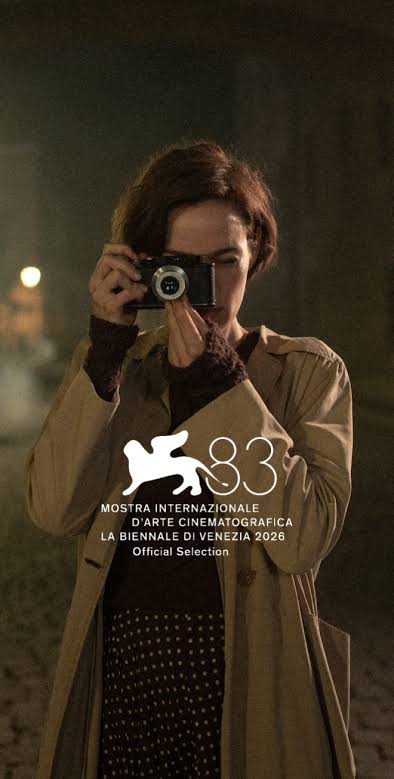
“Oportunista, às vezes infiel”, como ela se denominava, Gerda Taro também foi uma artista, cidadã e mulher à frente de seu tempo. Alemã e fotógrafa de guerra no campo de batalha, ao lado das forças que combatiam o regime fascista de Francisco Franco, Gerda pode ter fugido do país porque precisou fazê-lo para sobreviver, embora tenha reconhecido que era preciso ter feito mais para frear o avanço do nazismo. Havia ainda a mulher apaixonada, livre, inquieta, cercada de amigos e amantes, como se a intensidade fosse a única maneira de existir antes que a História lhe tirasse a possibilidade. Basta observar a maneira como os personagens de The Girl with the Leica e a própria diretora, Alina Marazzi, parecem observá-la ao longo de sua curta vida.
Adaptado do romance de Helena Janeczek, o filme parte do último dia de Gerda em Paris, em 14 de julho de 1937, antes de seu retorno ao front espanhol, e atravessa lembranças de seu ativismo político na Alemanha, do exílio em Paris, de sua relação com Endre Friedmann, que se tornaria Robert Capa, e da descoberta da fotografia como instrumento de resistência e liberdade.
Com uma estrutura relativamente fragmentada, a narrativa confunde-nos com a quantidade de amantes de Gerda ou de cidades que a personagem visita, mas o fio condutor é a própria personagem. Marazzi não constrói uma cinebiografia convencional, organizada pela sucessão cronológica dos acontecimentos, mas acompanha um único dia para abrir espaço a outras temporalidades, memórias e fragmentos da vida da fotógrafa. É uma estrutura que combina com a personalidade de Gerda porque não permite que ela se acomode em um único rótulo. O passado retorna de maneira descontínua, como lembranças que insistem em permanecer vivas, e a personagem existe simultaneamente em cada uma das mulheres que foi: a jovem politicamente engajada na Alemanha, a exilada em Paris, a amante, a fotógrafa, a mulher que deseja reconhecimento e aquela que decide ir à Espanha para registrar a guerra.
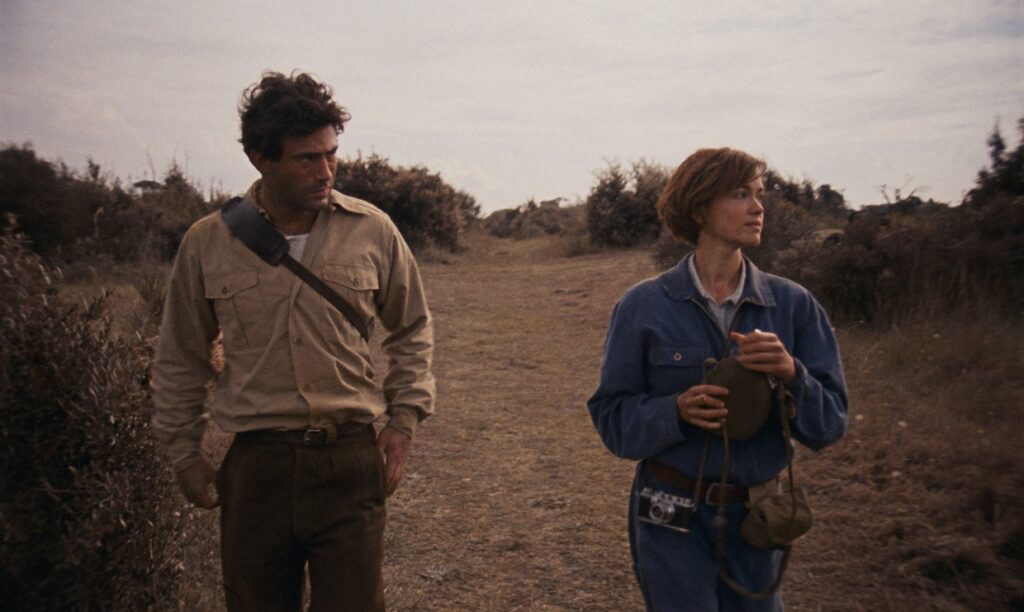
Marazzi tenta, ao máximo, honrar formalmente a intensidade, a inquietação e a paixão da personagem-título, tanto pelo formato da tela, remissivo aos formatos fílmicos de outrora, quanto pela direção de fotografia de Manuel Alberto Claro, ativa e espontânea, procurando rostos, olhares, gestos e objetos em movimentos e aproximações repentinos. A fotografia também cria elementos de contraste em determinados momentos. Em uma passagem na praia, por exemplo, a câmera se torna estática e cria a ilusão de segurança: será que Georg é o porto seguro de Gerda?, reflito. Talvez não, porque o porto seguro dela é a fotografia ou, melhor, aquilo que a fotografia ajuda-a a comunicar. Através dela, as crianças permanecem crianças, embora a guerra não acabe jamais; a fotografia denuncia os regimes fascistas espalhados pela Europa; e a artista pode dialogar com um mundo que talvez não pudesse transformar diretamente, mas que podia ao menos registrar.
É através da fotografia que Gerda parece lidar com a culpa de ter deixado a Alemanha para trás. Fugir era uma necessidade, mas não deixa de existir a sensação de que algo mais poderia ter sido feito. Registrar o que acontece na Espanha, nesse sentido, é uma forma de responder ao sentimento de não ter feito o suficiente em seu próprio país. A Leica deixa de ser apenas uma ferramenta profissional para se tornar uma extensão ativista e emocional da personagem. E Marazzi amplia essa dimensão ao incorporar fotografias e vídeos de arquivo registrados por Gerda, por Robert Capa ou por terceiros, fazendo com que a realidade histórica entre diretamente na encenação. O material de arquivo não interrompe o ritmo narrativo; pelo contrário, enriquece-o estabelecendo uma dialética entre duas formas de biografar uma artista: através de uma atriz que interpreta sua vida e através das imagens que ela própria deixou para trás.
Paralelamente à biografia da fotógrafa, muito bem interpretada por Emilia Schüle, é difícil não sair apaixonado por sua personalidade agregadora, boêmia e revolucionária, ao lado de um círculo de amigos e exilados que ajuda a repensar não somente a vida de Gerda, mas uma geração inteira atravessada pela perseguição política e pelo avanço do fascismo. O filme interessa-se por esse grupo de jovens que, ao mesmo tempo em que se comprometia com ideias democráticas, queria dançar, amar, fazer sexo, divertir-se e viver. A política não sufoca a juventude; a intensidade da juventude é parte da política.
Isso é fundamental para compreender Gerda Taro como personagem. Marazzi não parece interessada em transformá-la em uma mártir da Guerra Civil Espanhola, ou em um artista tardiamente descoberta. O filme a apresenta como uma mulher apaixonada, sexualmente livre, divertida, determinada, politicamente comprometida e vulnerável. A relação com Capa é ainda mais interessante porque envolve amor, desejo e um projeto artístico compartilhado. Durante um período breve, os dois trabalharam como uma espécie de empreendimento conjunto, até que ela passou a desejar uma identidade artística independente. O problema era o risco de desaparecer dentro da identidade do homem que amava.
O receio dela não era absurdo. Durante muito tempo, a sua obra foi parcialmente absorvida pela fama de Capa, que estampou a capa de publicações sobre sua carreira de cinegrafista em conflitos. Somente a descoberta de negativos então desconhecidos, ajudou a devolver o seu nome à História. The Girl with the Leica é parte desse movimento de recuperação ao recolocá-la no centro de sua narrativa.
Assim, a busca pela artista é paralela à busca pela mulher, metades complementares ainda nos elementos estéticos idealizados por Marazzi: Gerda utiliza azul e vermelho expressivos, enquanto o jazz e as músicas que dança participam dessa existência intensificada e quase improvisada. Uma em que a realidade empurrou Gerda em direções que talvez não tivesse seguido caso a Europa não tivesse se ajoelhado diante do fascismo. A mesma História que criou o seu engajamento político a levou com a sua câmera ao campo de batalha. A mesma História que quis apagar seu nome, preservou as suas fotografias para que outras gerações pudessem reencontrar a mulher por trás delas.
The Girl with the Leica é um filme sobre fotografia, identidade, memória e a necessidade de construir uma vida própria antes que outros façam isso por nós. Gerda Taro encontrou na câmera uma forma de olhar para o mundo e, sobretudo, de responder a ele. A fotografia era registro, resistência, profissão e linguagem, mas também uma maneira de permanecer em movimento. Suas imagens sobreviveram à guerra, aos homens que dividiram sua vida e ao esquecimento de mais de meio século. Marazzi não tenta transformá-la em um monumento; ou, se faz, é através da humanidade de uma mulher que soube aproveitar, de acordo com as suas regras, cada minuto do tempo que teve, fotografando, amando, lutando e tentando transformar a própria arte em uma forma de identidade.
THE GIRL WITH THE LEICA participa da 83ª Mostra Internacional de Cinema de Veneza, na seção Orizzonti, como filme de abertura e em competição.
Gerda Taro between photography, passion, and resistance
“Opportunistic, sometimes unfaithful,” as she described herself, Gerda Taro was also an artist, a citizen, and a woman ahead of her time. German and a war photographer on the battlefield, alongside the forces fighting Francisco Franco’s fascist regime, Gerda may have fled her country because she had to in order to survive, although she recognized that more needed to be done to halt the advance of Nazism. There was also the passionate, free-spirited, restless woman, surrounded by friends and lovers, as though intensity were the only way to exist before History could take that possibility away from her. One need only observe the way the characters in The Girl with the Leica, and even director Alina Marazzi herself, seem to look at her throughout her short life.
Adapted from Helena Janeczek’s novel, the film begins on Gerda’s final day in Paris, on July 14, 1937, before her return to the Spanish front, and moves through memories of her political activism in Germany, her exile in Paris, her relationship with Endre Friedmann, who would become Robert Capa, and her discovery of photography as an instrument of resistance and freedom.
With a relatively fragmented structure, the narrative becomes intertwined with the number of Gerda’s lovers and the cities she visits, but the unifying thread is the character herself. Marazzi does not construct a conventional biopic organized around the chronological succession of events, but instead follows a single day to make room for other temporalities, memories, and fragments of the photographer’s life. It is a structure that suits Gerda’s personality because it does not allow her to settle into a single label. The past returns discontinuously, like memories that insist on remaining alive, and the character exists simultaneously in each of the women she was: the politically engaged young woman in Germany, the exile in Paris, the lover, the photographer, the woman seeking recognition, and the one who decides to go to Spain to document the war.
Marazzi goes to great lengths to formally honor the intensity, restlessness, and passion of her protagonist, both through the film’s aspect ratio, reminiscent of film formats from another era, and through Manuel Alberto Claro’s cinematography, active and spontaneous, searching for faces, glances, gestures, and objects through sudden movements and close-ups. The cinematography also creates elements of contrast at certain moments. In a scene on the beach, for example, the camera becomes static and creates the illusion of safety: could Georg be Gerda’s safe harbor?, I wonder. Perhaps not, because her safe harbor is photography or, rather, what photography helps her communicate. Through it, children remain children, even though the war never seems to end; photography denounces the fascist regimes spreading across Europe; and the artist can engage with a world that she perhaps could not transform directly, but could at least record.
It is through photography that Gerda seems to grapple with the guilt of having left Germany behind. Fleeing was a necessity, but that does not eliminate the feeling that something more could have been done. Recording what is happening in Spain, in this sense, becomes a way of responding to the feeling that she did not do enough in her own country. The Leica ceases to be merely a professional tool and becomes an activist and emotional extension of the character. Marazzi expands this dimension by incorporating archival photographs and footage taken by Gerda, Robert Capa, or others, allowing historical reality to enter directly into the staging. The archival material does not interrupt the narrative rhythm; on the contrary, it enriches it by establishing a dialectic between two ways of biographing an artist: through an actress who portrays her life and through the images she herself left behind.
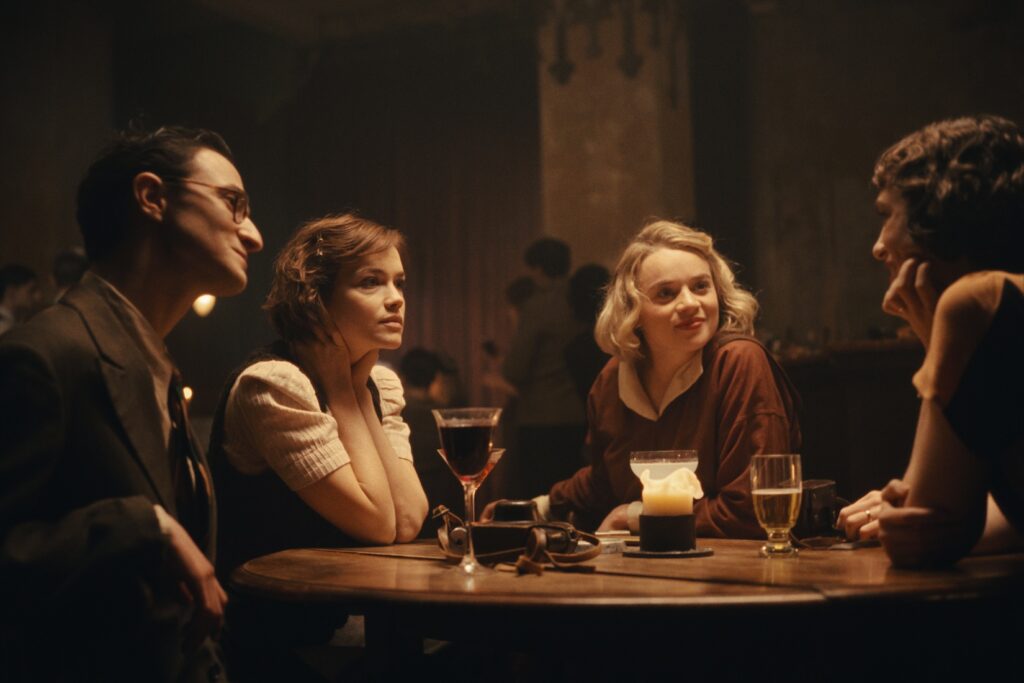
Alongside the photographer’s biography, beautifully portrayed by Emilia Schüle, it is difficult not to fall in love with her magnetic, bohemian, and revolutionary personality, surrounded by a circle of friends and exiles that helps us rethink not only Gerda’s life, but an entire generation shaped by political persecution and the rise of fascism. The film is interested in this group of young people who, while committed to democratic ideas, also wanted to dance, love, have sex, have fun, and live. Politics does not suffocate youth; the intensity of youth is part of politics.
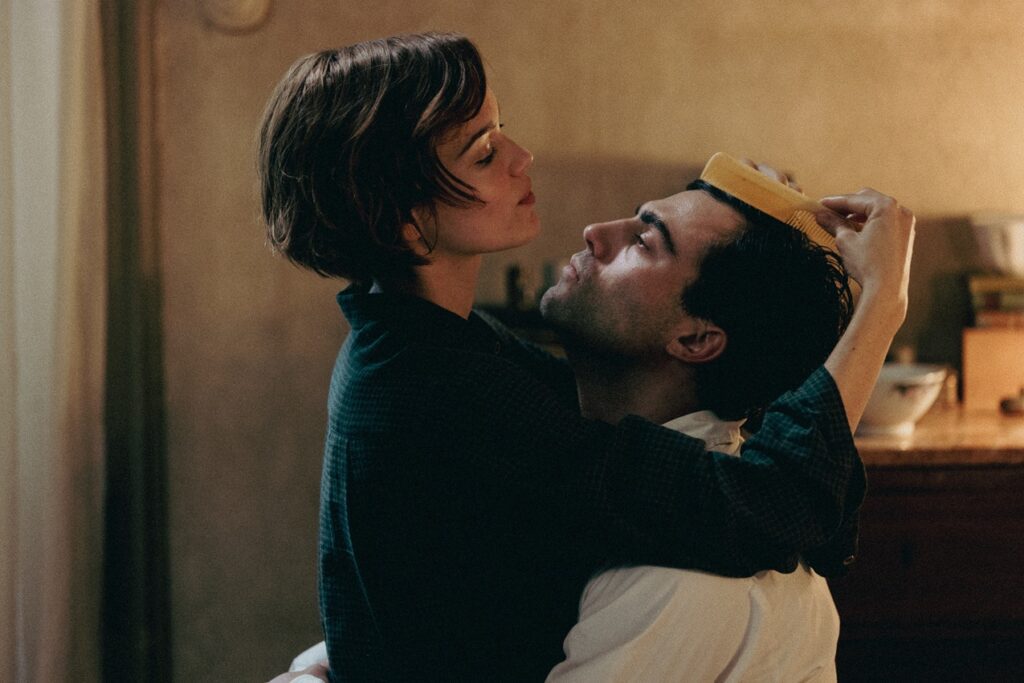
This is fundamental to understanding Gerda Taro as a character. Marazzi does not seem interested in turning her into a martyr of the Spanish Civil War, or into an artist discovered too late. The film presents her as a passionate, sexually free, playful, determined, politically committed, and vulnerable woman. Her relationship with Capa is even more interesting because it involves love, desire, and a shared artistic project. For a brief period, the two worked as a kind of joint venture, until she began to seek an independent artistic identity. The problem was the risk of disappearing within the identity of the man she loved.
Her concern was not unfounded. For a long time, her work was partially overshadowed by Capa’s fame, which graced the covers of publications about his career as a war photographer. Only the discovery of previously unknown negatives helped restore her name to History. The Girl with the Leica is part of this process of reclamation by placing her back at the center of its own narrative.
Thus, the search for the artist runs parallel to the search for the woman, complementary halves that also find expression in the aesthetic elements conceived by Marazzi: Gerda uses expressive blues and reds, while jazz and the music she dances to become part of this intensified, almost improvised existence. One in which reality pushed Gerda in directions she might not have followed had Europe not knelt before fascism. The same History that shaped her political commitment led her, with her camera, to the battlefield. The same History that sought to erase her name preserved her photographs so that later generations could rediscover the woman behind them.
The Girl with the Leica is a film about photography, identity, memory, and the need to build a life of one’s own before others do it for us. Gerda Taro found in the camera a way of looking at the world and, above all, of responding to it. Photography was record, resistance, profession, and language, but also a way of remaining in motion. Her images survived the war, the men who shared her life, and more than half a century of obscurity. Marazzi does not try to turn her into a monument; or, if she does, it is through the humanity of a woman who knew how to make the most of every minute she had, on her own terms, photographing, loving, fighting, and attempting to transform her art into a form of identity.
THE GIRL WITH THE LEICA is part of the 83rd Venice International Film Festival, in the Orizzonti section, as the Opening Film and in competition.

Crítico de cinema filiado a Critics Choice Association, à Associação Brasileira de Críticos de Cinema, a Online Film Critics Society e a Fipresci. Atuou no júri da 39ª Mostra Internacional de Cinema em São Paulo/SP, do 12º Fest Aruana em João Pessoa/PB, do 24º Tallinn Black Nights Film na Estônia, do 47º TIFF – Festival Internacional de Cinema em Toronto. Ministrante do Laboratório de Crítica Cinematográfica na 1ª Mostra Internacional de Cinema em São Luís (MA) e Professor Convidado do Curso Técnico em Cinema do Instituto Estadual do Maranhão (IEMA), na disciplina Crítica Cinematográfica. Concluiu o curso de Filmmaking da New York Film Academy, no Rio de Janeiro (RJ) em 2013. Participou como co-autor dos livros 100 melhores filmes brasileiros (Letramento, 2016), Documentário brasileiro: 100 filmes essenciais (Letramento, 2017) e Animação Brasileira – 100 Filmes Essenciais (Letramento, 2018). Criou o Cinema com Crítica em fevereiro de 2010 e o Clube do Crítico em junho de 2020.