

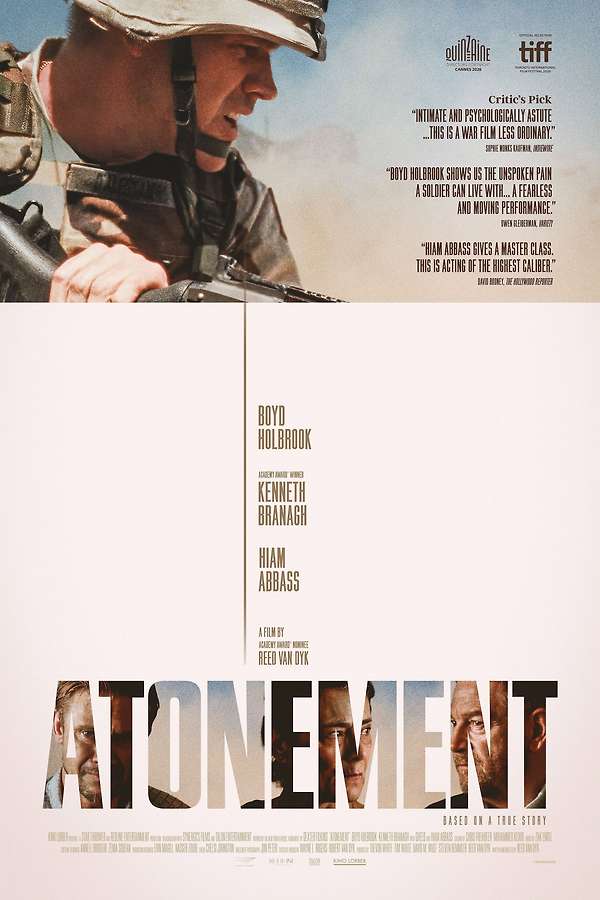
A culpa de um soldado diante da guerra do Iraque
Atonement pode parecer anacrônico à primeira vista porque nos obriga a lembrar da Guerra do Iraque, um conflito que, embora tenha acontecido poucas décadas atrás, parece pertencer a outro século ou período histórico. Esse período passou por uma deterioração tão intensa das relações geopolíticas e, sobretudo, das relações humanas que a distância entre aquele momento e o presente parece muito maior do que realmente é. O curioso é que o filme de Reed Van Dyk, em vez de simplesmente retornar ao passado, termina dialogando com um presente marcado pela multiplicação de conflitos e pela persistência de uma lógica em que determinadas vidas parecem ter um valor humano menor do que outras. Essa é uma das forças da narrativa: ele funciona simultaneamente como filme de época e como obra contemporânea, quando convida o espectador a olhar para a vida de uma maneira diferente daquela que a guerra costuma impor.
A história parte de uma ação militar norte-americana durante os primeiros dias da Guerra do Iraque que desloca a família Khachaturian de sua casa. Reunidos na residência de parentes, os integrantes de três gerações tentam manter uma aparência de normalidade até que um bombardeio os leva a decidir pelo retorno para casa. No caminho, ficam presos em um confronto entre fuzileiros estadunidenses e insurgentes locais, e uma decisão tomada em uma fração de segundo ocasiona a destruição da família. Van Dyk demora-se antes disso na apresentação dessa família. Ele não transforma os iraquianos em vítimas abstratas de uma guerra, mas começa mostrando a família reunida dentro de sua casa, relações, conversas, gestos cotidianos. A guerra só aparece depois, de forma que não enxergamos somente danos colaterais, mas pessoas com quem estabelecemos alguma forma de relação.
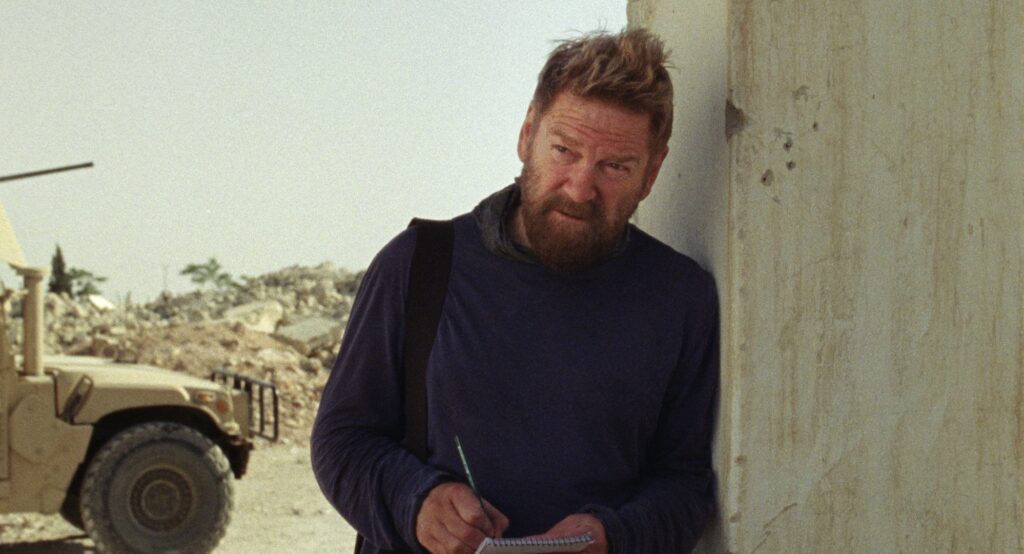
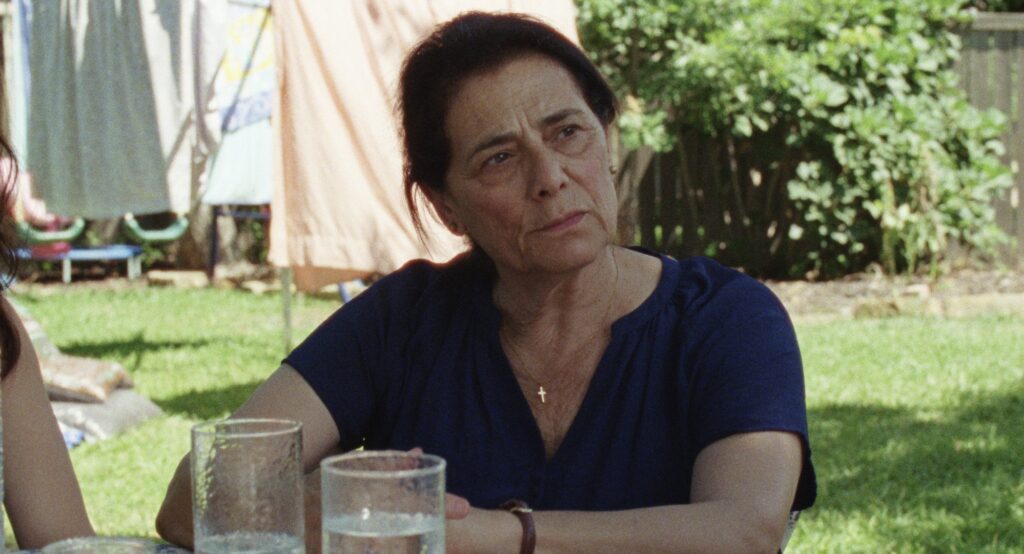
A partir desse acontecimento, a narrativa se subdivide em três capítulos que acompanham diferentes personagens envolvidos direta ou indiretamente na tragédia. Primeiro vem Lou (Boyd Holbrook), que, após um instante de insensibilidade, começar a sofrer com a culpa pela morte dos civis. Depois aparece Michael, jornalista da The New Yorker interpretado por Kenneth Branagh, que funciona como o elo entre Lou e a família sobrevivente. Por fim, chegamos a Mariam (Hiam Abbass), a matriarca que concentra todo o luto. Essa estrutura é eficiente, mas também arriscada. Há o risco de que o filme acabe comparando tragédias experiências que não possuem o mesmo peso. De um lado, a culpa de um homem que participou de uma ação militar, o agressor; do outro, o luto e trauma de uma família vítima que perdeu entes queridosem consequência dessa ação.
A narrativa está mais interessada em uma oposição entre culpado e vítima, mas em perguntar o que significa tentar reparar aquilo que não pode ser reparado? Lou deseja algum tipo de reconciliação, mas a ideia de reparação se torna impossível diante da morte de uma pessoa. Não existe nada que possa fazer capaz de devolver uma pessoa assassinada à sua família, tampouco há pedido de desculpas e expiação que restituam uma vida ou reconstruam a família em torno da tragédia.
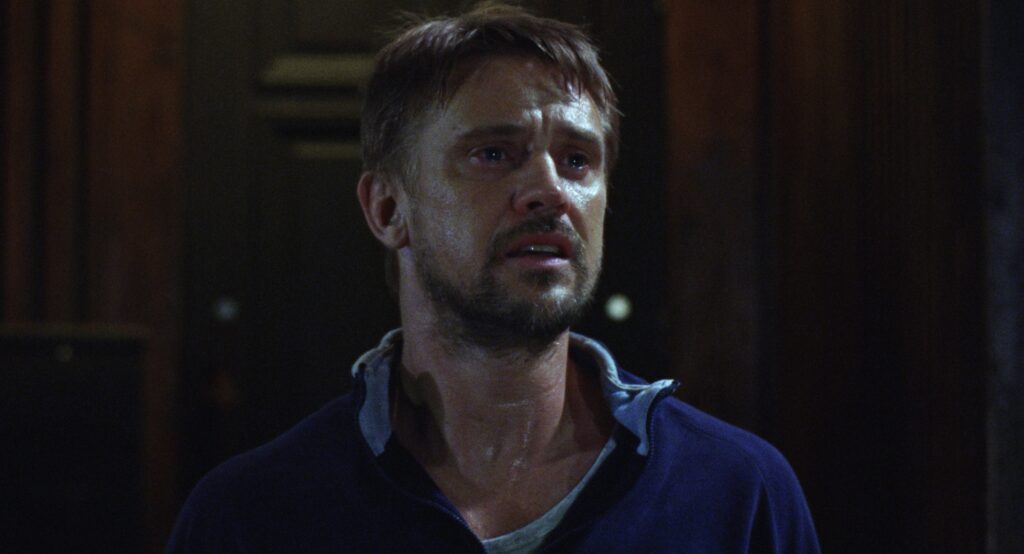
Nesse sentido, uma das imagens que mais me chama atenção é a cena em que Lou lava os pratos depois de um jantar com a família da vítima. Esse momento ganha uma dimensão além da simbólica dentro das circunstâncias apresentadas na narrativa, associa-se a uma tentativa de restituir uma ordem mínima ao mundo. Só que não existe mais ordem possível. O trabalho doméstico, então, transforma-se em uma espécie de ritual de expiação de um homem estadunidense à luz da morte de um homem iraquiano, o que pode ser lido e creio que seja a intenção como uma metonímia da sociedade estadunidense enviada à guerra sob pretextos jamais comprovados pela administração Bush.
Mas embora seja construído em torno do percurso de Lou, a princípio, Van Dyk valoriza ou tenta valorizar a família iraquiana. Em vez de os apresentar como o outro, alienígena e distante, procura dar-lhes o mesmo ponto de partida que alguém daria a famílias suburbanas estadunidenses. Essa intenção aparece na estrutura da narrativa. Mesmo que a família não seja exatamente o ponto de vista dominante, apenas um dentro três, não existe apenas para funcionar como instrumento da culpa de Lou. Há uma tentativa de reconhecer sua vida antes e depois da violência, de devolver aos personagens uma dimensão que a representação convencional da guerra muitas vezes lhes retira.
Como consequência, o filme não precisa transformar Bagdá em um cenário exótico que precisa ser libertado pelos Estados Unidos, que só contribuíram para tornar a região mais instável, nem fazer da violência o epicentro dramático para o qual retornará noutras vezes. As atuações de Boyd Holbrook e Kenneth Branagh são competentes, apesar de ser a atriz palestina Hiam Abbass que sustenta melhor essa dimensão humana, especialmente quando suas emoções contraditórias são expressas através de olhos fundos e silêncios demorados.
Ao término, é fácil reconhecer a humanidade quando ela se parece conosco. Famílias ocidentais, brancas, loiras, pertencentes ao nosso imaginário cultural. O desafio está em reconhecer essa mesma humanidade quando ela aparece em uma família árabe, iraquiana, e que vive do outro lado do mundo. Essas pessoas também amam, discutem, trabalham, celebram, fazem planos e constroem suas histórias e, diferente de nós, podem ter sua vida interrompida com o ato autoritário e tirânico do chefe da nação mais poderosa do mundo. Assim, Atonement sabe que não consegue reparar a violência endêmica produzida pelos Estados Unods, porque nenhuma obra poderia fazê-lo. Pode, ao menos, insistir naquilo que a guerra tenta apagar. Antes de serem danos colaterais ou personagens secundários da história de alguém, aquelas pessoas tinham uma vida. Olhar para essa vida é o primeiro passo para compreender o verdadeiro significado da palavra que dá título ao filme: reparação.
Reed Van Dyk’s Iraq War Drama and the Impossible Weight of Guilt
Atonement may seem anachronistic at first because it forces us to remember the Iraq War, a conflict that, although it took place only a few decades ago, seems to belong to another historical era. Perhaps that is because those decades have witnessed such an intense deterioration of geopolitical relations and, above all, of human relationships that the distance between that moment and the present feels much greater than it actually is. What is curious is that Reed Van Dyk’s film, rather than simply returning to the past, ends up speaking directly to a present marked by the multiplication of conflicts and by the persistence of a logic in which certain lives seem to be assigned less human value than others. And that is one of the strengths of Atonement: it functions simultaneously as a period film and as an intensely contemporary work, inviting viewers to look at life from a perspective different from the one imposed by war itself. Not coincidentally, the director says that the film originated with a story published in The New Yorker and that, over the years of development, it also became a reflection on his own country and on Iraqi civilians transformed by the American intervention.
The story begins with an American military action during the early days of the Iraq War that displaces the Khachaturian family from their home. Gathered at a relative’s house, three generations attempt to maintain some appearance of normality until another bombing leads them to decide to return home. On the way, they become trapped in a confrontation between U.S. Marines and insurgents, and a decision made in a split second results in the destruction of the family. It is important that Van Dyk takes his time introducing this family beforehand. The film does not begin by turning Iraqis into abstract victims of war; it begins by showing people. There is a family gathered together, bodies occupying a domestic space, relationships, conversations, small everyday movements. War comes afterward. This choice is fundamental because, when the violence occurs, the audience has already recognized these people as individuals before the narrative assigns them the condition of victims.
From that point onward, the narrative is divided into three movements that follow different characters directly or indirectly involved in the tragedy. First comes Lou D’Alessandro, the Marine played by Boyd Holbrook, who carries the guilt for the deaths of the civilians. Then comes Michael Reid, the New Yorker journalist played by Kenneth Branagh, who becomes the link between Lou and the surviving family. Finally, we reach Mariam Khachaturian, played by Hiam Abbass, the matriarch who carries the weight of grief. This structure is intriguing, but also risky. And precisely because it is constructed as an attempt to bring together individuals separated by war, there is a danger that the film may end up making comparable experiences that do not carry the same weight: on one side, the guilt of a man who participated in a military action; on the other, the trauma of a family that lost loved ones as a consequence of that action.
This is where Atonement finds a more interesting question than the simple opposition between perpetrator and victim: what does it mean to try to repair something that cannot be repaired? Lou wants some form of reconciliation, but the very idea of atonement becomes impossible in the face of death. There is no gesture capable of returning a dead person to their family, just as there is no apology capable of restoring a life. The director says that one of the questions that led him to the film was how someone can reconstruct themselves after a war, and what happens when an American Marine begins to awaken to the moral consequences of his participation in the conflict. At the same time, he was interested in the encounter, in a living room, between people placed on opposite sides of a war. The word “atonement,” therefore, does not describe a solution: it describes an impossibility that must nevertheless be confronted.
In this sense, one of the images that stands out most to me is the scene in which Lou washes the dishes. The gesture may seem banal, but it acquires an almost obsessive dimension within the circumstances presented. Washing, cleaning, organizing, placing clean cloths over surfaces: these are actions associated with the attempt to restore some minimal order to the world. Yet there is no longer any possible order after what has happened. Domestic labor thus becomes a kind of ritual of expiation. The body tries to do something concrete in the face of an event for which there is no reparative action. It is precisely when the film moves away from the most explicit dimension of war that this guilt finds one of its strongest visual translations. Instead of simply telling us that Lou is suffering, Atonement transforms suffering into gesture, repetition, and matter.
It is also important to note that although the film is built around the soldier’s trajectory, it does not stop valuing the Iraqi family. Van Dyk states that he wanted to avoid what he calls “othering,” the tendency to portray Iraq and Iraqis as foreign, homogeneous, and distant, and that he researched the country, traveled to Baghdad, and cast mostly Iraqi actors to play Iraqi characters. This intention is visible in the very structure of the narrative. Although the family is not exactly the dominant point of view, it does not exist merely as a device for Lou’s guilt. There is an attempt to recognize its life before and after the violence, to restore to these characters a dimension that conventional representations of war often take away from them.
This is why Atonement becomes more compelling when it approaches war through everyday life rather than simply presenting it as a spectacle of destruction. The film does not need to turn Baghdad into an exotic setting or make violence the visual center of everything. Its concern lies with the bodies that remain after violence. The director says he wanted to make a less cynical kind of cinema, one capable of acknowledging the darkness of the world without giving up on the possibility of human connection. That proposal may sound idealistic, but it is consistent with the film’s own dramatic structure, built around the attempt to bring together characters carrying experiences that cannot be reconciled.
The performances of Boyd Holbrook, Kenneth Branagh, and Hiam Abbass are essential to sustaining this human dimension, particularly because the film depends less on grand speeches than on physical presence and silence. The cinematography is by Jon Peter, with editing by Chelsi Johnston, while Zak Engel provides the score and John Warrin and Ugo Derouard the sound design. These elements help shape a film in which war is not merely a historical event, but an experience that continues to reverberate through those who survived it.
Perhaps this is precisely where Atonement finds its relevance. Because it is easy to recognize humanity when it looks like us: Western, white, blonde families belonging to our own cultural imagination. The challenge lies in recognizing that same humanity when it appears in an Arab, Iraqi family living on the other side of the world. These people also love, argue, work, celebrate, make plans, and build their own stories. Atonement cannot repair the violence it depicts, because no work of art could ever do so. But it can insist on what war tries to erase: before they were numbers, collateral damage, or secondary characters in someone else’s story, these people had lives. And perhaps looking at those lives is the first step toward understanding the true meaning of the word that gives the film its title: atonement.

Crítico de cinema filiado a Critics Choice Association, à Associação Brasileira de Críticos de Cinema, a Online Film Critics Society e a Fipresci. Atuou no júri da 39ª Mostra Internacional de Cinema em São Paulo/SP, do 12º Fest Aruana em João Pessoa/PB, do 24º Tallinn Black Nights Film na Estônia, do 47º TIFF – Festival Internacional de Cinema em Toronto. Ministrante do Laboratório de Crítica Cinematográfica na 1ª Mostra Internacional de Cinema em São Luís (MA) e Professor Convidado do Curso Técnico em Cinema do Instituto Estadual do Maranhão (IEMA), na disciplina Crítica Cinematográfica. Concluiu o curso de Filmmaking da New York Film Academy, no Rio de Janeiro (RJ) em 2013. Participou como co-autor dos livros 100 melhores filmes brasileiros (Letramento, 2016), Documentário brasileiro: 100 filmes essenciais (Letramento, 2017) e Animação Brasileira – 100 Filmes Essenciais (Letramento, 2018). Criou o Cinema com Crítica em fevereiro de 2010 e o Clube do Crítico em junho de 2020.






1 comentário em “Atonement”
Pingback: Atonement | A guerra do Iraque e a maneira como os Estados Unidos olham para o restante do mundo • Cinema com Crítica