

Desaprendemos a nos encantar com a arte. A transformação da expressão artística em indústria e propriedade massificou o que atualmente se nomeia como produção. Filmes, peças de teatro, músicas, pinturas, poemas e livros tornaram-se consumíveis, produtos numa prateleira infinita de possibilidades que busca atender aos mais variados gostos de seus consumidores. A paciência para sua apreciação plena, para a proposta de imersão num tempo que corre paralelo e diferente do nosso, tornou-se escassa.
Recordamo-nos qual foi o encantamento de se experienciar a arte pela primeira vez? Provavelmente não, já que, pessoas como essa que vos escreve e você que a lê, foram com ela estimuladas e enriquecidas como seres humanos em formação. Quantas vezes já paramos para pensar como seria assistir a um filme pela primeira vez? Qual seria a sensação que o teatro nos causaria se nunca tivéssemos tido acesso a ele? Dentro de nossas bolhas, esquecemo-nos de outros tempos, e de outras pessoas ao redor do mundo que coexistem conosco e que nunca puderam ir ao cinema (ou mesmo nem sabem o que é cinema), ou seja, desconhecem os efeitos de adentrar mentalmente em outras realidades por um tempo determinado, absorvendo sensações e sentimentos que não são os nossos, vivendo situações que não nos pertencem, e com isso plantando sementes de sensibilidade, de empatia, ou mesmo de ansiedade e agitação, em seus interiores.
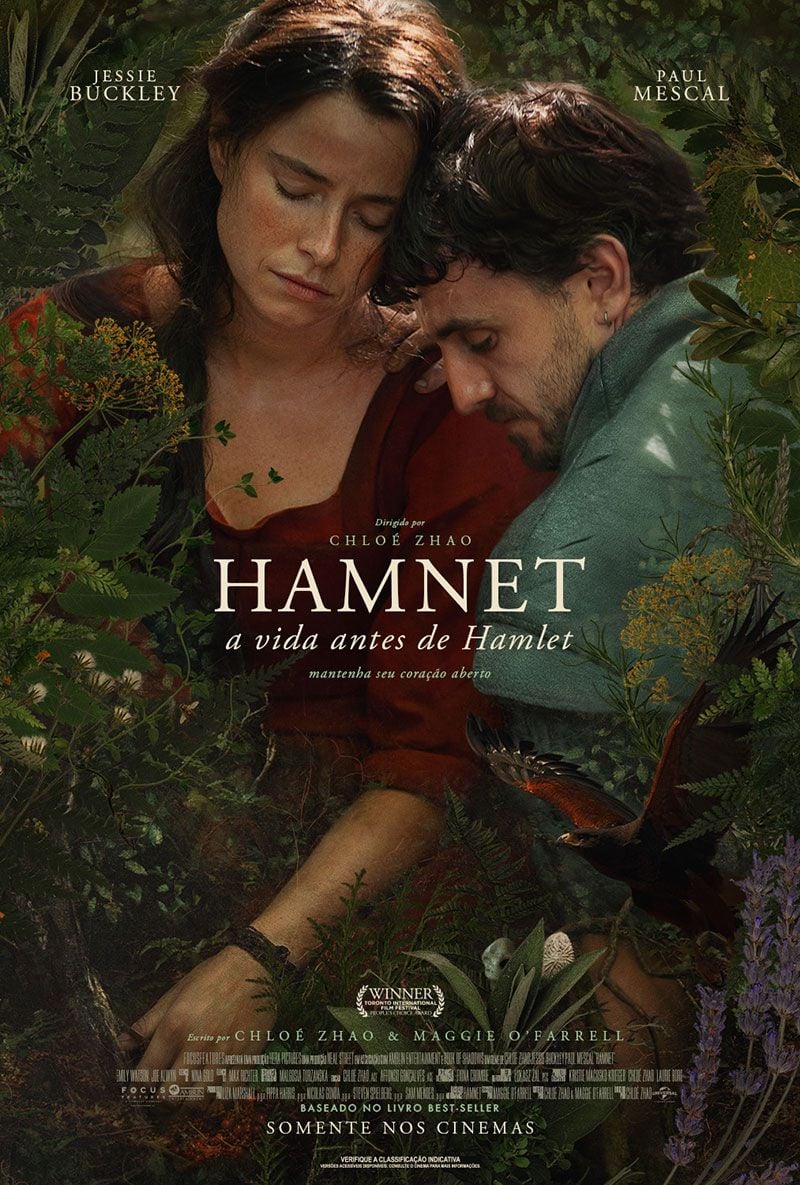
Repito: desaprendemos a nos encantar com a arte. Mas podemos, através dela própria, reaprender a dar os primeiros passos e absorvê-la como se fosse a primeira vez. Chloé Zhao propõe uma conexão paciente com as raízes da terra e da arte para nos permitir redescobrir esse encantamento em Hamnet: A Vida Antes de Hamlet, que adaptado da obra literária de Maggie O’Farrell, imagina momentos da vida de William Shakespeare (Paul Mescal) e sua família, a esposa Agnès (Jessie Buckley) e os três filhos, que antecederam a escrita de Hamlet, obra-prima do dramaturgo.
O registro histórico que se tem de William e Agnès Shakespeare é parco: o casal teve filhos e uma tragédia devastou a família. Sabe-se que Hamnet e Hamlet são variações de grafia do mesmo nome. Todo o restante é poesia imaginativa, é ficção que permite dar vida a uma história trágica daquele que escreveu tragédias como ninguém. Nessa tragédia, entretanto, há duas pessoas, William e Agnès, seres de línguas e linguagens distintas, que se unem pelo amor e pela dor – o amor é um, a dor também.
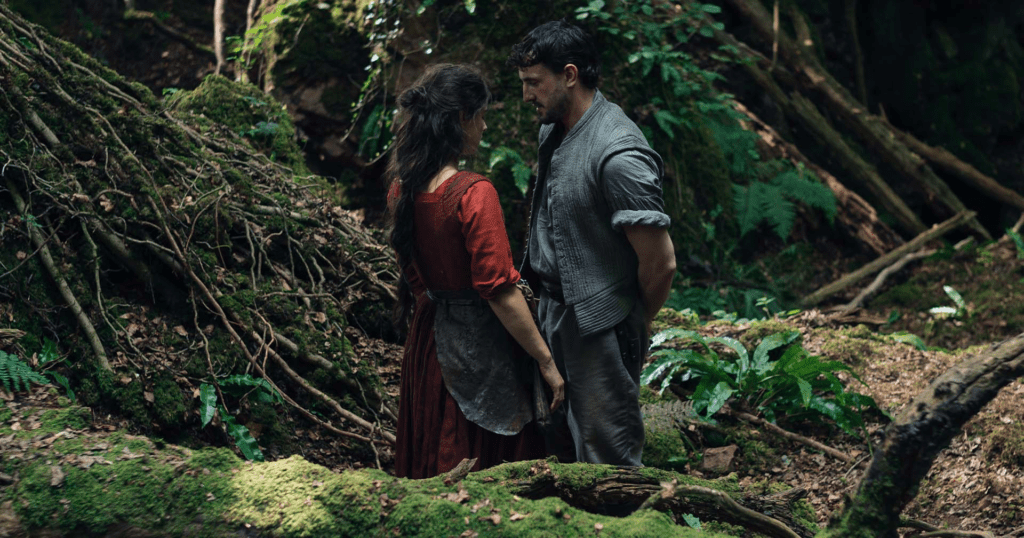
A tradução do que se sente é terra para um, é palavra escrita para o outro, e a comunicação entre eles se dá para além da troca física de afetos, através desses elementos. Forças da natureza e artística se atraem e naturalmente se complementam, mas são desconhecidas uma da outra. Não há gênios e deuses em Hamnet: A Vida Antes de Hamlet. Há, sim, uma história de amor e de vida a dois igualmente difíceis, em que a compreensão mútua da necessidade de cada um age como chave para a maturidade afetiva. Chloé Zhao não faz de sua obra uma ode ao escritor, ao homem por trás dos clássicos, mas parte das raízes elementares e instintivas da mulher que carregou em seu ventre a vitalidade que teria inspirado sua obra-prima para alcançá-lo como ser humano palpável. E Clarissa Pinkola Estés empresta substância à construção da protagonista dessa vida imaginada: a mulher selvagem que habita em plenitude em Agnès.
“Se você alguma vez foi chamada de desafiadora, incorrigível, saliente, esperta, insubmissa, indisciplinada, rebelde, você está no caminho certo. A mulher selvagem está por perto.” No livro de 1992, Mulheres que Correm com Lobos, Estés se debruça sobre mitos e histórias do arquétipo da mulher selvagem e como a sociedade atua de forma a esmagar a natureza instintiva feminina, estrategicamente afastando-a e reprimindo-a de seu verdadeiro eu em prol de uma dominação cultural e comportamental. Através dessa análise, a psicóloga americana resgata as antigas qualidades e vigores femininos, os “antigos poderes” presentes no inconsciente selvagem que toda mulher carrega como essência, propondo uma reconexão.
Agnès é a mulher selvagem em seu estado natural, insubmissa, obediente às suas próprias intuições, necessidades e instintos, viva e pulsante em meio à opressão que lhe sonda, que lhe chama de bruxa, que tenta calar seu chamado para a terra. Motivada pela energia da mulher selvagem de suas ancestrais, seu lugar seguro são as raízes de uma árvore imensa, são as plantas cujas propriedades ela conhece tão bem, é o falcão que pousa em seu braço para se alimentar de carne crua. Chloé Zhao dá à Jessie Buckley vestidos em tons vermelhos terrosos que se complementam ao verde dos espaços que a sua personagem gosta de habitar. Em seus momentos de conexão, em que mulher e ambiente parecem falar a mesma língua e ela deita-se sobre a terra, o som formado pelo vento que ela parece dialogar é etéreo, imergindo-nos em uma atmosfera espiritual e meditativa.
Momentos meditativos dão espaço à observação. A câmera da diretora por vezes parece flutuar, ressaltando a espiritualidade do longa, assumindo plongées de caráter observacional melancólico, como se forças opostas estivessem apenas aguardando o momento para inserir a tragédia. Ao colocar-nos em tal ângulo, Zhao nos tira do lugar de quase participantes da imersão, para inserir-nos diretamente na posição de observadores-espectadores que assistem à história de vidas que foram reais, mas cujas nuances estão aqui sendo imaginadas, e que assim como essas sombras de mau-presságio, aguardam o desequilíbrio. Não à toa, a diretora passeia pelos personagens até deixá-los em extracampo, forçando-nos a imaginar um pouco mais. O menino Hamnet (Jacobi Jupe), herdeiro homem dos instintos selvagens da mãe, quebra a quarta parede para falar diretamente com essa presença quase que fantasmagórica, que somente ele percebe – e que não deixa de ser também a nossa presença.
William Shakespeare (cujo nome só ouvimos uma vez durante todo o longa) não deixa de ser um distúrbio no equilíbrio mulher-natureza que Agnès estabelece, mas o amor também é ímpeto instintivo. Trata-se de um homem oprimido por rejeitar ser a força de trabalho bruta exigida pela sociedade, porque sua linguagem e sua sobrevivência é a escrita, e é através dela que ele é capaz de alcançar sua plenitude como ser. Portanto, são de duas pessoas que desejam não obedecer a ninguém além de si mesmas e as necessidades de suas almas. Ou, como dito pela própria protagonista, pessoas que não são deste mundo. O sentimento os une, mas não deixa de ser porta de acesso para submundos desconhecidos.
A presença reiterada do mito de Orfeu e Eurídice em Hamnet: A Vida Antes de Hamlet, para além da contação de história – é a partir dela que Agnès começa a ter contato com a arte e a conhecer a relação artística do marido – é símbolo desses submundos nos quais os personagens vão adentrando. Orfeu amou tanto Eurídice que foi até Hades, no reino dos mortos, para trazê-la de volta à vida. Amou tanto que a única condição que lhe foi imposta, não foi capaz de cumprir, e ansioso, olhou para trás para vê-la antes da hora, o que lhe era proibido. Perdeu-a, assim. Zhao insere muitos portais como simbolismo do mito: o buraco nas raízes da árvore sob as quais Agnès dá à luz à sua primeira filha, a porta da igreja onde eles se casam, onde ela convida o marido a olhar para trás, a desobedecer. Há consciência da escuridão, mas ainda assim, o amor, que ali paira tão sobrenatural quanto a morte, é mais forte.
Se Hamnet: A Vida Antes de Hamlet posiciona Agnès como seiva nutritiva desse organismo magnificente que é a floresta e vice-versa, mas cuja troca será falha no momento em que a sombra, que antes apenas pairava, torna-se real, é na arte de Shakespeare que ela finda por descobrir um complemento ao poder curativo das plantas que ela já conhece. A protagonista enfrenta o submundo desconhecido do marido e sua obra de arte, e descobre um novo encantamento. A cura do que parece incurável transcende o que a terra ensina, e a compreensão dessa transição é a expressão inesquecível de uma arrebatadora Jessie Buckley, tradução do aprendizado do poder sagrado da arte.
In English: Hamnet
We have unlearned how to be enchanted by art. The transformation of artistic expression into industry and property has massified what is now called “production.” Films, plays, songs, paintings, poems, and books have become consumables — products on an infinite shelf of possibilities designed to satisfy the most varied tastes of consumers. The patience required for their full appreciation, for immersion in a time that runs parallel to and different from our own, has become scarce.
Do we remember what it felt like to experience art for the first time? Probably not, since people like the one writing these words and you who read them were stimulated and enriched by it as human beings in formation. How many times have we stopped to imagine what it would be like to watch a film for the very first time? What sensation would theater awaken in us if we had never had access to it? Within our bubbles, we forget other times — and other people around the world who coexist with us and have never been to the cinema (or perhaps do not even know what cinema is). They are unaware of what it means to mentally step into other realities for a determined span of time, absorbing sensations and feelings that are not our own, living situations that do not belong to us, and in doing so planting seeds of sensitivity, empathy — or even anxiety and agitation — within themselves.
I repeat: we have unlearned how to be enchanted by art. But through art itself, we can relearn how to take those first steps and absorb it as if it were the first time. Chloé Zhao proposes a patient reconnection with the roots of the earth and of art to allow us to rediscover this enchantment in Hamnet: The Life Before Hamlet, adapted from Maggie O’Farrell’s novel. The film imagines moments in the life of William Shakespeare (Paul Mescal) and his family — his wife Agnès (Jessie Buckley) and their three children — preceding the writing of Hamlet, the playwright’s masterpiece.
The historical record of William and Agnès Shakespeare is sparse: the couple had children, and a devastating tragedy struck the family. It is known that Hamnet and Hamlet are variations of the same name. Everything else is imaginative poetry — fiction that breathes life into the tragic story of the man who wrote tragedies like no other. Yet in this tragedy, there are two people, William and Agnès, beings of different tongues and languages, united by love and pain — love is one, and pain is one.
The translation of what they feel is earth for one, written word for the other, and communication between them extends beyond physical expressions of affection, occurring through these elements. Natural and artistic forces attract and complement each other, yet remain unknown to one another. There are no geniuses or gods in Hamnet: The Life Before Hamlet. Instead, there is a love story and a shared life equally difficult, in which mutual understanding of each other’s needs becomes the key to emotional maturity. Zhao does not craft her film as an ode to the writer, to the man behind the classics; rather, she begins with the elemental and instinctive roots of the woman who carried in her womb the vitality that would inspire his masterpiece, reaching him as a tangible human being. And Clarissa Pinkola Estés lends substance to the construction of the protagonist of this imagined life: the wild woman who lives in fullness within Agnès.
“If you have ever been called defiant, incorrigible, bold, clever, unruly, undisciplined, rebellious — you are on the right path. The wild woman is near.” In her 1992 book Women Who Run With the Wolves, Estés delves into myths and stories of the wild woman archetype and how society works to crush the feminine instinctual nature, strategically distancing and repressing it from its true self in favor of cultural and behavioral domination. Through this analysis, the American psychologist revives ancient feminine qualities and strengths — the “ancient powers” present in the wild unconscious that every woman carries as essence — proposing a reconnection.
Agnès is the wild woman in her natural state — insubordinate, obedient only to her own intuitions, needs, and instincts, alive and pulsating amid the oppression that surrounds her, that calls her a witch, that tries to silence her call to the earth. Motivated by the wild woman energy of her ancestors, her safe place is the roots of a vast tree, the plants whose properties she knows so well, the falcon that lands on her arm to feed on raw meat. Zhao dresses Jessie Buckley in earthy red tones that complement the green spaces her character inhabits. In moments of connection — when woman and environment seem to speak the same language and she lies upon the earth — the sound shaped by the wind, with which she seems to converse, is ethereal, immersing us in a spiritual and meditative atmosphere.
Meditative moments give way to observation. The director’s camera at times seems to float, emphasizing the film’s spirituality, assuming melancholic, observational plongées, as if opposing forces were merely waiting for the moment to introduce tragedy. By placing us at such an angle, Zhao removes us from the role of near-participants in immersion and positions us directly as observer-spectators watching lives that were real, though their nuances are imagined here — and that, like those shadows of foreboding, await imbalance. It is no coincidence that the director moves among the characters until leaving them offscreen, forcing us to imagine further. The boy Hamnet (Jacobi Jupe), male heir to his mother’s wild instincts, breaks the fourth wall to speak directly to this almost ghostly presence — one only he perceives — which is also, unmistakably, our own presence.
William Shakespeare (whose name is spoken only once throughout the film) becomes a disturbance in the woman-nature equilibrium Agnès establishes, yet love too is instinctive impulse. He is a man oppressed for refusing to be the brute labor force demanded by society, because his language and survival lie in writing — and through it he achieves his fullness as a being. Thus, these are two people who wish to obey no one but themselves and the needs of their souls. Or, as the protagonist herself says, people who do not belong to this world. Feeling unites them, yet it also becomes a gateway to unknown underworlds.
The recurring presence of the myth of Orpheus and Eurydice in Hamnet: The Life Before Hamlet — beyond mere storytelling, as it is through this tale that Agnès begins to encounter art and understand her husband’s artistic relationship — symbolizes these underworlds into which the characters descend. Orpheus loved Eurydice so deeply that he went to Hades, into the realm of the dead, to bring her back to life. He loved her so much that he could not fulfill the only condition imposed upon him: anxiously, he looked back to see her before the appointed time — something forbidden. And thus he lost her. Zhao inserts many portals as symbols of the myth: the hollow in the tree roots beneath which Agnès gives birth to her first daughter, the church door where they marry, where she invites her husband to look back, to disobey. There is awareness of darkness, and yet love — hovering as supernaturally as death — is stronger.
If Hamnet: The Life Before Hamlet positions Agnès as the nourishing sap of the magnificent organism that is the forest — and vice versa — though their exchange fails when the shadow that once merely hovered becomes real, it is in Shakespeare’s art that she ultimately discovers a complement to the healing power of the plants she already knows. The protagonist confronts the unknown underworld of her husband and his art, and discovers a new enchantment. The healing of what seems incurable transcends what the earth teaches, and the understanding of this transition is embodied in the unforgettable performance of a breathtaking Jessie Buckley — a translation of the sacred power of art learned.

Crítica de cinema, formada pelo Talents Rio da Berlinale e Goethe Institut. Membra do júri da Latin American Critics Awards for European Films e da Comissão de Cinema da APCA (Associação Paulista de Críticos de Arte).


2 comentários em “Hamnet: A Vida Antes de Hamlet”
Seu comentário é preciso e precioso. Brilhante. Preciso ver esse filme – hoje, talvez – , pois ARTE e natureza , SÃO ESSENCIAIS… o melhor dessa vida louca e breve.
Muito interessante seu comentário. Vi o filme e gostei muito! Recomendo!