
Esconde-esconde parte 2, com mais personagens, mais mitologia e mais reflexões
Crítica em português
Quando Casamento Sangrento foi lançado em 2019, tornou-se um sucesso modesto de bilheteria e crítica, pela maneira com que estruturou horror gore e humor absurdo e ácido de uma maneira improvavelmente irônica e equilibrada. Como resultado disto, um filme que sabia rir de seus excessos, enquanto mergulhava de cabeça e sem pudor na brutalidade do jogo de esconde-esconde macabro “jogado” por Grace MacCaulley (a australiana Samara Weaving).
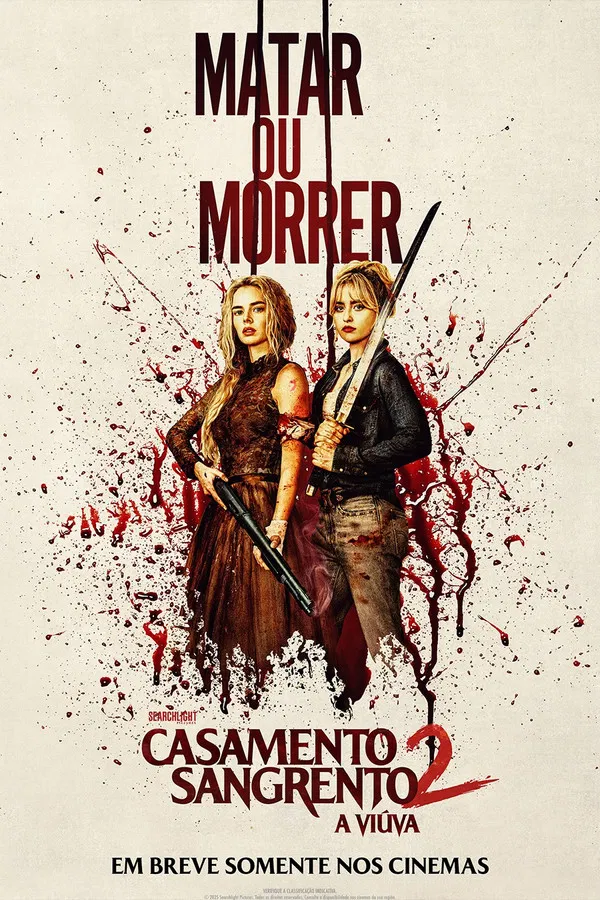
É até surpreendente que Casamento Sangrento: A Viúva tenha demorado tanto para sair do papel, com o retorno da dupla de roteiristas R. Christopher Murphy e Guy Busick e da dupla de diretores Matt Bettinelli-Olpin e Tyler Gillett – que abandonaram Pânico 7 depois de divergências criativas para se investir em Abigail. A narrativa continua a sua história no justo quando o anterior parou, com Grace, ensanguentada, traumatizada e mantida no hospital sob a custódia policial até estar recuperada e ser capaz de prestar depoimento. Quem se junta à Grace é Faith (Kathryn Newton), a sua irmã caçula, com quem não havia mantido contato por aproximadamente uma década. Logo, ambas vão descobrir que terão que participar de um jogo ainda maior e mais violento.
A referência que me veio imediatamente à cabeça foi John Wick, e vocês se perguntam ‘Oi?!’. Não é pelo gênero e nem pela pretensão artística, mas o movimento em direção a expansão da mitologia da história e dos personagens. Assim como a história de John Wick começou relativamente contida, antes de construir um universo que se expandiu em sequências e spin-offs, também A Viúva amplia o escopo ao adicionar um conjunto maior de participantes: as famílias rivais que disputam a hierarquia do poder supremo do Sr. Le Bail, o conjunto de regras que norteiam a sucessão após a extinção do clã dos Domas. O que antes era apenas o evento isolado e fetiche violento de uma família rica, agora é o sistema (ou o tal mecanismo, sobre o qual os teóricos da conspiração enchem a boca) que organiza a vida na Terra.
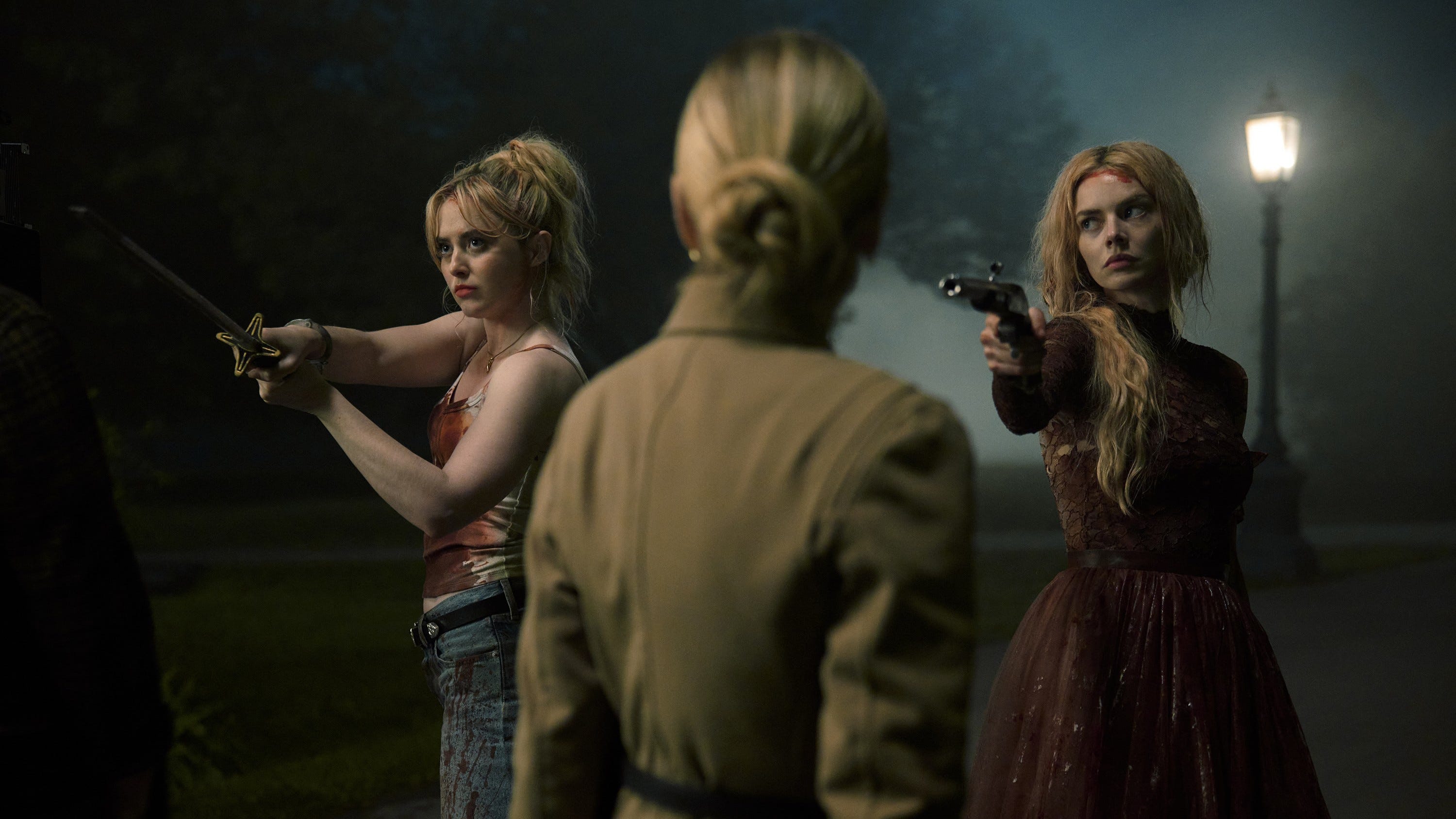
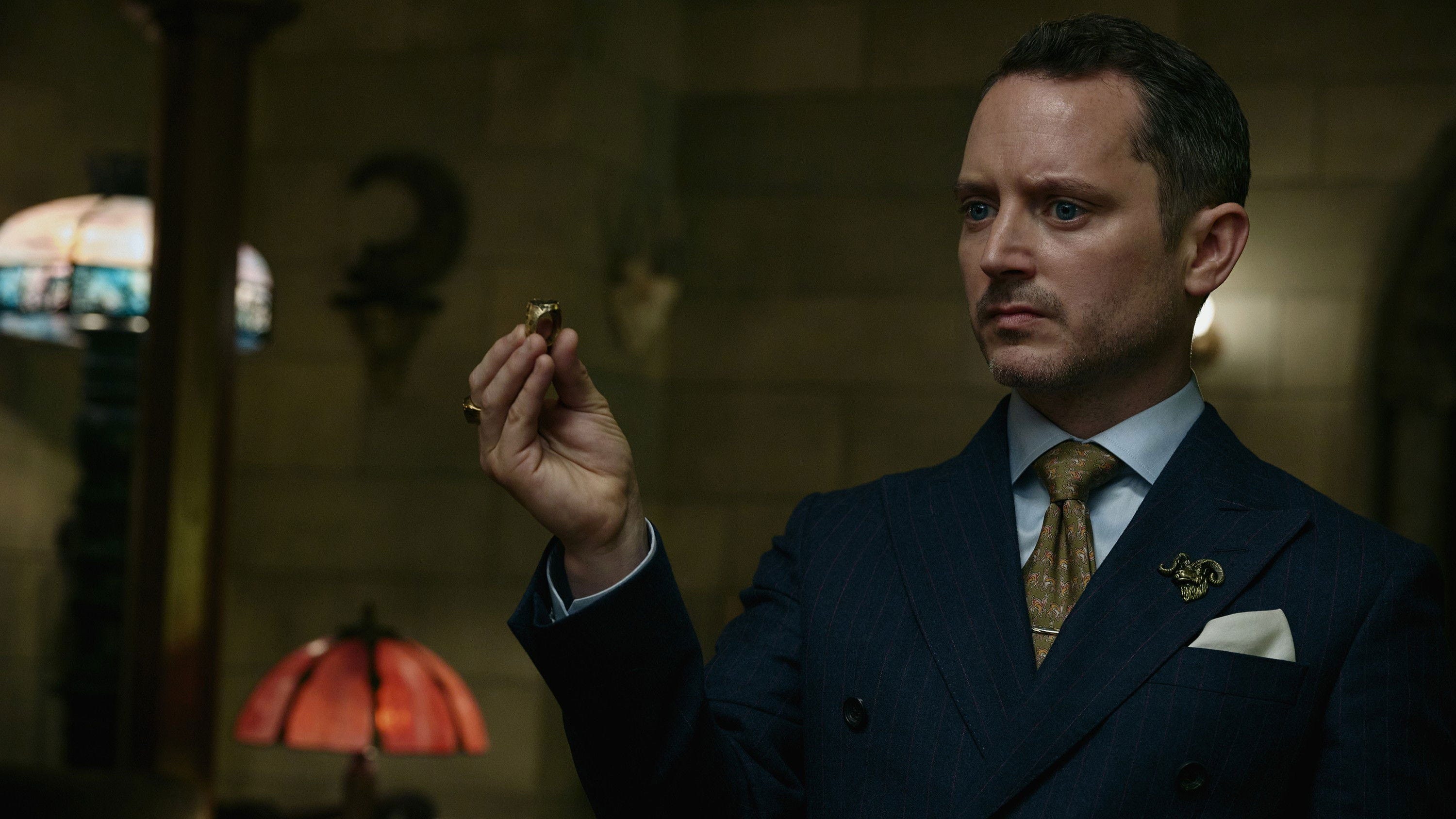
Apesar de a mitologia expandir-se dentro dos absurdos bem ou mal explicados por um advogado interpretado pro Elijah Wood, o que resta no centro da narrativa é o conflito familiar entre Grace e Faith que, separadas, precisam elaborar o trauma do abandono e reconstruir o relacionamento caso desejem permanecer vivas quando o sol nascer. É uma camada afetiva que recobre o espetáculo irreverentemente violento, tipo o açúcar de confeiteiro sobre o bolo de casamento, que praticamente não tem sabor, só faz mal, e arruína a experiência do bolo. Grace e Faith dependem de exposição demasiada e de trocas verbais de sentimentos e traumas que evoluem dentro de um jogo de afastar-se, aproximar-se, quando for conveniente para a narrativa.
São as pausas na caçada humana, que, bem-vindas em tese, interrompem o ritmo ou o fluxo da ação sem sustentar o interesse dramático, porque sabemos para onde roteiro está nos levando. Entretanto, quando a narrativa investe no que é vocacionada, a ação e violência extremas, encontra um caminho interessante que, se não é original igual é o anterior, ao menos em irreverente, criativo, até mesmo belo e poético. Quando duas personagens lutam temporariamente ‘cegas’ por spray de pimenta, a direção encena a coreografia comicamente caótica interconectada com a violência mas dura e explícita que acontece paralelamente. Já o clímax oferece plasticamente a violência com ares de arte de Francisco Goya, uma tela pintada com sangue em câmera lenta e que verbaliza uma disputa cega pelo poder supremo.
Porque, A Viúva não é apenas sobre a perseguição, mas sobre a disputa pelo poder e o custo em mantê-lo. Talvez esteja na relação de poder e força entre homens e mulheres onde está o sabor mais amargo da narrativa: ainda que o cinema tenha se empenhado, ao longo da história, em forjar mulheres ditas fortes no altar da violência, da agressão, da humilhação – alguns com um efeito claramente misógino apesar do texto fingir não o ser -, A Viúva permanece em um limiar incômodo. A violência contra Grace e Faith é parte da lógica do filme, mas é encenada de uma maneira demasiadamente explícita e sem filtros. A questão não é a presença da violência, mas a quantidade, a insistência e ênfase – e sei que aparecerão alguns leitores com problemas de interpretação de texto, criticando-me a partir daqui.
Até que ponto a violência é suficiente? Até que ponto é demais? Especialmente neste mundo em que vivemos em que os índices de violência contra a mulher e feminicídios são estratosféricos, e homens flertam em reproduzir tendências em que ensaiam como irão reagir se mulheres disserem não para seu pedido de namoro/casamento. O filme é produto de seu tempo, e o espectador é parte do mundo, não dá para dissociar alhos de bugalhos e fingir que nada está acontecendo. Ao mesmo tempo em que o roteiro tece o discurso que, em instância derradeira, condena o comportamento misógino, com o destino apropriado a certos personagens, também se delonga na representação de sua violência. Ao fazê-lo, dá a oportunidade para que estas cenas sejam consumidas como espetáculo por uma parcela do público.
É um terreno delicado, e não tenho respostas, mas perguntas. Talvez aí está o dilema, o meu dilema, em A Viúva: o filme funciona como um entretenimento, por vezes bem desconfortável, com reflexões sugeridas mas não enfrentadas.
O filme está em exibição nos cinemas brasileiros.
English review
When Ready or Not was released in 2019, it became a modest success both commercially and critically, largely due to the way it structured gore horror and absurd, acidic humor in an improbably ironic and balanced manner. As a result, it was a film that knew how to laugh at its own excesses while diving headfirst, without shame, into the brutality of the macabre hide-and-seek game “played” by Grace Macaulay (the Australian Samara Weaving).
It is somewhat surprising that Ready or Not: The Widow took so long to get off the ground, with the return of screenwriters R. Christopher Murphy and Guy Busick, as well as directors Matt Bettinelli-Olpin and Tyler Gillett, who stepped away from Scream 7 after creative differences to focus on Abigail. The narrative resumes precisely where the previous film left off, with Grace bloodied, traumatized, and held in a hospital under police custody until she recovers and is able to give her statement. Joining Grace is Faith (Kathryn Newton), her younger sister, with whom she had not maintained contact for approximately a decade. Soon enough, both will discover that they are now part of a much larger, and far more violent, game.
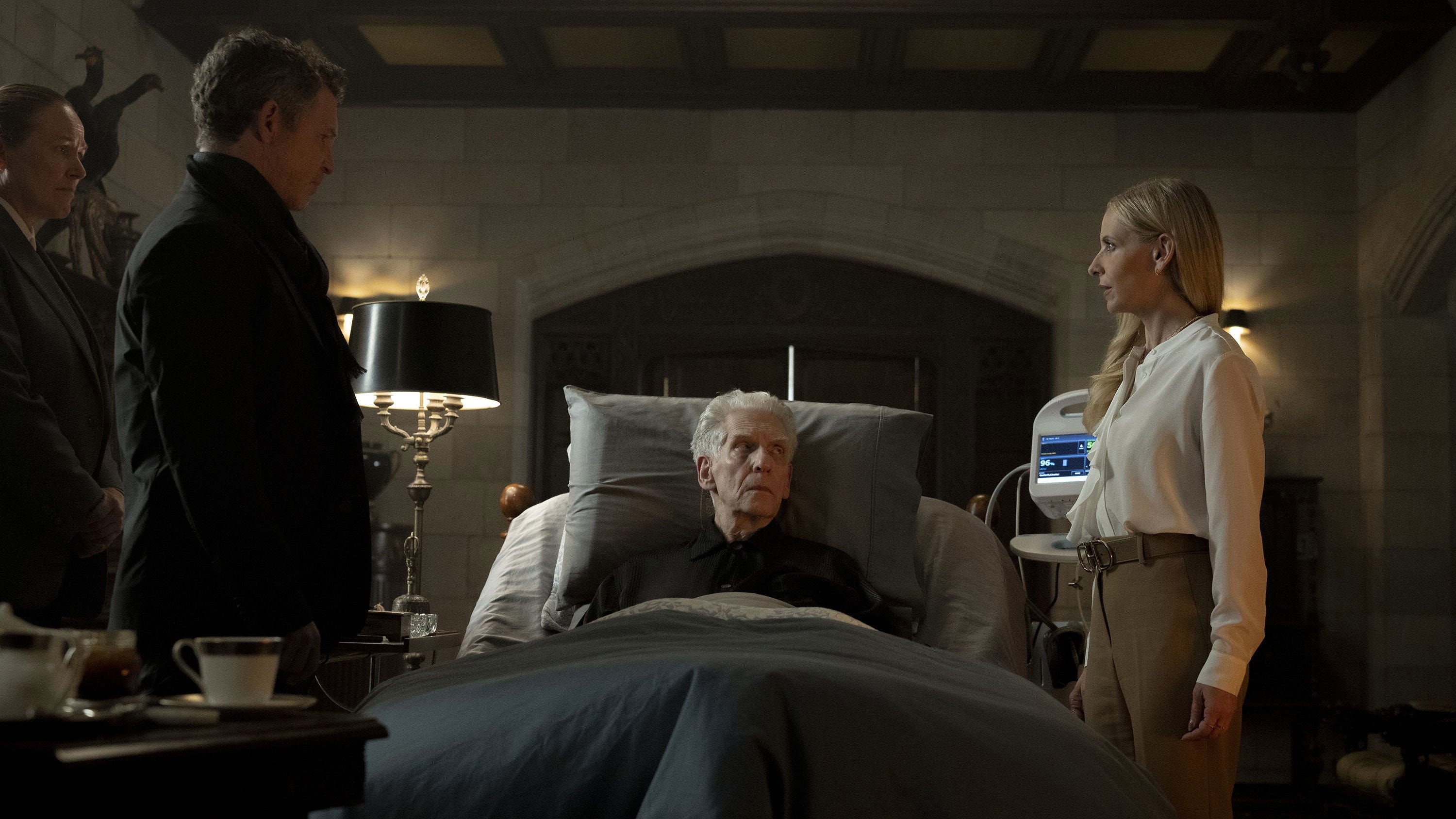
The reference that immediately came to my mind was John Wick, and you might ask, “What?!” It is not about genre nor artistic ambition, but rather the movement toward expanding the mythology of the story and its characters. Just as John Wick began as a relatively contained narrative before building a universe that expanded into sequels and spin-offs, The Widow broadens its scope by introducing a larger set of players: rival families competing for supremacy under Mr. Le Bail, along with the rules that govern succession after the extinction of the Domas clan. What was once an isolated event, a violent fetish confined to a single wealthy family, now becomes the system, or “the mechanism,” as conspiracy theorists like to call it, that organizes life on Earth.
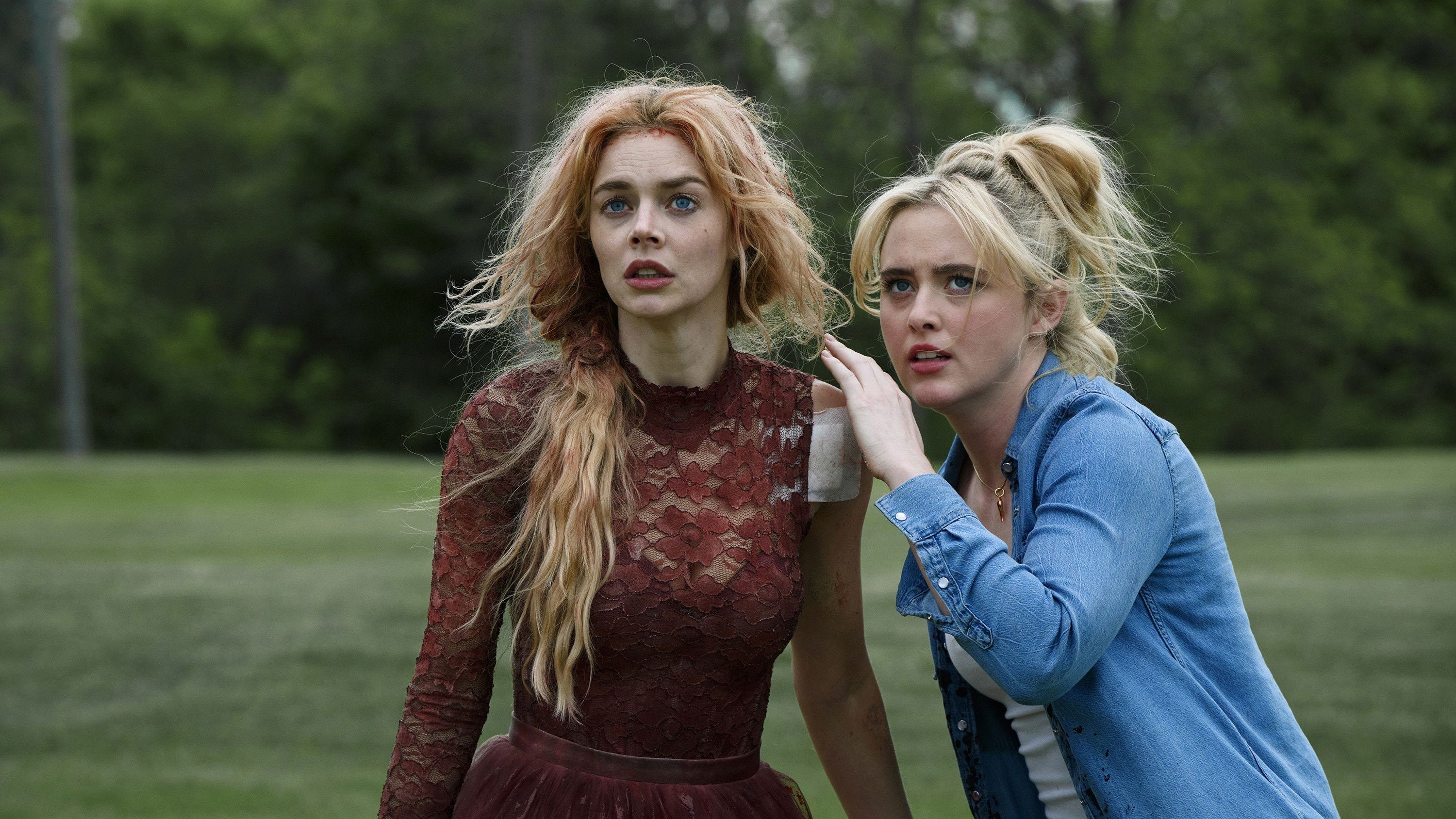
Although the mythology expands within absurdities that are, at best, loosely explained by a lawyer played by Elijah Wood, what remains at the core of the narrative is the familial conflict between Grace and Faith. Separated for years, they must process the trauma of abandonment and rebuild their relationship if they hope to survive until sunrise. It is an emotional layer placed over the irreverently violent spectacle, like powdered sugar dusted over a wedding cake that has no real flavor, only makes you sick, and ultimately ruins the experience. Grace and Faith rely too heavily on exposition and on verbal exchanges of feelings and trauma that evolve within a push-and-pull dynamic, distancing and reconnecting whenever it suits the narrative.
These moments serve as pauses in the human hunt, which, while theoretically welcome, interrupt the rhythm and flow of the action without sustaining dramatic interest, because we already know where the script is heading. However, when the narrative leans into what it is truly built for, extreme action and violence, it finds a more compelling path. It may not feel as original as its predecessor, but it is still irreverent, creative, at times even beautiful and poetic. When two characters fight while temporarily “blinded” by pepper spray, the direction stages the choreography as a comically chaotic sequence intertwined with the harsher, more explicit violence happening alongside it. Meanwhile, the climax presents violence with the visual texture of Francisco Goya’s work, a canvas painted in blood in slow motion, expressing a blind struggle for ultimate power.
Because The Widow is not just about pursuit, it is about power, and the cost of maintaining it. Perhaps it is precisely in the power dynamics between men and women where the narrative reveals its most bitter aftertaste. Even though cinema has long attempted to forge so-called “strong women” through violence, aggression, and humiliation, sometimes with clearly misogynistic undertones despite pretending otherwise, The Widow occupies an uncomfortable threshold. The violence inflicted upon Grace and Faith is part of the film’s internal logic, but it is staged in a way that is excessively explicit and unfiltered. The issue is not the presence of violence, but its quantity, its insistence, and its emphasis, and I am fully aware that some readers, struggling with basic textual interpretation, will take issue with this point.
At what point is violence enough? When does it become too much? Especially in the world we live in today, where rates of violence against women and femicide are astronomical, and where men flirt with reproducing behavioral trends by rehearsing how they might react if a woman says no to a proposal or a relationship. The film is a product of its time, and the viewer is part of that world, it is impossible to separate one from the other and pretend nothing is happening. At the same time that the screenplay constructs a discourse which, ultimately, condemns misogynistic behavior, assigning appropriate fates to certain characters, it also lingers on the representation of that violence. In doing so, it creates space for these scenes to be consumed as spectacle by a segment of the audience.

Crítico de cinema filiado a Critics Choice Association, à Associação Brasileira de Críticos de Cinema, a Online Film Critics Society e a Fipresci. Atuou no júri da 39ª Mostra Internacional de Cinema em São Paulo/SP, do 12º Fest Aruana em João Pessoa/PB, do 24º Tallinn Black Nights Film na Estônia, do 47º TIFF – Festival Internacional de Cinema em Toronto. Ministrante do Laboratório de Crítica Cinematográfica na 1ª Mostra Internacional de Cinema em São Luís (MA) e Professor Convidado do Curso Técnico em Cinema do Instituto Estadual do Maranhão (IEMA), na disciplina Crítica Cinematográfica. Concluiu o curso de Filmmaking da New York Film Academy, no Rio de Janeiro (RJ) em 2013. Participou como co-autor dos livros 100 melhores filmes brasileiros (Letramento, 2016), Documentário brasileiro: 100 filmes essenciais (Letramento, 2017) e Animação Brasileira – 100 Filmes Essenciais (Letramento, 2018). Criou o Cinema com Crítica em fevereiro de 2010 e o Clube do Crítico em junho de 2020.