

É secular a opressão feminina por meio da associação de sua figura às bruxas ou a algum tipo de maldição. No cinema africano, esse paralelo aparece em Eu Não Sou Uma Bruxa, de Rungano Nyoni, e Banel & Adama, de Ramata-Toulaye Sy, para citar alguns exemplos. Na literatura de Itamar Vieira Junior, ao refletir sobre os efeitos da pós-escravização de pessoas negras nos interiores baianos, e, portanto, sobre as culturas afro-diaspóricas, Salvar o Fogo, de forma semelhante, atribui à mulher negra o estigma do misticismo como algo pejorativo.
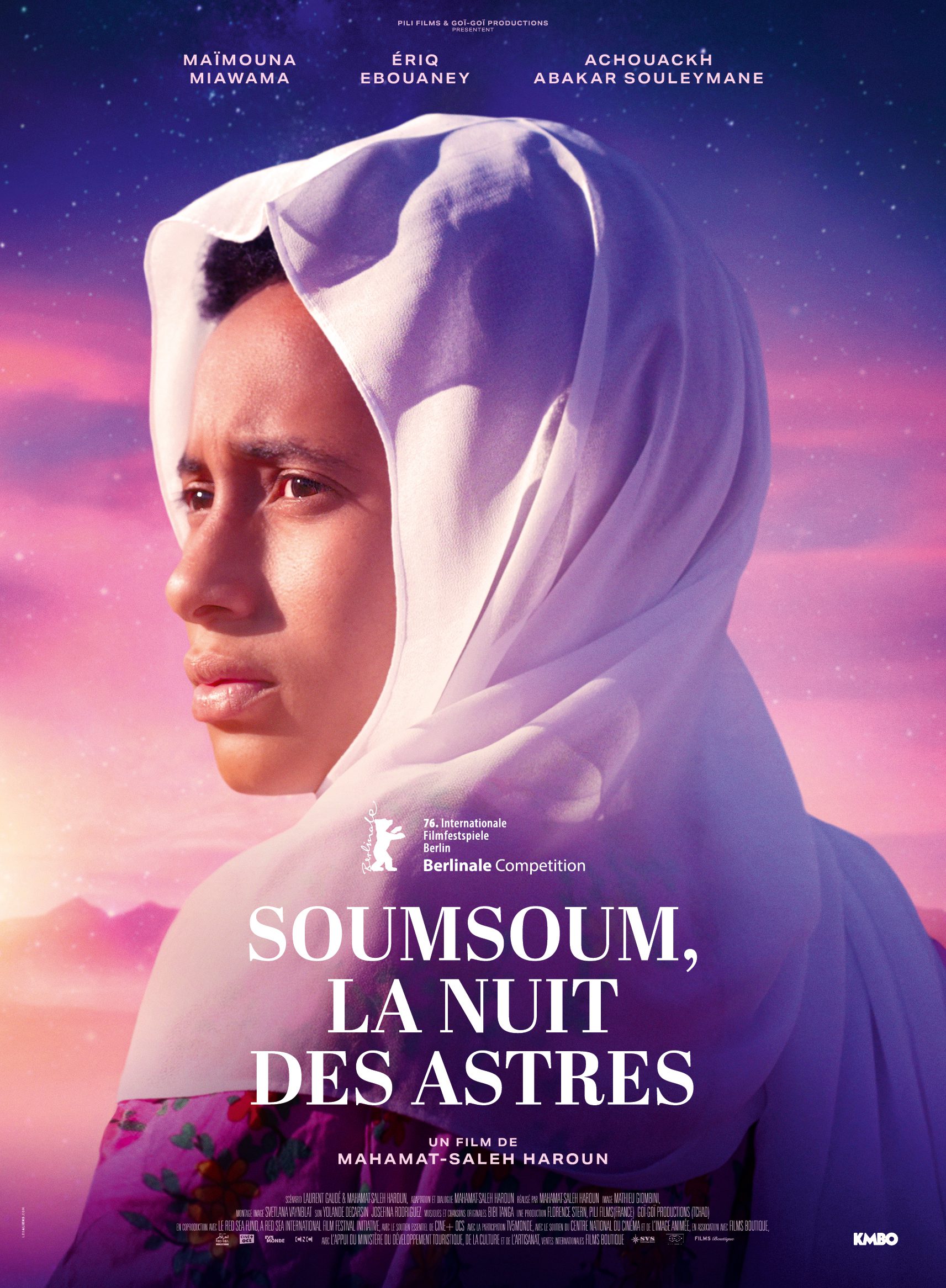
Soumsoum, the Night of the Stars, filme franco-chadiano da mostra Competition da 76ª Berlinale, dirigido por Mahamat-Saleh Haroun, segue caminho semelhante ao retratar a conexão entre duas mulheres sem qualquer vínculo sanguíneo, mas unidas por um dom sobrenatural que as coloca à margem da comunidade em que vivem. Kellou (Maïmouna Miawama) é uma jovem de 17 anos que oscila entre tentar viver uma vida ordinária para sua idade e os tormentos de perceber que possui um dom que não consegue compreender — seus sonhos são carregados de visões e mensagens proféticas.
Sua jornada de autodescoberta e crescimento na sororidade tem início quando conhece Aya (Achouackh Abakar Souleymane), uma mulher excluída da comunidade pelo estigma da bruxaria, a quem é negado tratamento adequado para uma doença aparentemente simples em razão de sua marginalização. Conformada com a morte, seus últimos dias passam a ser dedicados à jovem, assumindo uma função de guia espiritual e, outrossim, preenchendo a ausência da figura materna na vida de Kellou.
As nuances da protagonista e o percurso de seu amadurecimento são conduzidos por Mahamat-Saleh Haroun com grande sensibilidade, evidenciando que o dom da menina surge, a princípio, como um fardo que a afasta do pleno desfrute de sua juventude. Kellou é sonhadora e apaixonada, gosta de deitar-se no chão e ouvir, em seus fones, os sucessos do momento para desopilar; aprecia nadar com o namorado e partilhar com ele experiências; é uma boa aluna. Vê-se obrigada, contudo, a abdicar dessa normalidade para compreender a si mesma, e aproximar-se de Aya para fazê-lo é o início de um processo de exclusão contra o qual precisará lutar.
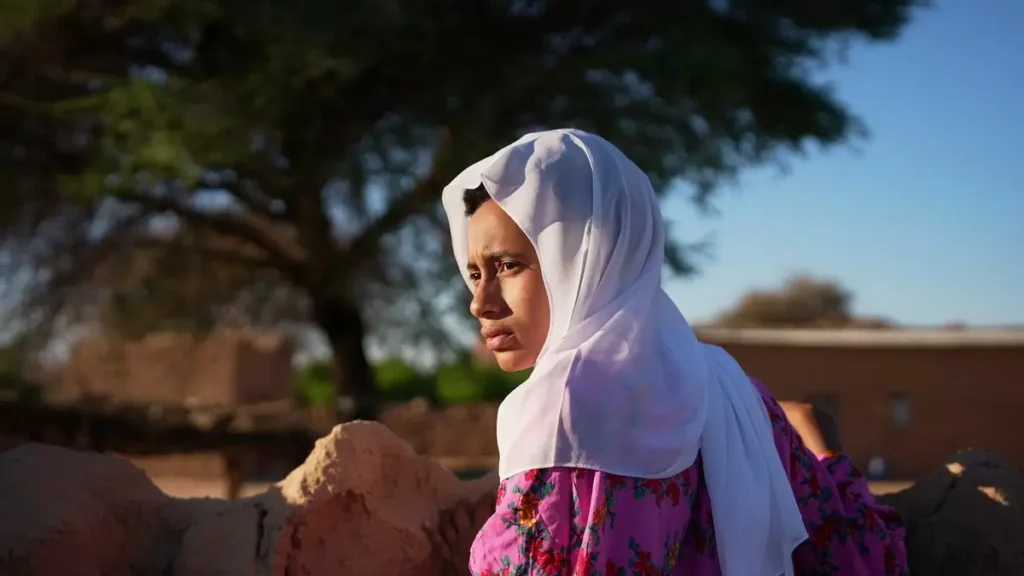
A suposta bruxaria é associada a todo e qualquer acontecimento negativo na comunidade. Se chove demais, se o sol castiga, se um bebê morre no parto, a responsabilidade recai sobre a presença dessas mulheres segregadas, ainda que não tenham qualquer relação com tais eventos. Ainda que essas associações se perpetuem, a ausência de Aya ou de Kellou não interrompe esse ciclo de violência. Outras mulheres serão identificadas como portadoras de dons e igualmente marcadas, reiterando a lógica de imposição do poder patriarcal.
O realismo fantástico impõe-se em Soumsoum, the Night of the Stars como expressão da vocação de Kellou diante das dificuldades de uma realidade opressora. O elemento fantástico opera de maneira semelhante ao que se observa nas obras de Mati Diop, especialmente em Atlantique, onde figuras fantasmagóricas tensionam e transformam o que é concreto e tangível. Aqui, tanto as visões de Kellou quanto a presença de entidades – almas errantes que apenas ela enxerga – desempenham essa função de reconfigurar o contexto.
Haroun constrói, em Soumsoum, the Night of the Stars, uma atmosfera de constante mau presságio, não só frontalmente, por meio das desgraças que permeiam o vilarejo e das visões proféticas, mas também na relação entre os personagens e o espaço que habitam. As paisagens se estendem desérticas até o horizonte, enquanto os indivíduos surgem diminutos diante da força da natureza. O ambiente impõe, assim, a ideia de ausência de controle sobre acontecimentos naturais marcados pela tragédia, ao mesmo tempo em que revela a necessidade humana (e aqui, machista) de atribuir culpa a algo ou alguém diante do incompreensível sob uma ótica não divina. Torna-se mais simples traduzir tudo como maldição. A angústia, nesse cenário, se intensifica progressivamente.
O diretor é, do mesmo modo, rigoroso na composição dos interiores e a forma como dialogam com as personagens, marcando, sobretudo, a relação de acolhimento mútuo entre Aya e Kellou. Ainda que a doença paire sobre a casa de Aya, trata-se de um ambiente aconchegante, feito de barro e cuidadosamente guarnecido com plantas medicinais, por onde a luz do sol adentra para realçar as cores vibrantes, a textura dos figurinos e a pele negra dessas mulheres que se olham com ternura, como se estivessem conectadas desde sempre.
Há, em Soumsoum, the Night of the Stars, uma luta latente contra o conservadorismo e o patriarcado que emerge a partir da descoberta da origem de Kellou, diretamente vinculada ao título. A condenação da jovem e seu julgamento não se restringem aos seus dons sobrenaturais, mas ao ritual da “noite para as estrelas”, no qual foi concebida: um espaço-tempo marcado pela liberdade sexual, em que corpos mascarados dançam em transe.
Esse rito de concepção abre caminho para a compreensão do ritual da morte — o corpo que não pôde se libertar em vida encontra, na passagem final, uma forma de se desvincular do estigma de sua origem por meio da preservação de sua dignidade. Falta à comunidade perceber que as chamadas maldições e desgraças derivam, em última instância, da própria ausência de empatia e da lógica excludente que direcionam ao outro. A Kellou amadurecida surge, então, como uma possibilidade de esperança, aproximando-se como forma de resistência capaz de, quem sabe, reverter essa dinâmica.
English Review
The oppression of women through the association of their figure with witches or some form of curse is centuries old. In African cinema, this parallel appears in I Am Not a Witch, by Rungano Nyoni, and Banel & Adama, by Ramata-Toulaye Sy, to cite a few examples. In the literature of Itamar Vieira Junior, when reflecting on the effects of the post-enslavement of Black people in the rural areas of Bahia—and, therefore, on Afro-diasporic cultures—Salvar o Fogo similarly attributes to Black women the stigma of mysticism as something pejorative.
Soumsoum, the Night of the Stars, a Franco-Chadian film in the Competition section of the 76th Berlinale, directed by Mahamat-Saleh Haroun, follows a similar path by portraying the connection between two women with no blood relation, yet united by a supernatural gift that places them on the margins of the community in which they live. Kellou (Maïmouna Miawama) is a 17-year-old girl who oscillates between trying to live an ordinary life for her age and the torment of realizing she possesses a gift she cannot understand—her dreams are filled with visions and prophetic messages.
Her journey of self-discovery and growth through sorority begins when she meets Aya (Achouackh Abakar Souleymane), a woman excluded from the community due to the stigma of witchcraft, and who is denied proper treatment for an apparently simple illness because of her marginalization. Resigned to death, her final days become devoted to the young girl, taking on the role of a spiritual guide and, moreover, filling the absence of a maternal figure in Kellou’s life.
The nuances of the protagonist and her path toward maturation are handled by Mahamat-Saleh Haroun with great sensitivity, revealing that the girl’s gift initially emerges as a burden that distances her from fully experiencing her youth. Kellou is dreamy and passionate: she likes to lie on the ground and listen to current hits on her headphones to unwind; she enjoys swimming with her boyfriend and sharing experiences with him; she is a good student. She is forced, however, to give up this sense of normalcy in order to understand herself, and her proximity to Aya marks the beginning of a process of exclusion against which she will have to struggle.
The supposed witchcraft is associated with every negative occurrence in the community. If it rains too much, if the sun is too harsh, if a baby dies during childbirth, responsibility falls upon the presence of these segregated women, even though they have nothing to do with such events. Even as these associations persist, the absence of Aya or Kellou does not interrupt this cycle of violence. Other women will be identified as bearers of gifts and equally marked, reinforcing the logic of patriarchal imposition.
Magical realism asserts itself in Soumsoum, the Night of the Stars as an expression of Kellou’s calling in the face of an oppressive reality. The fantastical element operates in a way similar to what is seen in the works of Mati Diop, especially Atlantique, where ghostly figures challenge and transform what is concrete and tangible. Here, both Kellou’s visions and the presence of entities—wandering souls visible only to her—serve this function of reconfiguring the context.
Haroun constructs, in Soumsoum, the Night of the Stars, an atmosphere of constant foreboding, not only directly through the misfortunes that permeate the village and the prophetic visions, but also in the relationship between the characters and the space they inhabit. The landscapes stretch out in desert-like vastness, while individuals appear diminutive in the face of nature’s force. The environment thus conveys a lack of control over natural events marked by tragedy, while also revealing the human (and here, patriarchal) need to assign blame to something or someone in the face of what cannot be understood through a non-divine lens. It becomes easier to translate everything as a curse. The anguish, in this scenario, intensifies progressively.
The director is equally rigorous in the composition of interior spaces and in the way they interact with the characters, especially highlighting the relationship of mutual care between Aya and Kellou. Even though illness lingers over Aya’s house, it is a welcoming space, built of clay and carefully adorned with medicinal plants, where sunlight enters to enhance the vibrant colors, the textures of the costumes, and the dark skin of these women who look at each other with tenderness, as if they had always been connected.
There is, in Soumsoum, the Night of the Stars, an underlying struggle against conservatism and patriarchy that emerges from the discovery of Kellou’s origin, directly tied to the title. The girl’s condemnation and judgment are not limited to her supernatural abilities, but extend to the ritual of the “night for the stars” in which she was conceived: a space-time marked by sexual freedom, where masked bodies dance in trance.
This ritual of conception opens the way to understanding the ritual of death—the body that could not free itself in life finds, in its final passage, a way to detach from the stigma of its origin through the preservation of its dignity. The community fails to perceive that the so-called curses and misfortunes ultimately stem from its own lack of empathy and the exclusionary logic imposed upon others. A more mature Kellou then emerges as a possibility of hope, approaching as a form of resistance capable, perhaps, of reversing this dynamic.


Crítica de cinema, formada pelo Talents Rio da Berlinale e Goethe Institut. Membra do júri da Latin American Critics Awards for European Films e da Comissão de Cinema da APCA (Associação Paulista de Críticos de Arte).