
Crítica em português
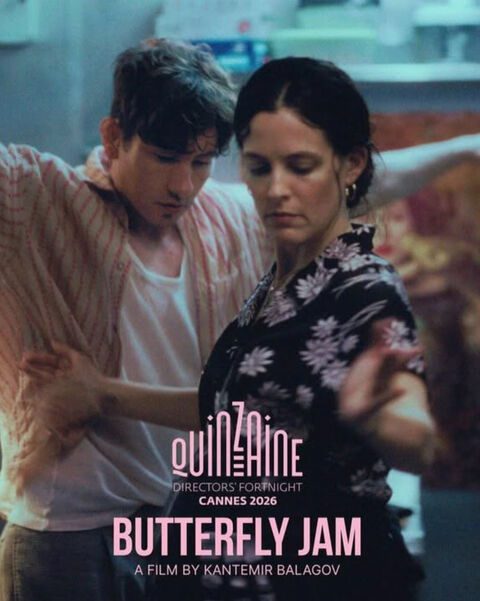
Apresentado como um conto de fadas contemporâneo, o terceiro longa-metragem de Kantemir Balagov (de Tesnota e Uma Mulher Alta), Butterfly Jam, apropria-se de alguns dos códigos desse gênero narrativo e os desloca ao terreno onde realidade e fantasia se confundem. Neste entre espaços, Balagov pode realizar uma reflexão sobre amadurecimento, identidade e masculinidade de Pyteh (Akdogan), filho de Azik (Keoghan), um bruto sensível, digamos assim. Quando vemos Azik pela primeira vez, está no fogão, preparando uma de suas iguarias populares para um grupo de amigos, dentre os quais Aslan, o dono de uma cadeira de restaurantes que deseja contratá-lo como chefe de cozinha, e Marat (Melling), que o acompanha como se fosse a sua sombra. Nessa oportunidade, também notamos a sua orelha deformada característica de um lutador profissional.
Não é por acaso que a luta greco-romana se torna um cenário de dramatização e metáfora essencial para a jornada de Pyteh. Além de o tatame representar a continuidade da trajetória de seu pai, é também onde pode reviver indiretamente o acontecimento que é como um pivô narrativo. O tatame ainda é onde Alika (Richards), de quem Pyteh afeiçoa-se, atravessa as transformações de seu corpo adolescente, as espinhas no corpo marcas da menstruação que a afasta de uma competição. À margem, a crise de masculinidade se infiltra em direção ao centro da narrativa. Sobreviver é reunir a força necessária para sobreviver à acusação de fraqueza, no gesto impulsivo de Azik. Por falar nele, gosto como Keoghan está se especializando em interpretar pais jovens, um pouco irresponsáveis mas afetuosos, e como a narrativa é um processo de sua desmistificação, mas não de sua desumanização.
O pai é retratado como mil coisas. Para além do sujeito cuja sensibilidade revela-se em sua culinária, é quase um amigo mais velho de seu filho, com quem brinca de acionar os alarmes de todos os carros na rua. Ele não é um herói; certamente, não é um vilão ou mártir. É só um adulto pressionado por expectativas difíceis de atender e compromissos que não deseja realiza. O restaurante familiar é uma componente desta família de imigrantes circassianos – um grupo étnico deslocado do norte do Cáucaso, na Rússia, para Nework -, onde se estabeleceu e tentou trazer algumas de suas tradições consigo. Essa trajetória dessensibilizou os membros de uma família incapazes de verbalizar seus afetos ou ansiedades, e transformando a luta em um mecanismo apropriado de comunicação dos sentimentos reprimidos. Neste aspecto, o momento em que Pytek encosta as costas na de Alika é um dos mais sensíveis em como funciona como gesto substitutivo de um beijo ou abraço.
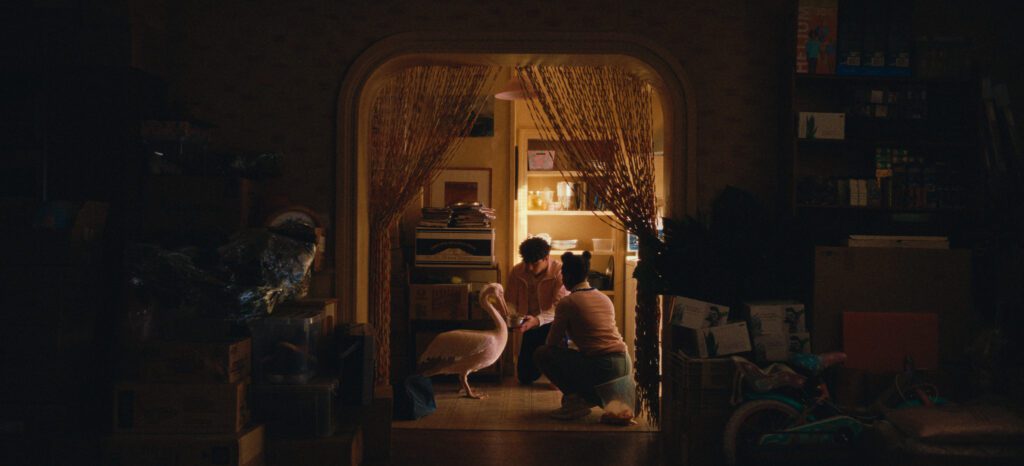
Essa sensação de uma espécie de deslocamento emocional se intensifica porque Balagov filma a cidade como um espaço suspenso entre o banal e o fantástico, entre a realidade e a artificialidade. Mesmo que a encenação realize uma abordagem realista concreta – na direção de fotografia sóbria ou na direção de arte dos espaços apertados onde a ação desenrola-se -, Balagov constantemente procura mecanismos de fuga que, a princípio, nem parecem sê-lo. Só parecem mesmo estar deslocados ou, quando não, acenos irreverentes que quebrem um olhar rigorosamente formal ao amadurecimento. O pelicano com que Azik pretende presentear a irmã Zalya (Keough), além de excêntrico, é também um gesto incapaz de ser comunicado plenamente em palavras. (Imaginem só, presentear um pelicano a alguém?) Já uma jovem contratada para um velório introduz uma estranha de absurdismo em um momento dramático, além de funcionar como um dispositivo de recorte da narrativa.
Alguns elementos, como a máquina de algodão doce, os alarmes de carro, o nascimento do bebê de Zalya e a presença da atriz Monica Belluci, reforçam essa tentativa de construir um cinema no qual o cotidiano concreto se contamina por uma dimensão extra-cotidiana e fantástica até. Eles terminam por serem os meios pelo qual o cineasta expressa os conflitos e estados emocionais dos personagens, para além de imagens ou palavras expositivas. E mesmo quando há a comunicação direta, e aqui penso no momento em que Marat retorna e traz consigo a máquina de algodão doce em funcionamento, a incapacidade de escuta ou compreender ou, mesmo, acreditar se torna o signo profundo dessa incomunicabilidade emocional.
Existe uma fisicalidade em Butterfly Jam, potencializada pelo ambiente da luta livre, mas que nunca se limita ao esforço atlético, e sim aos momentos em que os atores olham, pausam e silenciam. Apesar da violência e da fisicalidade, o que interessa mesmo é a vulnerabilidade de personagens que não sabemos lidar com aquilo que sentem, ou o atrito (a crise) entre uma família imigrante e um adolescente criado sob a égide estadunidense. Para além do amadurecimento e da crítica à masculinidade, há uma melancolia que atravessa essa ambição e desejo de pertencimento dos personagens – enquanto tentam conservar parte de quem foram.
Ainda assim, o que impede Butterfly Jam de se transformar em um drama miserabilista é justamente a delicadeza com que Balagov filma (e admira) seus personagens, mesmo os mais torpes. Até nos momentos mais agressivos e emocionalmente violentos, existe uma ternura por trás da encenação; até no momento mais chocante e imprevisível, existe uma camada – fina, é verdade – de sentimento não sonegado para além da dor e sofrimento. A maturidade não está em simplesmente aceitar ou negar a violência, pois isto seria fácil demais, mas num reconhecimento da herança étnica, cultural e paterna, e num desenvolvimento para além daí. E que melhor forma de retratar isto do que em um conto de fadas?
Assim, a narrativa encontra a força precisamente nessa combinação entre realismo e simbolismo, e na interdependência entre maturidade, masculinidade e imigração. Como uma improvável geleia de borboleta, que mais parece damasco, os filmes de Balagov parecem traduzir, em fantasia, histórias emocionalmente potentes e estranhamente delicadas. Butterfly Jam é um bom acréscimo a esta filmografia que tem amadurecido e enriquecido a cada filme.
O filme está na seleção da Quinzena dos Cineastas no Festival de Cannes 2026.
English review
Presented as a contemporary fairy tale, the third feature film by Kantemir Balagov (following Tesnota and Beanpole), Butterfly Jam appropriates some of the codes of that narrative genre and relocates them into a territory where reality and fantasy blur together. Within this in-between space, Balagov is able to reflect on coming-of-age, identity, and masculinity through the perspective of Pyteh (Akdogan), the son of Azik (Keoghan), a sensitive brute, so to speak. When we first see Azik, he is standing at the stove, preparing one of his popular delicacies for a group of friends, among them Aslan, the owner of a restaurant chain who wants to hire him as a chef, and Marat (Melling), who follows him around like a shadow. It is also in this scene that we notice his deformed ear, characteristic of a professional wrestler.
It is no coincidence that Greco-Roman wrestling becomes both a dramatic setting and an essential metaphor for Pyteh’s journey. Beyond the mat representing the continuation of his father’s trajectory, it is also the place where he can indirectly relive the event that functions as a narrative pivot. The mat is likewise where Alika (Richards), toward whom Pyteh develops an affection, undergoes the transformations of her adolescent body, the pimples and marks of menstruation forcing her away from a competition. On the margins, a crisis of masculinity gradually infiltrates the center of the narrative. Survival means gathering the strength necessary to survive the accusation of weakness, embodied in Azik’s impulsive gestures. Speaking of him, I like how Keoghan seems to be specializing in portraying young fathers who are somewhat irresponsible yet affectionate, and how the narrative gradually demystifies him without ever dehumanizing him.
The father is portrayed as many things at once. Beyond the man whose sensitivity reveals itself through cooking, he is almost like an older friend to his son, someone with whom he playfully triggers the alarms of every car on the street. He is not a hero; certainly not a villain or a martyr. He is simply an adult pressured by expectations he struggles to meet and commitments he does not wish to fulfill. The family restaurant is one component of this Circassian immigrant family — an ethnic group displaced from the North Caucasus region of Russia to New York — where they settled and attempted to bring some of their traditions with them. That trajectory has desensitized members of the family who are incapable of verbalizing their affections or anxieties, transforming wrestling into an acceptable mechanism through which repressed emotions can be communicated. In this regard, the moment when Pyteh leans his back against Alika’s becomes one of the film’s most sensitive scenes, functioning as a substitute gesture for a kiss or embrace.
This feeling of emotional displacement intensifies because Balagov films the city as a space suspended between the banal and the fantastic, between reality and artificiality. Even though the mise-en-scène embraces a concrete realism — in its sober cinematography and the cramped production design of the spaces where the action unfolds — Balagov constantly seeks mechanisms of escape that, at first, do not even appear to be escapes. They simply feel displaced or, at times, irreverent gestures that interrupt an otherwise rigorously formal perspective on growing up. The pelican Azik intends to give his sister Zalya (Keough), besides being eccentric, is also a gesture incapable of being fully communicated through words. (Just imagine gifting someone a pelican.) Meanwhile, a young woman hired to perform at a funeral introduces a strange sense of absurdism into a dramatic moment, while also functioning as a narrative framing device.
Certain elements — such as the cotton candy machine, the car alarms, the birth of Zalya’s baby, and even the presence of actress Monica Bellucci — reinforce this attempt to construct a cinema in which concrete everyday life becomes contaminated by an extra-ordinary, almost fantastical dimension. These elements ultimately become the means through which the filmmaker expresses the emotional conflicts and inner states of the characters, beyond merely expository images or dialogue. And even when direct communication occurs — here I am thinking of the moment when Marat returns carrying the cotton candy machine already operating — the inability to listen, understand, or even believe becomes the profound signifier of this emotional incomunicability.
There is a physicality to Butterfly Jam, heightened by the wrestling environment, yet one that never limits itself to athletic effort alone, but instead resides in the moments when the actors look, pause, and fall silent. Despite the violence and physicality, what truly matters is the vulnerability of characters who do not know how to deal with what they feel, or the friction — the crisis — between an immigrant family and an adolescent raised under the American ethos. Beyond the coming-of-age narrative and the critique of masculinity, there is a melancholy running through the characters’ ambition and desire for belonging, as they struggle to preserve fragments of who they once were.
Still, what prevents Butterfly Jam from becoming a miserabilist drama is precisely the delicacy with which Balagov films — and admires — his characters, even the clumsiest among them. Even in the most aggressive and emotionally violent moments, there is tenderness beneath the mise-en-scène; even in the film’s most shocking and unpredictable scenes, there remains a thin, yet perceptible, layer of feeling that transcends pain and suffering. Maturity does not lie simply in accepting or denying violence, for that would be too easy, but rather in recognizing one’s ethnic, cultural, and paternal inheritance, and developing beyond it. And what better way to portray that than through a fairy tale?
Thus, the narrative finds its strength precisely in this combination of realism and symbolism, and in the interdependence between maturity, masculinity, and immigration. Like an unlikely butterfly jam that somehow tastes more like apricot, Balagov’s films seem to translate emotionally powerful and strangely delicate stories into fantasy. Butterfly Jam is a worthy addition to a filmography that has grown richer and more mature with each new work.

Crítico de cinema filiado a Critics Choice Association, à Associação Brasileira de Críticos de Cinema, a Online Film Critics Society e a Fipresci. Atuou no júri da 39ª Mostra Internacional de Cinema em São Paulo/SP, do 12º Fest Aruana em João Pessoa/PB, do 24º Tallinn Black Nights Film na Estônia, do 47º TIFF – Festival Internacional de Cinema em Toronto. Ministrante do Laboratório de Crítica Cinematográfica na 1ª Mostra Internacional de Cinema em São Luís (MA) e Professor Convidado do Curso Técnico em Cinema do Instituto Estadual do Maranhão (IEMA), na disciplina Crítica Cinematográfica. Concluiu o curso de Filmmaking da New York Film Academy, no Rio de Janeiro (RJ) em 2013. Participou como co-autor dos livros 100 melhores filmes brasileiros (Letramento, 2016), Documentário brasileiro: 100 filmes essenciais (Letramento, 2017) e Animação Brasileira – 100 Filmes Essenciais (Letramento, 2018). Criou o Cinema com Crítica em fevereiro de 2010 e o Clube do Crítico em junho de 2020.