
Crítica em português
Por mais que goste de assistir a alternativas coletivas para os temas sociais, algumas histórias em alguns contextos terminam precisando ser histórias de individualidades que conseguem florescer mesmo sob a sombra da marginalização. Congo Boy é uma dessas histórias, na qual o esforço individual é o que permite que Robert distinga-se dentro do contexto em que está, uma guerra civil na República Centro-Africana, onde os pais estão presos e na qual ele permanece como refugiado, cuidando de seus irmãos do jeito que é possível.
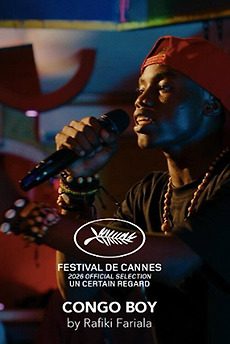
É o tipo de história que poderia ser exploratória sob olhares neocolonialistas, mas que, com a direção do jovem diretor congolês Rafiki Fariala, termina por revelar a realidade de um país com um potencial imenso, apesar de sufocado pela violência. E, na primeira vez em que encontramos o protagonista Robert, o jovem está carregando uma lata cheia de água para lavar um táxi na esperança de que o motorista deixará uma gorjeta, ou algo do tipo. Responsável, Robert visita com frequência os pais na prisão, cuida dos irmãos e, ainda, tenta manter os estudos em dia para, quem sabe, tornar-se alguém. O seu sonho, porém, não é se tornar médico como deseja o pai, mas encontrar um espaço na cena musical.
Uma oportunidade que cai no seu colo, em um clube noturno frequentado por soldados milicianos, quando sobe ao palco depois de uma explosão assustar o cantor residente. Após um lapso de hesitação, que não é exageradamente alongado e explorado pelo diretor, Robert chama a atenção do público e de um empresário inescrupuloso, Sarapata. Apesar de este ser capaz de abrir-lhe portas, somente faria isso a um preço que Robert não está disposto a pagar… até porque já basta ter que pagar 5 mil francos a mais pela inscrição em um exame de conclusão escolar apenas por ser congolês, e não centro-africano.
A maneira com que Fariala explora o contexto social é, ao mesmo tempo, ingênua e eficiente. Os sons da guerra civil eclodem no pano de fundo, às vezes perto o bastante para temermos pelo destino do protagonista. Em contrapartida, os elementos narrativos centrais de uma história tipicamente “nasce uma estrela” miram a originalidade oriunda do cenário, mas acertam nas convenções. É o pai contrário à escolha do filho, é o melhor amigo que assume às vezes de empresário e patrono, é a apresentação com a música não prevista, mas que é capaz de conquistar o público com a sua autenticidade.
O filme é muito mais eficiente quando tenta mostrar que a vida de Robert é literalmente um corre. Um conjunto de tarefas que equilibra, sabe-se lá como, riscos assumidos ao longo do caminho – inclusive o risco de morte -, seu respeito ao pai e sua responsabilidade e integridade, e tudo isto sem proporcionar ao protagonista qualquer momento de contemplação. Robert já é um prodígio, aparentemente, capaz de expressar alegria e melancolia através da música. Isso já diz o bastante sobre o que é viver numa zona de conflito, um contexto no qual a sobrevivência precede o sonho, realidade que a maioria de nós jamais experimentou quando pôde escolher o caminho que queria seguir.
Ainda que a narrativa possa ter sido construída a partir do arcabouço de histórias de superação, e portanto repetir de alguma maneira um olhar colonialista, ou ao menos adaptá-lo para a realidade na qual está, é, de fato, um olhar vindo de dentro sobre problemas internos. O que pode, e certamente haverá, são olhares colonialistas manifestados na forma de textos críticos ou jornalísticos, e não pretendo me isentar dessa lógica. E algo que me chamou a atenção, talvez por ser quem eu seja, foi a infraestrutura urbanística ou o sistema prisional e o educacional. O nível de deterioração humana e física desses espaços confere à Congo Boy uma característica semi-documental. Confere, também, à produção a característica de marco do cinema do país que, dentro daquelas circunstâncias, sobrevive e persiste apenas em meio a um terreno árido e hostil.
E por mais que esteja impelido a comparar esta história de superação e transformação pela arte com outras histórias semelhantes que a precederam, devo reconhecer a minha alegria quando Robert celebra uma vitória e, nós, podemos comemorar junto dele. Mesmo que o sonho de andar na contramão do conselho paterno possa parecer produzir uma consequência drástica, Congo Boy revela que perseguir os seus sonhos num contexto qualquer que seja ainda tem a capacidade de mudar vidas. Mundos, já não sei.
Quem vence pode ser o artista sonhador, transformado pelo reconhecimento de seu talento. Quem sabe, seja até capaz de transformar o meio imediatamente próximo de si (a família e os amigos). A vitória é individual, não social. A guerra civil não acabará, tampouco a marginalização. A força do indivíduo pode apenas amenizar, temporariamente, a realidade ao seu redor, que permanecerá igual nos dias, semanas, meses subsequentes. Mas prefiro abaixar a minha guarda, acreditar ingênua e otimisticamente que a vitória do indivíduo pode inspirar a vitória de outros, e que o êxito do personagem Robert ou do real Rafiki possa, sim, ser o pontapé para que o mundo mude.
O filme está na mostra Um Certo Olhar do Festival de Cannes 2026.
English review
As much as I enjoy seeing collective alternatives proposed for social issues, some stories, in certain contexts, ultimately need to become stories of individuals capable of flourishing even beneath the shadow of marginalization. Congo Boy is one of those stories, in which individual effort is what allows Robert to distinguish himself within the context he inhabits: a civil war in the Central African Republic, where his parents are imprisoned and where he himself remains a refugee, taking care of his siblings however he can.
It is the kind of story that could easily be explored through neocolonialist lenses, but which, under the direction of young Congolese filmmaker Rafiki Fariala, ultimately reveals the reality of a country with immense potential despite being suffocated by violence. And the first time we encounter Robert, the young man is carrying a can full of water to wash a taxi in the hope that the driver might leave him a tip or something of the sort. Responsible and mature beyond his years, Robert frequently visits his parents in prison, takes care of his siblings and still tries to keep up with his studies so that, perhaps, he may one day become somebody. His dream, however, is not to become a doctor as his father wishes, but to find a place within the music scene.
An opportunity falls into his lap in a nightclub frequented by militia soldiers, when he goes onstage after an explosion frightens the resident singer away. After a brief moment of hesitation, one that the director wisely refuses to overextend or excessively dramatize, Robert captures the attention of both the audience and a ruthless impresario named Sarapata. Although Sarapata is capable of opening doors for him, he would only do so at a price Robert is unwilling to pay… especially considering he already has to pay an extra 5,000 francs simply to register for a school graduation exam because he is Congolese rather than Central African.
The way Fariala explores the social context is simultaneously naïve and effective. The sounds of civil war erupt constantly in the background, sometimes close enough for us to fear for the protagonist’s fate. At the same time, the central narrative elements of a typical “A Star Is Born” structure aim for originality through the uniqueness of the setting, even if they still rely on familiar conventions. There is the father who disapproves of his son’s choices, the best friend who occasionally assumes the role of manager and patron, and the improvised musical performance capable of winning over the crowd through sheer authenticity.
The film is considerably more effective whenever it tries to show that Robert’s life is literally a hustle. A chain of responsibilities that somehow balances the risks he constantly faces along the way — including the possibility of death — with his respect for his father, his integrity and his sense of responsibility, all without ever granting the protagonist a single moment of contemplation. Robert already appears to be a prodigy, capable of expressing both joy and melancholy through music. That alone says enough about what it means to live in a conflict zone, a context in which survival precedes dreams, a reality most of us have never experienced while still being able to choose our own paths in life.
Even if the narrative may have been constructed from the framework of inspirational underdog stories, therefore reproducing in some capacity a colonialist perspective — or at least adapting that structure to its own reality — it is, in fact, a perspective that comes from within. What can and certainly will exist are colonialist perspectives manifested through critical or journalistic texts, and I do not intend to exempt myself from that possibility. And something that particularly caught my attention, perhaps because of who I am, was the urban infrastructure alongside the prison and educational systems. The level of human and physical deterioration within those spaces grants Congo Boy an almost semi-documentary quality. It also turns the production into something of a landmark for a national cinema that, under those circumstances, survives and persists only amid hostile and arid terrain.
And as much as I may feel compelled to compare this story of transformation through art with similar predecessors, I must admit the joy I felt whenever Robert celebrates a victory and we are able to celebrate alongside him. Even if pursuing a dream against paternal advice may seem destined to produce drastic consequences, Congo Boy reveals that chasing one’s dreams, regardless of the surrounding circumstances, still retains the power to change lives. Worlds, I am no longer certain.
The one who prevails may be the dreamer artist transformed by the recognition of his talent. Perhaps he may even become capable of transforming the lives immediately around him — his family and friends. The victory, however, is individual rather than social. The civil war will not end, nor will marginalization. Individual strength can only temporarily soften the surrounding reality, one that will remain fundamentally unchanged in the days, weeks and months that follow. Yet I still prefer to lower my guard and believe, both naïvely and optimistically, that the victory of one individual can inspire the victories of others, and that the success of the fictional Robert or the real Rafiki may indeed become the spark capable of changing the world.

Crítico de cinema filiado a Critics Choice Association, à Associação Brasileira de Críticos de Cinema, a Online Film Critics Society e a Fipresci. Atuou no júri da 39ª Mostra Internacional de Cinema em São Paulo/SP, do 12º Fest Aruana em João Pessoa/PB, do 24º Tallinn Black Nights Film na Estônia, do 47º TIFF – Festival Internacional de Cinema em Toronto. Ministrante do Laboratório de Crítica Cinematográfica na 1ª Mostra Internacional de Cinema em São Luís (MA) e Professor Convidado do Curso Técnico em Cinema do Instituto Estadual do Maranhão (IEMA), na disciplina Crítica Cinematográfica. Concluiu o curso de Filmmaking da New York Film Academy, no Rio de Janeiro (RJ) em 2013. Participou como co-autor dos livros 100 melhores filmes brasileiros (Letramento, 2016), Documentário brasileiro: 100 filmes essenciais (Letramento, 2017) e Animação Brasileira – 100 Filmes Essenciais (Letramento, 2018). Criou o Cinema com Crítica em fevereiro de 2010 e o Clube do Crítico em junho de 2020.