

Crítica em português
Das boas surpresas que um festival de cinema pode reservar em sua seleção são filmes iguais a este Elephants in the Fog. Não só viagem a uma geografia e cultura que raramente exploramos, a nepalese, especialmente sob a perspectiva do denominado terceiro gênero, como a experiência de assistir a um thriller em um formato que não se revela como tal. É o tipo de filme que, apesar de repetir as convenções e as formas de um cinema tradicional, é original justo por alterar as engrenagens e converter-se em algo novo.
Escrito e dirigido por Abinash Bikram Shah, o roteiro fala sobre a violência contra os corpos do terceiro gênero – que podem ser pensadas, de uma ótica brasileira, como pessoas travestis ou trans – e como esta violência não se manifesta somente em atos explícitos de agressão física, mas nos mecanismos cotidianos de exclusão e de apagamento. Em todos os casos, estruturas sociais reproduzidas na expectativa e desejo de rejeitar dignidade e humanidade àqueles que já foram historicamente expulsos da ideia dominante de sociedade.
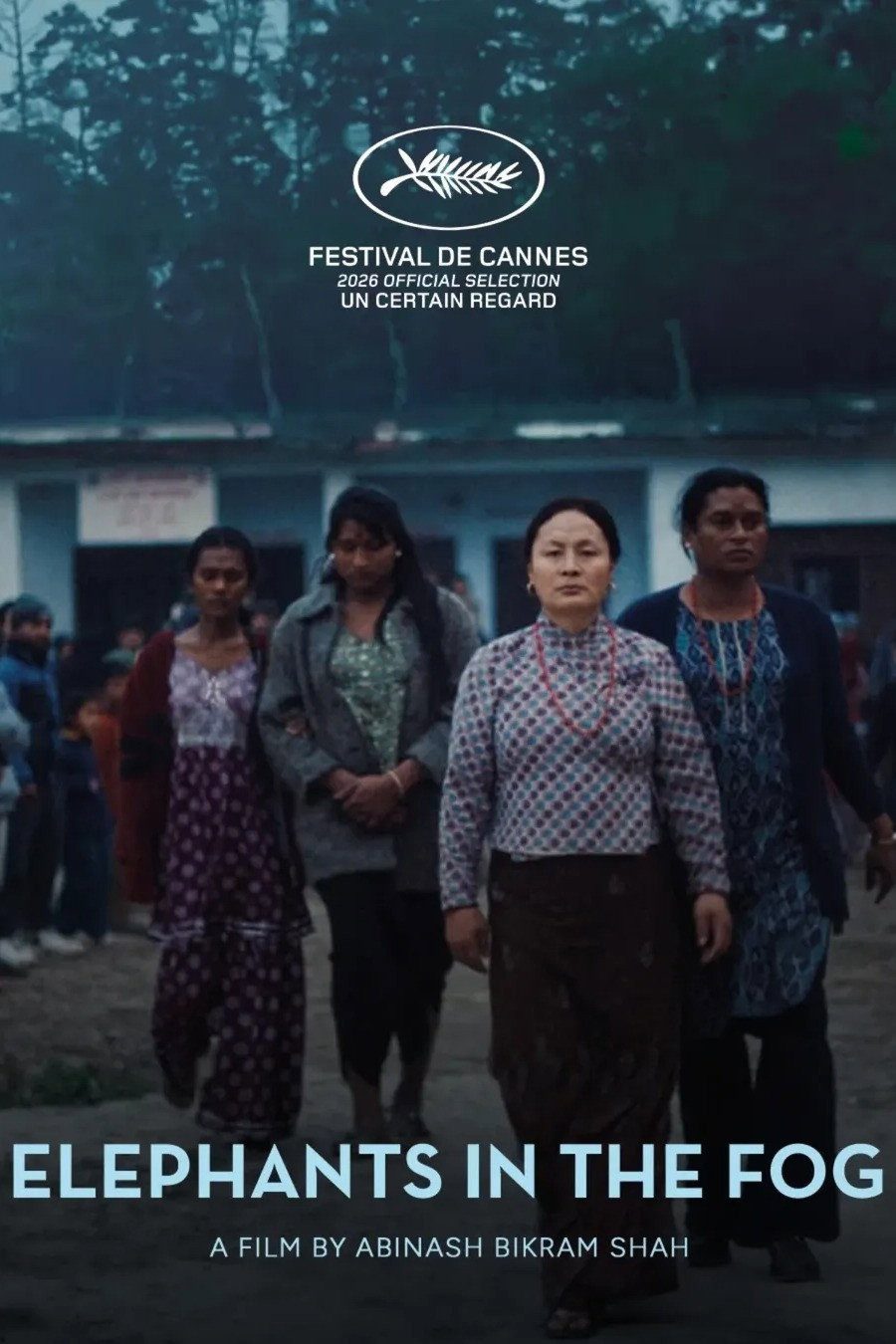
Situado em uma aldeia nepalesa cercada por florestas habitadas por elefantes selvagens, um elemento simbólico a qual o filme recorre e retoma – o longa acompanha Pirati, figura matriarcal de uma comunidade Kinnar, reconhecida não apenas por sua liderança, como ainda por uma relação quase espiritual com os saberes naturais e ritualísticos. Pirati não se coloca em uma posição de vítima, mas como alguém cuja autoridade transcende inclusive as barreiras impostas por uma sociedade transfóbica.
Mas essa posição simbólica é insuficiente para proteger os corpos trans da violência. Quando Apsara, a sua filha, desaparece, o filme troca a aparência contemplativa e converte-se em um thriller melancólico sobre luto, culpa e sobrevivência. A experiência narrativa rapidamente nos conduz à percepção de que não se trata apenas de um desaparecimento – o tempo já é delongado demais e há indícios concretos de um crime -, mas de um assassinato motivado por transfobia. Um crime que a estrutura social está preparada para absorver esse crime sem maiores consequências.
A polícia revela-se limitada pela incapacidade estrutural de enxergar plenamente aquelas vidas como dignas de justiça. E mesmo quando existe alguma tentativa protocolar de investigação – por parte de uma mulher que sente a dor daquela comunidade -, o sistema parece e está organizado através de silêncios e versões combinadas que dificultam ou impossibilitam alcançar qualquer verdade concreta. Crimes iguais a este permanecem insolúveis porque a sociedade dominante já decidiu que determinadas vítimas não importam o bastante.
O desaparecimento de Apsara funciona também como catalisador para uma investigação íntima sobre maternidade, abandono e culpa. Existe um subtexto emocional muito forte relacionado ao fato de que a filha havia sido rejeitada por Pirati, num relacionamento afetivo com um homem fora daquele universo. O desaparecimento transforma então a busca pela filha numa tentativa desesperada não apenas de encontrar justiça, mas de redimir a própria maternidade, uma que é construída pela escolha de acolher e proteger de um mundo que rejeita e mata.
Dentro da narrativa, para além da violência física que conduz ao provável assassinato, há a rejeição do nome social por parte da mãe que fala que o filho morreu, o uso insistente do “nome morto”, a inacessibilidade de caminhos institucionais habitualmente abertos às pessoas não queer. Tudo isso embalado em um thriller investigativo atmosférico valorizado pela fotografia de Noé Bach: os tons mais azulados e melancólicos que banham o filme criam uma sensação permanente de luto. Enquanto isto, a floresta transforma-se numa presença quase espiritual.
Jã a trilha sonora de Frédéric Alvarez também exerce papel fundamental ao incorporar sons ritualísticos, que escapam parcialmente ao repertório ocidental, aos ruídos da natureza, costurando uma ideia eficaz de costura do terceiro gênero na natureza. E a narrativa nunca exotiza aquela cultura; ao contrário, utiliza seus elementos simbólicos como forma de ampliar a experiência subjetiva dos personagens e envolve o espectador naqueles drama.
Além disso, Pirati conduz sua investigação paralela sem jamais tornar-se passiva diante da violência; ela não hesita nem se intimida. Mas avança, interroga e pressiona por respostas que talvez jamais encontrará. Investigar seus desaparecidos torna-se uma obrigação moral de uma comunidade. Entretanto, é justamente em sua conclusão que Elephants in the Fog revela sua fragilidade. Em vez de resolver o conflito de forma concreta – embora haja evidências deste ou daquele desfecho -, o filme opta por um encerramento mais simbólico e imagético. É um desfecho forte, considerando o elemento poético introduzido pelos maiores mamíferos terrestes. Também existe uma sensação até incômoda de irresolução, como se a poesia ou o símbolo fossem as alternativas daquelas pessoas.
Porque filmes como esse operam numa fronteira delicada: ao representar violência contra corpos dissidentes, podem simultaneamente denunciá-la e reinscrevê-la no audiovisual. Quando a narrativa não encontra formas de enfrentamento, reparação ou transformação, corre o risco de converter sofrimento em contemplação. Não se trata de exigir finais otimistas ou punitivos, nem finais conclusivos, não abertos, mas de perceber que o filme hesita, em favor da beleza artística, diante das implicações materiais do crime à comunidade.
Ainda assim, seria injusto ignorar a beleza de Elephants in the Fog, um filme sensível sobre maternidade dissidente e sobrevivência de uma comunidade que persevera em função do amor em um mundo de ódio. Um filme que é uma investigação de um desaparecimento, enquanto é ainda uma investigação de uma sociedade organizada para naturalizar desaparecimentos de alguns tipos de pessoas. O cadáver de um elefante escondido no coração da floresta é um sintoma, no fim das contas, de uma sociedade adoecida.
O filme está na seleção da mostra Um Certo Olhar do Festival de Cannes 2026.
English review
Among the pleasant surprises a film festival selection can offer are films like Elephants in the Fog. Not only is it a journey into a geography and culture we rarely explore — Nepalese culture, especially from the perspective of the so-called third gender — but it is also the experience of watching a thriller disguised as something else entirely. It is the kind of film that, despite repeating the conventions and forms of traditional cinema, becomes original precisely by rearranging its machinery and transforming itself into something new.
Written and directed by Abinash Bikram Shah, the screenplay addresses violence against third-gender bodies — which, from a Brazilian perspective, could be understood as trans or travesti individuals — and how this violence manifests not only through explicit acts of physical aggression, but through everyday mechanisms of exclusion and erasure. In every case, these are social structures reproduced through the expectation and desire to deny dignity and humanity to those who have historically been expelled from the dominant idea of society.
Set in a Nepalese village surrounded by forests inhabited by wild elephants — a symbolic element the film continually returns to — the feature follows Pirati, the matriarchal figure of a Kinnar community, recognized not only for her leadership but also for her almost spiritual relationship with natural and ritualistic knowledge. Pirati does not position herself as a victim, but rather as someone whose authority transcends even the barriers imposed by a transphobic society.
Yet this symbolic position is insufficient to protect trans bodies from violence. When Apsara, her daughter, disappears, the film abandons its contemplative appearance and transforms into a melancholic thriller about grief, guilt, and survival. The narrative quickly leads us to understand that this is not merely a disappearance — too much time has passed, and there are concrete signs of a crime — but a murder motivated by transphobia. A crime that the social structure is fully prepared to absorb without major consequences.
The police reveal themselves limited by a structural inability to fully recognize those lives as worthy of justice. And even when there is some procedural attempt at investigation — carried out by a woman who empathizes with the community’s pain — the system appears, and indeed is, organized through silences and coordinated versions of events that make any concrete truth difficult or impossible to reach. Crimes like this remain unsolved because dominant society has already decided that certain victims simply do not matter enough.
Apsara’s disappearance also functions as a catalyst for an intimate investigation into motherhood, abandonment, and guilt. There is a powerful emotional subtext related to the fact that the daughter had been rejected by Pirati for engaging in a romantic relationship with a man outside that world. The search for her daughter thus becomes a desperate attempt not only to obtain justice, but to redeem motherhood itself — a motherhood built upon the choice to shelter and protect against a world that rejects and kills.
Within the narrative, beyond the physical violence leading to the probable murder, there is the refusal of a trans person’s chosen name by a mother who insists that “her son died,” the persistent use of the deadname, and the inaccessibility of institutional pathways commonly available to non-queer people. All of this is framed within an atmospheric investigative thriller elevated by Noé Bach’s cinematography: the bluish, melancholic tones bathing the film create a permanent sensation of mourning. Meanwhile, the forest transforms into an almost spiritual presence.
Frédéric Alvarez’s score also plays a fundamental role by incorporating ritualistic sounds — partially outside the Western musical repertoire — alongside the sounds of nature, effectively weaving together the idea of the third gender as something integrated within nature itself. The narrative never exoticizes that culture; on the contrary, it uses its symbolic elements to deepen the characters’ subjective experience and immerse the viewer in their drama.
Moreover, Pirati conducts her own parallel investigation without ever becoming passive in the face of violence; she neither hesitates nor intimidates easily. Instead, she advances, interrogates, and pressures others for answers she may never find. Investigating their disappeared becomes a moral obligation for the community. Yet it is precisely in its conclusion that Elephants in the Fog reveals its fragility. Rather than resolving the conflict concretely — although evidence points toward one outcome or another — the film opts for a more symbolic and imagistic ending. It is a powerful conclusion, especially considering the poetic dimension introduced by the largest land mammals on Earth. At the same time, there is an uncomfortable feeling of irresolution, as though poetry or symbolism were the only alternatives left to those people.
Because films like this operate on a delicate frontier: by representing violence against dissident bodies, they may simultaneously denounce it and reinscribe it into audiovisual language. When the narrative fails to find forms of confrontation, reparation, or transformation, it risks converting suffering into contemplation. This is not about demanding optimistic or punitive endings, nor even fully conclusive ones, but about recognizing that the film hesitates, in favor of artistic beauty, before the material implications of the crime upon the community.
Still, it would be unfair to ignore the beauty of Elephants in the Fog, a sensitive film about dissident motherhood and the survival of a community that perseveres through love within a world of hatred. A film that investigates a disappearance while simultaneously investigating a society organized to normalize the disappearance of certain kinds of people. The carcass of an elephant hidden deep within the forest ultimately becomes a symptom of a sick society.

Crítico de cinema filiado a Critics Choice Association, à Associação Brasileira de Críticos de Cinema, a Online Film Critics Society e a Fipresci. Atuou no júri da 39ª Mostra Internacional de Cinema em São Paulo/SP, do 12º Fest Aruana em João Pessoa/PB, do 24º Tallinn Black Nights Film na Estônia, do 47º TIFF – Festival Internacional de Cinema em Toronto. Ministrante do Laboratório de Crítica Cinematográfica na 1ª Mostra Internacional de Cinema em São Luís (MA) e Professor Convidado do Curso Técnico em Cinema do Instituto Estadual do Maranhão (IEMA), na disciplina Crítica Cinematográfica. Concluiu o curso de Filmmaking da New York Film Academy, no Rio de Janeiro (RJ) em 2013. Participou como co-autor dos livros 100 melhores filmes brasileiros (Letramento, 2016), Documentário brasileiro: 100 filmes essenciais (Letramento, 2017) e Animação Brasileira – 100 Filmes Essenciais (Letramento, 2018). Criou o Cinema com Crítica em fevereiro de 2010 e o Clube do Crítico em junho de 2020.