
Crítica em português
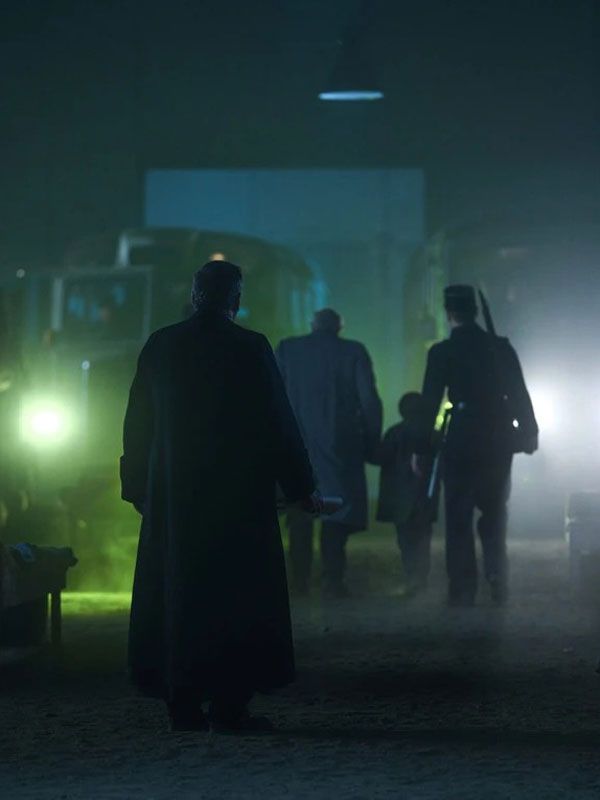
When the Night Falls, ou La Troisième Nuit no título original francês, nos transporta para a França ocupada de 1942, quando o governo de Vichy, colaboracionista do regime nazista, começa a organizar uma operação de triagem e deportação de judeus estrangeiros refugiados no país. A partir de um contexto histórico já bastante explorado no cinema, o diretor, corroterista e ator Daniel Auteuil tenta equilibrar os fatos históricos e a dimensão humana numa espécie de retrato da burocracia do horror. E não foi isto o regime nazista? A transformação, ou normalização, de uma barbárie humana em um procedimento administrativo, em um papel assinado, em uma decisão aparentemente racional tomada sob a égide das leis?
No roteiro, Gilbert Lesage (Reinartz) é um funcionário público convocado para presidir uma comissão responsável por decidir quais judeus poderão permanecer temporariamente na França e quais serão enviados para os campos de concentração… para a morte. Com a ideologia fortemente ancorada na justiça, Gilbert tenta à sua maneira salvar a vida da maior quantidade de pessoas que pode. E conta com a ajuda e cumplicidade do padre Alexandre Glasberg (Auteuil), uma figura humanitária que tenta agir dentro das brechas possíveis daquele sistema, substituindo a teoria dogmática da Igreja Católica – que prefere não intervir – pela práxis que os seus ensinamentos professam.
Gilbert e Alexandre trabalham dentro dos critérios burocráticos estabelecidos pelo governo francês para definir quem merece permanecer (viver) e quem deverá ser deportado (morrer): mulheres grávidas, pessoas que trabalham nos órgãos do governo francês etc. Estas figuras tentam manipular tais regras a fim de salvar vidas, e transformam o direito à vida em um elemento circunstancial dependente de provas e atestados dados por especialistas.
O filme constrói muito bem essa atmosfera urgente dentro de um suspense. A contagem dos dias, a elaboração das listas, as reuniões do comitê, tudo isto tentando manipular o tempo, enquanto há tempo. Uma variável que começa a mudar de valor à medida que o governo francês modifica as regras. Se, antes, atrasos e ganhos de tempo eram armas utilizadas para salvar mais vidas, agora, com regras e prazos apertados, o tempo se torna em uma urgência que obriga os personagens a correr e salvar quanto podem. Existe uma lógica kafkiana aí, e neste funcionamento estatal em que homens relativamente comuns, acuados pelo medo e pela autopreservação, acabam transformando-se em heróis mesmo não se enxergando assim.
Existe ainda uma terceira personagem feminina (Luàna Bajrami) que infelizmente é menos desenvolvida pela direção. Ela utiliza estratégias clandestinas para esconder judeus, cria identidades falsas, alterando nomes e improvisando alternativas, aproveitando as brechas daquele caos administrativo. Contudo, o filme não encontra muito espaço para aprofundá-la emocionalmente, e ela acaba funcionando mais como peça narrativa do que como personagem plenamente construída, diferentemente de Gilbert e Alexandre.
Ainda assim, o filme funciona melhor quando se concentra nessa dinâmica entre burocracia e humanidade, tentando des-vilanizar vilões – eu tenho uma família e filhos, e eu apenas podia pensar, eles também têm! Porque o filme entende algo fundamental: o horror nazista não começou nas câmaras de gás, mas antes, quando pessoas normalizaram reduzir seres humanos em categorias inferiores e administrativas. Quando passaram a discutir quem merece ou não a proteção estatal. Quando começaram a relativizar o sofrimento em nome da aparente ordem de um país ocupado. E talvez por isso o filme dialogue tão fortemente com o presente.
Em determinado momento, conforme as medidas vão se agravando e o espaço de negociação desaparece, salvar as crianças passa a ser praticamente a prioridade possível. E é impossível assistir a isso sem pensar no mundo contemporâneo. Em Gaza, no Líbano ou no Irão, e em tantos outros conflitos recentes, nas quais as crianças continuam sendo transformadas em símbolos, estatísticas e, por que não, em armas políticos, enquanto imagens de sofrimento circulam diariamente diante de nós até produzirem indignação coletiva antes de virar anestesia emocional.
Mas, cinematograficamente, When the Night Falls tem limitações formais claras. É um filme extremamente protocolar, tanto quanto o que dramatiza. Um filme que confia quase exclusivamente na força da própria história real e na gravidade histórica do tema que aborda. E isso obviamente já produz impacto emocional. O problema é que falta a Auteuil uma personalidade compatível. Ou uma maneira mais singular de transformar essa narrativa em experiência cinematográfica.
A direção é funcional, correta, sóbria, mas raramente encontra soluções visuais ou dramáticas que façam o filme ultrapassar o campo do drama histórico da Segunda Guerra Mundial. A tensão existe, mas nasce da situação dramática, não da construção formal. O espectador permanece envolvido porque sabe o destino inevitável dos personagens que mal vemos – em primeiro plano, os que agem, não os que sofrem. Não necessariamente porque o filme encontre uma linguagem cinematográfica para contar essa história.
Ainda assim, é impossível sair totalmente indiferente de uma história como essa. Porque o cinema sobre a Segunda Guerra Mundial nos lembra repetidamente da mesma coisa: a civilização é mais frágil do que gostamos de acreditar. E porque histórias de coragem silenciosa, de pessoas comuns tentando preservar algum senso de humanidade dentro do horror absoluto, talvez sejam justamente as histórias que mais precisamos continuar ouvindo. Em um mundo como o que vivemos hoje, talvez possa ajudar a abrir os olhos de que as pessoas não são apenas números ou estatísticas, ou que o genocídio pode, e muitas vezes é!, sancionado por Estados democráticos.
English review
When the Night Falls, or La Troisième Nuit in its original French title, transports us to occupied France in 1942, when the Vichy government, collaborating with the Nazi regime, begins organizing an operation to screen and deport foreign Jews who had sought refuge in the country. Drawing from a historical context already widely explored in cinema, director, co-writer, and actor Daniel Auteuil attempts to balance historical facts with the human dimension in what becomes a kind of portrait of the bureaucracy of horror. And was that not what the Nazi regime ultimately was? The transformation, or normalization, of human barbarity into an administrative procedure, into a signed document, into an apparently rational decision made under the aegis of the law?
In the screenplay, Gilbert Lesage (Reinartz) is a civil servant appointed to preside over a commission responsible for deciding which Jews may temporarily remain in France and which will be sent to concentration camps… to their deaths. With an ideology deeply rooted in justice, Gilbert tries, in his own way, to save as many lives as possible. He is aided and supported by Father Alexandre Glasberg (Auteuil), a humanitarian figure who seeks to act within the limited gaps allowed by that system, replacing the dogmatic theory of the Catholic Church, which prefers not to intervene, with the praxis its teachings profess.
Gilbert and Alexandre operate within the bureaucratic criteria established by the French government to determine who deserves to remain (to live) and who must be deported (to die): pregnant women, individuals employed by French state institutions, and so on. These figures attempt to manipulate such rules in order to save lives, turning the right to life into a circumstantial condition dependent on documentation and certifications provided by specialists.
The film builds this urgent atmosphere effectively within a framework of suspense. The counting of days, the drafting of lists, the committee meetings, all of it aimed at manipulating time while there is still time. A variable that begins to shift as the French government tightens its rules. If delays and extensions were once tools used to save more lives, now, with stricter deadlines and regulations, time becomes an urgency that forces the characters to act quickly and save whoever they can. There is a Kafkaesque logic at play here, in this state machinery where relatively ordinary men, cornered by fear and self-preservation, ultimately transform themselves into heroes without necessarily seeing themselves as such.
There is also a third female character (Luàna Bajrami) who, unfortunately, is less developed by the direction. She employs clandestine strategies to hide Jews, creates false identities by altering names and improvising alternatives, taking advantage of the loopholes within that administrative chaos. However, the film finds little space to explore her emotional depth, and she ultimately functions more as a narrative device than as a fully realized character, unlike Gilbert and Alexandre.
Even so, the film works best when it focuses on this dynamic between bureaucracy and humanity, attempting to de-villainize its villains: I have a family and children, and I could only think, they do too! Because the film understands something fundamental: Nazi horror did not begin in the gas chambers, but earlier, when people normalized reducing human beings to inferior, administrative categories. When they began debating who does or does not deserve state protection. When suffering started to be relativized in the name of the apparent order of an occupied country. Perhaps this is why the film resonates so strongly with the present.
At a certain point, as measures become increasingly severe and the space for negotiation disappears, saving children becomes almost the only possible priority. And it is impossible to watch this without thinking of the contemporary world. In Gaza, in Lebanon, in Iran, and in so many other recent conflicts, where children continue to be turned into symbols, statistics, and, why not, political instruments, while images of suffering circulate daily before us until they first provoke collective outrage and then dissolve into emotional numbness.
Cinematically, however, When the Night Falls has clear formal limitations. It is an extremely procedural film, much like what it dramatizes. A film that relies almost exclusively on the strength of its real-life story and the historical gravity of its subject. And this, of course, already produces emotional impact. The problem is that Auteuil lacks a compatible authorial personality, or a more distinctive way of transforming this narrative into a cinematic experience.
The direction is functional, precise, restrained, but rarely finds visual or dramatic solutions that allow the film to transcend the boundaries of the conventional World War II historical drama. The tension is present, but it arises from the dramatic situation itself rather than from formal construction. The viewer remains engaged because they know the inevitable fate of the characters we barely see, with the focus placed on those who act rather than those who suffer, not necessarily because the film discovers a cinematic language capable of telling this story.
Even so, it is impossible to leave entirely unmoved by a story like this. Because cinema about World War II repeatedly reminds us of the same thing: civilization is more fragile than we like to believe. And because stories of quiet courage, of ordinary people trying to preserve some sense of humanity within absolute horror, may be precisely the stories we most need to keep hearing. In a world like the one we live in today, they may help remind us that people are not merely numbers or statistics, and that genocide can be, and often is, sanctioned by democratic states.

Crítico de cinema filiado a Critics Choice Association, à Associação Brasileira de Críticos de Cinema, a Online Film Critics Society e a Fipresci. Atuou no júri da 39ª Mostra Internacional de Cinema em São Paulo/SP, do 12º Fest Aruana em João Pessoa/PB, do 24º Tallinn Black Nights Film na Estônia, do 47º TIFF – Festival Internacional de Cinema em Toronto. Ministrante do Laboratório de Crítica Cinematográfica na 1ª Mostra Internacional de Cinema em São Luís (MA) e Professor Convidado do Curso Técnico em Cinema do Instituto Estadual do Maranhão (IEMA), na disciplina Crítica Cinematográfica. Concluiu o curso de Filmmaking da New York Film Academy, no Rio de Janeiro (RJ) em 2013. Participou como co-autor dos livros 100 melhores filmes brasileiros (Letramento, 2016), Documentário brasileiro: 100 filmes essenciais (Letramento, 2017) e Animação Brasileira – 100 Filmes Essenciais (Letramento, 2018). Criou o Cinema com Crítica em fevereiro de 2010 e o Clube do Crítico em junho de 2020.