
Crítica em português
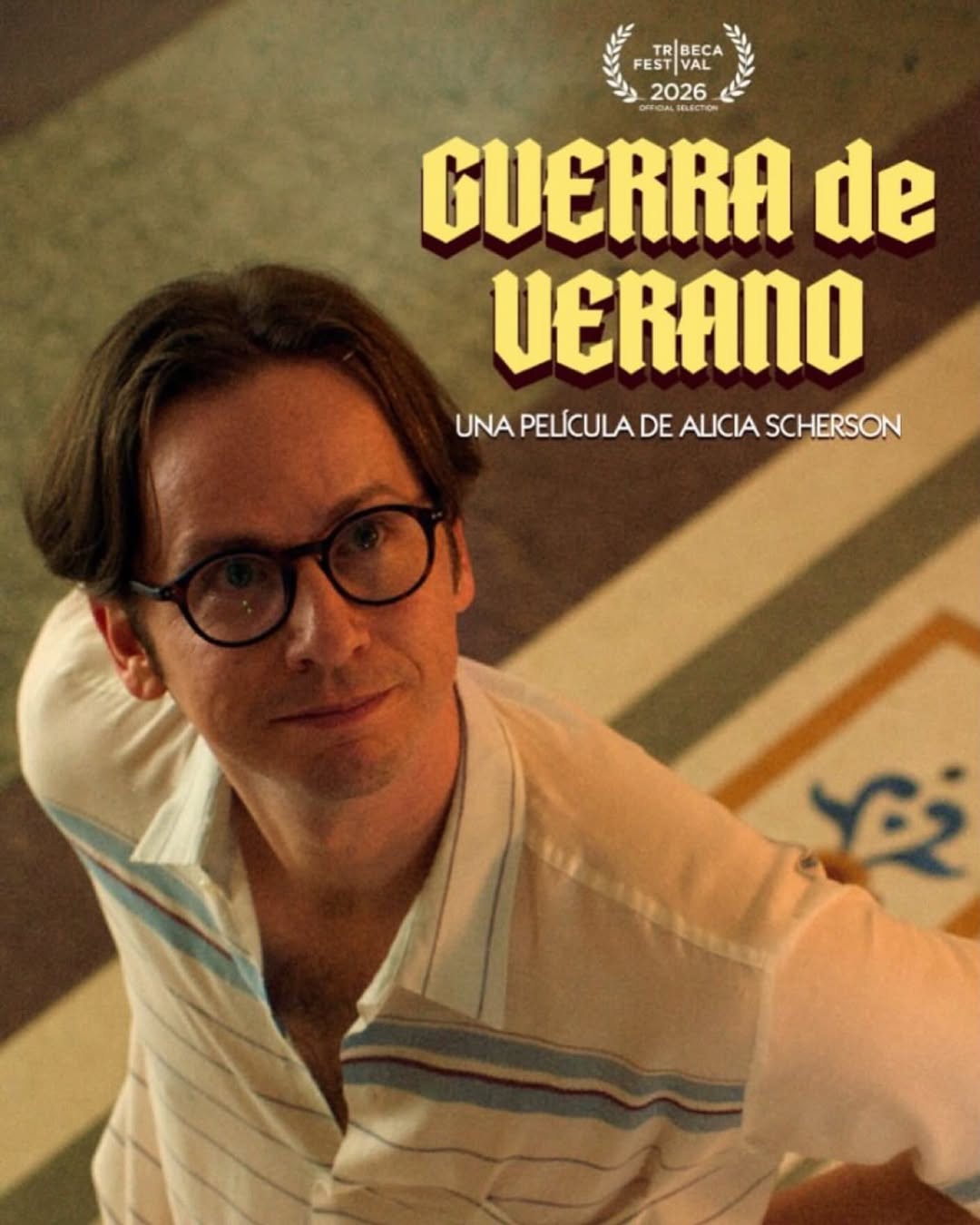
Adaptado a partir do romance O Terceiro Reich, de Roberto Bolaño, descoberto e publicado depois da morte do autor, Summer War é um filme simultaneamente atraente e inquietante em como registra o estágio da democracia chilena durante o final da década de 80, depois do plebiscito ter votado Não para a continuidade no poder do ditador e fantoche estadunidense Augusto Pinochet. Alicia Scherson, que é diretora e roteirista, encontra no contexto histórico um pano de fundo fértil para investigar a relação entre poder e alienação, e também a fim de educar o espectador. Ao menos, assim que percebi, pois o meu conhecimento sobre a restituição da democracia chilena havia sido limitado ao período do plebiscito documentado em NO, de Pablo Larraín. Aqui, vemos como mesmo após a votação, havia contradições e a sensação permanente de que algo horrível poderia acontecer.
Como brasileiro, consigo entender essa realidade melhor do que o turista estadunidense de ascendência alemã Udo Berger (Dan Beirne), o protagonista da narrativa, um campeão de jogos de guerra de tabuleiro que chega ao litoral chileno acompanhado da namorada para passar férias. À primeira vista, trata-se de um gringo apático e quase desinteressante. Seu comportamento é marcado por uma ilusão de privilégio por ser estadunidense, impeditiva de qualquer identificação emocional. Não existe nele qualquer resquício de carisma, só uma trivialidade e um empoderamento que irritam. Sinto que Udo merece uma lição. Contudo, Scherson parece entender como a alienação e incapacidade de compreender o mundo ao seu redor e, mais ainda, o seu papel no mundo, podem tornar cinematograficamente ricos e interessantes personagens que rapidamente rejeitaríamos.
Udo observa o mundo sem enxergá-lo. É reveladora a cena inicial dele enquanto encara El Quemado (David Gaete): um estranho encara o outro com um misto de repulsa, curiosidade e pré-julgamento, mas não de empatia. Udo caminha por um país em transformação histórica sem demonstrar qualquer interesse nem conhecimento por esse processo. Aos seus olhos, o Chile de 1989 desponta como uma paisagem exótica destinada ao consumo e à exploração. Enquanto o regime ditatorial agoniza, as estruturas de violência que sustentaram a ditadura durante décadas permanecem visíveis. Neste contexto, o desaparecimento misterioso de um turista argentino mobiliza rumores, suspeitas e inquietações. E, ainda assim, Udo permanece preso ao universo controlado de seus jogos estratégicos.
Scherson não enxerga Udo como um indivíduo distraído da realidade. Pelo contrário, a narrativa sugere que a sua alienação constitui uma forma de acreditar ainda manter o poder. Além de carregar consigo uma herança histórica que atravessa silenciosamente toda a narrativa: o imperialismo estadunidense que subjugou a América latina com a doutrina Monroe associado ao regime nazista da época dos avós, e as imagens de arquivo sugerem como este passado permanece inscrito no presente. É neste cenário que o jogo de tabuleiro referente, ora, à Segunda Guerra Mundial, ajuda a reproduzir de forma lúdica algumas dinâmicas sociais e históricas. Udo circula pelos espaços do hotel ou trata os funcionários como se fosse o proprietário e exercesse algum domínio sobre eles. Como se os dólares pudesse pagar algo além do que o sistema capitalista. Pudesse pagar acesso. Pudesse acomodar seus privilégios e suas necessidades.
O que Summer War sugere com não muita sutileza é que essa postura não está distante das estruturas coloniais e imperiais que ajudaram a moldar grande parte do século XX. Enquanto Udo movimenta exércitos em miniatura sobre o tabuleiro hexagonal que é a mesma forma do piso sobre o qual caminha, a realidade ao seu redor permanece assombrada pelos fantasmas de violências diversas. Enquanto a guerra é enxergada por Udo apenas como jogo, o Chile é marcado pelas consequências de conflitos civis e militares, e cuja brutalidade ainda está longe de ser superada. E o misterioso El Quemado, que mora na praia, desempenha um papel essencial tanto com uma vítima provável do regime, quanto como um sujeito capaz de derrubar o regime, nem que apenas simbolicamente.
Pois não basta Udo ser alienado afetiva, social ou politicamente, também é alienado dentro do seu próprio jogo. Não bastava não saber jogar as regras do mundo real, Udo também parece não saber jogar as regras do jogo, e começa a amargar derrotas para El Quemado, à medida em que a sua vida emocional começa a deteriorar: a namorada viajou de volta aos Estados Unidos – ela também não é inocente, culpa o Chile e a atmosfera latinoamericana pelo desejo retributivo que sentiu -, enquanto a Sra. Elsa começa a oferecer aquilo que Udo desejava por tantos anos, mas nos termos dela.
Scherson conduz esse processo por meio de uma narrativa marcada pela estranheza. Muitos dos personagens que atravessam-na estão em uma zona intermediária entre o realismo e o lynchiano, não pela presença de acontecimentos sobrenaturais ou estranhos, mas pela forma como a realidade se apresenta constantemente fora do lugar, sem que ninguém consiga identificar exatamente o quê. A sensação está amplificada por elementos na edição que me inspiram a querer relacionar o filme a White Lotus. Creio até que surgirá naturalmente: em ambas as narrativas, estrangeiros privilegiados em hotéis de luxo subjugam os habitantes nativos enquanto terminam absorvidos pelas particularidades dos contextos em que estão.
Mas Scherson está menos interessada na sátira classista e mais em uma investigação sobre os mecanismos de uma história já repetida. A sua narrativa não deseja ridicularizar o turista alienado, mas compreender como a forma de poder nazista e/ou imperialista sobrevive até quando os seus agentes não possuem consciência disso, ou quando o repudiam veementemente. É como se a Segunda Guerra Mundial não houvesse terminado com a tomada de Berlim pelas tropas soviéticas, mas permanece, por exemplo, enquanto Pinochet permanece, ilegitamente, no poder.
Ao término, o roteiro até mantém alguns de seus mistérios deliberadamente irresolvidos: acidente ou assinato? O que aconteceu com El Quemado, e qual a sua relação com o marido de Elsa? Ou para onde foram outros personagens? Mas essa recusa é uma virtude, já que é um meio de reproduzir, em nós, a mesma alienação de Udo. O que resta é o fantasma histórico pairando sobre o presente, determinando as regras do jogo da vida que jogamos.
Summer War está na seleção do Festival de Tribeca, na seção International Narrative Competition.
English review
Adapted from Roberto Bolaño’s novel The Third Reich, discovered and published after the author’s death, Summer War is a film that is simultaneously compelling and unsettling in the way it captures the state of Chilean democracy during the late 1980s, after the plebiscite had voted No to the continuation in power of dictator and American puppet Augusto Pinochet. Alicia Scherson, who serves as both writer and director, finds in this historical context fertile ground to investigate the relationship between power and alienation, while also educating the viewer. At least, that was my experience, since my knowledge of Chile’s return to democracy had been largely limited to the plebiscite period documented in Pablo Larraín’s No. Here, we see how, even after the vote, contradictions remained and there was a permanent sense that something terrible could still happen.
As a Brazilian, I can understand this reality better than Udo Berger (Dan Beirne), the German-American tourist who serves as the film’s protagonist, a champion of tabletop war games who arrives on the Chilean coast with his girlfriend for a vacation. At first glance, he is an apathetic and almost uninteresting gringo. His behavior is marked by an illusion of privilege derived from being American, one that prevents any emotional identification. There is not a trace of charisma in him, only a triviality and a sense of entitlement that becomes irritating. I feel that Udo deserves a lesson. Yet Scherson seems to understand how alienation and the inability to comprehend the world around oneself — and, more importantly, one’s place within it — can make characters whom we would otherwise reject become cinematically rich and fascinating.
Udo observes the world without truly seeing it. The opening scene in which he stares at El Quemado (David Gaete) is revealing: one stranger looks at the other with a mixture of disgust, curiosity, and prejudice, but never empathy. Udo walks through a country undergoing profound historical transformation without displaying either interest in or knowledge of that process. In his eyes, Chile in 1989 emerges as an exotic landscape meant for consumption and exploitation. While the dictatorship is dying, the structures of violence that sustained it for decades remain visible. Within this context, the mysterious disappearance of an Argentine tourist generates rumors, suspicions, and unease. And yet Udo remains trapped within the controlled universe of his strategic games.
Scherson does not view Udo as an individual merely distracted from reality. On the contrary, the narrative suggests that his alienation constitutes a way of believing he still possesses power. He also carries with him a historical legacy that silently permeates the entire narrative: American imperialism, which subjugated Latin America through the Monroe Doctrine, intertwined with the Nazi legacy of his grandparents’ generation, and the archival footage suggests how this past remains inscribed in the present. It is within this framework that the board game centered on World War II helps reproduce, in playful form, certain social and historical dynamics. Udo moves through the hotel as though he owned it and treats its employees as though he exercised authority over them. As though dollars could purchase something beyond what capitalism already provides. As though they could buy access. As though they could accommodate his privileges and desires.
What Summer War suggests, not very subtly, is that this posture is not far removed from the colonial and imperial structures that helped shape much of the twentieth century. While Udo moves miniature armies across a hexagonal board that mirrors the shape of the floor beneath his feet, the reality surrounding him remains haunted by the ghosts of various forms of violence. While war exists for him merely as a game, Chile remains marked by the consequences of civil and military conflicts whose brutality is far from being overcome. And the mysterious El Quemado, who lives on the beach, fulfills an essential role both as a likely victim of the regime and as someone capable of bringing that regime down, if only symbolically.
For it is not enough that Udo is emotionally, socially, and politically alienated; he is also alienated within his own game. It is not enough that he does not know how to play by the rules of the real world; he also seems unable to play by the rules of the game itself, and begins suffering defeats at the hands of El Quemado as his emotional life deteriorates. His girlfriend returns to the United States — she is not innocent either, blaming Chile and the broader Latin American atmosphere for the feelings of retribution she experiences — while Mrs. Elsa begins offering Udo what he had desired for so many years, but on her own terms.
Scherson guides this process through a narrative marked by strangeness. Many of the characters who inhabit it exist in an intermediate zone between realism and the Lynchian, not because of supernatural or overtly bizarre events, but because reality constantly feels out of place, without anyone being able to identify precisely why. This sensation is amplified by elements of the editing that inspire me to connect the film with The White Lotus. The comparison may arise naturally: in both narratives, privileged foreigners staying at luxury hotels subordinate local inhabitants while ultimately becoming absorbed by the peculiarities of the environments they inhabit.
But Scherson is less interested in class satire than in investigating the mechanisms of a history that continues to repeat itself. Her narrative does not seek to ridicule the alienated tourist but rather to understand how Nazi and/or imperial forms of power survive even when their agents are unaware of them, or actively reject them. It is as though World War II did not end with the Soviet capture of Berlin, but continues, for example, as long as Pinochet remains illegitimately in power.
By the end, the screenplay deliberately leaves some of its mysteries unresolved: accident or murder? What happened to El Quemado, and what is his relationship to Elsa’s husband? Where did certain other characters go? Yet this refusal becomes a virtue because it reproduces within us the same alienation experienced by Udo. What remains is the historical ghost hovering over the present, determining the rules of the game of life that we continue to play.
Summer War is part of the Tribeca Festival selection in the International Narrative Competition section.

Crítico de cinema filiado a Critics Choice Association, à Associação Brasileira de Críticos de Cinema, a Online Film Critics Society e a Fipresci. Atuou no júri da 39ª Mostra Internacional de Cinema em São Paulo/SP, do 12º Fest Aruana em João Pessoa/PB, do 24º Tallinn Black Nights Film na Estônia, do 47º TIFF – Festival Internacional de Cinema em Toronto. Ministrante do Laboratório de Crítica Cinematográfica na 1ª Mostra Internacional de Cinema em São Luís (MA) e Professor Convidado do Curso Técnico em Cinema do Instituto Estadual do Maranhão (IEMA), na disciplina Crítica Cinematográfica. Concluiu o curso de Filmmaking da New York Film Academy, no Rio de Janeiro (RJ) em 2013. Participou como co-autor dos livros 100 melhores filmes brasileiros (Letramento, 2016), Documentário brasileiro: 100 filmes essenciais (Letramento, 2017) e Animação Brasileira – 100 Filmes Essenciais (Letramento, 2018). Criou o Cinema com Crítica em fevereiro de 2010 e o Clube do Crítico em junho de 2020.