

Crítica em português
Children of Liberty recupera uma qualidade cada vez mais rara na animação contemporânea: a capacidade de conversar com crianças sem subestimá-las nem ser condescendente. Em uma indústria que frequentemente confunde entretenimento infantil com excesso de estímulos, piadas tolas ou sentimentalismo, o filme dirigido por Léahn Vivier-Chapas e Rémy Schaepman parece buscar inspiração na melhor fonte: Disney clássica. Seja por sua aventura protagonizada por duas crianças ou por seu ritmo narrativo, seja principalmente porque entende que histórias voltadas ao público infantil podem – talvez até devam – abordar questões morais, políticas e históricas, porém sem abrir mão da magia e do encanto.
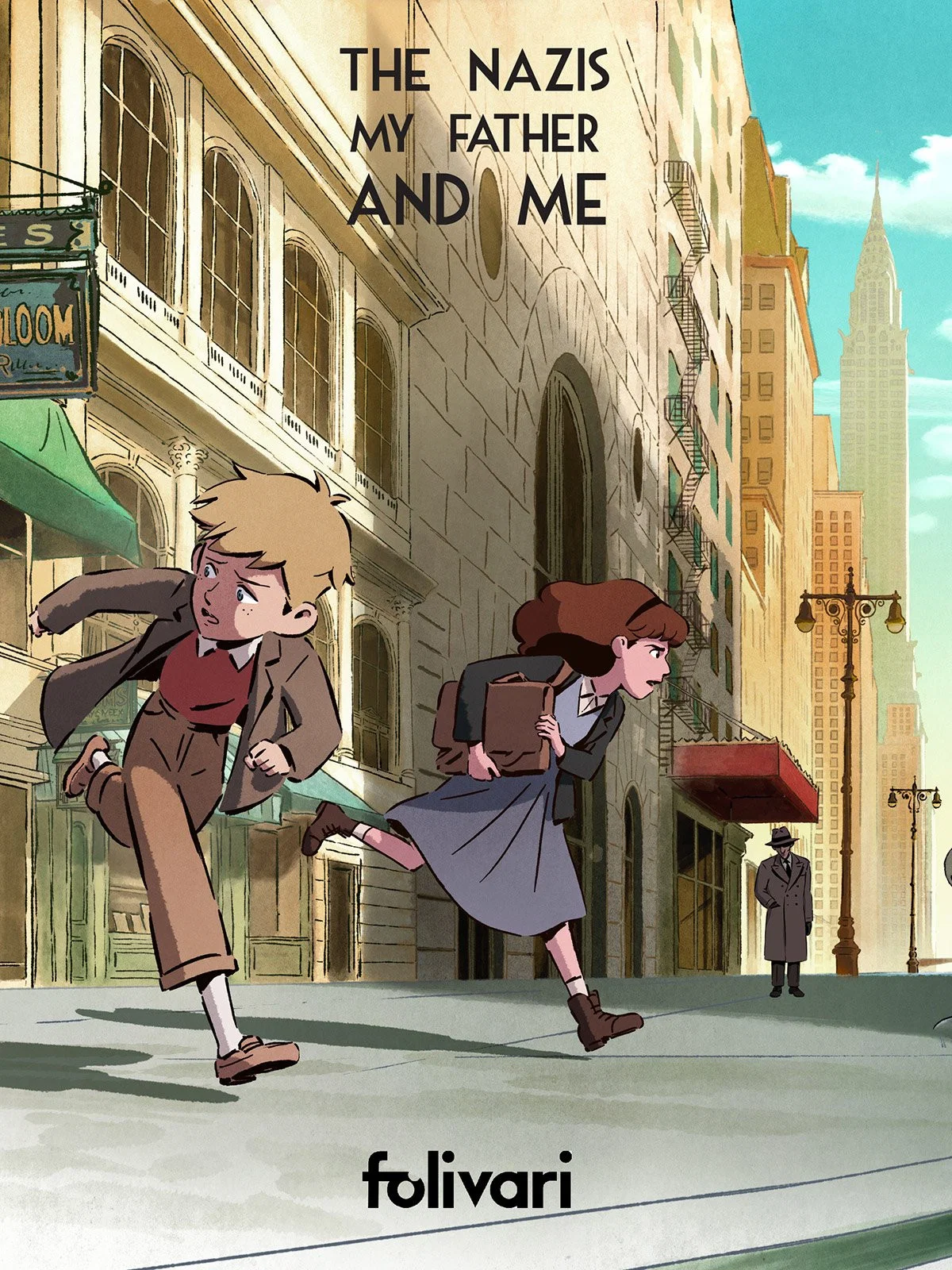
Ambientado em Nova York, no outono de 1941, pouco antes da entrada oficial dos Estados Unidos na Segunda Guerra Mundial, o roteiro acompanha Steven, um garoto alemão de doze anos que vê o pai desaparecer depois de ser perseguido dentro da Estação Grand Central. Restam só uma misteriosa mala e uma acusação que descobre nas páginas dos jornais: o seu pai estaria sendo investigado pelo FBI sob a suspeita de atuar como espião nazista. Ao seu lado surge Miriam, adolescente austríaca, judia e órfã, apaixonada por Agatha Christie, cuja existência é o resumo dos horrores que obrigaram ambos os personagens a abandonar a Europa.
A investigação conduzida pelas duas crianças rapidamente assume contornos de thriller. Contudo, apesar do mistério envolvendo a mala do seu pai e a chave que encontram dentro dela, Children of Liberty encontra a sua força emocional na amizade entre Steven e Miriam e a sua provocação na constatação de que a Terra da Liberdade para onde fugiram os refugiados é também um país que abriga as mesmas ideais nazistas.
Isso evita transformar os Estados Unidos em uma terra idealizada. O país é refúgio e é contradição. Enquanto milhares chegavam de barco em Nova York, escapavam da perseguição, parte da sociedade simpatizava com discursos nacionalistas, xenófobos e antissemitas que não estavam tão distantes daqueles combatidos na Europa. Esse nem um discurso panfletário dos diretores, é simplesmente algo factual e que permeia o ambiente, contaminando personagens e relações de confiança.
Tudo isso envolto é um aspecto que torna a aventura ainda melhor: a sua consciência cinematográfica. O cinema-instituição aparece não só como um pano de fundo, mas como um refúgio para os personagens. Em alguns momentos, Steven e Miriam encontram nas salas de exibição uma alternativa de fuga… literal, e não meramente escapista. E a animação não deixa de ser um entretenimento escapista em um mundo que assiste tanto a retomada do antissemitismo, quanto ações violentas e genocidas praticadas por um Estado que abriga muitos que um dia foram os perseguidos.
Ao mesmo tempo, Children of Liberty também discute aquilo que constitui a própria essência da encenação. Quase todos os personagens escondem alguma identidade, ou disfarçam para conseguir fugir. As aparências se tornam incertas dentro da narrativa, desde Steven, cujo sobrenome não é o que parece ser, quanto os seus parentes mais próximos. Papéis sociais tornam-se máscaras. O filme brinca com a arte de fingir, naturalmente integrada dentro da aventura dos personagens. Mesmo Nova York é também um fingimento, uma encenação, um mito de acolhimento e liberdade que, na verdade, pode abrigar ameaças.
Há um equilíbrio entre fantasia e perigo. Os realizadores não abrem mão dos exageros físicos ao flexionar a linguagem de um desenho animado à moda antiga: personagens despencam escadas, surfam com os pés sobre o mar e desafiam a lógica em sequências claramente inspiradas pelo humor clássico da animação. Entretanto, esses momentos jamais diminuem a sensação de risco. Os diretores sabem que o público-alvo também precisa experimentar ansiedade, apreensão e insegurança durante uma narrativa, temer o destino dos personagens.
Steven e Miriam não parecem completamente protegidos pelo roteiro, senão pela fórmula clássica. Há momentos em que a ameaça é um elemento concreto e que o medo é uma emoção convidada para dentro da aventura. A serviço dessa narrativa, o animador Peter de Sève privilegia personagens expressivos, levemente caricaturais, e capazes de transmitir emoção sem abrir mão de sua personalidade. A própria metrópole adquire um contorno quase labiríntico, no qual os arranha-céus são como gigantes diante das crianças. Nova York parece ser imensa porque a aventura de duas crianças contra a ameaça nazista adquire uma sensação de desproporção ameaçadora.
Sem jamais perder a inocência, Children of Liberty recorda algo que o melhor cinema infantil sempre soube fazer: formar espectadores e pensamento crítico não significa protegê-los das complexidades do mundo, mas oferecer algumas ferramentas para compreendê-las. E se essas ferramentas envolvem diversão, emoção e encantamento, os temas de coragem, acolhida e liberdade se tornam ainda mais fortes.
Children of Liberty ainda está inédito no Brasil, e foi lançado no Festival de Annecy.
English review
Children of Liberty recaptures a quality that has become increasingly rare in contemporary animation: the ability to speak to children without either underestimating or patronizing them. In an industry that too often mistakes children’s entertainment for sensory overload, silly jokes, or sentimentality, the film directed by Léahn Vivier-Chapas and Rémy Schaepman seems to draw inspiration from the best possible source: classic Disney. Whether through its adventure led by two children or its narrative rhythm—and, above all, through its understanding that stories made for young audiences can, perhaps even should, engage with moral, political, and historical issues without sacrificing wonder or enchantment.
Set in New York in the fall of 1941, shortly before the United States officially entered World War II, the screenplay follows Steven, a twelve-year-old German boy who watches his father disappear after being chased through Grand Central Terminal. All that remains is a mysterious suitcase and an accusation he discovers in the newspapers: his father is under FBI investigation on suspicion of being a Nazi spy. Alongside him is Miriam, an Austrian Jewish teenager, orphaned by the war and an avid Agatha Christie reader, whose very existence embodies the horrors that forced both children to flee Europe.
The investigation carried out by the two children quickly takes on the shape of a thriller. Yet despite the mystery surrounding Steven’s father’s suitcase and the key they discover hidden inside it, Children of Liberty finds its emotional strength in the friendship between Steven and Miriam, and its sharpest provocation in the realization that the Land of Liberty to which so many refugees escaped was also a country that harbored the very same Nazi ideals.
That choice prevents the United States from becoming an idealized promised land. The country is both a refuge and a contradiction. While thousands arrived by ship in New York, escaping persecution, part of American society sympathized with nationalist, xenophobic, and antisemitic rhetoric that was not all that different from the ideology being fought in Europe. This is not a polemical statement imposed by the filmmakers; it is simply a historical reality that permeates the film’s atmosphere, contaminating its characters and their relationships of trust.
All of this is wrapped inside another element that makes the adventure even richer: its cinematic awareness. Cinema itself appears not merely as a backdrop, but as a refuge for the characters. At several moments, Steven and Miriam find in movie theaters a means of escape—quite literally, rather than merely emotionally. At the same time, the film itself functions as escapist entertainment in a world once again witnessing the resurgence of antisemitism, alongside violent and even genocidal acts committed by a state that shelters many of those who were once the persecuted.
At the same time, Children of Liberty also explores the very essence of performance. Nearly every character conceals an identity or adopts a disguise in order to survive. Appearances become increasingly uncertain throughout the story, from Steven—whose surname is not what it initially seems—to the people closest to him. Social roles become masks. The film playfully embraces the art of pretending, naturally weaving it into the children’s adventure. Even New York itself becomes a performance: a carefully constructed myth of refuge and freedom that, in reality, may also conceal danger.
There is a delicate balance between fantasy and peril. The filmmakers fully embrace the physical exaggeration inherent to old-fashioned hand-drawn animation: characters tumble down staircases, surf across the sea, and defy logic in sequences clearly inspired by the classical language of animated comedy. Yet these moments never diminish the sense of danger. Vivier-Chapas and Schaepman understand that their young audience also needs to experience anxiety, suspense, and uncertainty—to genuinely fear for the fate of the characters.
Steven and Miriam never feel completely protected by the screenplay, except perhaps by the conventions of the classical adventure itself. There are moments when danger becomes tangible and fear is welcomed as an essential part of the journey. In service of that narrative, character designer Peter de Sève favors expressive, gently caricatured figures capable of conveying emotion without sacrificing individuality. New York itself takes on an almost labyrinthine form, where skyscrapers tower over the children like giants. The city feels immense because the adventure of two children confronting the threat of Nazism is, by its very nature, overwhelming in scale.
Without ever losing its innocence, Children of Liberty reminds us of something the finest children’s cinema has always understood: nurturing future audiences and encouraging critical thinking does not mean shielding children from the world’s complexities, but giving them the tools to begin understanding them. And when those tools come wrapped in adventure, emotion, and enchantment, its themes of courage, refuge, and freedom become all the more powerful.
Children of Liberty premiered at Annecy Film Festival.

Crítico de cinema filiado a Critics Choice Association, à Associação Brasileira de Críticos de Cinema, a Online Film Critics Society e a Fipresci. Atuou no júri da 39ª Mostra Internacional de Cinema em São Paulo/SP, do 12º Fest Aruana em João Pessoa/PB, do 24º Tallinn Black Nights Film na Estônia, do 47º TIFF – Festival Internacional de Cinema em Toronto. Ministrante do Laboratório de Crítica Cinematográfica na 1ª Mostra Internacional de Cinema em São Luís (MA) e Professor Convidado do Curso Técnico em Cinema do Instituto Estadual do Maranhão (IEMA), na disciplina Crítica Cinematográfica. Concluiu o curso de Filmmaking da New York Film Academy, no Rio de Janeiro (RJ) em 2013. Participou como co-autor dos livros 100 melhores filmes brasileiros (Letramento, 2016), Documentário brasileiro: 100 filmes essenciais (Letramento, 2017) e Animação Brasileira – 100 Filmes Essenciais (Letramento, 2018). Criou o Cinema com Crítica em fevereiro de 2010 e o Clube do Crítico em junho de 2020.