
Crítica do documentário sobre dança contemporânea africana e a École des Sables
A dança é uma das formas de expressão artística mais difíceis de traduzir em palavras. Não porque falta significado à dança, ou às artes abstratas, mas porque o significado não depende da palavra, da narrativa ou mesmo de uma representação reconhecível. Um corpo em movimento agitado ou suave, ou interrompido acumulando energia para um outro movimento pode comunicar uma experiência que o espectador compreende ser precisar explicá-lo. Essa linguagem corporal e cinética é a matéria prima de Atcha Atcha, acompanhando os estudantes da École des Sables, no Senegal, aprendendo a transformar o corpo e a dança em uma reflexão maior sobre identidade, memória e preservação cultural. O documentário dirigido por Mamadou Dia não pretende explicar a dança contemporânea africana a quem a desconhece, tampouco submetê-la a explicações didáticas. São os corpos dos dançarinos que nos guiam por essa experiência e pela instituição.
Fundada pela coreógrafa Germaine Acogny, uma das figuras fundamentais da dança contemporânea africana e homenageada com o Leão de Ouro na Bienal de Veneza de 2021, a École des Sables reúne estudantes de diferentes países, culturas e idiomas em ambiente que funciona simultaneamente como escola, residência artística e encontro propício para a criação e tradição. Atcha Atcha registra o processo de formação dos estudantes, que precisam preparar uma apresentação individual para um júri profissional. Esse trabalho de conclusão de curso convida cada aluno para, investigando experiências individuais e tradições coletivas, transformá-las em expressão artística. Pode ser o histórico colonialista, pode ser o orgulho negro materializado na figura de Mohammad Ali, pode ser a a condição feminina no continente africano, a memória e as referências tornam-se matéria para coreografias que não precisam necessariamente explicar tudo o que representam.
O interesse do documentário está, portanto, menos em descobrir uma história por trás de cada dança do que em observar como uma história se transforma em dança. O processo criativo aparece como uma espécie de investigação na qual os estudantes procuram tudo que lhes pertence – e que não pertence! – para depois aprender a comunicar isso através do próprio corpo. É um procedimento familiar a qualquer artista, ainda que a linguagem seja diferente. Como um dos estudantes explica, uma ideia pode surgir durante o sono e em um momento de ócio. O trabalho do dançarino é transformar essa percepção em forma de arte. No cinema, essa forma é a imagem ou a montagem; na literatura, é a palavra; na dança, é o corpo.
A câmera acompanha corpos muito diferentes entre si, em que cada dançarino trabalha com o que tem. Altos, baixos, fortes, magros, corpos mais volumosos ou aparentemente frágeis, todos precisam encontrar uma maneira de ocupar o espaço. A técnica não apaga a individualidade, mas tornam possível tantas individualidades. E os movimentos recebem emoção e intenção, enquanto Dia retrata esse momento em que a técnica se converte em arte. Como não tenho o conhecimento para me expressar melhor, cabe o registro do que a velocidade, a pausa, a intensidade, o silêncio, a respiração e a repetição trouxeram em termos de emoção. Eu não saberia dizer por que o movimento de um dançarino, apesar de tecnicamente correto, não é fluido ou íntegro como faz Acogny quando sentada no júri. Mas aí a beleza da arte abstrata ao leigo: eu não preciso compreender todos os códigos da dança para perceber o que está acontecendo. É a capacidade de encarar a beleza sem reduzi-la a palavras que honra o pensamento de Susan Sontag no ensaio Contra a Interpretação.
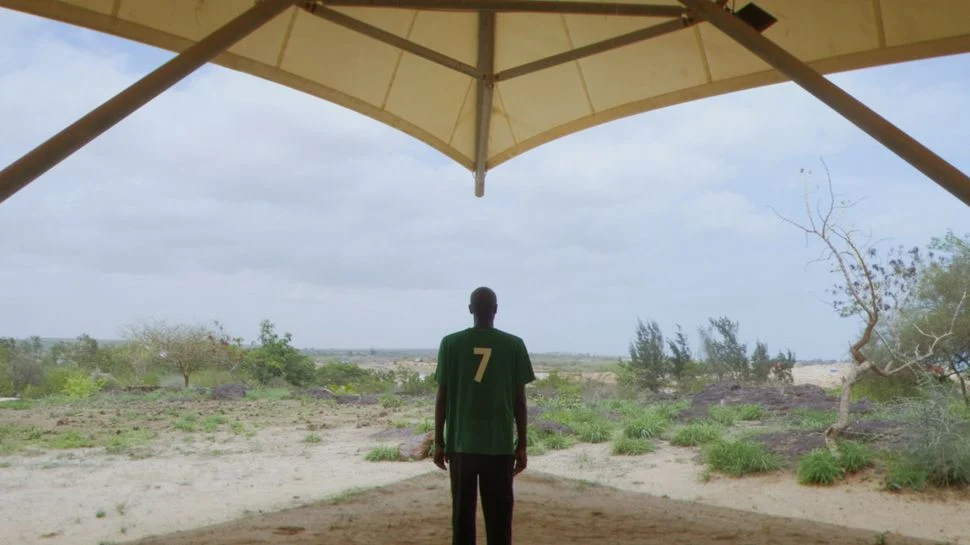
Mais fácil é perceber e analisar a rotina dos estudantes. O filme não os transforma em abstrações que apenas dançam; eles carregam o nome, o país de origem e a visão sobre a dança. Eles comem juntos no refeitório, vivem em quartos minimalistas, e muitos viajaram de muito longe e pagaram caro para tentar uma arte que, em diferentes países africanos, ainda é encarada com alguma desvalorização. E essa precariedade não é transformada em espetáculo, nem do ângulo da superação a despeito das circunstâncias, nem da abordagem, na falta de termo melhor, miserabilista.
Igual a tantos jovens sonhadores, os estudantes de Atcha Atcha enfrentam os problemas que poderiam pertencer a qualquer escolha: a dúvida sobre o próprio talento, o medo do fracasso e a pressão por transformar a dança em profissão, a arte em meio de vida. Neste cenário, a geografia importa evidentemente porque a formação acontece em um continente cuja dança contemporânea ainda luta por uma forma de reconhecimento e legitimação regional e internacional, mas não é definidora.
Esse olhar ganha uma dimensão política quando se entende a importância da École des Sables, ou de espaços análogos. Acogny torna-se, assim, uma espécie de legado vivo que oferece, aos estudantes, o exemplo de quem pôde criar a partir de suas experiências e pôde tornar a sua arte em vida. Contudo, como Dia registra nos créditos finais, esse espaço está ameaçado: a obra de infraestrutura vizinha à escola pode ameaçar o ambiente de contemplatação que antes possuía. Isto, claro, somado às dificuldades financeiras que não existem frontalmente, mas tangencialmente na narrativa. Podemos enxergar nos alojamentos, nas refeições, ou no estado de conservação.
Nesse sentido, Atcha Atcha é também um filme sobre preservação. Não só a preservação do espaço físico, como também da tradição e memória cultural da dança contemporânea. De certo modo, Dia fez um documentário biográfico sobre Acogny, mas não um que se preste a celebrá-la como fazem os filmes convencionais. A biografia do legado é mais importante, acho. O que ela criou, não no palco apenas, mas na vida daquela região e daqueles estudantes (tantos outros que por ali passaram). Ao fazer isso, Dia deseja proporcionar tempo e liberdade para observar a dança e senti-la.
Atcha Atcha um retrato da dança africana que encontra nos corpos dos estudantes da École des Sables uma discussão maior sobre o pertencimento, a identidade e a transmissão de um legado. Um documentário sobre o sacrifício, o processo artístico, a dança, e toda a infraestrturua humana e material que torna possível que algumas emoções simplesmente possam se mover diante de nós, ao invés de serem explicadas por imagens ou textos.
Atcha Atcha estreia Fora de Competição no 79º Festival de Cinema de Locarno.
Review of the Documentary on African Contemporary Dance and the École des Sables
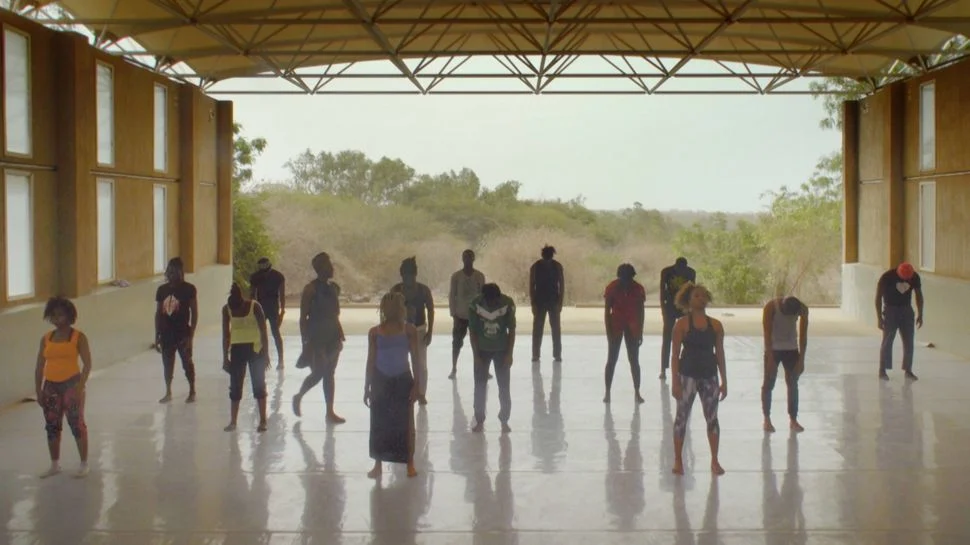
Dance is one of the artistic forms of expression that is most difficult to translate into words. Not because dance, or abstract art, lacks meaning, but because its meaning does not depend on words, narrative, or even a recognizable representation. A body moving violently or gently, or suddenly stopping while accumulating energy for another movement, can communicate an experience that the spectator understands without necessarily being able to explain it. This bodily and kinetic language is the raw material of Atcha Atcha, which follows students at the École des Sables in Senegal as they learn to transform the body and dance into a broader reflection on identity, memory, and cultural preservation. Directed by Mamadou Dia, the documentary does not attempt to explain African contemporary dance to those unfamiliar with it, nor does it subject it to didactic explanations. It is the dancers’ bodies that guide us through this experience and through the institution itself.
Founded by choreographer Germaine Acogny, one of the fundamental figures in African contemporary dance and the recipient of the Golden Lion for Lifetime Achievement at the 2021 Venice Biennale, the École des Sables brings together students from different countries, cultures, and languages in an environment that simultaneously functions as a school, an artistic residency, and a meeting place conducive to the encounter between creation and tradition. Atcha Atcha documents the students’ training process as they prepare an individual performance for a professional jury. This final assignment invites each student to investigate individual experiences and collective traditions and transform them into artistic expression. It may be the history of colonialism, Black pride embodied in the figure of Muhammad Ali, the condition of women on the African continent, memory, or cultural references: these become the raw material for choreographies that do not necessarily need to explain everything they represent.
The documentary is therefore less interested in discovering the story behind each dance than in observing how a story becomes dance. The creative process appears as a kind of investigation in which the students search for everything that belongs to them — and that does not belong to them — before learning how to communicate it through their own bodies. It is a process familiar to any artist, even if the language is different. As one of the students explains, an idea can emerge during sleep or in a moment of idleness. The dancer’s task is to transform that perception into an artistic form. In cinema, that form is the image or the editing; in literature, it is the word; in dance, it is the body.
The camera follows bodies that are very different from one another, with each dancer working with what they have. Tall, short, strong, thin, larger or apparently fragile bodies: everyone must find a way to occupy space. Technique does not erase individuality; instead, it makes so many individualities possible. Movements receive emotion and intention, while Dia captures the moment when technique becomes art. Since I do not have the knowledge to express this more precisely, I can only register what speed, pause, intensity, silence, breathing, and repetition produce in terms of emotion. I would not know how to explain why a dancer’s movement, despite being technically correct, does not feel as fluid or complete as Acogny’s when she sits on the jury. But that is precisely the beauty of abstract art for the layperson: I do not need to understand every code of dance to perceive what is happening. This ability to encounter beauty without reducing it to words recalls Susan Sontag’s argument in her essay Against Interpretation.
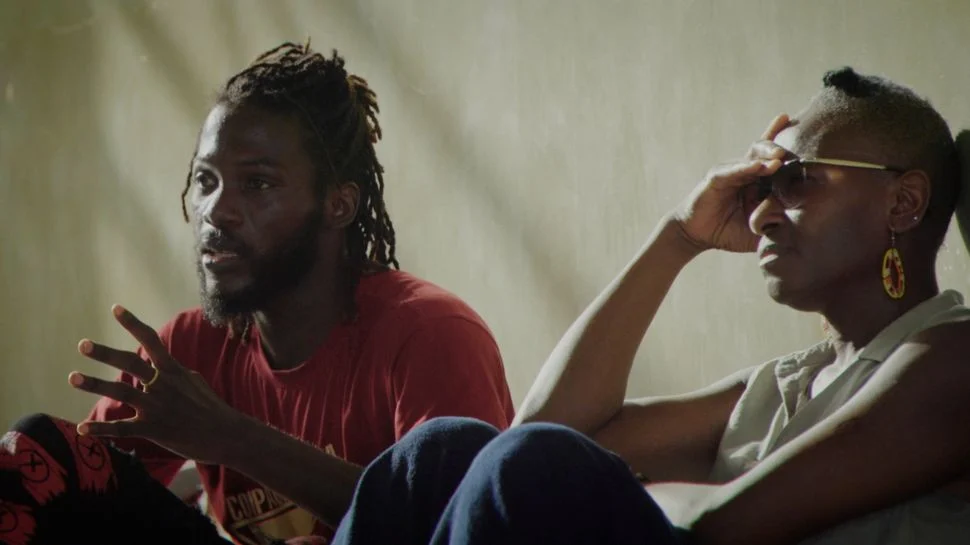
It is easier to perceive and analyze the students’ daily routines. The film does not turn them into abstractions who simply dance; they carry their names, countries of origin, and perspectives on dance. They eat together in the cafeteria, live in minimalist rooms, and many have traveled from very far away and paid a considerable price to pursue an art form that is still undervalued in different African countries. Yet this precariousness is not turned into spectacle, either through the rhetoric of overcoming adversity or through what, for lack of a better term, could be called a poverty-focused approach.
Like so many young dreamers, the students in Atcha Atcha face problems that could accompany any life choice: doubts about their own talent, fear of failure, and the pressure to turn dance into a profession, art into a means of living. In this context, geography obviously matters because their training takes place on a continent where contemporary dance is still struggling for regional and international recognition and legitimacy, but it does not define them.
This perspective acquires a political dimension when we understand the importance of the École des Sables, or of analogous institutions. Acogny thus becomes a kind of living legacy, offering students the example of someone who was able to create from her own experiences and turn her art into a way of life. Yet, as Dia records in the end credits, this space is under threat: nearby infrastructure development may threaten the contemplative environment the school once possessed. This is compounded by financial difficulties that do not appear directly in the narrative, but emerge tangentially. We can glimpse them in the accommodations, the meals, and the state of preservation of the facilities.
In this sense, Atcha Atcha is also a film about preservation. Not only the preservation of physical space, but also of the tradition and cultural memory of contemporary dance. In a way, Dia has made a biographical documentary about Acogny, but not one that seeks to celebrate her in the manner of conventional portraits. The biography of her legacy is more important, I think: what she created not only onstage, but in the lives of people in the region and of the students who have passed through the school. By doing so, Dia wishes to provide time and freedom to observe dance and feel it.
Atcha Atcha is a portrait of African dance that finds, in the bodies of the students at the École des Sables, a broader discussion about belonging, identity, and the transmission of a legacy. It is a documentary about sacrifice, the artistic process, dance, and all the human and material infrastructure that makes it possible for certain emotions simply to move before us, rather than having to be explained through images or words.
Atcha Atcha premieres Out of Competition at the 79th Locarno Film Festival.

Crítico de cinema filiado a Critics Choice Association, à Associação Brasileira de Críticos de Cinema, a Online Film Critics Society e a Fipresci. Atuou no júri da 39ª Mostra Internacional de Cinema em São Paulo/SP, do 12º Fest Aruana em João Pessoa/PB, do 24º Tallinn Black Nights Film na Estônia, do 47º TIFF – Festival Internacional de Cinema em Toronto. Ministrante do Laboratório de Crítica Cinematográfica na 1ª Mostra Internacional de Cinema em São Luís (MA) e Professor Convidado do Curso Técnico em Cinema do Instituto Estadual do Maranhão (IEMA), na disciplina Crítica Cinematográfica. Concluiu o curso de Filmmaking da New York Film Academy, no Rio de Janeiro (RJ) em 2013. Participou como co-autor dos livros 100 melhores filmes brasileiros (Letramento, 2016), Documentário brasileiro: 100 filmes essenciais (Letramento, 2017) e Animação Brasileira – 100 Filmes Essenciais (Letramento, 2018). Criou o Cinema com Crítica em fevereiro de 2010 e o Clube do Crítico em junho de 2020.