

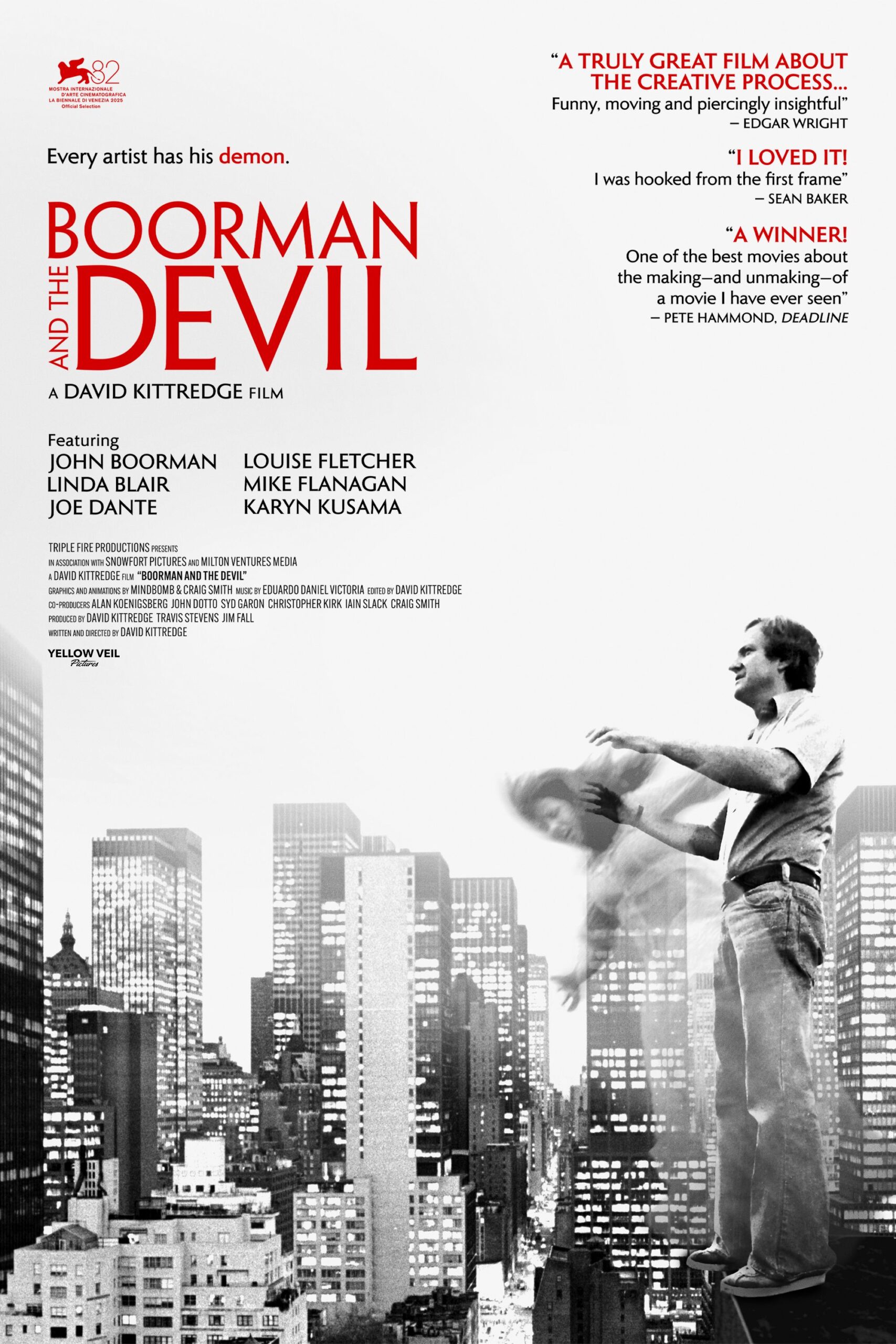
O diabo que é frustrar as expectativas do público reimaginando O Exorcista
Rapidamente após a sua invenção, o cinema deixou de ser apenas experimento e passou a ser arte, e a arte rapidamente se deixou seduzir pelo capital, ou talvez tenha desejado essa sedução. Quanto mais capital era injetado, mais avessos a riscos se tornaram os investidores, mais seguras se tornaram as produções na esperança de saciar o desejo já reconhecível do público e mais a arte se converteu em produto. Até que o próprio produto artístico deixou de ser atraente por razões que vão além das descritas no prólogo do documentário Boorman and the Devil, e a era dos estúdios ruiu e abriu espaço temporariamente à geração da Nova Hollywood, que criou arte, mexeu com o público, e depois foi cooptada pelo capital e tudo recomeçou.
Nesse contexto, David Kittredge foi bastante feliz por ter escolhido O Exorcista II: O Herege como a sua matéria-prima para refletir sobre a criação de arte em um mercado de massa como é Hollywood e o espectador-consumidor estadunidense, e como criar arte é o equivalente a caminhar sobre um trapézio, mas sem uma rede de segurança. Ainda mais em se tratando da continuação do sucesso de crítica e público dirigido por William Friedkin anos antes. Com a citação do dramaturgo e escritor Hanif Kureishi, de que “The artist must live on the edge of failure”, Kittredge abre caminho para que o espectador reflita qual é o significado de fracassar em termos da produção artística. Para quem analisa bilheterias, retorno de investimento etc., fracassar é um dado objetivo, e de forma meramente numérica a continuação não é um fracasso. Para quem pensa nas expectativas afetivas do público, talvez seja por se desviar e desvirtuar o original. Para quem pensa em arte propriamente dita, de maneira nenhuma poderia ser considerado um fracasso, tanto que hoje é um filme considerado injustiçado.
Portanto, o formato de um documentário sobre os bastidores esconde a investigação mais arrojada sobre a arte em um período de incertezas, em que os detentores do capital haviam perdido a bússola que lhes permitia navegar em meio às incertezas da sociedade estadunidense dos anos 60 e meados dos anos 70. Sem saber no que apostar, apostaram em artistas-autores, cujo retorno, como diz Kureishi, jamais é seguro em termos financeiros. E a aposta em John Boorman, em ascensão após À Queima Roupa (1967) e sobretudo Amargo Pesadelo (1972), é uma que remunerou artisticamente ao reimaginar o horror a partir da bondade, e não da maldade. Mas não em termos críticos ou financeiros, a ponto de o filme ser frequentemente apontado como um dos marcos do fim desse período breve de liberdade criativa dada aos autores.
A questão, naturalmente, é que os autores cinematográficos raramente trabalham dentro da lógica fordista de linha de produção e produzem o que se espera deles. O que distingue um autor de um diretor competente é exatamente a capacidade de nos surpreender com o que jamais havíamos visto. Se Friedkin havia concebido O Exorcista como um encontro entre o horror sobrenatural e o realismo urbano, Boorman parecia mais interessado em transformar a continuação em uma fábula metafísica sobre a consciência, espiritualidade e interconexão humana. O fracasso começa exatamente aí: no fato de que Boorman insistiu em fazer o que se espera de um autor e não apenas um O Exorcista mais violento e sangrento.

Os motivos não foram somente conceituais, como Kittredge revela nas entrevistas feitas com Boorman, o roteirista não creditado Rospo Pallenberg, as atrizes Linda Blair e Louise Fletcher, além de artistas, críticos e historiadores. A produção foi uma tempestade perfeita de erros e obstáculos artísticos, técnicos e individuais, desde a escolha de Richard Burton para interpretar o Padre Lamont, após a hesitação inicial de Jon Voight ou de outros atores não serem considerados apropriados para o papel. Burton, então em recuperação do alcoolismo e já distante da imagem de astro que havia cultivado até uma década antes, acabou sendo uma escolha infeliz. Mesmo que o ator tenha trabalhado com profissionalismo, o estilo de interpretação da Hollywood clássica e dos palcos teatrais não combinava com a forma arriscada e marginal do horror proposto na Nova Hollywood.
Fora Burton, aspectos pessoais e técnicos também prejudicaram a produção desde o dia um. A morte de Lee J. Cobb, em vez de resultar na escalação de outro intérprete, obrigou Pallenberg a reescrever o roteiro, excluindo o personagem e condensando sua contribuição em outra personagem. A esse contratempo somou-se a dificuldade logística de realizar as filmagens em locação. Em vez disso, Boorman precisou recriar dentro do estúdio todos os cenários, inclusive a residência onde aconteciam os eventos no original, uma espécie de subrealidade que passou a influenciar simbolicamente a produção. Até o dispositivo apelidado sincronizador – que tem uma função específica para quem já assistiu ao filme – trouxe mais dificuldades do que somente iluminar as cenas, inclusive um problema meio estapafúrdio sobre quem poderia operá-lo, já que os sindicatos que monitoram a produção tinham dúvidas sobre se se tratava de um objeto de cena ou uma luminária.
Todas essas situações se transformaram em uma bola de neve que, em última análise, ofuscaram todos os avanços técnicos e criativos de Boorman, como a criação do efeito de dupla exposição diretamente em câmara, a partir do emprego de espelhos e de superfícies reflexivas. Ou o emprego da steadicam, recém-inventada por Garrett Brown, para criar o ponto de vista dos gafanhotos quando atacam o vilarejo na Etiópia. A propósito, Kittredge recorda até momentos curiosos, como a exigência para que todos os gafanhotos fossem macho; do contrário, poderia acabar acontecendo uma reprodução descontrolada e epidêmica dos insetos em Los Angeles. E até os momentos mais perigosos, como as filmagens no topo do arranha-céu da Warner Bros.
Kittredge entende que uma produção problemática não é sinônimo de uma produção interessante. Boorman and the Devil é curioso e envolvente, não pela mera enumeração de acidentes ou decisões equivocadas, mas pela maneira como esses eventos constroem e fundamentam uma reflexão sobre autoria. Em vez de transformar a sequência em só uma piada, o diretor trata os seus fracassos como sintomas de um conflito maior entre ambição artística e expectativa comercial. Qual é o preço da liberdade criativa de uma indústria que, reiterada e historicamente, desconfia de seus autores?
Para além dessa contribuição ao repertório de documentários de bastidores, praticamente um subgênero que ensina bastante sobre os desafios e riscos envolvidos na produção dos filmes, Kittredge apoia-se no adoecimento inesperado de Boorman para debater a fundo a arte. Boorman poderia ter sido substituído após adoecer e atrasar a produção por semanas, mas em um período em que o diretor era tido como o autor da obra cinematográfica, fazê-lo poderia trazer mais prejuízos. Mantê-lo foi uma jogada arriscada, que impactou o roteiro, que precisou passar por reescritas, e a montagem, que precisou ser encurtada, resultando em uma versão inicial ridicularizada pelo público, inclusive por William Friedkin, o diretor do original, um notório provocador e que também amargou o fracasso, ou o que quer que isto signifique para você, com o igualmente injustiçado Comboio do Medo.
Boorman and the Devil é uma lente sobre uma produção dita amaldiçoada, e especialmente sobre a indústria na qual floresceu. Uma indústria que alimentou e cultivou um espectador, com o qual, depois, mostrou-se incapaz de se reconectar em um período em que o fracasso artístico era um risco aceitável. Um espectador que se sentiu traído porque recebeu uma sequência diferente do que esperava: não um filme ruim, só diferente do que o original havia sugerido. Então, com o êxito de Guerra nas Estrelas, surge uma nova ordem industrial, uma menos interessada em autores e mais interessada em propriedades intelectuais reproduzíveis. O demônio observado por Kittredge não é mais Pazuzu, mas a incapacidade de uma indústria baseada em investimentos multimilionários tolerar a possibilidade do erro. Um demônio que, ao contrário daquele enfrentado por Regan MacNeil, dificilmente seria exorcizado nos anos subsequentes.
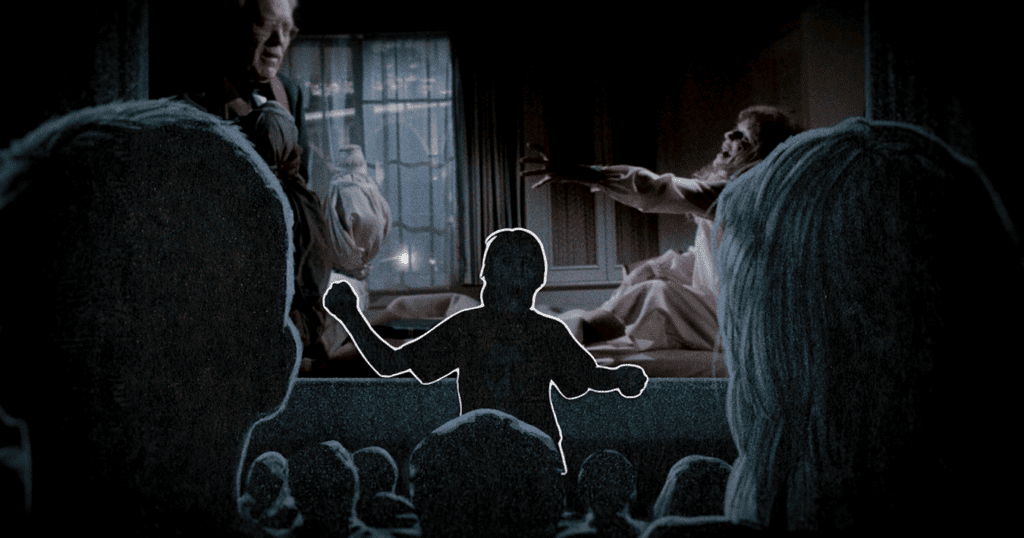
The devil of frustrating audience expectations by reimagining The Exorcist.
Shortly after its invention, cinema ceased to be merely an experiment and became an art form, and art quickly allowed itself to be seduced by capital—or perhaps it actively desired that seduction. The more money was injected into the industry, the more risk-averse investors became, the safer productions grew in the hope of satisfying an increasingly recognizable public demand, and the more art was transformed into product. Until the product itself ceased to be attractive for reasons that extend well beyond those outlined in the prologue of Boorman and the Devil, and the studio era collapsed, temporarily giving way to the generation of New Hollywood—a generation that created art, challenged audiences, and was eventually co-opted by capital, allowing the cycle to begin anew.
In this context, David Kittredge was quite astute in choosing Exorcist II: The Heretic as the raw material for a reflection on the creation of art within a mass-market system such as Hollywood and the American consumer-spectator. Creating art, the documentary suggests, is equivalent to walking a tightrope without a safety net. This is especially true when dealing with the sequel to a film that had been both a critical and commercial triumph under the direction of William Friedkin only a few years earlier. By opening with playwright and novelist Hanif Kureishi’s observation that “The artist must live on the edge of failure,” Kittredge invites viewers to reconsider what failure actually means in artistic production. For those who analyze box-office returns and profit margins, failure is an objective metric, and by purely numerical standards, the sequel was not a failure. For those invested in audience expectations and emotional attachment, perhaps failure lies in deviating from and subverting the original. But for those who think in terms of art itself, it could hardly be considered a failure at all, especially given that it is now widely regarded as an unfairly maligned film.
The documentary’s behind-the-scenes format therefore conceals a far more ambitious investigation into art during a period of uncertainty, when the holders of capital had lost the compass that once allowed them to navigate the shifting currents of American society in the 1960s and mid-1970s. Unsure of where to invest, they placed their bets on artist-authors whose returns, as Kureishi suggests, are never financially guaranteed. Their investment in John Boorman—whose reputation had risen after Point Blank (1967) and especially Deliverance (1972)—paid artistic dividends through a reimagining of horror rooted in benevolence rather than evil. Yet it did not pay off critically or financially, to the point that the film is frequently cited as one of the landmarks marking the end of that brief period of creative freedom granted to auteurs.
The problem, naturally, is that cinematic authors rarely operate within a Fordist logic of assembly-line production and deliver precisely what is expected of them. What distinguishes an auteur from a merely competent director is the ability to surprise us with something we have never seen before. If Friedkin conceived The Exorcist as a collision between supernatural horror and urban realism, Boorman seemed far more interested in transforming the sequel into a metaphysical fable about consciousness, spirituality, and human interconnectedness. The film’s failure begins precisely there: in Boorman’s insistence on doing what one expects from an auteur rather than simply delivering a more violent and bloodier Exorcist.
The reasons for the film’s troubled reception were not merely conceptual, as Kittredge reveals through interviews with Boorman, uncredited screenwriter Rospo Pallenberg, actresses Linda Blair and Louise Fletcher, as well as artists, critics, and historians. The production became a perfect storm of artistic, technical, and personal obstacles, beginning with the casting of Richard Burton as Father Lamont after Jon Voight hesitated and other actors were deemed unsuitable for the role. Burton, then recovering from alcoholism and already far removed from the movie-star image he had cultivated a decade earlier, ultimately proved an unfortunate choice. However professional he may have been, his classical Hollywood and theatrical style of performance did not align with the risk-taking, marginal sensibility that defined the original film.
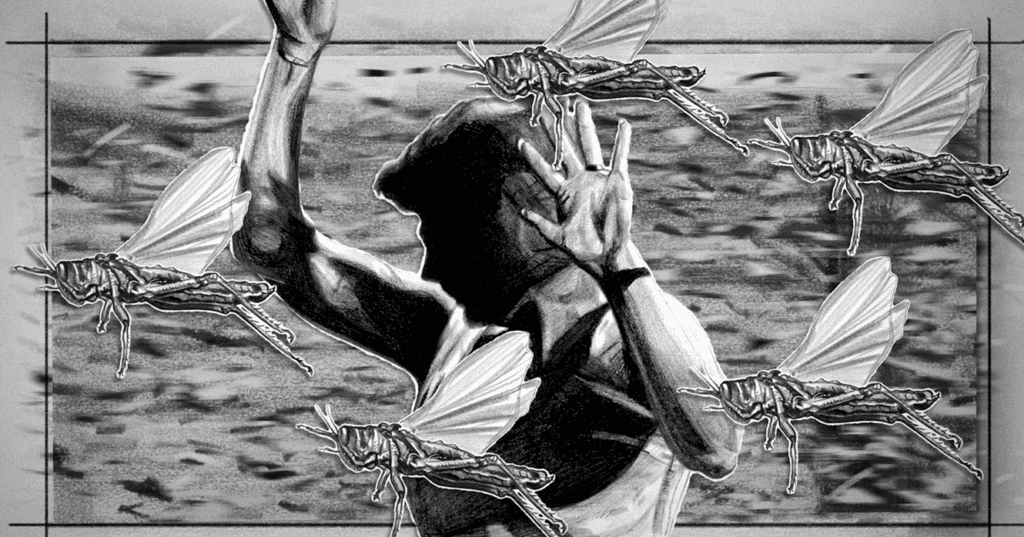
Beyond Burton, personal and technical issues plagued the production from the very beginning. The death of Lee J. Cobb, rather than leading to a recasting, forced Pallenberg to rewrite the screenplay, removing the character entirely and redistributing his narrative function elsewhere. Added to this setback were the logistical difficulties of shooting on location. Instead, Boorman was forced to recreate every environment within the studio, including the house from the original film, creating a kind of alternate reality that came to influence the production symbolically. Even the device nicknamed the “Synchronizer”—whose specific function will be familiar to anyone who has seen the film—generated more problems than simply illuminating scenes, including an absurd dispute over who was allowed to operate it, as the unions overseeing the production could not determine whether it should be classified as a prop or a lighting instrument.
All these circumstances snowballed into a situation that ultimately overshadowed Boorman’s many technical and creative achievements. These included the creation of in-camera double-exposure effects through mirrors and reflective surfaces, as well as the use of Garrett Brown’s newly invented Steadicam to create the point of view of the locust swarm attacking the Ethiopian village. Kittredge also recalls a number of curious moments, such as the requirement that every locust used in production be male; otherwise, there was concern that uncontrolled breeding could result in a locust infestation across Los Angeles. There were dangerous moments as well, including filming atop the Warner Bros. skyscraper.
Kittredge understands that a troubled production is not automatically an interesting one. Boorman and the Devil is intriguing not because it merely catalogs accidents and misguided decisions, but because it uses those events to construct a broader reflection on authorship. Rather than reducing the sequel to a punchline, the director treats its failures as symptoms of a larger conflict between artistic ambition and commercial expectation. What, after all, is the cost of creative freedom within an industry that has repeatedly and historically distrusted its auteurs?
Beyond its contribution to the ever-growing body of behind-the-scenes documentaries—a subgenre that reveals much about the risks and challenges involved in filmmaking—Kittredge uses Boorman’s unexpected illness to engage in a deeper discussion about art itself. Boorman could easily have been replaced after falling ill and delaying production for weeks, but at a time when directors were still widely regarded as the authors of cinematic works, doing so might have caused even greater damage. Keeping him was a risky decision, one that affected the screenplay through multiple rewrites and forced the film into a shortened edit, resulting in an initial version that was ridiculed by audiences and even by William Friedkin himself, a notorious provocateur who would later endure his own failure—or whatever that word may mean to you—with the equally underappreciated *Sorcerer*.
Boorman and the Devil is a lens through which to examine a supposedly cursed production and, more importantly, the industry that produced it. It is an industry that nurtured and cultivated an audience only to find itself incapable of reconnecting with that audience at a moment when artistic failure was still considered an acceptable risk. An audience that felt betrayed because it received a sequel different from what it expected—not a bad film, merely one that diverged from what the original had suggested. Then came the success of Star Wars, ushering in a new industrial order less interested in auteurs and more invested in reproducible intellectual property. The demon observed by Kittredge is no longer Pazuzu, but rather an industry’s inability to tolerate the possibility of failure while operating on multimillion-dollar investments. A demon that, unlike the one confronted by Regan MacNeil, would prove exceedingly difficult to exorcise in the decades that followed.
The film opens in New York City on August 28, before opening in Los Angeles and nationwide on September 4.
Exclusivo: Entrevista com o diretor David Kittredge / Exclusive: Interview with filmmaker David Kittredge

Crítico de cinema filiado a Critics Choice Association, à Associação Brasileira de Críticos de Cinema, a Online Film Critics Society e a Fipresci. Atuou no júri da 39ª Mostra Internacional de Cinema em São Paulo/SP, do 12º Fest Aruana em João Pessoa/PB, do 24º Tallinn Black Nights Film na Estônia, do 47º TIFF – Festival Internacional de Cinema em Toronto. Ministrante do Laboratório de Crítica Cinematográfica na 1ª Mostra Internacional de Cinema em São Luís (MA) e Professor Convidado do Curso Técnico em Cinema do Instituto Estadual do Maranhão (IEMA), na disciplina Crítica Cinematográfica. Concluiu o curso de Filmmaking da New York Film Academy, no Rio de Janeiro (RJ) em 2013. Participou como co-autor dos livros 100 melhores filmes brasileiros (Letramento, 2016), Documentário brasileiro: 100 filmes essenciais (Letramento, 2017) e Animação Brasileira – 100 Filmes Essenciais (Letramento, 2018). Criou o Cinema com Crítica em fevereiro de 2010 e o Clube do Crítico em junho de 2020.



1 comentário em “Boorman and the Devil”
Pingback: Boorman and the Devil | O Exorcista 2: O Herege é reavaliado em um documentário de bastidores • Cinema com Crítica