
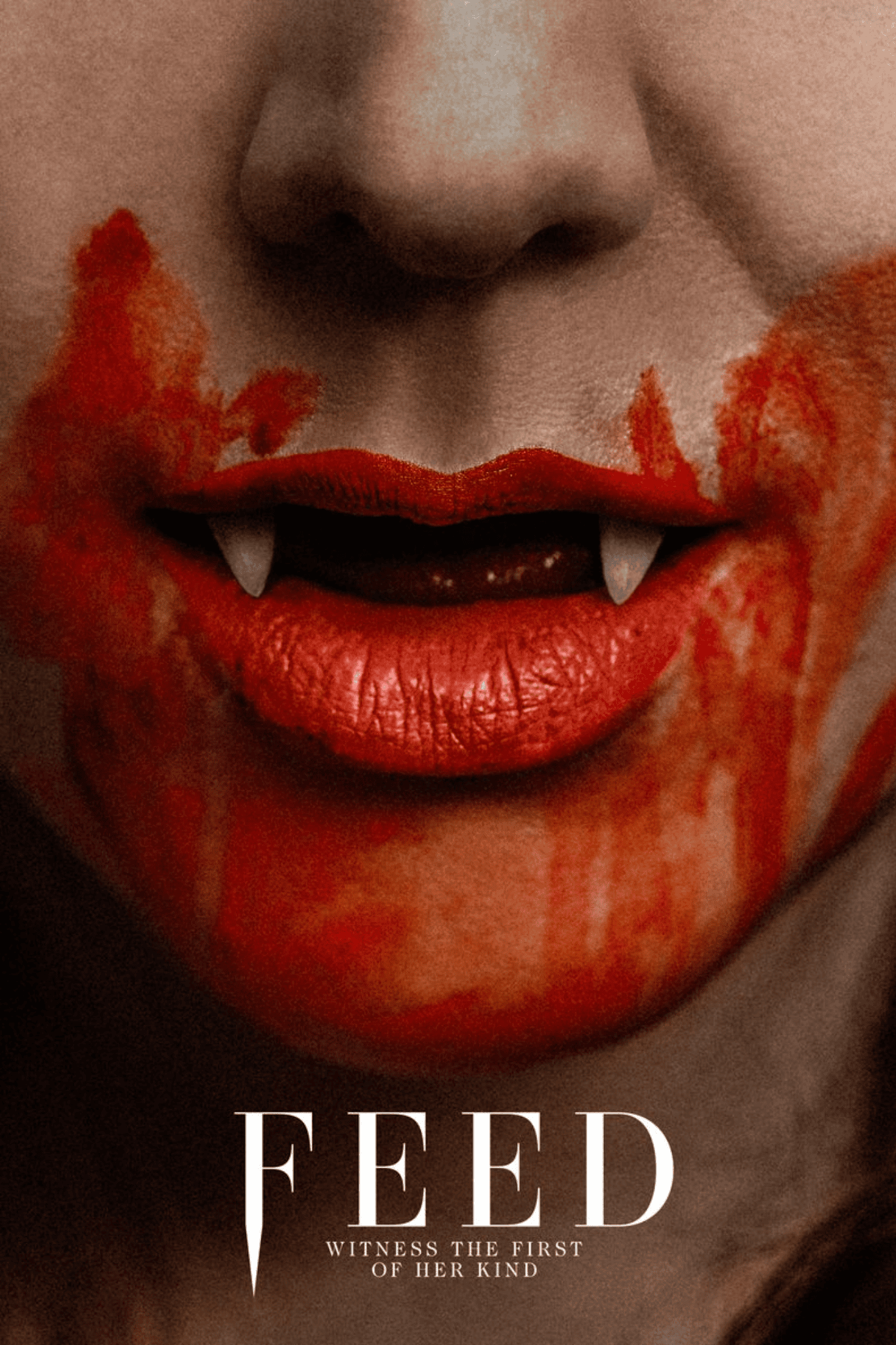
Feed é um filme de muitas ideias, mas poucas decisões. Demora para engrenar, e na ânsia de falar sobre redes sociais com vampiros, possessão e maldições, decepciona ao deixar tudo pelo caminho, sem conseguir equilibrar.
O cinema, como arte, nasceu para despertar sentimentos. Alegria, emoção, medo, angústia, dentre muitas outras sensações, são partes fundamentais da construção de uma obra cinematográfica, ao extrapolar os limites da tela e leva para o público a imersão para aquele universo. Quando essa relação não existe com o filme, e o projeto imersivo é quebrado, algo não está certo. É engraçado que quando me sentei, agora a pouco, para escrever sobre Feed, percebi que pouco me recordava sobre a obra, que assisti na noite imediatamente anterior. Tamanha talvez tenha sido minha apatia pelo filme que, dentre minhas atividades rotineiras, muito já havia sido esquecido, ou sequer foi guardado pela minha mente.
Desde os primeiros minutos, já se percebe um ar comum pairando sobre a narrativa. A premissa não escapa do padrão mais básico do cinema de terror: um grupo de jovens chegando a uma casa no meio do nada, em uma região rural do Reino Unido, cercada por uma floresta, para passar o final de semana. Como um reflexo dos tempos modernos, o que os individualiza em relação a um grupo semelhante de um filme parecido lançado há vinte anos é a influência que estes personagens exercem em um mundo contemporâneo globalizado: trata-se de “influencers”, com milhares de seguidores nas redes sociais.
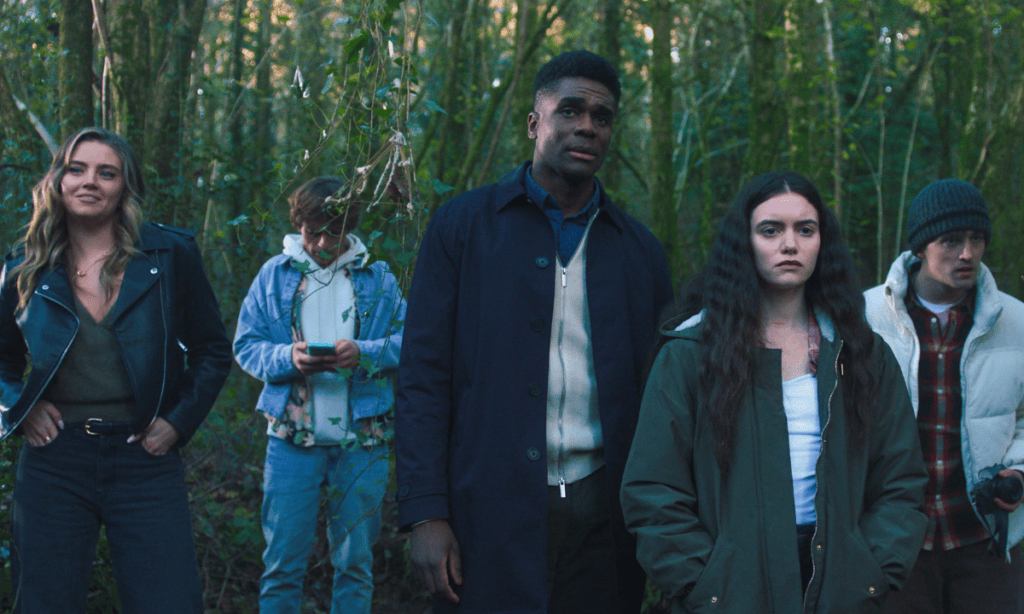
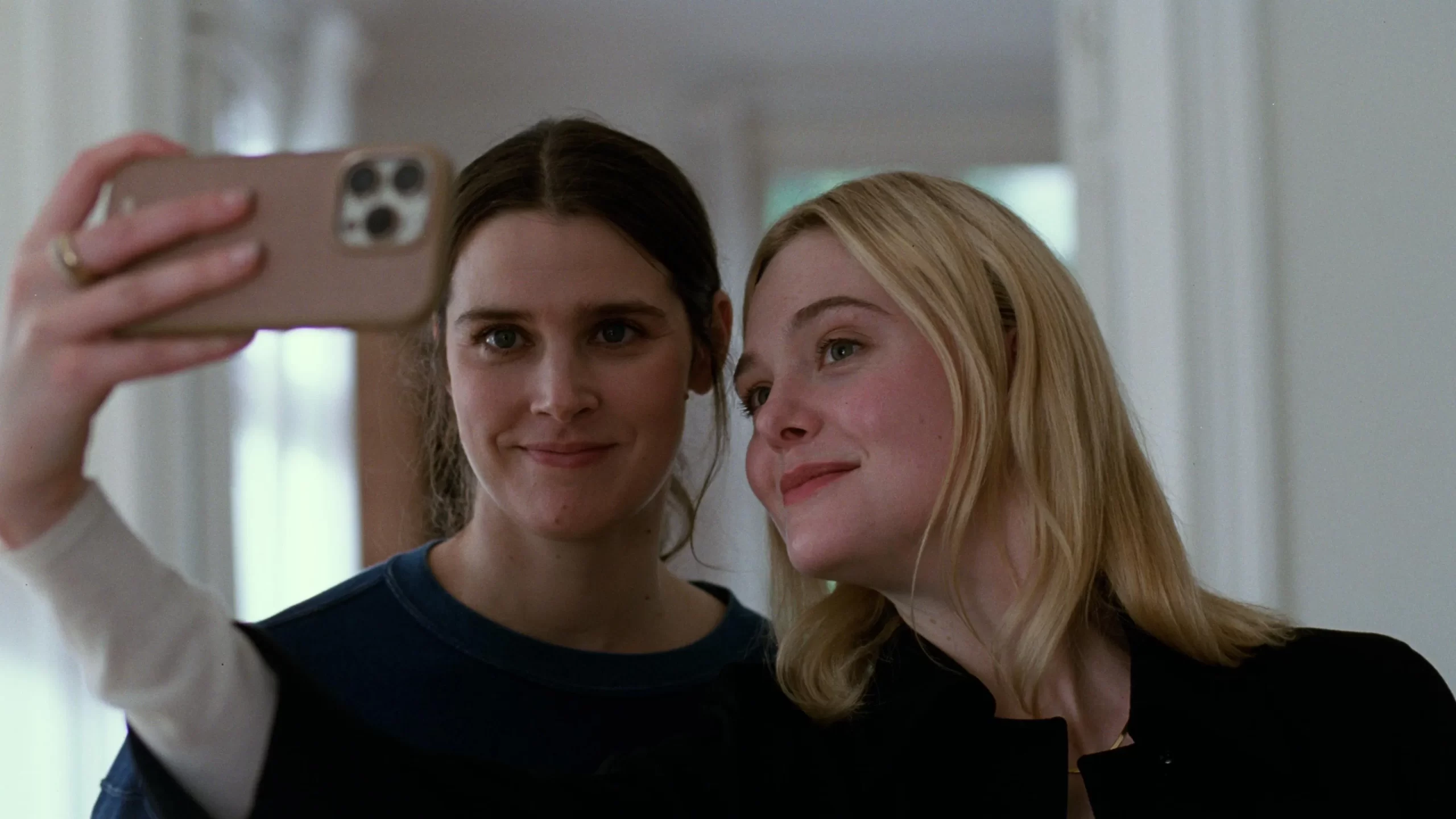
Personagens “influencers” de Feed, em cena do filme.
Se acreditam, por um lado, que podem influenciar os outros pelo tamanho de suas contas, das publicações que fazem, dos vídeos curtos e stories, por outro lado as relações entre eles não poderiam ser mais superficiais. Não é este necessariamente um defeito do filme, quando proposital para trabalhar um ambiente passivamente hostil de pessoas que se reúnem não necessariamente por amizade, mas sim por interesse. Acontece que isso também acaba surtindo maus efeitos no desenrolar do longa, quando, a partir do surgimento da ameaça sobrenatural, esse debate é deixado para o lado em prol do enfrentamento de uma vilã que mistura vampirismo com possessão, unindo-se de maneira inorgânica.
Até existe um estabelecimento dessa força que circunda o local, explorada em prólogo bastante burocrático, com uma cena situada no final do século XIX, que mostra um estranho ritual envolvendo uma pessoa possuída sendo enterrada viva, de cabeça para baixo, sobre um buraco na floresta. No entanto, toda a mitologia no entorno dessa criatura é construída de forma bastante confusa pelo roteiro de Marco van Belle (roteirista do thriller de ficção-científica Justiça Artificial, lançado nos cinemas brasileiros em janeiro deste ano), incapaz de especificar exatamente seus poderes ou intenções – para além daquela coisa vaga de “dominação mundial” –, sobretudo com aquele grupo em específico.
O elo comum entre o ressurgimento dessa entidade adormecida e os personagens é a protagonista vivida por Grace Collender, e o estado de depressão após um acidente de carro levar sua família. Sua vulnerabilidade emocional, somada a uma conveniência do texto para dar início, sem perceber, a uma espécie de ritual, com o derramamento de uma gota de sangue após se ferir em um espinho, é uma ideia interessante trazida pelo longa, que aos poucos vai sendo também esquecida para lugar a ação e ao terror.
Notadamente repleto de intenções em trabalhar com temas correlatos à depressão, automutilação e redes sociais, Feed faz do excesso de ideias o seu calcanhar de Aquiles. Até certo ponto, existe razão no argumento narrativo desenvolvido, que, ao tentar abraçar o mundo, começa a se perder dentro daquilo que busca desenvolver.
A direção, também assumida por Van Belle, se aventura em alguns maneirismos estéticos que tiram o filme do absoluto lugar comum. A maneira como faz de a antagonista atacar os personagens por meio de alucinações instiga a fotografia a explorar um cenário onírico, com grande angular, fundo desfocado, e uma sensação de estranhamento latente ao espectador. Em contrapartida, se excede no uso da câmera lenta para sequências mais intensas, tentando impor um ar dramático que, no fundo, apenas desinflama passagens que deveriam soar mais tensas e urgentes ao espectador.
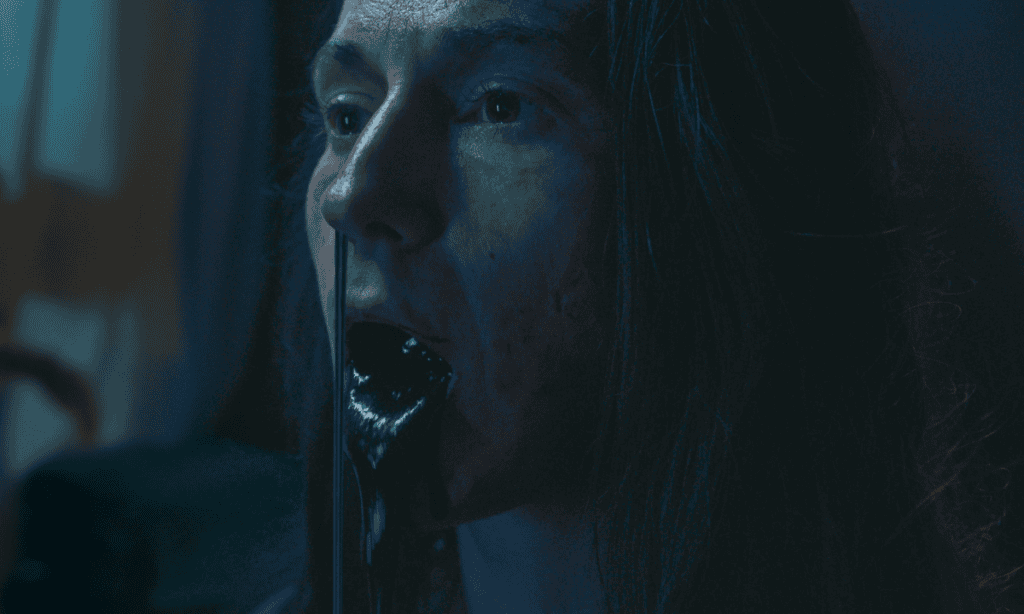
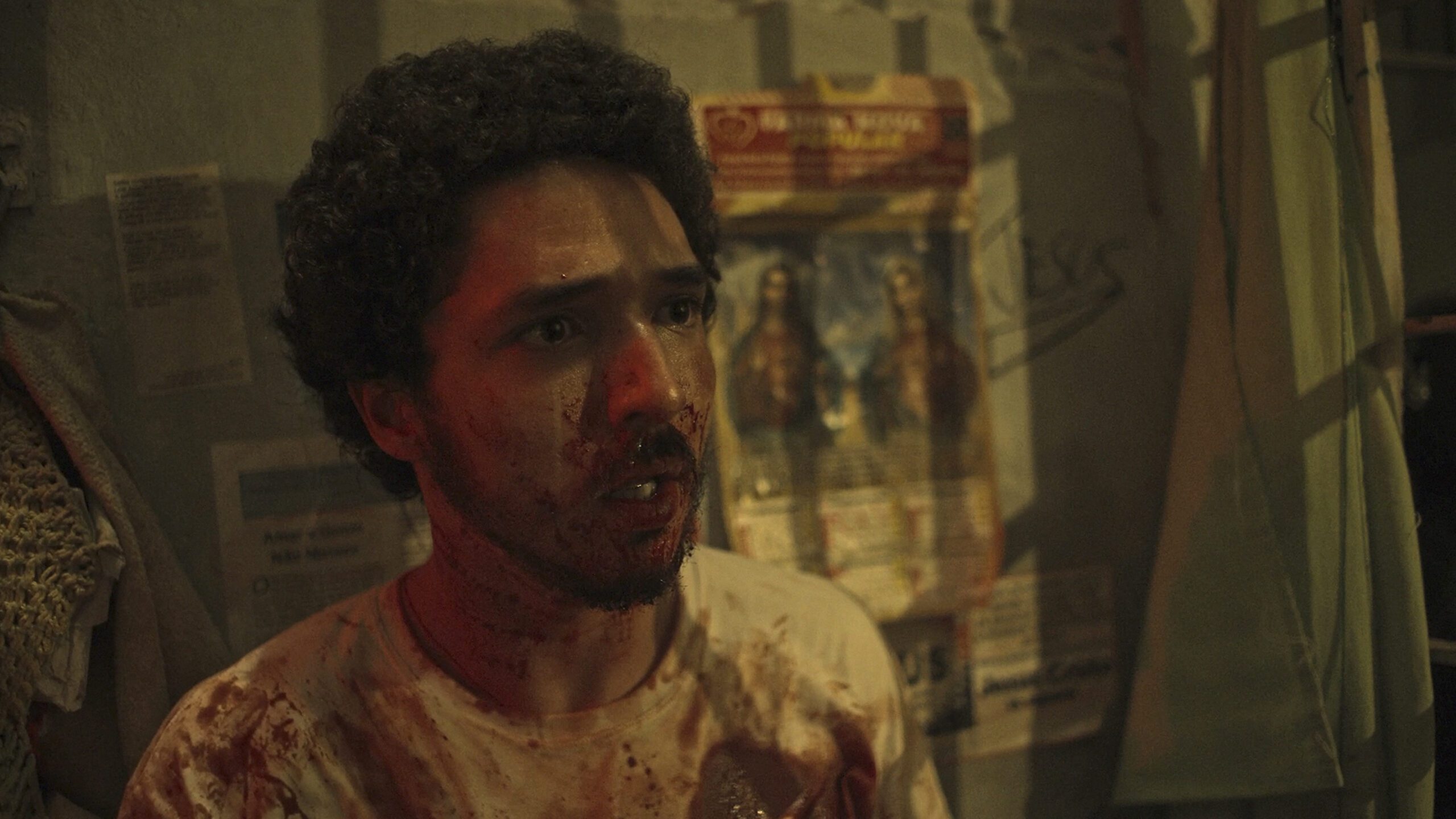
Cena de Feed.
Tanto é que, mesmo quando a violência gráfica assume posição de relevância no trecho final do filme – e até conta com alguns bons efeitos visuais, dentro de suas limitações –, o impacto pouco é sentido quando diante dos personagens unidimensionais e desse excesso de slow motion. Em algumas oportunidades, até o elenco parece um tanto perdido em suas interpretações, como se conhecessem pouco daqueles que interpretam, justamente em razão do pouco substrato oferecido pela obra, que depende de uma profundidade mínima que nunca consegue atingir.
Confesso que até gosto do interesse da vilã pelo universo das redes sociais (algo que só conseguimos entender após decorrido bastante tempo), mas o filme pretende trabalhar tantas ideias simultaneamente que gasta seus cartuchos todos de uma vez, deixando, pelo caminho, várias delas incompletas. Chega a ser difícil até classificar Feed como um filme de vampiros, maldição ou possessão, quanto todos os elementos se fazem presentes, mas de maneiras pouco articuladas entre si. Chega ao ponto de se repetir dentro da fórmula que estabelece, matando seus personagens por mais de uma vez até completar oitenta minutos, que parecem muito forçosos até serem atingidos. E de tanta indecisão, resta um filme esquecível, que não se dedica a nada propriamente, senão conceitos rasos e aquele resultado genérico de sempre, onde há uma oportunidade perdida de algo melhor.
Feed já está disponível nas plataformas digitais norte-americanas. No Brasil, ainda não há previsão de lançamento.
English review
Feed is a film with many ideas, but few decisions. It takes a long time to get going, and in its eagerness to talk about social media through vampires, possession, and curses, it disappoints by leaving everything behind, unable to find a balance.
Cinema, as an art form, was born to awaken feelings. Joy, emotion, fear, anguish, among many other sensations, are fundamental parts of the construction of a film, going beyond the limits of the screen and immersing the audience in that universe. When this relationship does not exist with a film, and the immersive experience is broken, something is not right. It is funny that when I sat down, just now, to write about Feed, I realized that I remembered very little about the film, which I watched the previous night. Such may have been my apathy toward the film that, amid my routine activities, much of it had already been forgotten, or had never even been retained by my mind.
From the first minutes, there is already a familiar air hanging over the narrative. The premise does not escape the most basic pattern of horror cinema: a group of young people arriving at a house in the middle of nowhere, in a rural region of the United Kingdom, surrounded by a forest, to spend the weekend. As a reflection of modern times, what distinguishes them from a similar group in a similar film released twenty years ago is the influence these characters exert in a contemporary, globalized world: they are “influencers,” with thousands of followers on social media.
If, on the one hand, they believe they can influence others through the size of their accounts, the posts they make, their short videos and stories, on the other hand, their relationships could not be more superficial. This is not necessarily a flaw in the film, since it is clearly intentional in establishing a passively hostile environment of people who gather not necessarily out of friendship, but rather out of self-interest. The problem is that this also has negative effects on the film’s development, when, with the emergence of the supernatural threat, this discussion is pushed aside in favor of confronting a villain who combines vampirism with possession, bringing the two together in an inorganic manner.
There is, in fact, an establishment of the force surrounding the location, explored in a rather perfunctory prologue set in the late nineteenth century, which depicts a strange ritual involving a possessed person being buried alive, upside down, over a hole in the forest. However, the mythology surrounding this creature is constructed rather confusingly by the screenplay from Marco van Belle (screenwriter of the science-fiction thriller Mercy, released in theaters in January this year), unable to specify exactly what its powers or intentions are – beyond that vague notion of “world domination” – particularly in relation to this specific group.
The common link between the resurgence of this dormant entity and the characters is the protagonist played by Grace Collender, and the state of depression she experiences after a car accident takes the lives of her family. Her emotional vulnerability, combined with a convenient plot device that causes her to unknowingly initiate a kind of ritual by spilling a drop of blood after cutting herself on a thorn, is an interesting idea introduced by the film, which gradually gets forgotten as the story gives way to action and horror.
Notably full of intentions to explore themes related to depression, self-harm, and social media, Feed makes its excess of ideas its Achilles’ heel. To a certain extent, there is merit to the narrative argument being developed, which, by trying to embrace the whole world, begins to lose itself within what it is attempting to develop.
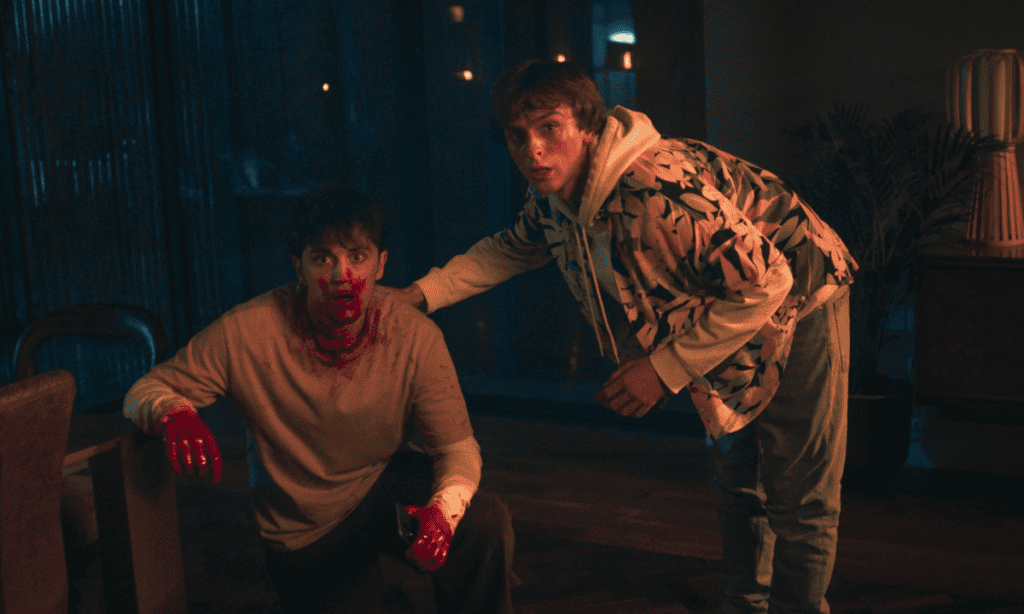
Rhys Mannion and Oskar Smith in Feed scene.
The direction, also handled by Van Belle, ventures into some aesthetic flourishes that pull the film away from complete conventionality. The way the antagonist attacks the characters through hallucinations encourages the cinematography to explore a dreamlike setting, with wide-angle lenses, blurred backgrounds, and a latent sense of unease for the viewer. On the other hand, the film overuses slow motion in more intense sequences, attempting to impose a dramatic quality that ultimately only deflates scenes that should feel more tense and urgent to the audience.
So much so that even when graphic violence becomes prominent during the film’s final stretch – and even features some good visual effects within its limitations – the impact is barely felt when faced with the one-dimensional characters and this excessive use of slow motion. On some occasions, even the cast seems somewhat lost in their performances, as if they barely knew the people they were playing, precisely because of the lack of substance provided by the film, which depends on a minimum degree of depth that it never manages to achieve.
I confess that I actually like the villain’s interest in the world of social media (something we only manage to understand after quite a while), but the film attempts to explore so many ideas simultaneously that it spends all its ammunition at once, leaving several of them incomplete along the way. It is even difficult to classify Feed as a vampire, curse, or possession film, since all these elements are present, but in ways that are poorly articulated with one another. It gets to the point of repeating itself within the formula it establishes, killing its characters more than once before reaching the eighty-minute mark, with deaths that feel forced until they finally happen. And from all this indecision, what remains is a forgettable film that dedicates itself to nothing in particular, other than shallow concepts and that same generic result we have seen so many times before, where there is a missed opportunity for something better.
Feed is available to rent or buy on the digital plataforms.

Crítico de cinema desde 2019. Formado em crítica de cinema pela Academia Internacional de Cinema (2020), e aluno do Clube do Crítico desde 2021, é criador do Cineolhar e colaborador do Cinema com Crítica.