
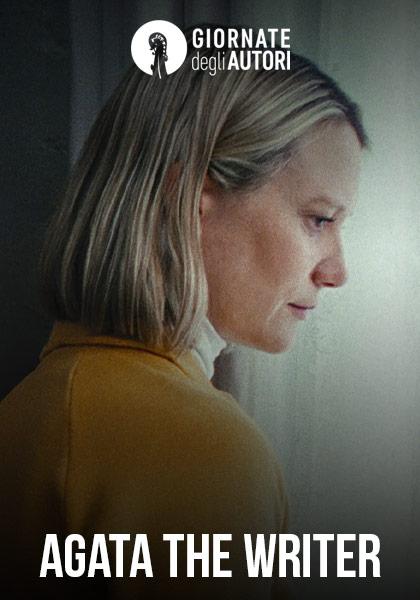
Quando a Ficção Escreve sobre a Realidade da Guerra
De todos os gêneros cinematográficos, os filmes de guerra são aqueles que me provocam sentimentos mais controversos. Devo ter aceitado, ao menos em parte, a crítica provocativa de François Truffaut de que não existem filmes antiguerra, pelo menos dentro do contexto industrial hollywoodiano, já que, em uma análise derradeira, todo filme antiguerra corre o risco de se tornar um filme pró-guerra quando transforma a estética ou a natureza do confronto em elemento do entretenimento.
É por isso que consigo compreender os personagens com que se encontra Agata (Wasikowska), que a perguntam por que ela está escrevendo um livro sobre o genocídio de Sarajevo. Afinal, ela não é da Bósnia: é polonesa, criada na Austrália, e chega ao país não para produzir uma reportagem jornalística, mas para escrever uma ficção. O que uma escritora estrangeira está fazendo em Sarajevo tentando transformar a guerra de outro país em literatura? A pergunta se torna mais incômoda porque tanto seu país natal quanto o país adotivo carregam em suas histórias marcas profundas de violência, guerras e genocídios (Holocausto, Genocídio de Aborígenes), embora nenhuma dessas experiências lhe conceda automaticamente o direito de falar pelo sofrimento alheio.
“Sua história não pode ajudar ninguém nem impedir outros crimes”, afirma uma das sobreviventes, alguém que perdeu o marido e os filhos, foi violentada e ferida. É a partir desse choque que Agata the Writer encontra seu principal conflito: qual é a responsabilidade de uma escritora diante de um trauma histórico e qual o compromisso, se é que existe algum, a ficção deve assumir quando decide narrá-lo?
O filme convida a refletir sobre as histórias que contamos a respeito da realidade e, sobretudo, sobre a maneira como essas histórias são construídas. Agata, embora não escreva com a intenção de produzir uma comédia, termina conduzindo a sua narrativa para uma espécie de ironia, um tom irreverente, que aparece, inclusive, na presença de uma série de objetos de arte escatológica. O humor se esgueira pela narrativa da mesma maneira que um ladrão misterioso tem invadido o apartamento onde a escritora está hospedada, apenas para roubar apenas as peças de arte relacionadas àquele universo, criando uma espécie de jogo de investigação que se instala na cabeça do espectador. Quem está roubando aqueles objetos? E por quê? A pergunta passa a coexistir com outra, mais importante: quais são exatamente os caminhos percorridos por Agata para escrever a história para a qual foi contratada?
O mistério acrescenta uma dimensão lúdica ao drama, como ainda parece reproduzir o próprio mecanismo dos livros da protagonista. Assim como sua obra literária, o filme se permite ser estranho, irônico e levemente absurdo, mesmo quando seu centro dramático está ocupado por uma questão tão áspera quanto a guerra. Essa duplicidade também ajuda a compreender por que Agata the Writer é mais interessante quando fala de ficção do que quando tenta falar diretamente sobre a guerra. O filme não transforma Sarajevo em espetáculo, nem pretende reconstruir o conflito através de cenas de batalha. Em vez disso, concentra-se no processo pelo qual uma escritora tenta transformar a experiência dos outros em matéria literária.
Os diretores Kuba Dorabialski e Alex White partem dessa zona de desconforto para discutir proximidade, autoria e permissão. Mesmo que haja alguma forma de semelhança linguística – Agata entende o que um sobrevivente fala, mas Jasmina (Božinović) não traduz as falas inteiramente – ou cultural – afinal, a Polônia, igual à Bósnia, é uma nação do Leste Europeu, do lado Oriental do Muro de Berlim, isso não significa experiência compartilhada.
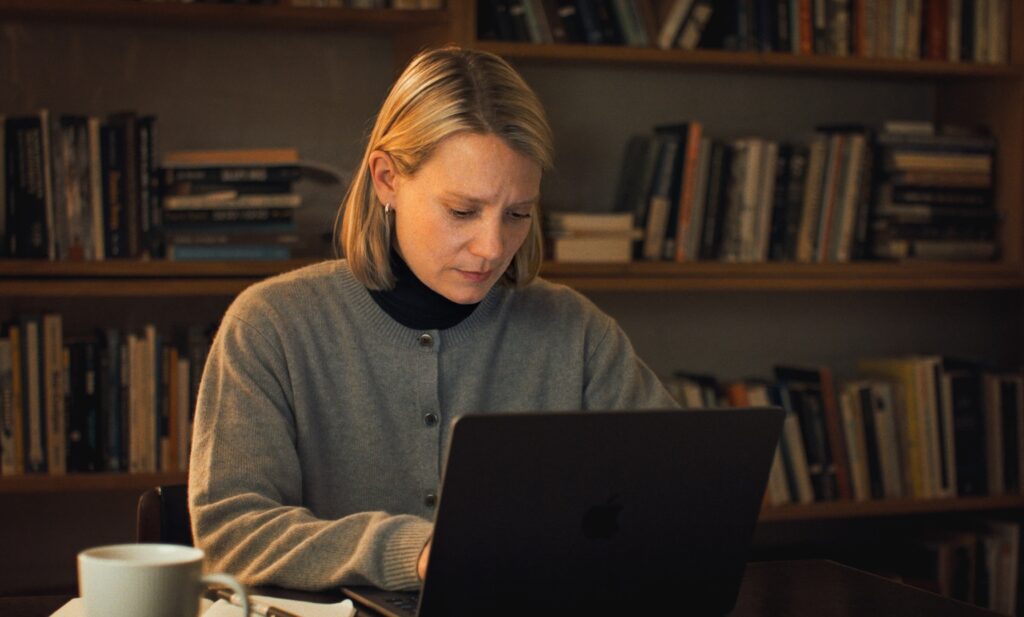
A melhor maneira de perceber as camadas de contar histórias, contudo, está na estrutura narrativa. Em determinado momento, um dispositivo brechtiano rompe a ordem e a lógica estabelecidas pela narrativa. No início, um narrador literário apresentou Agata e o trabalho para o qual foi contratada, criando uma espécie de moldura para a experiência da protagonista. No terço final, contudo, é Agata quem assume o papel de narradora. Ao ler o livro que escreveu e, enquanto sua voz conduz a passagem, fragmentos de sua experiência em Sarajevo reaparecem modificados, reconfigurados pela literatura. O espectador deixa de ocupar a posição de quem assiste e passa, de alguma maneira, a ocupar a posição de quem lê. O cinema transforma em audiovisual aquilo que a personagem transformou em linguagem, estabelecendo uma fusão bastante competente entre literatura e audiovisual. Neste sentido, a guerra é mais uma ponte para o eu do que a fonte de um espetáculo.
A trilha sonora reforça essa passagem. As notas musicais acompanham as notas vocais da atriz, como se linguagem e som buscassem um mesmo ritmo, enquanto imagens anteriormente associadas ao cotidiano da personagem retornam sob a influência daquilo que ela escreveu. O procedimento não é apenas metalinguístico, mas coloca em crise a própria ideia de representação. O que estamos vendo é o que realmente aconteceu com Agata ou aquilo que ela decidiu escrever que aconteceu? E, no instante em que o vivido se transforma em narrativa, o que se perde, o que se transforma e o que se inventa?
É nesse ponto que volto à frase de Truffaut. Na realidade, nunca acreditei que não existissem filmes antiguerra. Acho que o diretor e crítico francês, embora tenha partido de uma questão legítima, não considerou suficientemente uma possibilidade: é possível fazer cinema antiguerra quando a história está concentrada nos sobreviventes obrigados a carregar o fardo do trauma. Por exemplo, quando retiramos a ação de O Resgate do Soldado Ryan, ainda podemos enxergar o impacto da guerra sobre os jovens soldados obrigados a conviver com a morte. Quando retiramos a câmera lenta e a trilha sonora lírica da morte do sargento Elias em Platoon, resta a violência que atinge um dos soldados mais éticos e nobres daquele universo. O problema, então, talvez não esteja na reflexão da possibilidade e existência de um cinema antiguerra, mas na maneira como esse cinema foi cultivado e cultuado ao longo do tempo.
Agata the Writer não resolve inteiramente essa questão. O filme parece conter um potencial ainda maior do que aquele que consegue desenvolver, sobretudo quando sua estrutura metalinguística, sua dimensão poética e seu toque de ironia sugerem todos os caminhos que poderiam ser aprofundados. Ainda assim, há uma provocação importante em sua incompletude: ao invés de transformar a guerra em espetáculo, ele pergunta o que acontece depois que alguém decide contar uma história sobre ela. Essa é uma maneira que, apesar de difícil e desconfortável, é honesta ao pensar cinema antiguerra: questionar o direito, a responsabilidade ou os limites do autor que transforma e perpetua essa violência histórica em uma violência cinematográfica.
Agata the Writer integra a Mostra Giornate degli Autori do Festival de Veneza 2026.
When Fiction Writes About the Reality of War
Of all cinematic genres, war films are the ones that provoke the most conflicting feelings in me. I must have accepted, at least in part, François Truffaut’s provocative criticism that there are no anti-war films, at least within the context of Hollywood’s industrial system, since, ultimately, every anti-war film runs the risk of becoming a pro-war film when it turns the aesthetics or very nature of conflict into an element of entertainment.
That is why I can understand the people Agata (Mia Wasikowska) encounters who ask her why she is writing a book about the genocide in Sarajevo. After all, she is not from Bosnia: she is Polish, raised in Australia, and she arrives in the country not to write a journalistic report, but to write fiction. What is a foreign writer doing in Sarajevo, trying to turn another country’s war into literature? The question becomes even more uncomfortable because both her country of birth and her adopted country carry deep scars of violence, wars, and genocide in their histories — the Holocaust in Poland, the genocide of Aboriginal peoples in Australia — although none of these experiences automatically grants her the right to speak on behalf of someone else’s suffering.
“Your story cannot help anyone and it cannot stop other crimes,” one of the survivors tells her, a woman who lost her husband and children, was raped, and was wounded. It is from this confrontation that Agata the Writer finds its central conflict: what is a writer’s responsibility when confronting historical trauma, and what commitment, if any, should fiction assume when it decides to tell such a story?
The film invites us to reflect on the stories we tell about reality and, above all, on the ways those stories are constructed. Although Agata does not set out to write a comedy, her narrative gradually takes on a kind of irony, a quirky tone that is also evident in the presence of a series of scatological artworks. Humor slips into the narrative in much the same way that a mysterious thief has been slipping into the apartment where the writer is staying, stealing only the artworks associated with that particular universe and creating a kind of investigative game in the spectator’s mind. Who is stealing those objects? And why? The question begins to coexist with another, more important one: what exactly are the paths Agata is taking in order to write the story she was hired to tell?
The mystery adds a playful dimension to the drama, while also seeming to reproduce the very mechanism of the protagonist’s books. Like her literary work, the film allows itself to be strange, ironic, and slightly absurd, even while its dramatic core deals with a subject as harsh as war. This duality also helps explain why Agata the Writer is more interesting when it talks about fiction than when it attempts to address the war directly. The film does not turn Sarajevo into spectacle, nor does it seek to reconstruct the conflict through battle scenes. Instead, it focuses on the process through which a writer attempts to transform other people’s experiences into literary material.
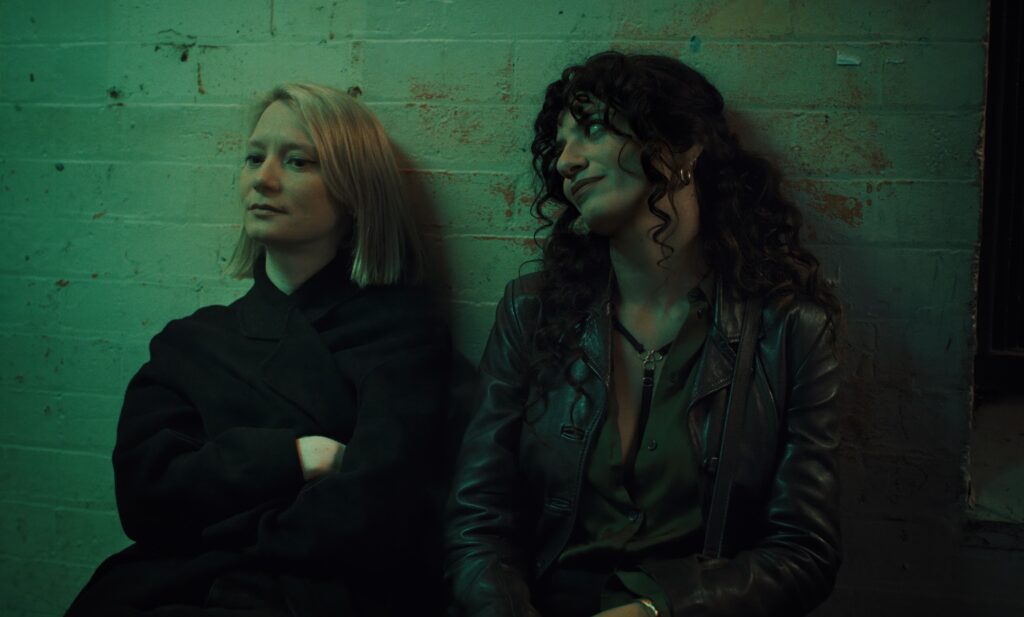
Directors Kuba Dorabialski and Alex White begin from this uncomfortable territory to explore proximity, authorship, and permission. Even if there is some form of linguistic similarity — Agata understands what one survivor is saying, while Jasmina (Vedrana Božinović) does not translate the dialogue in full — or cultural similarity — Poland, like Bosnia, is an Eastern European nation located on the eastern side of the Iron Curtain — this does not mean shared experience. The film is interested precisely in the distance hidden beneath these apparent connections.
The best way to perceive the layers of storytelling, however, is through the narrative structure. At a certain point, a Brechtian device disrupts the order and logic established by the narrative. At the beginning, a literary narrator introduces Agata and the work she has been hired to do, creating a kind of framework for the protagonist’s experience. In the final third, however, Agata takes over as narrator. As she reads the book she has written, fragments of her experience in Sarajevo reappear, altered and reconfigured by literature. The spectator moves away from simply occupying the position of someone watching and, in a sense, begins to occupy that of someone reading. Cinema turns into an audiovisual experience what the character has transformed into language, establishing a rather accomplished fusion between literature and moving images. In this sense, the war becomes more a bridge toward the self than a source of spectacle.
The soundtrack reinforces this transition. Musical notes follow the actress’s vocal inflections, as though language and sound were searching for the same rhythm, while images previously associated with the character’s everyday life return under the influence of what she has written. The procedure is not merely metalinguistic; it also puts the very idea of representation into crisis. Are we seeing what actually happened to Agata, or what she decided to write happened? And, at the moment lived experience is transformed into narrative, what is lost, what is transformed, and what is invented?
This is where I return to Truffaut’s statement. In truth, I have never believed that anti-war films do not exist. I think the French director and critic, although starting from a legitimate concern, failed to fully consider one possibility: it is possible to make anti-war cinema when the story focuses on survivors forced to carry the burden of trauma. For example, when we strip away the action from Saving Private Ryan, we can still see the impact of war on the young soldiers forced to live alongside death. When we remove the slow motion and lyrical score from Sergeant Elias’s death in Platoon, what remains is the violence inflicted upon one of the most ethical and noble soldiers in that world. The problem, then, may not be whether anti-war cinema is possible or whether it exists, but rather the way this kind of cinema has been cultivated — and celebrated — over time.
Agata the Writer does not entirely resolve this question. The film seems to contain a potential greater than what it ultimately manages to develop, especially because its metalinguistic structure, poetic dimension, and touch of irony suggest so many paths that could have been explored further. Still, there is an important provocation in its incompleteness: rather than turning war into spectacle, it asks what happens after someone decides to tell a story about it. It is a difficult and uncomfortable approach, but an honest one for thinking about anti-war cinema: questioning the rights, responsibilities, and limits of the author who transforms and perpetuates historical violence into cinematic violence.
Agata the Writer is part of the Giornate degli Autori section of the 2026 Venice International Film Festival.

Crítico de cinema filiado a Critics Choice Association, à Associação Brasileira de Críticos de Cinema, a Online Film Critics Society e a Fipresci. Atuou no júri da 39ª Mostra Internacional de Cinema em São Paulo/SP, do 12º Fest Aruana em João Pessoa/PB, do 24º Tallinn Black Nights Film na Estônia, do 47º TIFF – Festival Internacional de Cinema em Toronto. Ministrante do Laboratório de Crítica Cinematográfica na 1ª Mostra Internacional de Cinema em São Luís (MA) e Professor Convidado do Curso Técnico em Cinema do Instituto Estadual do Maranhão (IEMA), na disciplina Crítica Cinematográfica. Concluiu o curso de Filmmaking da New York Film Academy, no Rio de Janeiro (RJ) em 2013. Participou como co-autor dos livros 100 melhores filmes brasileiros (Letramento, 2016), Documentário brasileiro: 100 filmes essenciais (Letramento, 2017) e Animação Brasileira – 100 Filmes Essenciais (Letramento, 2018). Criou o Cinema com Crítica em fevereiro de 2010 e o Clube do Crítico em junho de 2020.