
O monstro, a fumaça e aquilo que a história tenta apagar
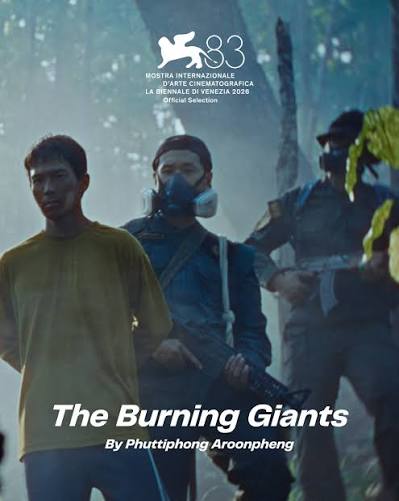
Do pouco que conheço do cinema tailandês, existe uma característica específica para além da maneira com que o tempo é dilatado em uma experiência quase espiritual: uma maneira de se relacionar com a natureza como espaço apropriado para um convite ao mistério e místico. É esse aspecto que individualiza The Burning Giants, mas tampouco seria justo afirmar ser sua virtude isolada. Na realidade, o filme de Phuttiphong Aroonpheng sabe empregar o cenário distópico, em que uma doença misteriosa é provocada aparentemente por uma fumaça que cobre um vilarejo remoto no país, para construir uma história universal sobre relações de afeto, poder e força em um contexto socioeconômico reconhecível.
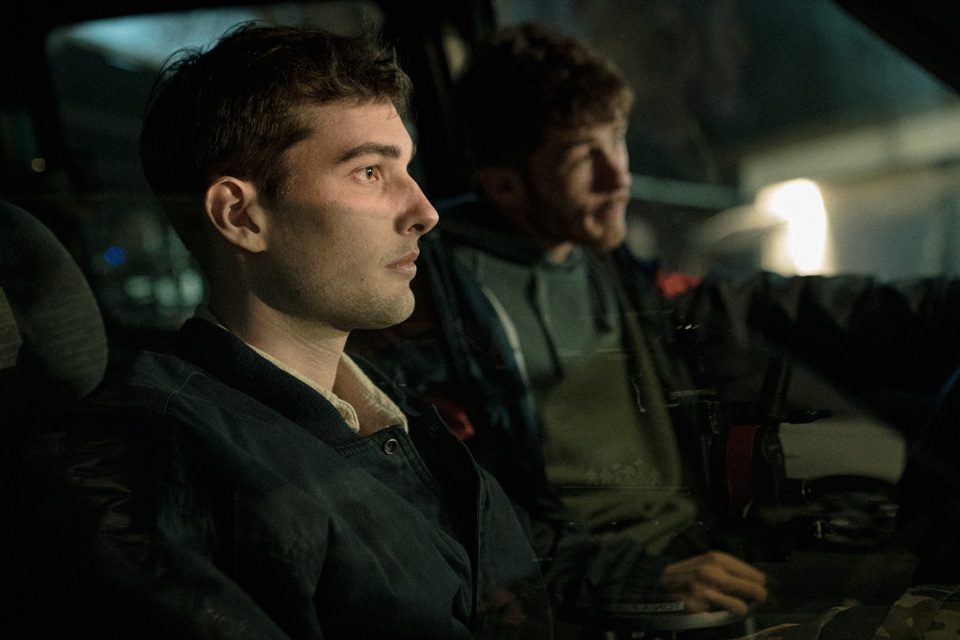
Um cenário em que Aeva (Waywiree) cuida do filho de sua patroa mais rica, embora precise negligenciar a própria filha no processo na creche. Em que as relações trabalhistas drenam o melhor das pessoas. E, enquanto alguns personagens são protegidos pela estrutura social, outros são justamente aqueles que precisam sobreviver às consequências dela. A doença é apenas a superfície de um universo maior em que os personagens estão submetidos a forças maiores. No centro desse mundo está Lak (Pakapol), um policial que parece ser decente pela maneira com que cuida com o aparentemente infectado Yak (Awat). Lak relaciona-se com Aepoh (Phunthida), a irmã de Aeva, que é a esposa de Yak, e a trama acaba trazendo esses personagens ao centro de uma narrativa ocupada por essa fumaça e toda a infraestrutura que existe por trás dela.
No meio da floresta onde acontece muito da ação da narrativa, o monstro ou uma tubulação coberta de musgo, cujos ruídos e fumaça que escapam fabricam a aparência de uma criatura fantástica, um dragão talvez. Mas o que poderia ser o mistério da narrativa se torna uma presença mais sobrenatural, que convive com a realidade social concreta do capitalismo tardio. Um mundo bem além do realismo material, mais perto do realismo espiritual ou fantástico que soa original mesmo quando a sua simbologia parece escapar por entre os nossos dedos.

A fumaça, aliás, não é apenas um elemento visual ou metafórico. Ela é reciclada dentro da memória narrativa, logo após descobrirmos o que há dentro dos barris espalhados dentro da floresta, objetos que o filme transforma em sinais de contaminação da humanidade. Aliado a isto, a memória coletiva e não distante da pandemia de Covid-19: as máscaras de proteção, os procedimentos de higiene e de desinfecção etc. Phuttiphong, enquanto reconhece que essas imagens são referências ao passado recente, ainda permite que respirem dentro da narrativa e tenham sentido completado pelo espectador.
Depois de me debruçar além da narrativa, aprendi sobre o conflito entre as comunidades da etnia Karen com autoridades que queriam expulsá-las de seus territórios para criar um parque nacional, juntamente com a violência história anticomunista, quando, na década de 70, civis suspeitos de práticas comunistas foram mortos e queimados no interior dos mesmos barris que povoam a floresta. A partir daí, o fantástico deixa de ser apenas uma forma de esconder a realidade e passa a ser uma maneira de torná-la visível por outro caminho.
Nesse aspecto, uma ação específica provoca uma ruptura tão forte na narrativa que se transforma no elefante – ou, melhores, no javali – no meio da sala. Um elemento que exige do espectador retornar ao princípio e reconsiderar especialmente a confissão de Aepoh a Lak. Essa atitude retrospectiva é a evidência de que The Burning Giants não parece interessado em oferecer respostas tranquilizadoras. Sua doença, sua fumaça, seu monstro, seu teatro abandonado na floresta e mesmo os soldados dourados que surgem como os ecos de um passado jamais elaborado pertencem a uma mesma lógica simbólica que flui dentro da narrativa como o tempo nas mãos do cineasta.
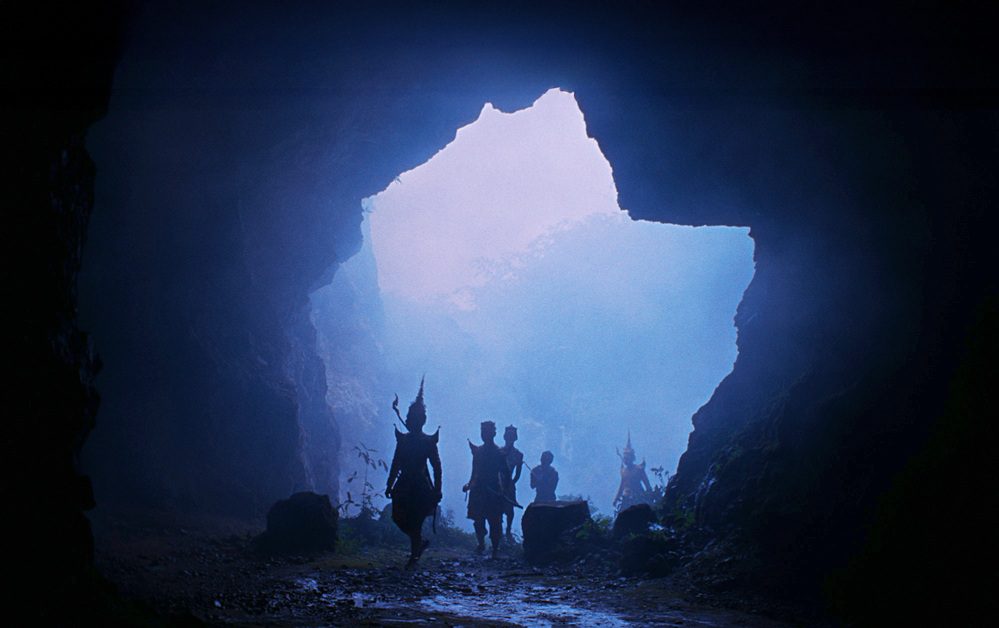
É onde o filme se torna politicamente mais potente, quando relaciona a mitologia tailandesa – infelizmente, não tenho conhecimento suficiente para descrevê-la – com a realidade do país, a opressão das forças policiais que cumprem as missões, por mais violentas que sejam, depois de determinado por forças ocultas (o Estado, talvez, ou o Poder). Daí que a floresta é tanto cúmplice quando é fuga dos personagens, e também o purgatório de Lak, onde é obrigado a confrontar as certezas que detinha.
A narrativa não está interessada em explicar muito dos elementos simbólicos, mas em se aprofundar no que é mais humano dentro da narrativa, como a culpa e a penitência. Gosto de filmes assim, que me provocam para além da inércia, que me oferecem perguntas em vez de respostas e me fazem pensar que o cinema pode ser muito mais do que aquilo que imaginava antes de começar mais um filme. The Burning Giants encontra sua força nessa capacidade de permanecer entre estados: entre o real e o fantástico, entre a concretude e o metafórico, entre a memória e o mito, entre o indivíduo e o coletivo. Há algum crítico em mim que tenha ficado frustrado, mas um que reconhece que a ambição da narrativa é loucável ao transformar fumaça, floresta e doença em vestígios de uma violência histórica que insiste em permanecer visível mesmo quando todos os mecanismos do poder trabalham para enterrá-la.
O filme integra a Mostra Orizzonti do Festival de Veneza 2026.
The Monster, the Smoke, and What History Tries to Erase
From the little I know of Thai cinema, there is a particular characteristic beyond the way time is stretched into an almost spiritual experience: a way of relating to nature as a space that invites mystery and the mystical. This is what makes The Burning Giants distinctive, although it would hardly be fair to say it is its only virtue. In reality, Phuttiphong Aroonpheng’s film knows how to employ its dystopian setting, in which a mysterious disease is apparently caused by smoke covering a remote village in the country, to construct a universal story about relationships of affection, power, and strength within a recognizable socioeconomic context.
A setting in which Aeva (Waywiree) cares for her wealthier employer’s child, although she must neglect her own daughter at daycare in the process. In which labor relations drain the best out of people. And while some characters are protected by the social structure, others are precisely the ones who must survive its consequences. The disease is merely the surface of a larger universe in which the characters are subjected to forces greater than themselves. At the center of this world is Lak (Pakapol), a police officer who appears to be decent in the way he cares for the apparently infected Yak (Awat). Lak is involved with Aepoh (Phunthida), Aeva’s sister, who is Yak’s wife, and the story eventually brings these characters to the center of a narrative occupied by the smoke and all the infrastructure that exists behind it.
In the middle of the forest where much of the story takes place, there is the monster — or perhaps a moss-covered pipe, whose noises and escaping smoke create the appearance of a fantastical creature, perhaps a dragon. But what could have been the narrative’s mystery becomes something more supernatural, coexisting with the concrete social reality of late capitalism. A world far beyond material realism, closer to a spiritual or fantastical realism that feels original even when its symbolism seems to slip through our fingers.
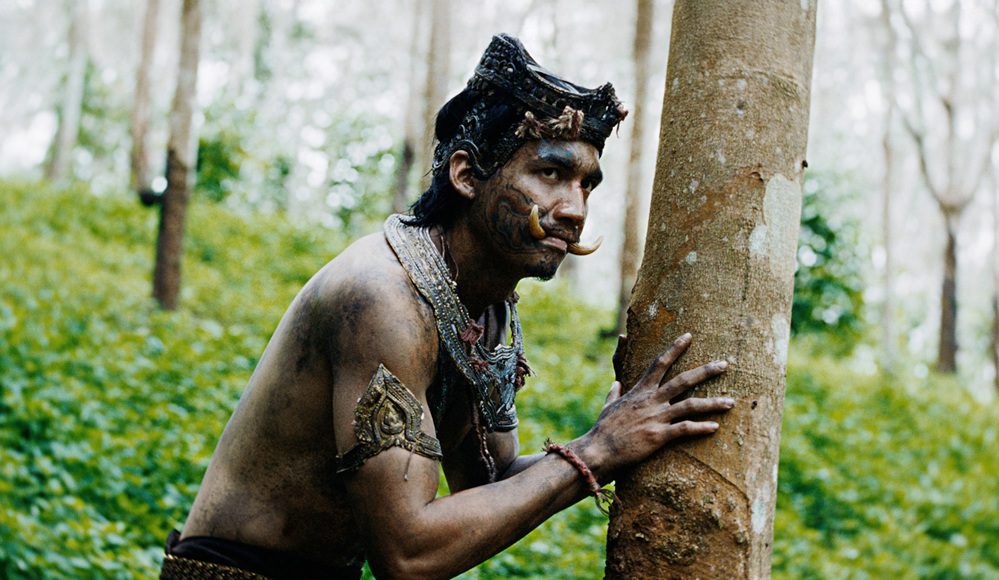
The smoke, incidentally, is not merely a visual or metaphorical element. It is recycled within the narrative’s memory shortly after we discover what lies inside the barrels scattered throughout the forest, objects that the film transforms into signs of humanity’s contamination. Added to this is a collective memory not so distant from the COVID-19 pandemic: protective masks, hygiene procedures, disinfection, and so on. Phuttiphong, while acknowledging that these images refer to the recent past, still allows them to breathe within the narrative and lets their meaning be completed by the spectator.
After looking beyond the narrative itself, I learned about the conflict between Karen communities and authorities who sought to expel them from their territories in order to create a national park, as well as the history of anti-communist violence, when, in the 1970s, civilians suspected of communist activities were killed and burned inside the same barrels that populate the forest. From that point onward, the fantastic ceases to be merely a way of concealing reality and becomes a means of making it visible through another path.
In this respect, a specific action provokes such a profound rupture in the narrative that it becomes the elephant — or, better yet, the boar — in the middle of the room. An element that demands that the spectator return to the beginning and reconsider, especially, Aepoh’s confession to Lak. This retrospective gesture is evidence that The Burning Giants does not seem interested in offering reassuring answers. Its disease, its smoke, its monster, its abandoned theater in the forest, and even the golden soldiers who emerge like echoes of a past that was never fully reckoned with all belong to the same symbolic logic that flows through the narrative like time in the filmmaker’s hands.
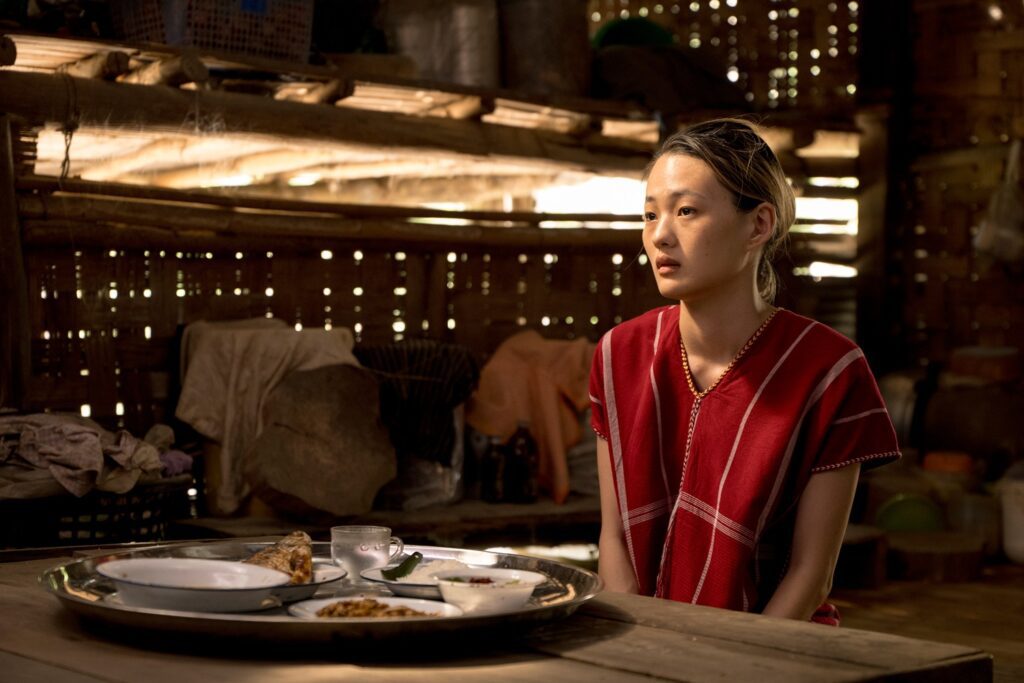
This is where the film becomes politically most potent, when it connects Thai mythology — unfortunately, I do not know enough about it to describe it adequately — with the reality of the country, the oppression exercised by police forces that carry out their missions, however violent they may be, after being commanded by hidden forces (the State, perhaps, or Power). Hence the forest is both accomplice and refuge for the characters, as well as Lak’s purgatory, where he is forced to confront the certainties he once held.
The narrative is not interested in explaining much of its symbolic elements, but rather in deepening what is most human within the story, such as guilt and penance. I like films like this, films that provoke me beyond inertia, that offer questions instead of answers and make me think that cinema can be so much more than what I imagined before starting yet another film. The Burning Giants finds its strength in this ability to remain between states: between the real and the fantastic, between the concrete and the metaphorical, between memory and myth, between the individual and the collective. There is a critic in me who was left frustrated, but also one who recognizes that the narrative’s ambition is laudable in transforming smoke, forest, and disease into traces of a historical violence that insists on remaining visible even when every mechanism of power is working to bury it.
The film is part of the Orizzonti section of the 2026 Venice Film Festival.

Crítico de cinema filiado a Critics Choice Association, à Associação Brasileira de Críticos de Cinema, a Online Film Critics Society e a Fipresci. Atuou no júri da 39ª Mostra Internacional de Cinema em São Paulo/SP, do 12º Fest Aruana em João Pessoa/PB, do 24º Tallinn Black Nights Film na Estônia, do 47º TIFF – Festival Internacional de Cinema em Toronto. Ministrante do Laboratório de Crítica Cinematográfica na 1ª Mostra Internacional de Cinema em São Luís (MA) e Professor Convidado do Curso Técnico em Cinema do Instituto Estadual do Maranhão (IEMA), na disciplina Crítica Cinematográfica. Concluiu o curso de Filmmaking da New York Film Academy, no Rio de Janeiro (RJ) em 2013. Participou como co-autor dos livros 100 melhores filmes brasileiros (Letramento, 2016), Documentário brasileiro: 100 filmes essenciais (Letramento, 2017) e Animação Brasileira – 100 Filmes Essenciais (Letramento, 2018). Criou o Cinema com Crítica em fevereiro de 2010 e o Clube do Crítico em junho de 2020.