
Crítica em português
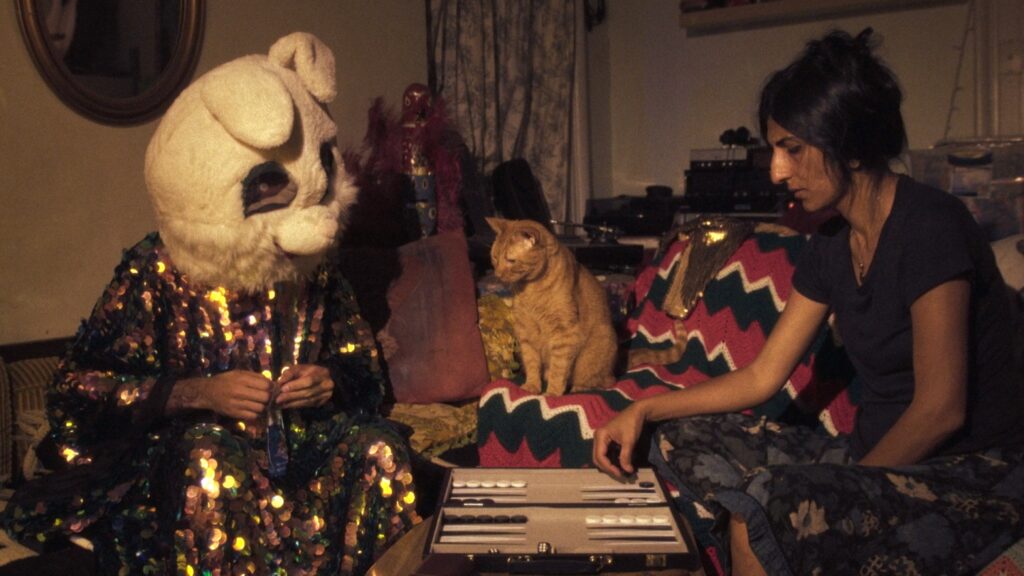
Qual idioma devo utilizar longe do Irã?, questiona-se a diretora iraniana Mahsa Karampour em certo instante de Into the Jaws of the Ogre. A reflexão é pertinente, porque Mahsa deixou o país no começo do século em direção à França, enquanto seu irmão caçula Siavash, mais tarde para morar nos Estados Unidos. No centro deste documentário com ares ensaísticos, a ideia de pertencimento de pessoas exiladas, uma discussão melancólica da cineasta desenraizada e que, agora, procura restabelecer o vínculo afetivo que possuía com o irmão. Esse desenraizamento, ou perda de pertencimento, é trabalhado dentro de uma espécie de filme de estrada intimista e confessional, na qual a diretora tenta enfrentar o trauma da separação e recuperar o tempo perdido de um passado que não existe mais.
O filme parte de uma premissa potente, que não se resume a um reencontro entre irmã e irmão, mas a uma tentativa de reconstruir uma ponte entre irmãos tornados estrangeiros um para o outro por circunstâncias diversas. Enquanto Mahsa acaba de se tornar, oficialmente, uma cidadão francesa, Siavash ainda está atravessando o processo longo de obter a sua cidadania estadunidense. Essas nacionalidades e culturas substitutivas expressam-se, especialmente a partir de Siavash, cujo rock ‘n roll é um gênero musical proibido no Irã – na verdade, a música não é aceita pelo regime do país, somente tolerada. Ainda assim, gosto como o estilo da cineasta mantém algumas referências (inconscientes?) do cinema iraniano de Jafar Panahi ou Abbas Kiarostami, especialmente no interior do carro.
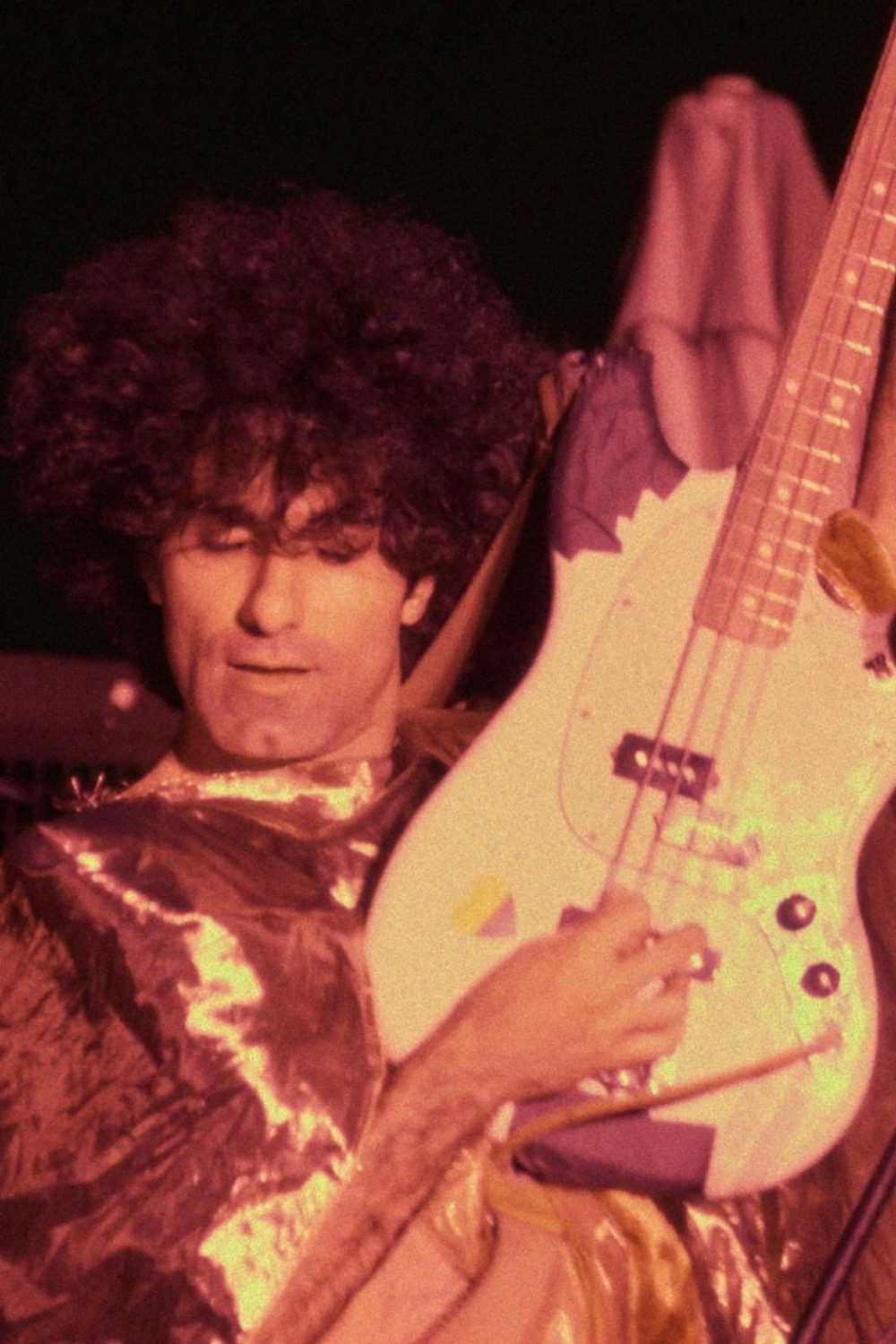
Ao longo dessa jornada pelos Estados Unidos, o documentário/ensaio resgata fragmentos importantes dessa história familiar e política do Irã no início do século. Além dos registros de arquivo – vídeos amadores ou reportagens -, os relatos de Mahsa, em off contextualizam-nos da trajetória do irmão, sobretudo, no processo de reencontro familiar. Siavash amargou o luto pela perda dos amigos da banda The Yellow Dogs, depois de um atentado ter custado a vida deles. É um entrelaçamento de repressão política e cultural, perda de pertencimento junto a dificuldades migratórias, cultura underground e independente, e mesmo assim a experiência deixou-me frustrado.
Embora admire a generosidade da diretora em expor a intimidade de sua família, algo que costuma ser banalizado na prática documental contemporânea, e que aqui atravessa a redoma do íntimo para dialogar com a sociedade, Into the Jaws of the Ogre confia mais na palavra falada do que na palavra-imagem. Mahsa narra, incessantemente, memórias, saudades, sentimentos e olhares, mas não os traduz de uma forma cinematográfica. O filme fala sobre um “golfe” emocional entre irmãos sem encontrar uma materialidade visual para esse abismo. E esta materialidade visual faz falta.
E talvez a materialidade que mais faça falta é a da diretora. Mahsa demora cerca de 40 minutos antes de aparecer diante da câmera, e de uma forma breve. A tentativa de apagar a sua imagem, ou de a substituir pelo olhar da câmera, é compreensível, e talvez preserve alguma forma de espontaneidade do reencontro. Mas o efeito disso acaba sendo curioso: o que parecia ser um retrato do reencontro torna-se um retrato do irmão, que se torna metonímia da irmã. A ponte que atravessaria o golfo emocional que os separa se tornou a estrada, que tem o seu simbolismo – o cruzamento do início do filme, por ex., ou onde os irmãos se deitam -, mas que dificilmente me trouxe esse gesto de reaproximação.
Isso fez diferença porque documentários íntimos dependem muito menos da informação revelada do que da forma como essa intimidade é transformada em experiência. Quando Mahsa narra a infância perdida, a separação ou o distanciamento, o filme frequentemente apenas nos informa, mas não dá corpo a isso. Em outros momentos, a diretora abandona essa necessidade explicativa e deixa que as imagens nos contem o que têm a contar. O carro de sorvete, por ex., é um aceno à memória e inocência perdida.
Ainda é interessante perceber como o filme absorve elementos muito tradicionais do cinema de estrada estadunidense, no qual não é o destino mas as paradas que ajudam a compreender o todo dramático. Um exemplo é a passagem no carnaval em Nova Orleans, em que Siavash perde, temporariamente, o seu pertencimento de forma concreta. Mas é um momento disperso dentro do documentário/ensaio que oscila entre a imagem e a palavra, entre o irmão e a distância que o separa da cineasta, e acaba sem encontrar uma unidade fílmica capaz de unificá-lo.
O resultado é irregular, às vezes excessivamente verbalizado, menos emocionalmente envolvente do que desejava ser (ou do que de fato deve ter sido, considerado o processo que requereu da diretora). Pois há algo bastante sincero em como Into the Jaws of the Ogre torna o cinema em uma ferramenta de reconciliação. Uma que apela mais a pessoa que o criou, do que a mim, que assistiu. Tem uma lógica nisto: atrás das câmeras, Mahsa ainda pode criar reencontrar fisicamente o irmão que não existe mais como lembrava; à frente das câmeras, no entanto, este reencontro torna-se ausência.
O filme está na seleção da Mostra ACID no Festival de Cannes 2026.
English review
“What language should I use away from Iran?” asks Iranian filmmaker Mahsa Karampour at one point in Into the Jaws of the Ogre. The question is a fitting one, because Mahsa left the country at the beginning of the century for France, while her younger brother Siavash later moved to the United States. At the center of this essayistic documentary lies the idea of belonging among exiled people — a melancholic reflection by a filmmaker uprooted from her homeland who now seeks to reestablish the emotional bond she once shared with her brother. This uprootedness, or loss of belonging, unfolds within an intimate and confessional road movie through which the director attempts to confront the trauma of separation and recover the lost time of a past that no longer exists.
The film begins from a powerful premise, one that goes beyond a simple reunion between sister and brother, becoming instead an attempt to rebuild a bridge between siblings who have become strangers to one another through different circumstances. While Mahsa has just officially become a French citizen, Siavash is still undergoing the lengthy process of obtaining American citizenship. These substitute nationalities and cultures are expressed especially through Siavash, whose rock ’n’ roll identity belongs to a musical genre forbidden in Iran — or rather, one not accepted by the regime and merely tolerated. Even so, I appreciate how Karampour’s style retains certain (perhaps unconscious) echoes of Iranian cinema by filmmakers such as Jafar Panahi or Abbas Kiarostami, particularly in the scenes set inside the car.
Throughout this journey across the United States, the documentary-essay revisits important fragments of both this family story and Iran’s political history at the beginning of the century. Beyond the archival material — amateur footage and news reports — Mahsa’s voice-over narration contextualizes her brother’s trajectory, especially within the process of familial reconnection. Siavash endured the grief of losing the members of his band, The Yellow Dogs, after an attack claimed their lives. It is an intertwining of political and cultural repression, loss of belonging, migratory hardship, and underground independent culture — and yet the experience ultimately left me frustrated.
Although I admire the director’s generosity in exposing her family’s intimacy — something often banalized within contemporary documentary practice, but which here breaks beyond the sphere of the private to engage with broader social questions — Into the Jaws of the Ogre relies more heavily on spoken language than on image-language. Mahsa constantly narrates memories, longing, emotions, and perceptions, yet rarely translates them into cinematic form. The film speaks about an emotional gulf between siblings without finding a visual materiality for that abyss. And that visual materiality is sorely missed.
Perhaps the greatest absence, however, is the director herself. Mahsa takes nearly forty minutes to appear before the camera, and even then only briefly. The attempt to erase her own image — or replace it with the gaze of the camera — is understandable, and perhaps preserves some degree of spontaneity within the reunion. Yet the result is curious: what initially seemed like a portrait of reconnection gradually becomes a portrait of the brother, who turns into a metonymy for the sister herself. The bridge meant to cross the emotional gulf separating them becomes instead the road — a road that certainly carries symbolic weight, whether in the crossroads shown at the beginning of the film or in the spaces where the siblings lie together — but which rarely conveys the gesture of emotional rapprochement.
This matters because intimate documentaries depend far less on the information they reveal than on the way intimacy is transformed into experience. When Mahsa speaks of lost childhood, separation, or emotional distance, the film often merely informs us of these wounds instead of embodying them. In other moments, however, the director abandons this explanatory impulse and allows the images themselves to speak. The ice cream truck, for instance, becomes a gesture toward memory and lost innocence.
It is also interesting to observe how the film absorbs very traditional elements of the American road movie, in which it is not the destination but the stops along the way that illuminate the dramatic whole. One example is the sequence during the carnival in New Orleans, where Siavash temporarily loses his sense of belonging in a very concrete way. Yet it remains a dispersed moment within a documentary-essay that oscillates between image and speech, between the brother himself and the distance separating him from the filmmaker, ultimately failing to discover a cinematic unity capable of holding these tensions together.
The result is uneven, at times excessively verbalized, and less emotionally involving than it aspires to be — or perhaps than it truly was for the director herself, considering the personal process the film demanded of her. Because there is something undeniably sincere in the way Into the Jaws of the Ogre transforms cinema into a tool for reconciliation. One that seems to speak more deeply to the person who created it than to me, who watched it. There is a certain logic to this: behind the camera, Mahsa can still physically recreate the brother she remembers; in front of the camera, however, that reunion becomes absence.

Crítico de cinema filiado a Critics Choice Association, à Associação Brasileira de Críticos de Cinema, a Online Film Critics Society e a Fipresci. Atuou no júri da 39ª Mostra Internacional de Cinema em São Paulo/SP, do 12º Fest Aruana em João Pessoa/PB, do 24º Tallinn Black Nights Film na Estônia, do 47º TIFF – Festival Internacional de Cinema em Toronto. Ministrante do Laboratório de Crítica Cinematográfica na 1ª Mostra Internacional de Cinema em São Luís (MA) e Professor Convidado do Curso Técnico em Cinema do Instituto Estadual do Maranhão (IEMA), na disciplina Crítica Cinematográfica. Concluiu o curso de Filmmaking da New York Film Academy, no Rio de Janeiro (RJ) em 2013. Participou como co-autor dos livros 100 melhores filmes brasileiros (Letramento, 2016), Documentário brasileiro: 100 filmes essenciais (Letramento, 2017) e Animação Brasileira – 100 Filmes Essenciais (Letramento, 2018). Criou o Cinema com Crítica em fevereiro de 2010 e o Clube do Crítico em junho de 2020.