
Crítica em português
Eu tenho um prazer imenso em descobrir um filme sem saber rigorosamente nada a seu respeito. Não estou me referindo a preservação das surpresas em torno das reviravoltas narrativas – algo que, honestamente, o cinema e o espectador contemporâneos frequentemente superestimam -, mas sim da possibilidade de me apropriar de um direito praticamente inexistente nos dias de hoje. Para além de somente formular as minhas conclusões, formular também as minhas hipóteses antes de que o jornalismo cultural faça por nós. A minha relação com este agradável e e irreverente Summer Drift, título internacional de Virages, existe num território ambíguo, uma espécie de gato de Schrodinger narrativo. E me refiro ao experimento da física quântica em que um gato é colocado em uma caixa fechada, onde também é colocado algum veneno. Em certo momento do tempo, por não podermos enxergar dentro da caixa, não sabemos se o gato está vivo ou morto, daí ele está, tanto, vivo e morto ao mesmo tempo!
De onde eu tirei física quântica para falar de um filme sobre uma personagem tentando provar o seu valor?
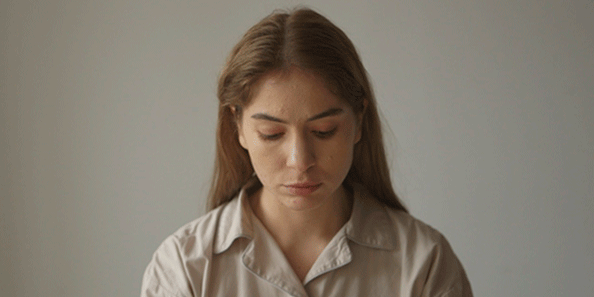
A sensação emergiu, sobretudo, após os créditos finais, quando percebemos a coincidência entre o nome da protagonista, Johanna, e o da atriz, Johanna Schopfer. Um detalhe aparentemente banal, mas que brincou retrospectivamente com a minha experiência, associado também ao estilo das diretoras e roteiristas Céline Carridroit e Aline Suter. Ao procurar informações sobre Johanna, a ausência de rastro digital e de materiais promocionais produziu um efeito curioso. Em vez de esclarecer o que havia dentro da caixa, tornou-a mais opaca. Mesmo rebuscada pelo cinema – algo que, invariavelmente, acontece em ficções e documentários -, Johanna é uma invenção dramática ou uma transfiguração da realidade concreta, reimpressa na ficção?
Considerando que há alguns momentos, especialmente nas feiras de automóveis, em que Céline e Aline apostam em uma forma híbrida entre real e ficção, esse questionamento não é descabido. O roteiro acompanha essa mulher colombiana vivendo em Genebra durante o verão suíço, trabalhando na montagem meticulosa de relógios de luxo enquanto tenta restaurar o seu velho Fusca para disputar corridas em um universo automobilístico. Essa missão é mais árdua do que parece, pois além de precisar obter as partes mecânicas e remontá-las para que o Fusca volte à vida, isto precisa ser negociado com o trabalho, a expectativa dos que gravitam ao redor de Johanna e a cobrança, e autocobrança.
A direção articula o trabalho de Johanna com relógios e sua obsessão pelo Fusca. De início, é uma metáfora cuidadosamente desenhada: a mesma personagem que manipula mecanismos minúsculos, preciosos e frágeis dentro de uma fábrica suíça também reconstrói, peça por peça, um carro velho que o mundo (e ela em certa medida) já teria descartado. Mas quando o filme permanece aberto à possibilidade de que exista algo autobiográfico na invenção da personagem, essa relação ganha outra dimensão. Não parece mais um símbolo criado por roteiristas engenhosas, mas uma extensão de alguém que efetivamente aprendeu a montar coisas para sobreviver à ideia de desmonte, sobretudo identitário.
A narrativa reflete, de forma leve, irreverente e queer, sobre o que resta das pessoas quando deixam de caber nos sistemas produtivos ou nos afetos normalizados. Um cemitério de carros outrora funcionais, porém agora comprimidos e empilhados uns sobre os outros, é uma imagem poderosa sobre a descartabilidade nos tempos de capitalismo tardio. Uma imagem que não é apenas alegórica do sistema produtivo, mas da relação deste com o pensamento sobre o indivíduo. Não é à toa que Johanna sonha sangrar ao ter o Fusca arranhado, e o desejo dela de restaurar o veículo e participar da corrida torna-se um gesto existencial de devolver valor ao que o mundo desvaloriza ou rejeita.
Os sonhos também são o ponto de maior filiação estética ao cinema queer. Após o sonho que mencionei, que tenta se integrar de forma orgânica à encenação, os demais têm sua artificialidade deliberadamente acentuada. Tornam-se os espaços de representação do humor e da emoção de Johanna em que a personagem performa diretamente ao público, com maquiagem, figurinos e cores saturadas e os efeitos visuais assumidamente falsos. Estas cenas funcionam justamente por buscar expressar subjetivamente o que Johanna, de certo modo, não exibe.
Os sonhos não a psicologizam; servem como os espelhos para além da atuação. O sonho ou pesadelo com um manequim desmontado relaciona o desmonte do ferro-velho ao do indivíduo em seu aspecto identitário, como também funcional. Além dos sonhos, a narrativa também deixa pistas sobre Johanna: Mad Max, o original, é o seu filme favorito. Para além da relação do homem com o seu carro, também dá para encontrar ecos com o futuro distópico de um amanhã em que corpos vagam por desertos pós-capitalistas. Já as tirinhas de HQ que desenhou e que interrompem o fluxo da narrativa revelam dores, anseios e frustrações que não expressa diretamente no trato rotineiro.
Porque Johanna não é construída como uma personagem confrontativa. Ela não reivindica espaços através do discurso, mas da ocupação. A sua atuação é caracterizada por um tom de voz suave e desacelerado, por uma espécie de ausência e presença – as conversas com uma colega de trabalho ou quando é chamada por seu chefe revelam isso com clareza. Essa expressividade, aliás, é mais importante como crítica a um modelo capitalista hiperprodutivo e desumanizante, que vê pessoas como coisas, do que manifestações explícitas. Faz sentido: já que isto subverte a ordem dramática e conflituosa de uma narrativa convencional da indústria.
E talvez seja por isso que Summer Drift permaneça tão vivo depois de terminar. Para além de ser um filme interessado em compreender as personagens marginalizadas reinventando a sua existência a partir de pequenos atos de revolta, montagem e reconstrução diários que dão função ao que o sistema considera improdutivo, é um filme cuja mera existência já é um ato anticapitalista ou revolucionário. Johanna não usa os relógios de luxo aos quais tem direito por sua função. Ela também não quer um carro de luxo. Ela só quer dirigir o seu carro velho, ou passar a tarde com os amigos, ou ter o direito de existir nos seus termos.
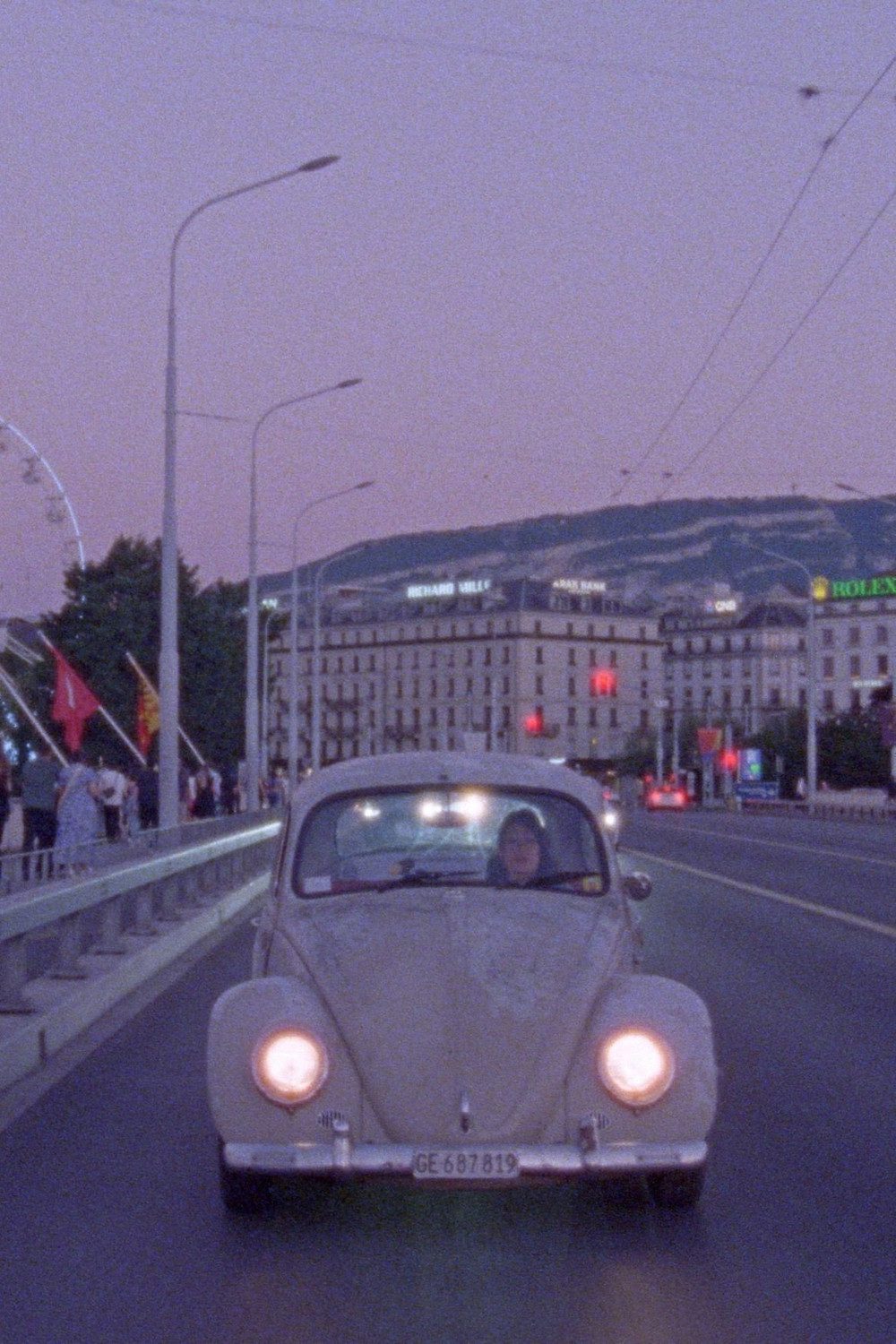
A imagem dela se movimentando em direção à câmera, diante do despertar azul e róseo do dia, em sua motocicleta ou em seu Fusca, já constitui, por si só, um gesto poderoso dentro de um filme adorável.
Summer Drift está na seleção da Mostra ACID no Festival de Cannes 2026.

English review
There is an immense pleasure in discovering a film without knowing absolutely anything about it. I am not referring to preserving the surprises surrounding narrative twists — something that, honestly, contemporary cinema and audiences often overestimate — but rather to reclaiming an almost nonexistent right nowadays. Beyond merely formulating my own conclusions, it is also about formulating my own hypotheses before cultural journalism does it for us. My relationship with this pleasant and irreverent Summer Drift, the international title of Virages, exists within an ambiguous territory, a kind of narrative Schrödinger’s cat. And I refer here to the quantum physics experiment in which a cat is placed inside a closed box alongside poison. At a certain moment in time, because we cannot see inside the box, we do not know whether the cat is alive or dead; therefore, it is simultaneously both alive and dead.
Where did I pull quantum physics from in order to discuss a film about a character trying to prove her worth?
The sensation emerged especially after the end credits, when I noticed the coincidence between the protagonist’s name, Johanna, and the actress’s name, Johanna Schopfer. An apparently banal detail, yet one that retrospectively reshaped my entire experience, especially when associated with the style adopted by directors and screenwriters Céline Carridroit and Aline Suter. While searching for information about Johanna, the absence of a digital footprint and promotional material produced a curious effect. Instead of clarifying what was inside the box, it made it even more opaque. Even reworked through cinema — something that inevitably occurs in both fiction and documentaries — is Johanna a dramatic invention, or a transfiguration of concrete reality reprinted through fiction?
Considering that there are moments, especially during the automobile fairs, in which Céline and Aline embrace a hybrid form between reality and fiction, this question does not feel unfounded. The screenplay follows this Colombian woman living in Geneva during the Swiss summer, working in the meticulous assembly of luxury watches while trying to restore her old Volkswagen Beetle in order to compete in racing events within the automotive universe. This mission proves more difficult than it initially appears, because beyond acquiring mechanical parts and reassembling them so that the Beetle may return to life, all of this must be reconciled with work, with the expectations of those orbiting around Johanna, and with both external pressure and self-imposed pressure.
The direction articulates Johanna’s work with watches and her obsession with the Beetle. At first, it seems like a carefully designed metaphor: the same character who manipulates tiny, precious, fragile mechanisms inside a Swiss factory also reconstructs, piece by piece, an old car that the world — and, to some extent, she herself — had already discarded. But once the film remains open to the possibility that there may be something autobiographical in the construction of the character, this relationship acquires another dimension. It no longer feels like a symbol created by clever screenwriters, but rather an extension of someone who genuinely learned to assemble things in order to survive the idea of dismantlement — especially an identitarian one.
The narrative reflects, in a light, irreverent, and queer manner, upon what remains of people once they no longer fit into productive systems or normalized forms of affection. A graveyard of cars that were once functional, but are now compressed and stacked upon one another, becomes a powerful image of disposability in late capitalism. An image that is not merely allegorical of the productive system itself, but also of the relationship between this system and the very notion of individuality. It is no coincidence that Johanna dreams of bleeding when the Beetle is scratched, and her desire to restore the vehicle and participate in the race becomes an existential gesture of restoring value to what the world devalues or rejects.
The dreams are also the film’s strongest aesthetic affiliation with queer cinema. After the dream I previously mentioned — one that still attempts to integrate itself organically into the staging — the others deliberately accentuate their own artificiality. They become spaces representing Johanna’s humor and emotions, in which the character performs directly to the audience through makeup, costumes, saturated colors, and intentionally artificial visual effects. These scenes work precisely because they seek to subjectively express what Johanna, in a certain way, cannot openly externalize.
The dreams do not psychologize her; they function as mirrors beyond performance itself. The dream — or nightmare — involving a dismantled mannequin connects the dismantling of the scrapyard to that of the individual, both in terms of identity and functionality. Beyond the dreams, art itself also leaves clues about Johanna: Mad Max, the original, is her favorite film. Beyond the relationship between man and machine, it is also possible to identify echoes of a dystopian future in which bodies wander through post-capitalist deserts. Likewise, the comic strips she draws — interrupting the flow of the narrative — reveal pains, desires, and frustrations that she does not directly express in ordinary interactions.
Because Johanna is not constructed as a confrontational character. She does not claim space through discourse, but through occupation. Her performance is characterized by a soft and slowed-down tone of voice, by a kind of simultaneous absence and presence — her conversations with a co-worker or the moments when she is called upon by her boss illustrate this particularly well. This expressiveness, in fact, functions more importantly as a critique of a hyperproductive and dehumanizing capitalist model that perceives people as objects rather than as explicit political manifestations. It makes sense, since this subverts the dramatic and conflict-driven order of conventional industrial narratives.
And perhaps that is why Summer Drift remains so alive after it ends. Beyond being a film interested in understanding marginalized characters reinventing their existence through daily acts of revolt, assembly, and reconstruction that restore purpose to what the system considers unproductive, it is also a film whose very existence already constitutes an anti-capitalist or revolutionary act. Johanna does not wear the luxury watches she is entitled to through her work. She does not want a luxury car either. She simply wants to drive her old car, spend the afternoon with her friends, or possess the right to exist on her own terms.
The image of her moving toward the camera, against the awakening blue and pink hues of dawn, on her motorcycle or inside her Beetle, already constitutes a powerful gesture within an utterly lovely film.

Crítico de cinema filiado a Critics Choice Association, à Associação Brasileira de Críticos de Cinema, a Online Film Critics Society e a Fipresci. Atuou no júri da 39ª Mostra Internacional de Cinema em São Paulo/SP, do 12º Fest Aruana em João Pessoa/PB, do 24º Tallinn Black Nights Film na Estônia, do 47º TIFF – Festival Internacional de Cinema em Toronto. Ministrante do Laboratório de Crítica Cinematográfica na 1ª Mostra Internacional de Cinema em São Luís (MA) e Professor Convidado do Curso Técnico em Cinema do Instituto Estadual do Maranhão (IEMA), na disciplina Crítica Cinematográfica. Concluiu o curso de Filmmaking da New York Film Academy, no Rio de Janeiro (RJ) em 2013. Participou como co-autor dos livros 100 melhores filmes brasileiros (Letramento, 2016), Documentário brasileiro: 100 filmes essenciais (Letramento, 2017) e Animação Brasileira – 100 Filmes Essenciais (Letramento, 2018). Criou o Cinema com Crítica em fevereiro de 2010 e o Clube do Crítico em junho de 2020.