
Crítica em português
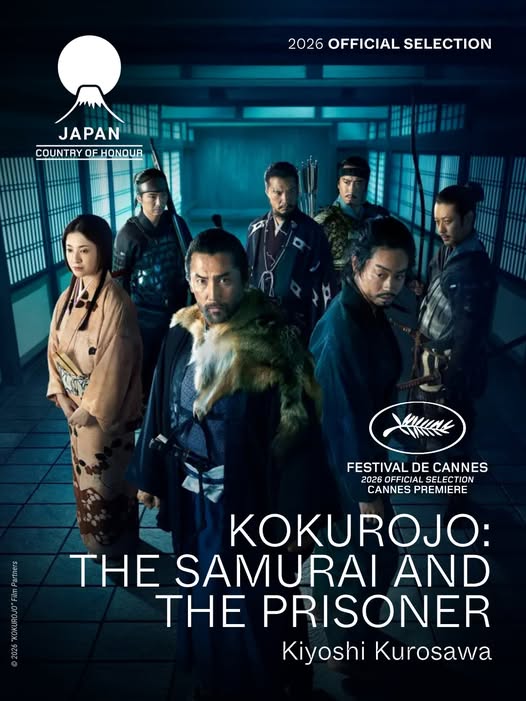
Com a filmografia mais associada ao cinema fantástico, Kiyoshi Kurosawa, cineasta de Pulse (2001), Para o Outro Lado (2015) e Cloud (2024), aventura-se em um Jidaigeki – a denominação do cinema de época japonês -, e especificamente em um Chanbara – subgênero que gira em torno de samurais e do código de honra ao qual se submetem, ou deveriam se submeter. E, honestamente, é bom assistir a cineastas emprestarem a sua sensibilidade a gêneros ou histórias aos quais não estão habituados. Isso pode proporcionar inovações ou fissuras criativas bem-vindas. É dessa fricção estética que surge The Samurai and the Prisoner, o título internacional de Kokurojo, que pode ser entendido como “o castelo da prisão sombria”.
O que é coerente com a história ambientada no século XVI, quando o Lorde Murashige Araki (Motoki) se ergue contra o tirano Nobunaga Oda, mas permanece encurralado no interior de seu castelo, no aguardo da chegada da paz e do estabelecimento de uma aliança com outro clã. Ao menos é esta a proposição apresentada pelo mensageiro Kanbei Kuroda (Suda). Porém, em vez de liberá-lo ou executá-lo, como exige a tradição samurai, Murashige decide seguir a própria intuição e mantém Kanbei prisioneiro em um calabouço. Ao mesmo tempo, ainda deve manter a ordem quando uma série de crimes começa a acontecer no interior do castelo.
Subdividido em quatro capítulos, cada qual correspondente a uma estação do ano, o roteiro de Kurosawa é esquemático e, rapidamente, começamos a aprender qual a lógica que rege a sua estrutura. A cada estação corresponde um crime que Murashige precisa resolver. Para tanto, conta com o auxílio de Kanbei, que é quem abre os seus olhos para as respostas que procura por meio de reflexões e aconselhamentos. No inverno, por exemplo, Murashige investiga um assassinato cometido nas acomodações do castelo. Com o processo de acareação e investigação do assassinato misterioso, Kurosawa explora uma dimensão mais racional em comparação com o cânone do gênero; nesse sentido, Kanbei surge como uma espécie de Hercule Poirot dos livros de Agatha Christie, enquanto a narrativa conserva a solenidade de uma investigação conduzida sob os códigos sociais japoneses daquela época.
Isso cria uma experiência confortável para o espectador. Depois do crime, juntamente com Murashige, reunimos as pistas e informações para resolvê-lo. Em seguida, descemos ao calabouço onde está Kanbei. A interação entre os personagens torna-se crucial para entender por que Murashige recorre a Kanbei e o que este espera obter em troca. Na realidade, é fácil prever que Kanbei tem uma agenda, que será revelada no momento oportuno, já que, a cada reencontro, a dinâmica muda sensivelmente. O espectador fica em posição de espera sobre quando e como o plano de Kanbei será revelado, o que pode engajá-lo ou frustrá-lo, uma vez que a estrutura narrativa se torna previsível, embora o roteiro ainda mantenha algumas cartas na manga.
O conflito religioso entre budistas e cristãos, ou a ideia de justiça — ou providência divina — como mecanismo de resolução de conflitos, estimula a reflexão sobre o papel da religião na apropriação de uma era de guerra para promover, justamente, a difusão de seus conceitos de céu, inferno etc. Por falar em religião, Kurosawa ainda flerta, brevemente, com um elemento de horror, quando introduz uma investigação envolvendo uma cabeça decapitada e deformada. Além do mais, o existencialismo, que é um traço muito característico de sua obra, está presente em personagens que questionam se vale mais defender o indivíduo ou o clã.
Nesse contexto, Murashige é um personagem intrigante. Ao mesmo tempo em que ocupa uma posição de liderança, cativando a moral e a lealdade das famílias de senhores da guerra mesmo evitando soluções violentas imediatas, não se coloca exatamente contra o código samurai, mas propõe alternativas heterodoxas. Kanbei não é morto porque, a princípio, Murashige acredita que pode usá-lo estrategicamente; e o fato de ser um mestre de chá, devotado a esta arte milenar, acrescenta ainda mais à sua sensibilidade. O mesmo não pode ser dito de Kanbei, que é melhor definido pela dignidade que tenta manter em uma situação indigna. Já a companheira de Murashige, interpretada por Yuriko Yoshitaka, tem um papel muito maior do que o de simplesmente ocupar a posição de figura feminina em um mundo de homens.
Envolvente, a narrativa ainda preocupa-se com a liturgia daquele período, como os gestos formais dos líderes diante de Murashige. É possível, por exemplo, rememorar a forma como se sentam ao tatame, aproximam-se ou recuam durante uma conversa mais formal ou uma degustação de chá. Além do mais, Kurosawa deve ser celebrado por transformar as batalhas individuais ou coletivas em retratos não de heroísmo, mas de sobrevivência, e que terminam quase sempre de forma brutal. O resultado é um experimento interessante ao colocar um diretor de sensibilidade muito específica experimentando e encontrando caminhos inusitados, cativantes e estimulantes em um gênero pouco associado à sua filmografia.
English review
With a filmography more closely associated with fantastical cinema, Kiyoshi Kurosawa, the filmmaker behind Pulse, Journey to the Shore, and Cloud, ventures into a Jidaigeki — the designation for Japanese period cinema — and, more specifically, into a Chanbara, the subgenre centered on samurai and the code of honor to which they submit, or are expected to submit. And honestly, it is always fascinating to watch filmmakers lend their sensibility to genres or stories with which they are not usually associated. Such encounters can generate welcome innovations or creative ruptures. It is precisely from this aesthetic friction that The Samurai and the Prisoner emerges, the international title of Kokurojo, which can be understood as “the castle of the dark prison.”
This is entirely coherent with a story set in the 16th century, when Lord Murashige Araki (Motoki) rises against the tyrant Nobunaga Oda, yet remains trapped inside his own castle while awaiting the arrival of peace and the establishment of an alliance with another clan. At least, that is the proposition presented by the messenger Kanbei Kuroda (Suda). However, instead of releasing or executing him, as samurai tradition demands, Murashige chooses to follow his intuition and keeps Kanbei imprisoned in a dungeon. Simultaneously, he must maintain order as a series of crimes begins to unfold within the castle walls.
Divided into four chapters, each corresponding to a season of the year, Kurosawa’s screenplay is schematic, and we quickly begin to understand the logic governing its structure. Each season introduces a new crime that Murashige must solve. To do so, he relies on the assistance of Kanbei, who gradually opens his eyes to the answers he seeks through reflection and counsel. In winter, for example, Murashige investigates a murder committed within the castle’s quarters. Through interrogations and the investigation itself, Kurosawa explores a more rational dimension compared to the genre’s canon; in this sense, Kanbei emerges almost like a version of Hercule Poirot transplanted into feudal Japan, while the narrative preserves the solemnity of an inquiry conducted under the social codes of that era.
This creates a comfortable experience for the viewer. After each crime, we gather clues and information alongside Murashige in order to solve it. Then, we descend into the dungeon where Kanbei awaits. The interaction between the characters becomes crucial in understanding why Murashige repeatedly turns to Kanbei and what the latter hopes to gain in return. In truth, it is easy to foresee that Kanbei has his own agenda, one that will eventually be revealed at the appropriate moment, especially since their dynamic subtly changes with each encounter. The audience is therefore left waiting for when and how Kanbei’s plan will be exposed, which may either engage or frustrate them, given that the narrative structure becomes somewhat predictable — although the screenplay still keeps a few cards hidden up its sleeve.
The religious conflict between Buddhists and Christians, as well as the notion of justice — or divine providence — as a mechanism for resolving conflicts, stimulates reflection on the role of religion in appropriating an era of war precisely to disseminate its concepts of heaven, hell, and salvation. Speaking of religion, Kurosawa also briefly flirts with horror through an investigation involving a decapitated and disfigured head. Moreover, the existentialism that has always been one of the defining traits of his cinema is present in characters who question whether it is more worthwhile to defend the individual or the clan.
Within this context, Murashige becomes an intriguing character. Although he occupies a position of leadership, inspiring loyalty and moral conviction among the families of warlords while simultaneously avoiding immediate violent solutions, he does not position himself entirely against the samurai code, but instead proposes heterodox alternatives to it. Kanbei is spared because Murashige initially believes he can use him strategically; furthermore, the fact that he is a tea master, devoted to this ancient art, only deepens his sensitivity. The same cannot be said of Kanbei, who is better defined by the dignity he attempts to preserve within an undignified situation. Meanwhile, Murashige’s companion, played by Yuriko Yoshitaka, serves a far more substantial role than merely occupying the position of the lone female figure in a world dominated by men.
Engaging throughout, the narrative also pays close attention to the liturgy of that period, particularly the formal gestures displayed by the leaders before Murashige. One can vividly recall the manner in which they sit upon the tatami, approach one another, or withdraw during formal conversations or tea ceremonies. Furthermore, Kurosawa deserves praise for transforming individual or collective battles into portraits not of heroism, but of survival, battles that almost always end brutally. The result is a fascinating experiment: a filmmaker with an unmistakably singular sensibility venturing into and discovering unusual, captivating, and stimulating pathways within a genre not traditionally associated with his body of work.

Crítico de cinema filiado a Critics Choice Association, à Associação Brasileira de Críticos de Cinema, a Online Film Critics Society e a Fipresci. Atuou no júri da 39ª Mostra Internacional de Cinema em São Paulo/SP, do 12º Fest Aruana em João Pessoa/PB, do 24º Tallinn Black Nights Film na Estônia, do 47º TIFF – Festival Internacional de Cinema em Toronto. Ministrante do Laboratório de Crítica Cinematográfica na 1ª Mostra Internacional de Cinema em São Luís (MA) e Professor Convidado do Curso Técnico em Cinema do Instituto Estadual do Maranhão (IEMA), na disciplina Crítica Cinematográfica. Concluiu o curso de Filmmaking da New York Film Academy, no Rio de Janeiro (RJ) em 2013. Participou como co-autor dos livros 100 melhores filmes brasileiros (Letramento, 2016), Documentário brasileiro: 100 filmes essenciais (Letramento, 2017) e Animação Brasileira – 100 Filmes Essenciais (Letramento, 2018). Criou o Cinema com Crítica em fevereiro de 2010 e o Clube do Crítico em junho de 2020.