

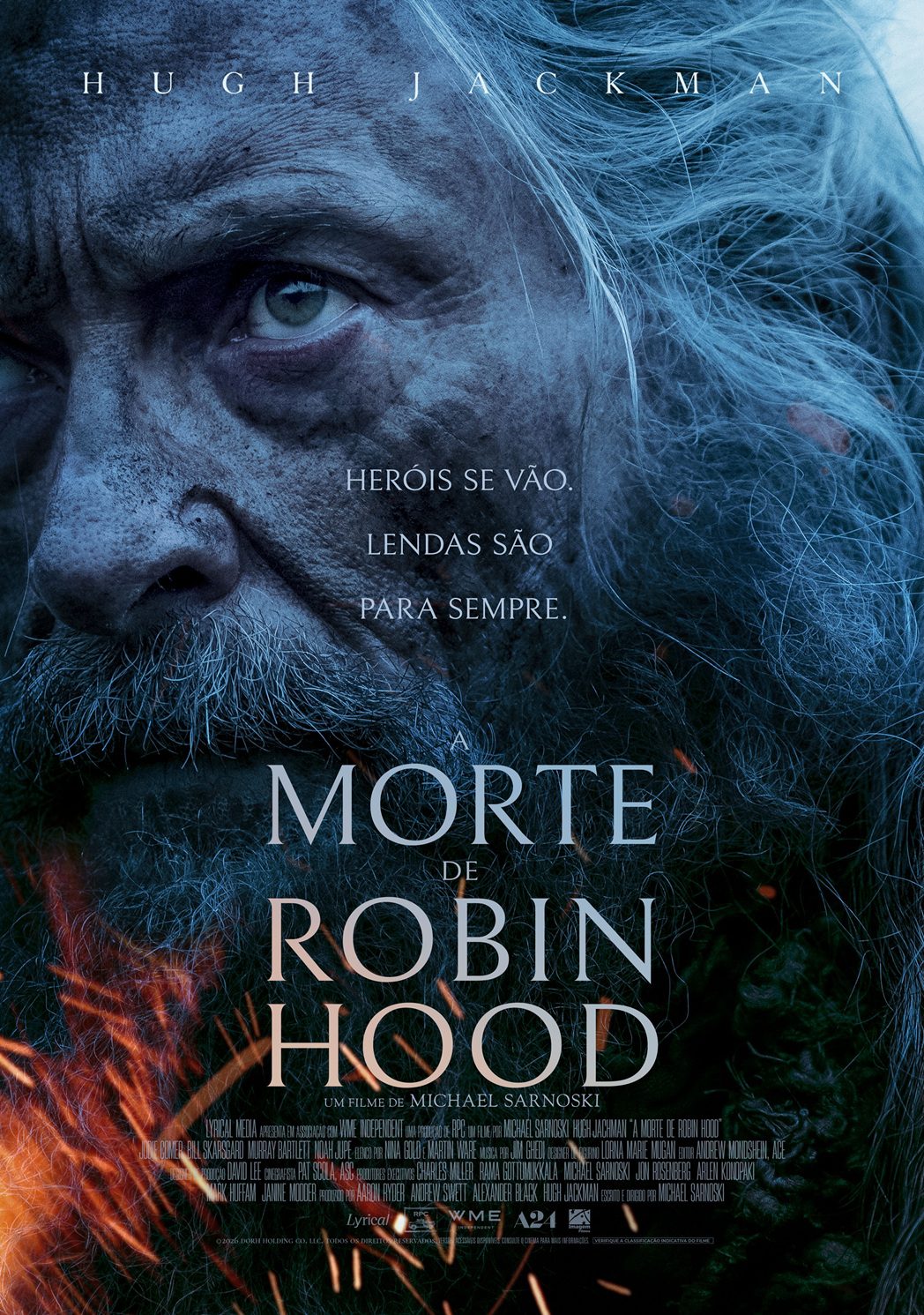
A Morte de Robin Hood transforma um mito de justiça em uma história de redenção
Nós devemos fazer algumas perguntas quando assistimos aos filmes, porque a arte não nasce no vácuo, mas dentro de um contexto específico e influenciada por interesses e propósitos além de apenas contar uma história. É um dos motivos pelo qual eu seja um dos entusiastas da ideia de pegar personagens já estabelecidos, clássicos, lendas e mitos, e reimaginá-los ou reinterpretá-los. Entretanto, todo esse processo precisa ser apreciado sob olhar crítico, porque modificar um personagem pode ainda significar modificar aquilo que ele representa. E quando penso em A Morte de Robin Hood, de Michael Sarnoski (de Pig e do medíocre Um Lugar Silencioso: Dia Um), preciso refletir como as mudanças propostas dialogam com o mundo no qual vivemos. A principal delas é justamente a que parece mais simples: Robin Hood não é mais o ladrão que roubava dos ricos para dar aos pobres.
O Robin Hood de Sarnoski é um bandoleiro, um sujeito que, ao lado de seu grupo de criminosos, tinha prazer em roubar e matar. Não há uma finalidade por trás do crime e não existe uma intenção de reequilíbrio das relações econômicas. O crime é o crime, despido de qualquer justiça anexa. Nessa desconstrução, surge a questão que considero central. Por que retirar de Robin Hood aquilo que o torna singular, muito mais até do que sua habilidade com arco e flecha? Da mesma forma que a arte não nasce no vácuo, tampouco nasce a crítica de cinema. Vivemos em um mundo em que discutimos a concentração de riqueza, desigualdade social ou de oportunidades, ou a falta de dignidade, e o fato de que uma parcela diminuta da população concentra uma quantidade de bens enquanto milhões (bi?) permanecem sem casa e sem condições mínimas de existência. Nesse contexto, retirar do mito de Robin Hood justamente o elemento político que o tornou tão duradouro é uma escolha nada neutra.
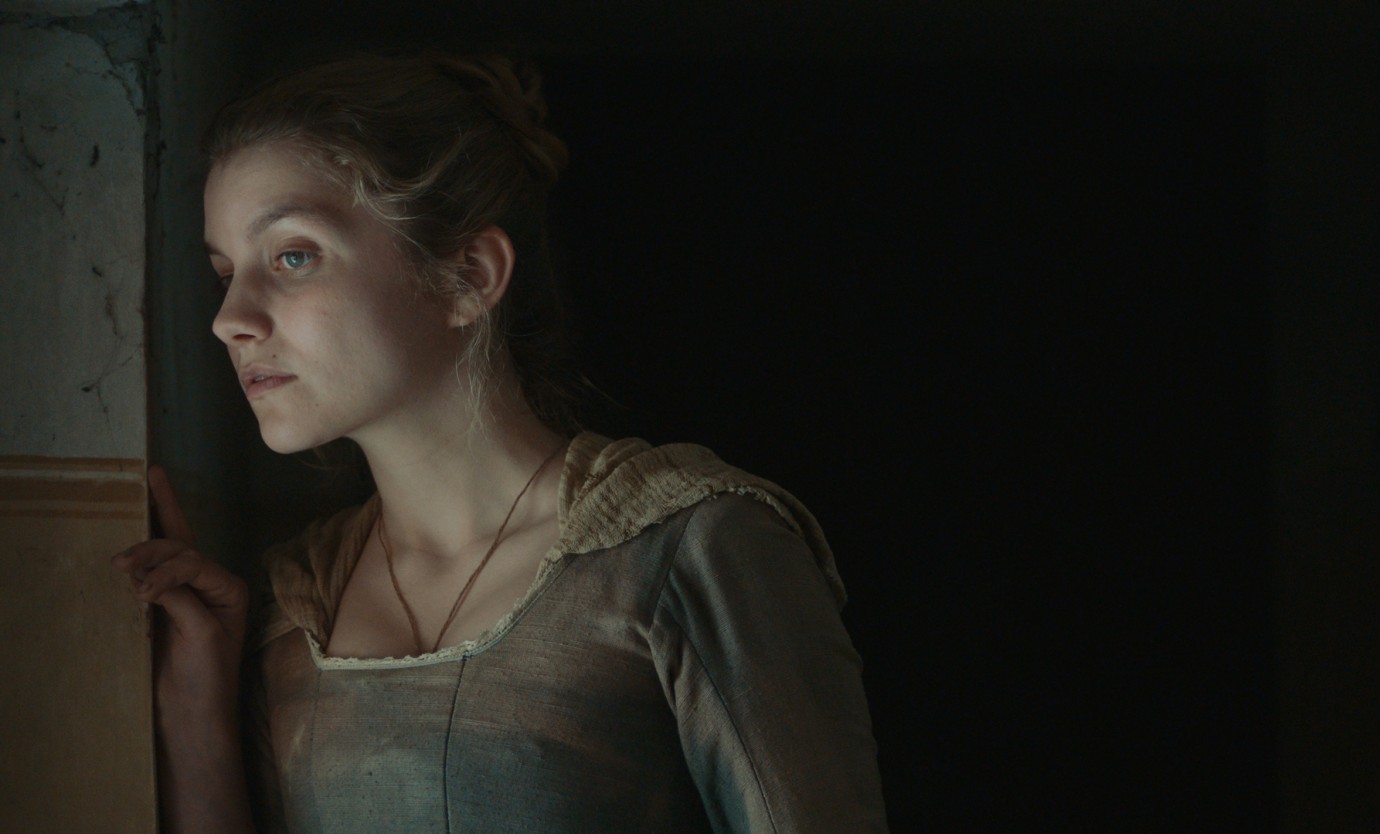
O problema fica ainda mais evidente porque o filme parece substituir a justiça social pela redenção individual. Robin Hood inicia a sua trajetória no filme como um homem envelhecido, ferido e perseguido, que sobrevive por pouco a sua última batalha. Ele reencontra Pequeno John (Skarsgård) e parte em uma missão que poderia devolver-lhe alguma glória derradeira: proteger a filha e esposa do seu protegido. A violência é fotografada de maneira épica, apesar do pano de fundo noturno, antes que Robin desperte à beira da morte sob os cuidados da personagem de Jodie Comer. Ela é uma mulher que dedicou sua vida a cuidar dos outros, praticar a caridade e viver sua religião. Robin abandona então aquela vida isolada e marcada pela violência, e passa a trajar roupas brancas (como disse, nenhuma escolha é neutra). Não só o seu corpo precisa ser curado, sua alma precisa ser purificada.
O bandido que, na tradição popular, roubava dos ricos para dar aos pobres encontra agora naquele ambiente meio monástico, meio religioso uma oportunidade de expiar seus pecados. No lugar de refletir como um indivíduo poderia combater uma estrutura social injusta e inspirar outros a fazê-lo, a narrativa preocupa-se em discutir como um criminoso pode tornar-se uma pessoa melhor (com aspas, muitas delas). A lenda passa da luta de classes para a redenção pessoal. E, em um filme lançado em 2026, dentro do contexto social e industrial, essa mudança não pode ser ignorada.
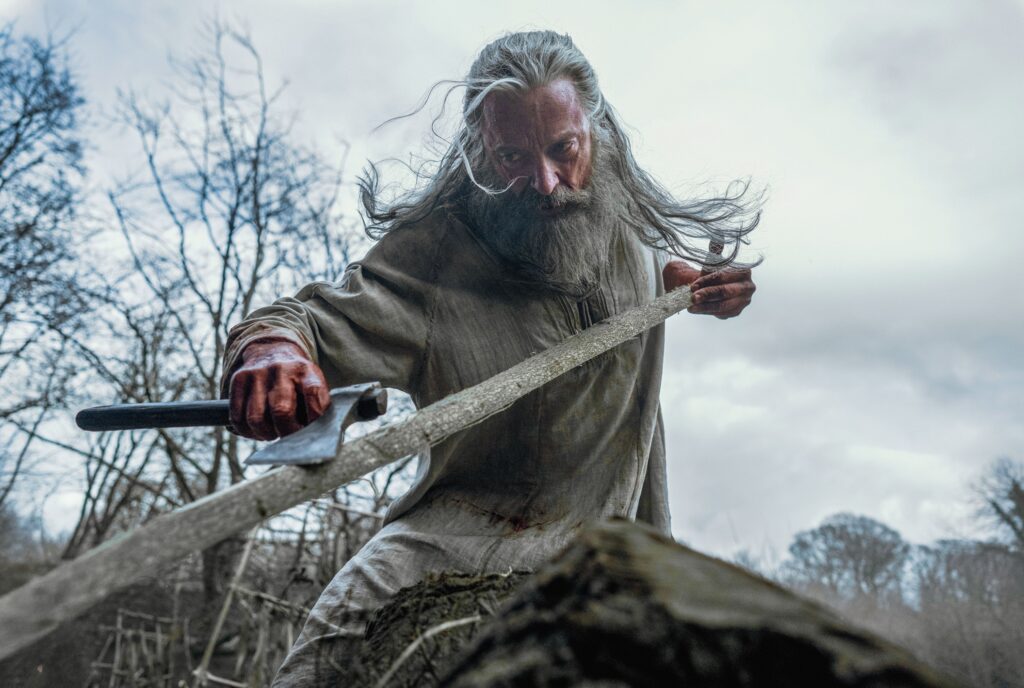
A narrativa ainda encontra, nos personagens coadjuvantes, espelhos para esse processo. Há o homem leproso (Bartlett, de The Last of Us), que guarda uma relação com o passado de Robin; há Margaret (Delaney), que ele passa a cuidar e proteger como algo próximo de uma filha; e há Arthur (Jupe), um rapaz que Robin acreditava ter matado e que chega ao priorado movido pela vingança. Entretanto, em vez de agir como agiu no início da narrativa, Robin é outra pessoa e agora preocupa-se em ensina que o ódio e a vingança não devem ser perpetuados. Às vezes, pareço estar em uma outra versão de Logan, na qual um homem marcado pela violência é convidado, pelas circunst6ancias, a descobrir uma forma diferente de responsabilidade. No lugar das garras, o arco e flecha.
Por falar em Logan, Hugh Jackman é confiável para interpretar esse tipo de homem cansado, machucado e introvertido. Sua atuação se sustenta muito no olhar, na fisicalidade, no franzir do cenhor ou nos grunhidos. E a fotografia de Pat Scola acompanha a transformação de Robin através da própria imagem: os cinzas frios do mundo violento dão lugar a cores mais quentes quando ele chega ao priorado e começa a sua recuperação. Até o formato da tela modifica-se de uma imagem mais épica e solitária para uma imagem mais intimista. E Jodie Comer também evita que sua personagem seja maniqueísta. Ela sustenta a ideia de uma mulher que salva Robin fisicamente, bem como uma que o obriga a confrontar os pecados de seu passado.
Enquanto isso, o diretor parece consciente da importância da lenda que carrega consigo: a narrativa tem um senso de grandiosidade e materialidade, inclusive a fotografia em 35mm e o emprego de efeitos práticos em vez de efeitos computacionais parecem buscar mais disso. Contudo, tal decisão formal está acompanhada de uma narrativa despolitizada, alcaçada à condição de uma história de redenção. O Robin Hood que roubava dos ricos para dar aos pobres podia até ser uma fantasia, mas uma em que éramos convidados a imaginar um herói disposto a enfrentar aqueles que tinham demais para dar aqueles que tinha de menos.
Esse Robin nunca existiu; é só parte das lendas que contamos, e cuja ficção é rememorada dentro da narrativa nas oportunidades em que personagens resgatam histórias que Robin desconhece total ou parcialmente. Aqui, o roubo é apenas roubo. A resposta para esse crime é religiosa, ainda por cima. Deste modo, embora a direção ofereça soluções criativas cinematográfica e imageticamente, ou que tenha bons atores em um filme tecnicamente competente, retirar de Robin Hood aquilo que o torna tal é uma escolha que não consigo ignorar. Em 2026, transformar Robin Hood apenas em um bandoleiro, especialmente um cruel e sádico, que precisa ser salvo talvez seja mais do que uma reinterpretação da lenda. É uma escolha política. E, para mim, é uma escolha imperdoável.
The Death of Robin Hood Turns a Myth of Justice into a Story of Redemption
We should ask ourselves certain questions when we watch films, because art does not emerge in a vacuum, but within a specific context and influenced by interests and purposes beyond merely telling a story. It is one of the reasons why I am an enthusiast of taking established characters, classics, legends, and myths and reimagining or reinterpreting them. However, this entire process needs to be examined through a critical lens, because modifying a character can also mean modifying what that character represents. And when I think about The Death of Robin Hood, by Michael Sarnoski (Pig and the mediocre A Quiet Place: Day One), I need to consider how the changes proposed by the film engage with the world in which we live. The main one is precisely the one that seems simplest: Robin Hood is no longer the thief who stole from the rich to give to the poor.
Sarnoski’s Robin Hood is a bandit, a man who, alongside his group of criminals, took pleasure in robbing and killing. There is no purpose behind the crime and no intention of rebalancing economic relations. Crime is simply crime, stripped of any attached sense of justice. Within this deconstruction, the question I consider central emerges. Why remove from Robin Hood the very thing that makes him unique, far more than his skill with a bow and arrow? Just as art does not emerge in a vacuum, neither does film criticism. We live in a world in which we discuss the concentration of wealth, social and economic inequality, or the lack of dignity, and the fact that a tiny portion of the population possesses an enormous amount of wealth while millions (billions?) remain homeless and without the minimum conditions for existence. In this context, removing from the Robin Hood myth precisely the political element that made it so enduring is anything but a neutral choice.
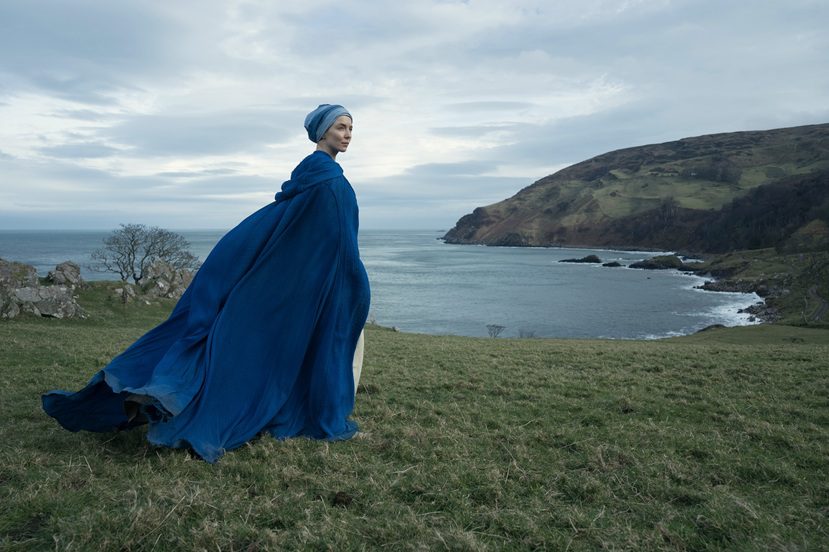
The problem becomes even more evident because the film seems to replace social justice with individual redemption. Robin Hood begins the film as an aging, wounded, hunted man who barely survives what he believes to be his final battle. He reunites with Little John (Skarsgård) and embarks on a mission that could restore some final measure of glory: protecting the daughter and wife of his protégé. The violence is filmed in an epic manner, despite the nocturnal setting, before Robin awakens on the brink of death under the care of Jodie Comer’s character. She is a woman who has devoted her life to caring for others, practicing charity, and living according to her religion. Robin then abandons that isolated life marked by violence and begins wearing white clothes (as I said, no choice is neutral). It is not only his body that needs to be healed; his soul needs to be purified.
The outlaw who, in popular tradition, stole from the rich to give to the poor now finds in that semi-monastic, semi-religious environment an opportunity to atone for his sins. Instead of reflecting on how an individual might confront an unjust social structure and inspire others to do the same, the narrative is concerned with discussing how a criminal can become a better person (in quotation marks, many of them). The legend moves from class struggle to personal redemption. And in a film released in 2026, within its social and industrial context, this shift cannot be ignored.
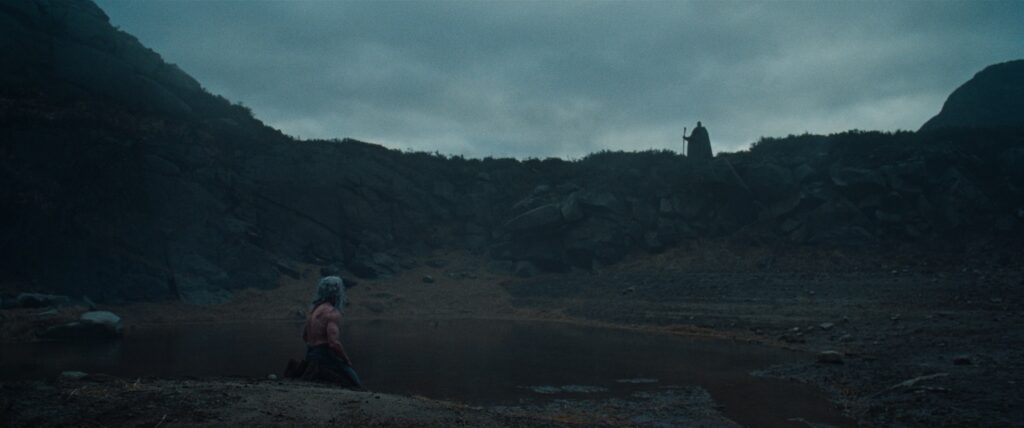
The narrative also finds, in its supporting characters, mirrors for this process. There is the leper (Bartlett, from The Last of Us), who has a connection to Robin’s past; there is Margaret (Delaney), whom he begins to care for and protect as something close to a daughter; and there is Arthur (Jupe), a young man whom Robin believed he had killed and who arrives at the priory driven by revenge. Yet instead of acting as he did at the beginning of the narrative, Robin is now a different person and is concerned with teaching him that hatred and revenge should not be perpetuated. At times, I feel as though I am watching another version of Logan, in which a man marked by violence is invited, by circumstance, to discover a different form of responsibility. Instead of claws, a bow and arrow.
Speaking of Logan, Hugh Jackman is reliable when it comes to playing this kind of tired, wounded, introverted man. His performance relies heavily on his gaze, his physicality, the furrowing of his brow, or his grunts. And cinematographer Pat Scola follows Robin’s transformation through the image itself: the cold grays of the violent world give way to warmer colors when he arrives at the priory and begins his recovery. Even the aspect ratio changes, moving from a more epic and solitary image to a more intimate one. Jodie Comer, meanwhile, also prevents her character from becoming one-dimensional. She conveys the idea of a woman who saves Robin physically, as well as one who forces him to confront the sins of his past.
Meanwhile, the director seems aware of the importance of the legend he carries with him: the narrative possesses a sense of grandeur and materiality, and even the 35mm cinematography and use of practical effects instead of digital effects seem to pursue that quality. However, this formal decision is accompanied by a depoliticized narrative, reduced to the condition of a redemption story. The Robin Hood who stole from the rich to give to the poor may have been a fantasy, but it was a fantasy in which we were invited to imagine a hero willing to confront those who had too much in order to give to those who had too little.
That Robin never existed; he is only part of the legends we tell, and whose fiction is recalled within the narrative whenever characters recover stories that Robin himself only partially knows or does not know at all. Here, stealing is simply stealing. The answer to that crime is religious, to make matters worse. Thus, although the direction offers creative solutions both cinematically and visually, and although the film has good actors and is technically competent, removing from Robin Hood what makes him Robin Hood is a choice I cannot ignore. In 2026, transforming Robin Hood into merely a bandit, particularly a cruel and sadistic one who needs to be saved, may be more than a reinterpretation of the legend. It is a political choice. And, for me, it is an unforgivable one.

Crítico de cinema filiado a Critics Choice Association, à Associação Brasileira de Críticos de Cinema, a Online Film Critics Society e a Fipresci. Atuou no júri da 39ª Mostra Internacional de Cinema em São Paulo/SP, do 12º Fest Aruana em João Pessoa/PB, do 24º Tallinn Black Nights Film na Estônia, do 47º TIFF – Festival Internacional de Cinema em Toronto. Ministrante do Laboratório de Crítica Cinematográfica na 1ª Mostra Internacional de Cinema em São Luís (MA) e Professor Convidado do Curso Técnico em Cinema do Instituto Estadual do Maranhão (IEMA), na disciplina Crítica Cinematográfica. Concluiu o curso de Filmmaking da New York Film Academy, no Rio de Janeiro (RJ) em 2013. Participou como co-autor dos livros 100 melhores filmes brasileiros (Letramento, 2016), Documentário brasileiro: 100 filmes essenciais (Letramento, 2017) e Animação Brasileira – 100 Filmes Essenciais (Letramento, 2018). Criou o Cinema com Crítica em fevereiro de 2010 e o Clube do Crítico em junho de 2020.

3 comentários em “A Morte de Robin Hood”
Por isso amo o Cinema com crítica.
Que texto irretocável! A Arte deve servir à fantasia tanto quanto à realidade!
Obrigado, Talita. <3
Pingback: A Morte de Robin Hood | Um filme ideologicamente errado • Cinema com Crítica