
A herança que é um fardo
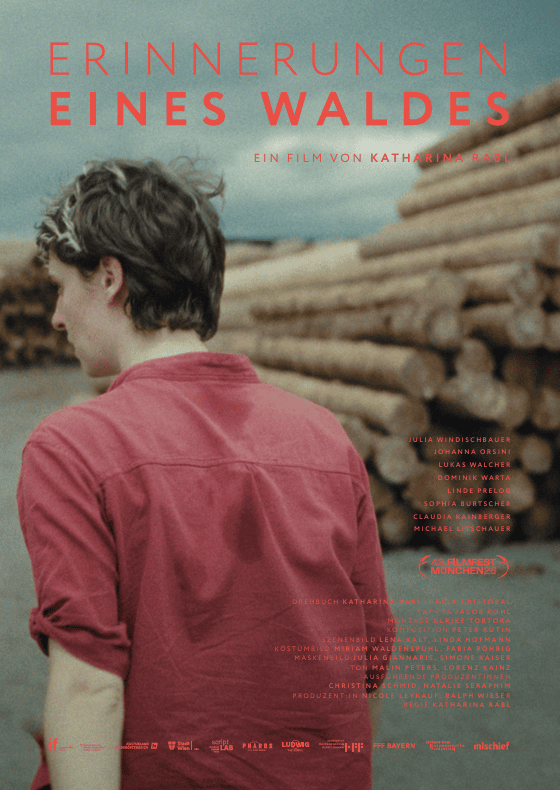
Na maior parte do tempo, Memories of a Forest é mais um drama familiar protocolar sobre a herança que os filhos e netos carregam de seus pais e avós. O filme, a estreia na direção de longas-metragens da austríaca Katharina Rabl, acompanha Frieda (Windischbauer), uma mulher que retorna à vila onde cresceu para o velório e enterro da avó Margarethe, oportunidade em que também descobre que herdou 15 hectares de floresta, afetivamente importantes à família. A volta para a casa não significa acolhimento, mas sim a reabertura de uma série de dores e feridas jamais verbalizadas. Para complicar, Frieda tem um prazo apertado para concluir a tese de doutorado, e a apresentação é indispensável para assumir uma posição na Universidade de Viena. Este conflito coloca-a diante de uma realidade que a família tem transmitido por gerações: mulheres obrigadas a sacrificar os seus sonhos em favor de obrigações domésticas e familiares.
Frieda já chega com uma aparência abatida, derrotada, como se a palavra trauma estivesse escrita em sua testa e tivesse precisado fugir daquela família para sobreviver a ela, embora não pareça existir nada de particularmente traumático em sua vida anterior que justifique tamanha sensação de derrota. Ainda assim, quando retorna, passa a sacrificar a própria vida, a sua ambição acadêmica e a possibilidade concreta de um futuro em Viena para tentar solucionar os problemas financeiros e particulares da família. A floresta de Zullus que recebe como herança, que deveria representar uma oportunidade, rapidamente transforma-se em um fardo obrigacional. Diante das dificuldades econômicas dos pais, a venda da propriedade pareceria ser a solução mais elementar, uma ideia que Johanna rejeita porque enxerga naquele terreno o investimento da avó no patrimônio afetivo da família. Frieda, então, permanece mais tempo na vila do que havia planejado e começa a cortar e vender madeira com o amigo de infância Friedrich (Walcher), deixando sua tese em segundo plano.
A crítica do filme à herança material e emocional entre gerações está, portanto, bem definida, ainda que me pareça menos convincente quando precisa transformar essa ideia em um dramalhão. Rabl reflete sobre toda uma geração obrigada a responder e corresponder às decisões tomadas por gerações anteriores, além de debater o conflito entre preservar aquilo que foi herdado e libertar-se do que pode facilmente se tornar um fardo e fonte de ressentimento. À medida que o tempo passa, Frieda precisa fazer escolhas profissionais, que a aproximam da história da avó e da mãe, que também negociaram alguma coisa que as interessava em favor da família, e as relações da família entram em crise.
O problema é que essas relações não parecem propriamente construídas, mas existem em função de uma tese que o roteiro defende. Como praticamente todos guardam algum tipo de ressalva em relação aos demais e ninguém sabe exatamente pelo que o outro está passando, o filme trabalha quase inteiramente com o não dito, com aquilo que paira sobre cada conversa, olhar e silêncio. Não há um problema em construir uma dramaturgia baseada no subtexto, mas aqui o recurso vem acompanhado de uma atmosfera tão densa e sufocante, ou de um dramalhão, na falta de uma palavra melhor, que qualquer profundidade é substituída pela ilusão de gravidade. É como se o filme estivesse apoiado no peso que atribui às personagens e aos seus dramas do que na capacidade de retratá-la. O que, diga-se, tem muita relação com a floresta.
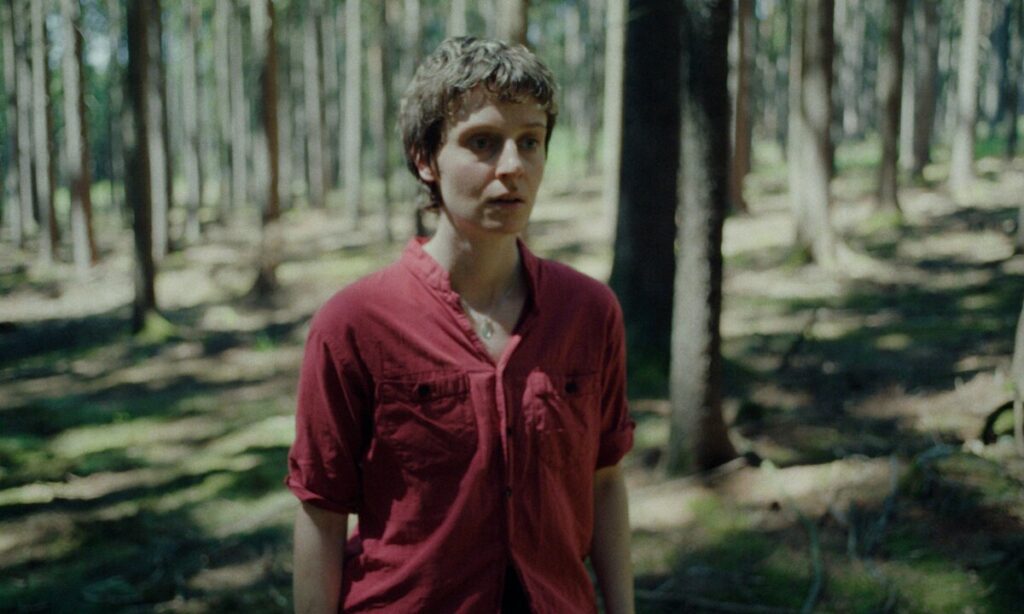
E ela é o que há de melhor na narrativa porque transforma em matéria visual aquilo que o drama familiar tenta expressar. As metáforas não são particularmente complexas, mas funcionam. A infestação de besouros que destrói as árvores pode ser interpretada como uma infestação de traumas que atravessa a família. Por outro lado, à medida que algumas árvores são derrubadas, o céu se abre, a floresta é iluminada e o espaço se torna menos sufocante. E há ainda o momento em que Frieda planta uma muda de árvore, gesto que, além de reforçar algum compromisso ecológico do filme, também oferece uma oportunidade de construir uma história diferente da herdada. E também de explorá-la comercialmente.
Dessa maneira, o patrimônio deixado pela avó não é só uma lembrança afetiva da família, mas se transforma em modelo econômico e artesanal à medida em que Fried transforma em mercadora as árvores que a avó plantou. Só que essa floresta é, no mínimo, ambígua: é a esperança de que a geração subsequente colha os seus frutos, embora também seja, em razão da praga, uma coleção de equívocos e desastres.
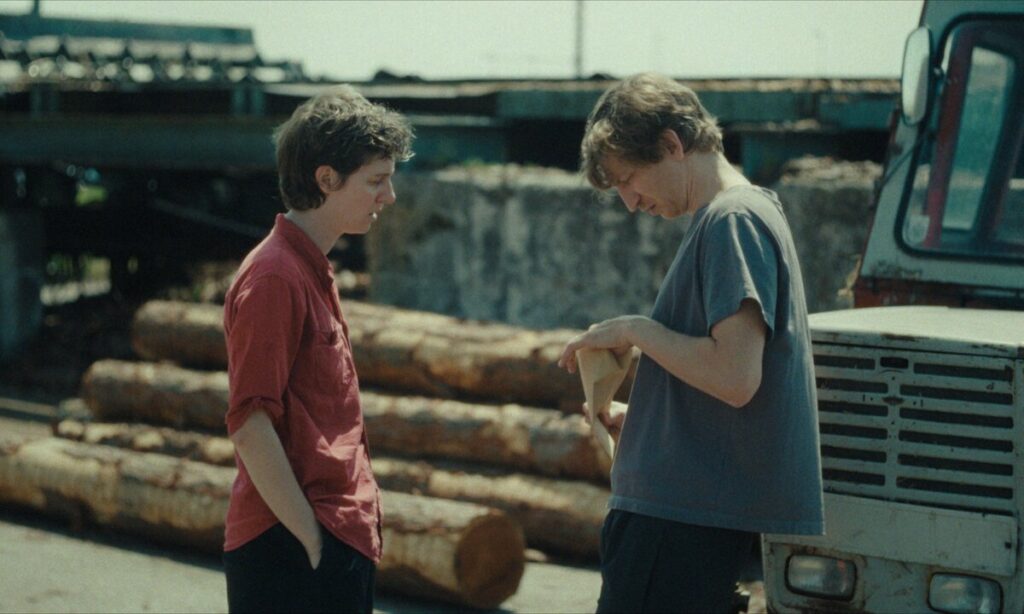
Assim, quando a narrativa abandona temporariamente o drama familiar e se concentra em documentar o trabalho que Rabl encontra a naturalidade que falta no restante do tempo. As cenas de processamento da madeira ou aquelas em que Frieda trabalha, no coração da floresta, derrubando árvores, aparando os galhos, trabalhando e organizando a madeira e transportando-a para vendê-la, revelam uma naturalidade e fisicalidade ausente no restante do tempo e mais eficazes em termos de explorar os traumas. Nesses momentos, a tese é substituída pelo processo extrativo, o trabalho intelectual pelo esforço físico, e as escolhas de Frieda ficam mais claras. Toda a narrativa respira melhor porque a materialidade do trabalho é substituto da dramaturgia forjada. O drama se forma naturalmente, em vez de ser fruto de uma encenação, que no caso do filme, não funciona tão bem.
Mas esses momentos são breves em comparação com os demais e Memories of a Forest retorna ao drama e ao conflito de Frieda, que está entre a herança e a ambição de construir o próprio futuro. Apesar de atuações competentes e do roteiro com o coração no lugar certo, o filme é melhor conceitualmente e, infelizmente, eu não me envolvi o suficiente com sua narrativa para acompanhá-la e me emocionar.
O filme está em exibição no Festival de Toronto (TIFF) 2026.
When Inheritance Becomes a Burden
Most of the time, Memories of a Forest is yet another conventional family drama about the inheritance that children and grandchildren carry from their parents and grandparents. The film, Austrian filmmaker Katharina Rabl’s feature directorial debut, follows Frieda (Windischbauer), a woman who returns to the village where she grew up for the funeral and burial of her grandmother Margarethe, only to discover that she has also inherited 15 hectares of forest that are deeply meaningful to the family. Returning home does not mean finding comfort, but rather reopening a series of pains and wounds that have never been verbalized. To complicate matters, Frieda has a tight deadline to complete her doctoral thesis, whose defense is essential for her to take up a position at the University of Vienna. This conflict places her face to face with a reality that her family has passed down through generations: women forced to sacrifice their dreams in favor of domestic and family obligations.
Frieda already arrives looking worn down, defeated, as if the word trauma were written across her forehead and she had needed to flee that family in order to survive it, although there does not seem to be anything particularly traumatic in her previous life to justify such a sense of defeat. Even so, once she returns, she begins to sacrifice her own life, her academic ambitions, and the concrete possibility of a future in Vienna in order to try to solve her family’s financial and personal problems. The Zullus forest she receives as an inheritance, which should represent an opportunity, quickly becomes an obligatory burden. Given her parents’ financial difficulties, selling the property would seem like the most elementary solution, an idea Johanna rejects because she sees the land as her mother’s investment in the family’s emotional heritage. Frieda therefore stays in the village longer than she had planned and begins cutting and selling wood with her childhood friend Friedrich (Walcher), putting her thesis on the back burner.
The film’s criticism of the material and emotional inheritance passed between generations is therefore clearly defined, even if it becomes less convincing when it has to turn that idea into melodrama. Rabl reflects on an entire generation forced to respond to and live up to decisions made by previous generations, while also exploring the conflict between preserving what has been inherited and freeing oneself from something that can easily become a burden and a source of resentment. As time passes, Frieda has to make professional choices that bring her closer to the history of her grandmother and mother, who also negotiated away something that mattered to them in favor of their family, and the family relationships begin to collapse.
The problem is that these relationships do not seem to be properly constructed, but rather to exist in service of a thesis that the screenplay wants to defend. Since almost everyone seems to harbor some kind of reservation toward the others, while no one knows exactly what the other person is going through, the film works almost entirely through what remains unsaid, through what hangs over every conversation, glance, and silence. There is nothing inherently wrong with building a drama around subtext, but here the device comes accompanied by such a dense and suffocating atmosphere, or by melodrama, for lack of a better word, that any depth is replaced by the illusion of gravity. It is as if the film relies more on the weight it attributes to its characters and their dramas than on its ability to actually portray them. Which, incidentally, has a great deal to do with the forest.
And the forest is the best thing in the film because it transforms into visual matter what the family drama tries to express. The metaphors are not particularly complex, but they work. The infestation of beetles that destroys the trees can be interpreted as an infestation of trauma spreading through the family. On the other hand, as some of the trees are cut down, the sky opens up, the forest becomes brighter, and the space becomes less suffocating. Then there is the moment when Frieda plants a new tree, a gesture that, in addition to reinforcing the film’s ecological concerns, also offers the possibility of building a story different from the one she inherited. And of exploiting it commercially as well.
In this way, the legacy left by the grandmother is not merely an emotional reminder of the family, but becomes an economic and artisanal model as Frieda turns the trees her grandmother planted into commodities. Yet the forest is, at the very least, ambiguous: it represents the hope that the next generation will reap its fruits, while also becoming, because of the infestation, a collection of mistakes and disasters.
Thus, when the narrative temporarily abandons the family drama and focuses on documenting the work, Rabl finds the naturalism that is missing elsewhere. The scenes of wood processing, as well as those in which Frieda works in the heart of the forest, cutting down trees, trimming branches, handling and organizing the wood, and transporting it to be sold, reveal a naturalness and physicality absent from the rest of the film, and they are more effective in exploring its traumas. In these moments, the thesis is replaced by the extractive process, intellectual labor by physical effort, and Frieda’s choices become clearer. The entire narrative breathes better because the materiality of labor substitutes for the contrived dramaturgy. The drama emerges naturally instead of being the result of staging, which, in this case, does not work as well.
But these moments are brief compared with everything else, and Memories of a Forest returns to the drama and to Frieda’s conflict, caught between inheritance and the ambition to build her own future. Despite competent performances and a screenplay whose heart is in the right place, the film works better conceptually and, unfortunately, I did not become sufficiently involved in its narrative to follow it emotionally or be moved by it.
The film is screening at the 2026 Toronto International Film Festival (TIFF).

Crítico de cinema filiado a Critics Choice Association, à Associação Brasileira de Críticos de Cinema, a Online Film Critics Society e a Fipresci. Atuou no júri da 39ª Mostra Internacional de Cinema em São Paulo/SP, do 12º Fest Aruana em João Pessoa/PB, do 24º Tallinn Black Nights Film na Estônia, do 47º TIFF – Festival Internacional de Cinema em Toronto. Ministrante do Laboratório de Crítica Cinematográfica na 1ª Mostra Internacional de Cinema em São Luís (MA) e Professor Convidado do Curso Técnico em Cinema do Instituto Estadual do Maranhão (IEMA), na disciplina Crítica Cinematográfica. Concluiu o curso de Filmmaking da New York Film Academy, no Rio de Janeiro (RJ) em 2013. Participou como co-autor dos livros 100 melhores filmes brasileiros (Letramento, 2016), Documentário brasileiro: 100 filmes essenciais (Letramento, 2017) e Animação Brasileira – 100 Filmes Essenciais (Letramento, 2018). Criou o Cinema com Crítica em fevereiro de 2010 e o Clube do Crítico em junho de 2020.